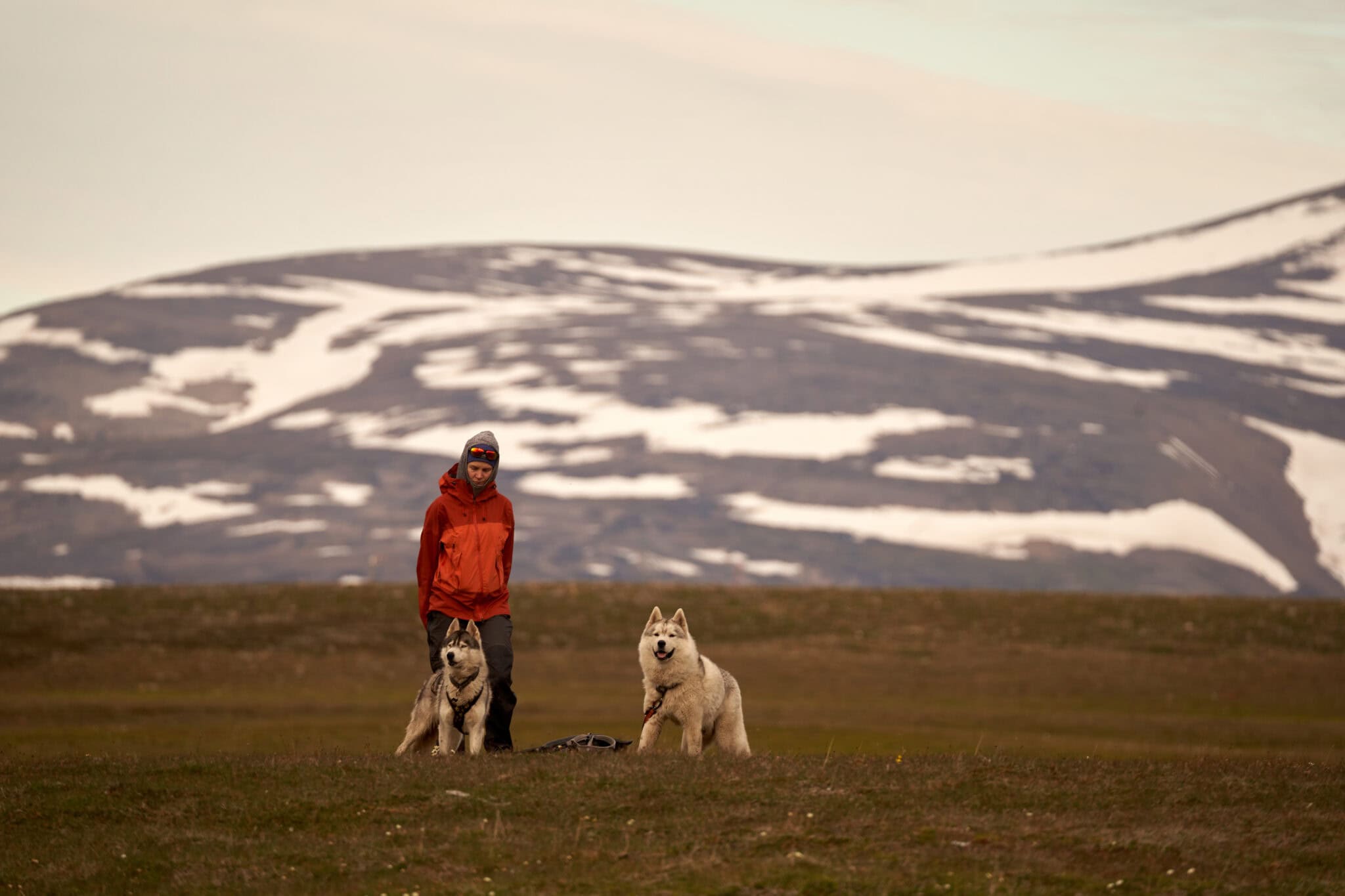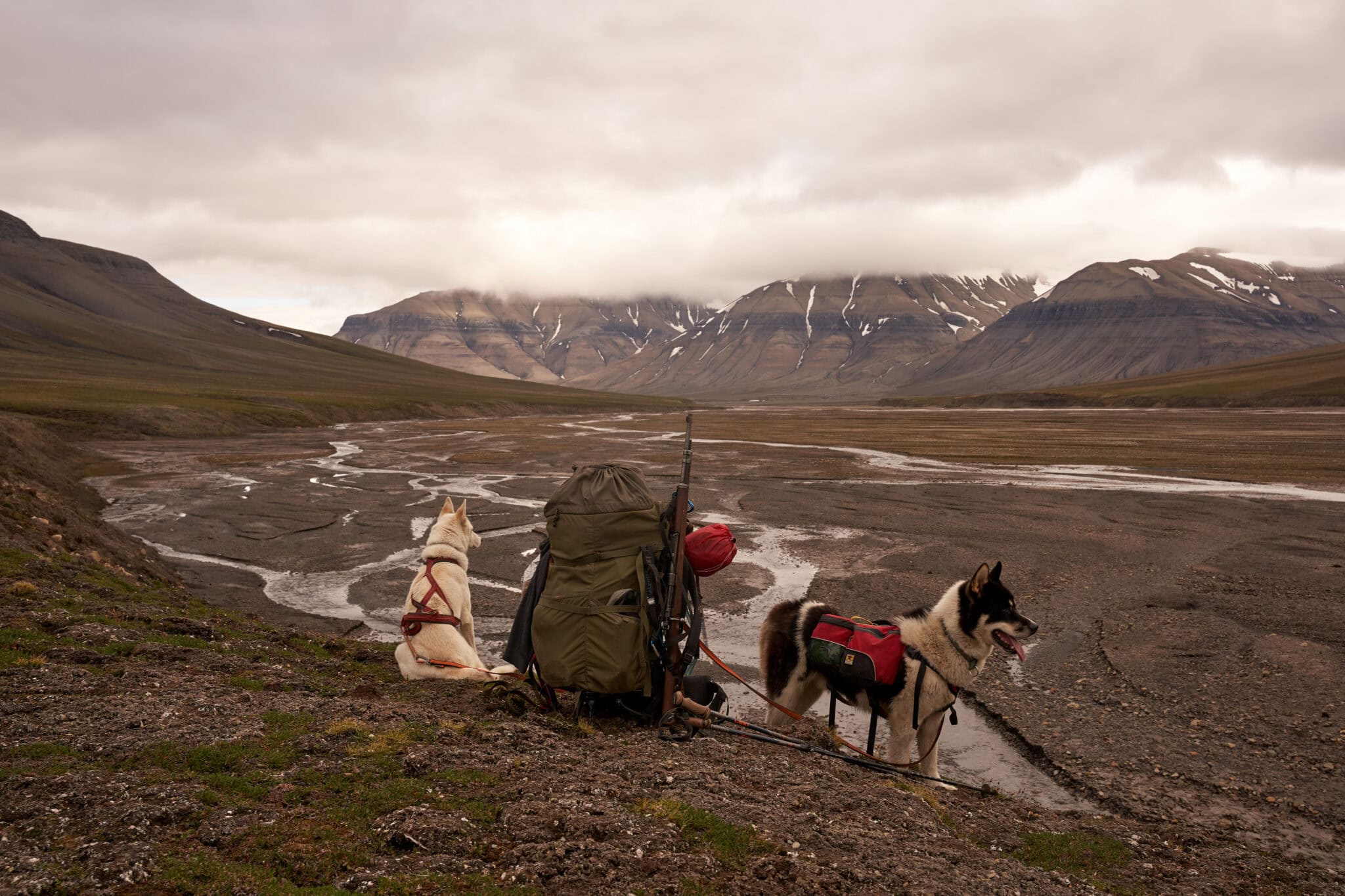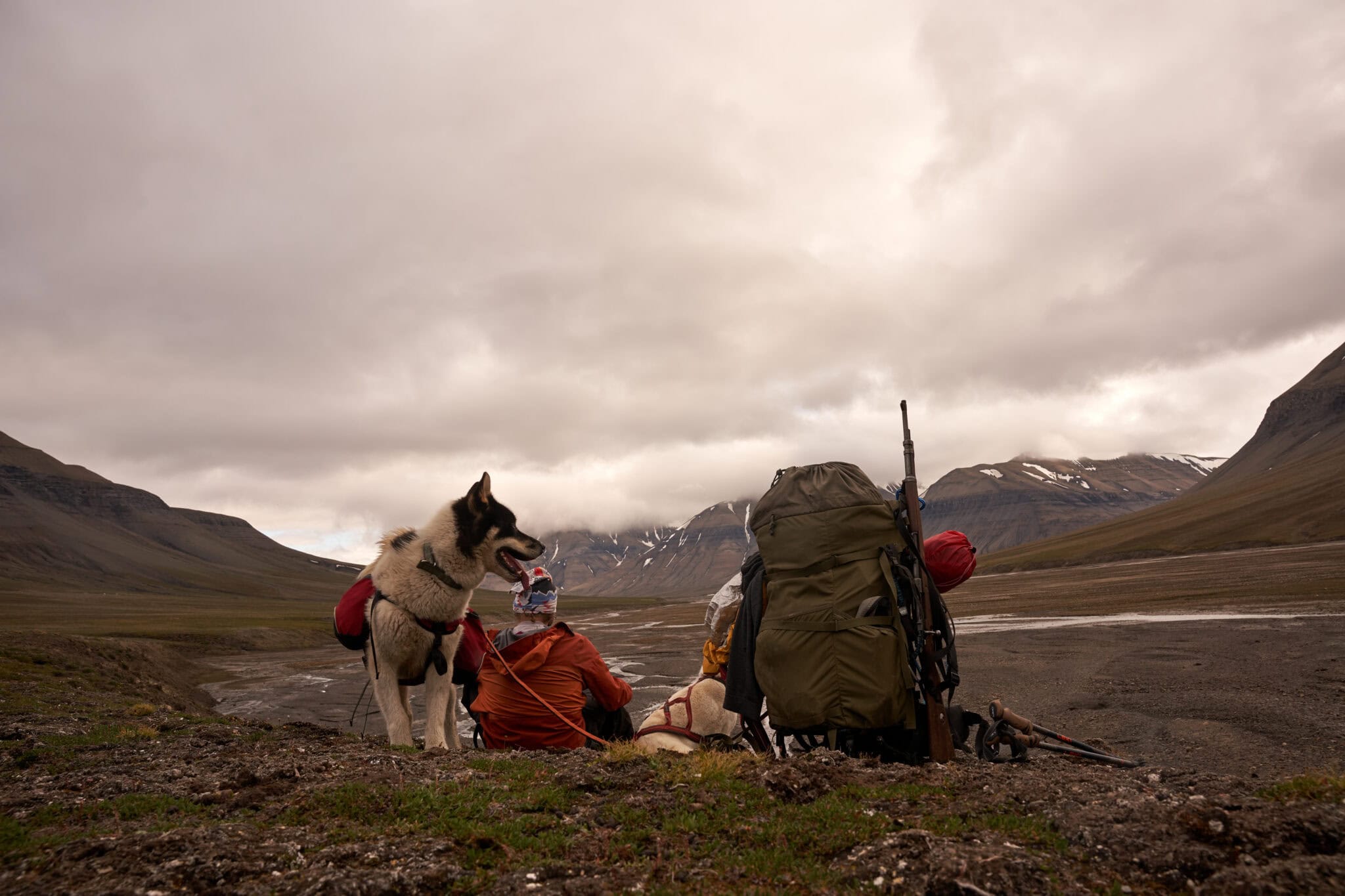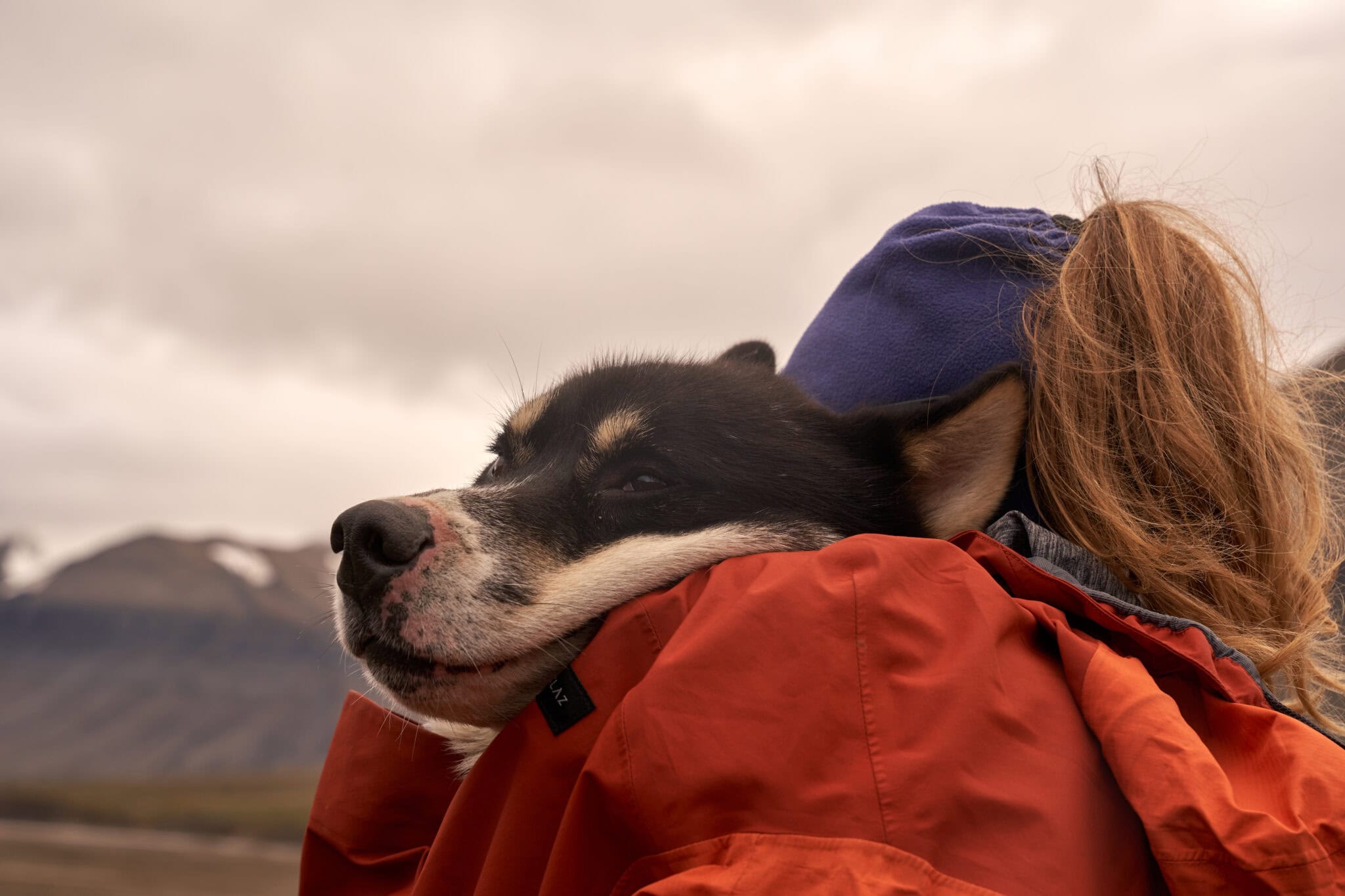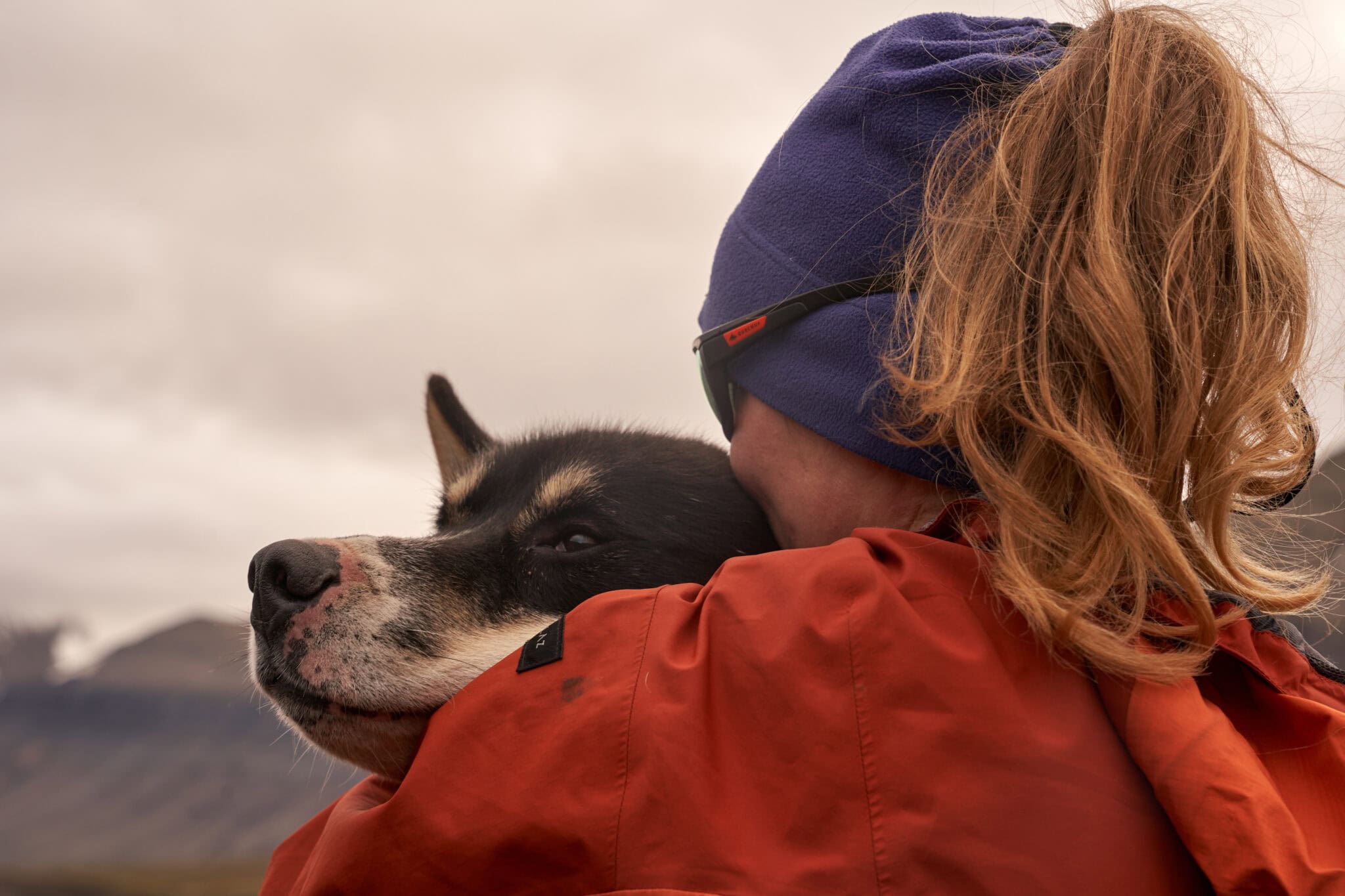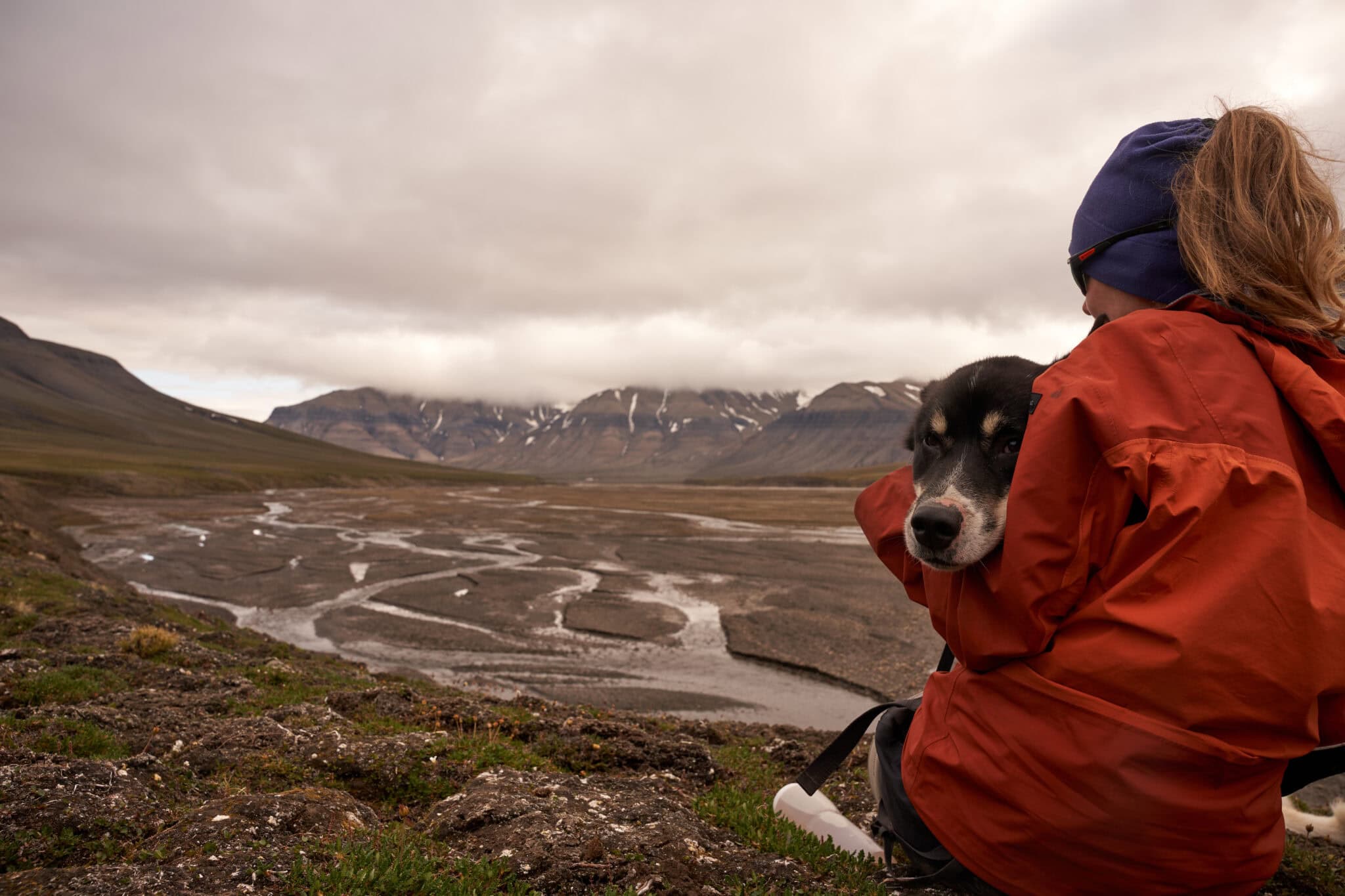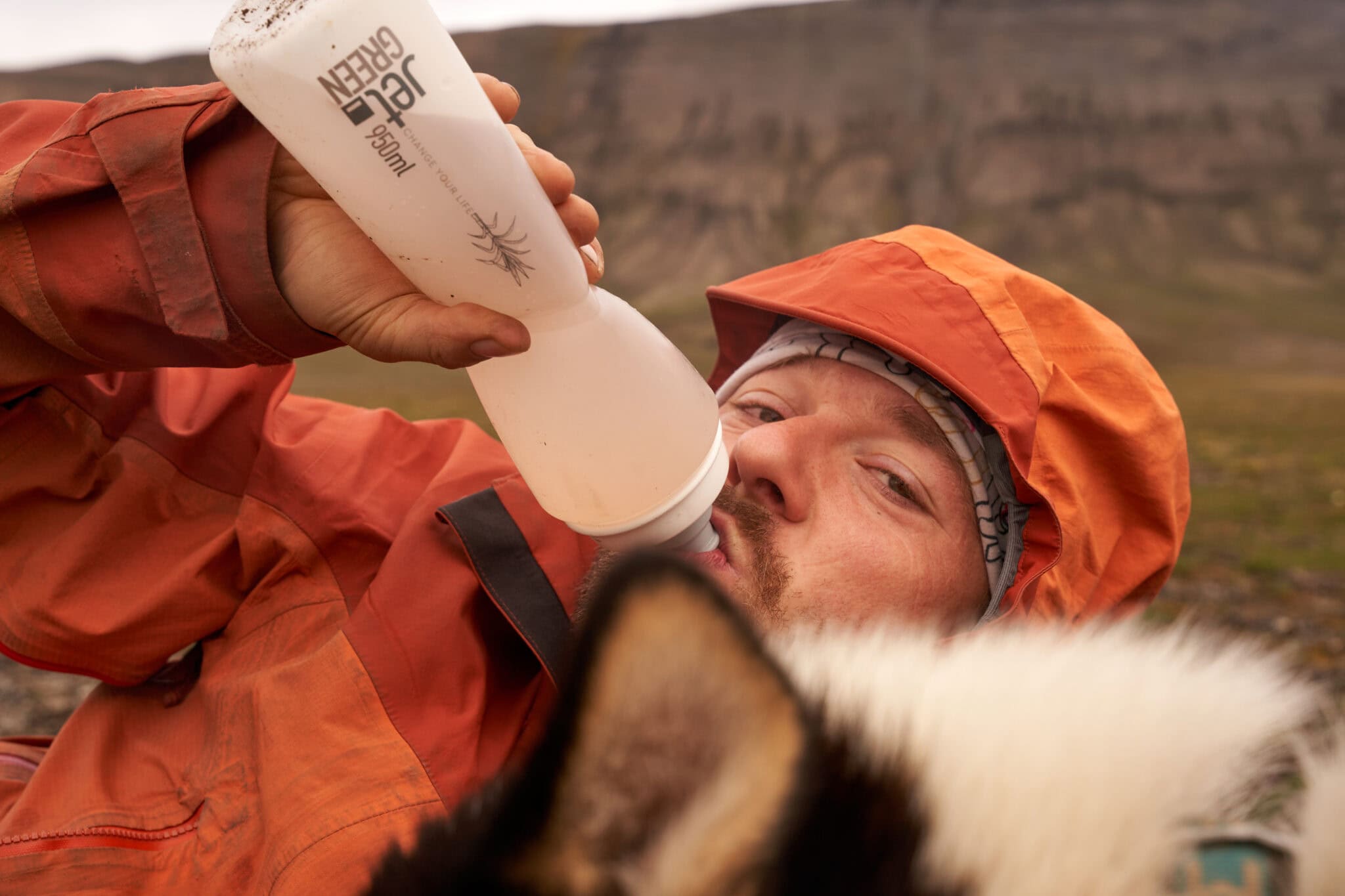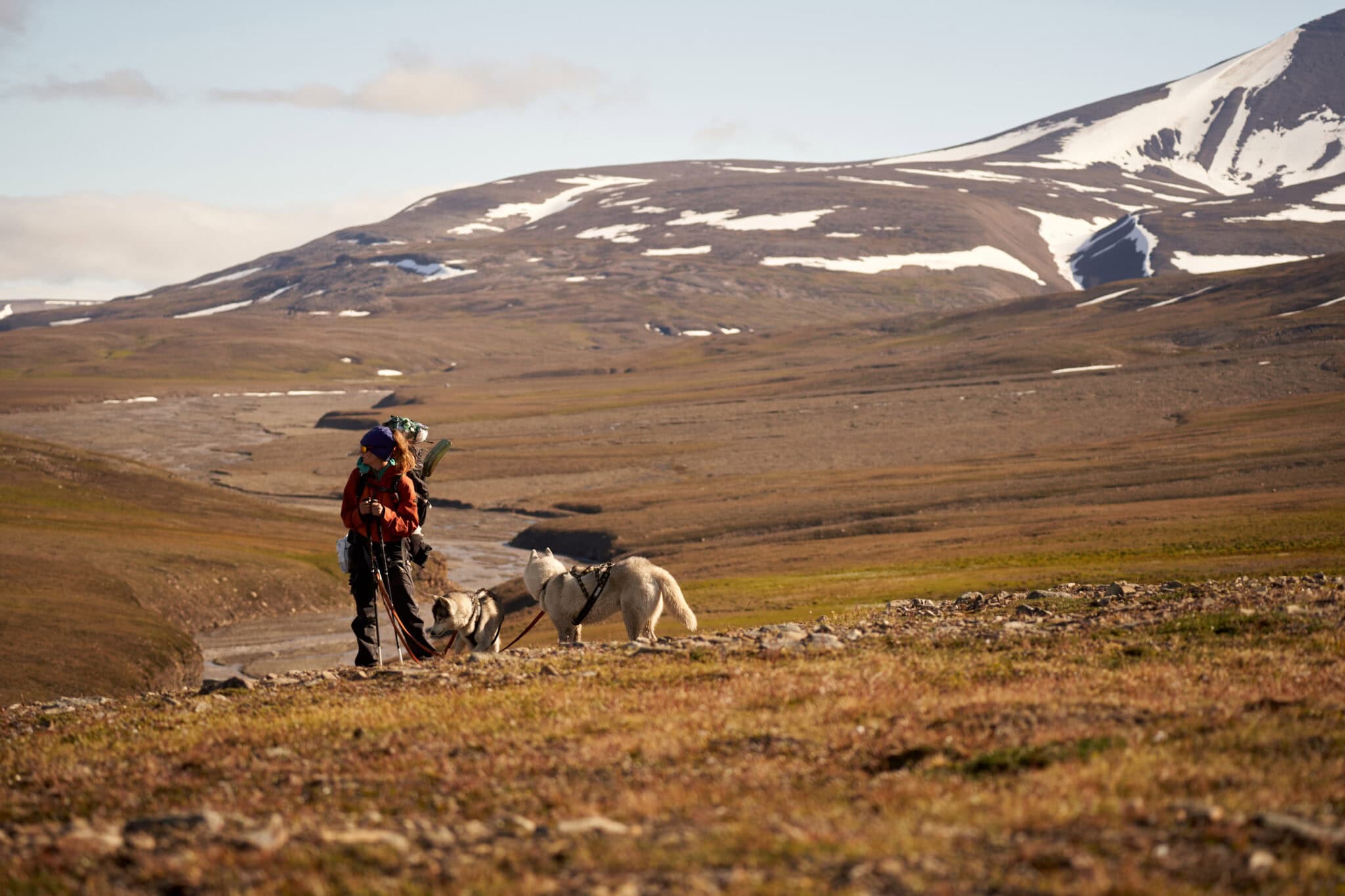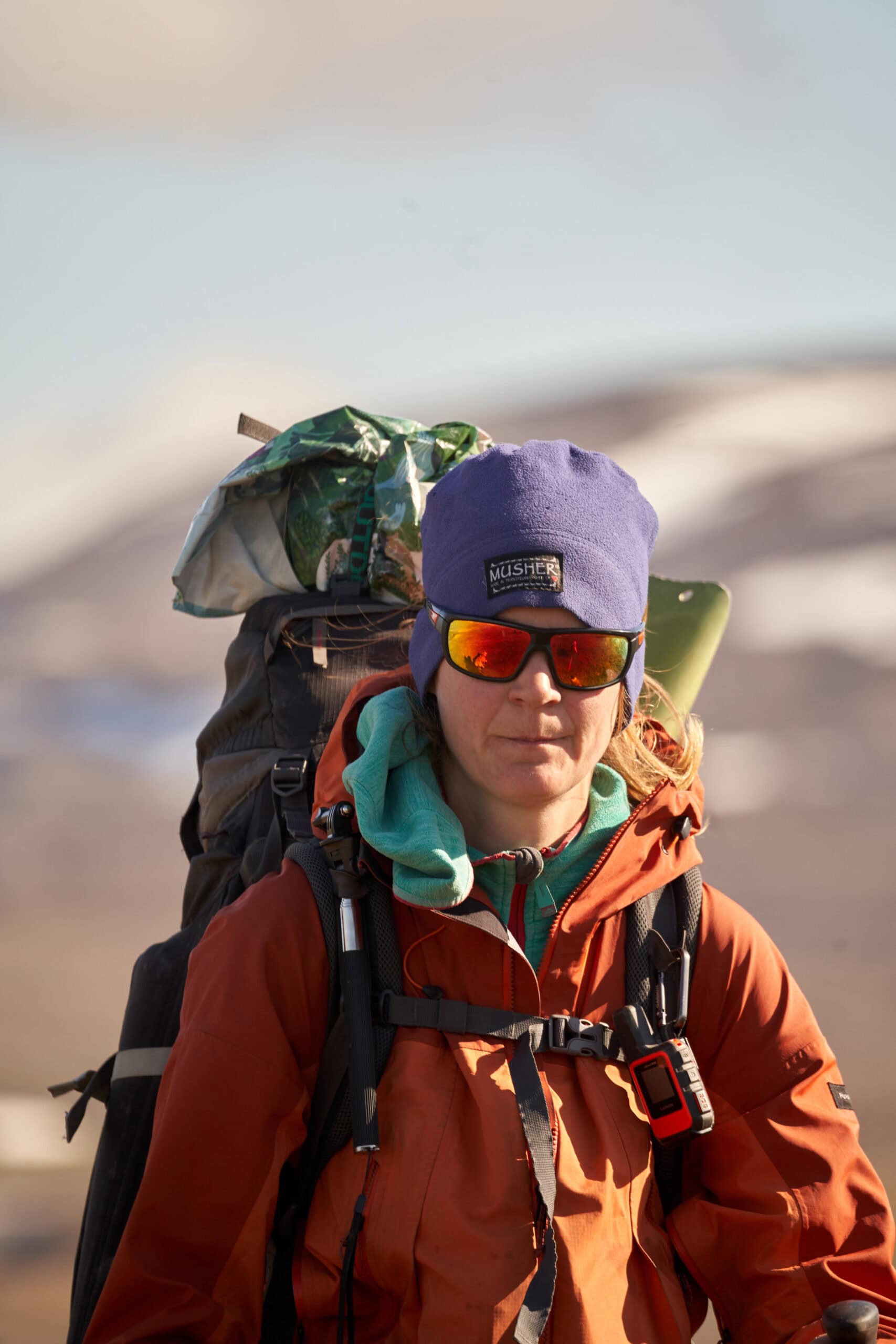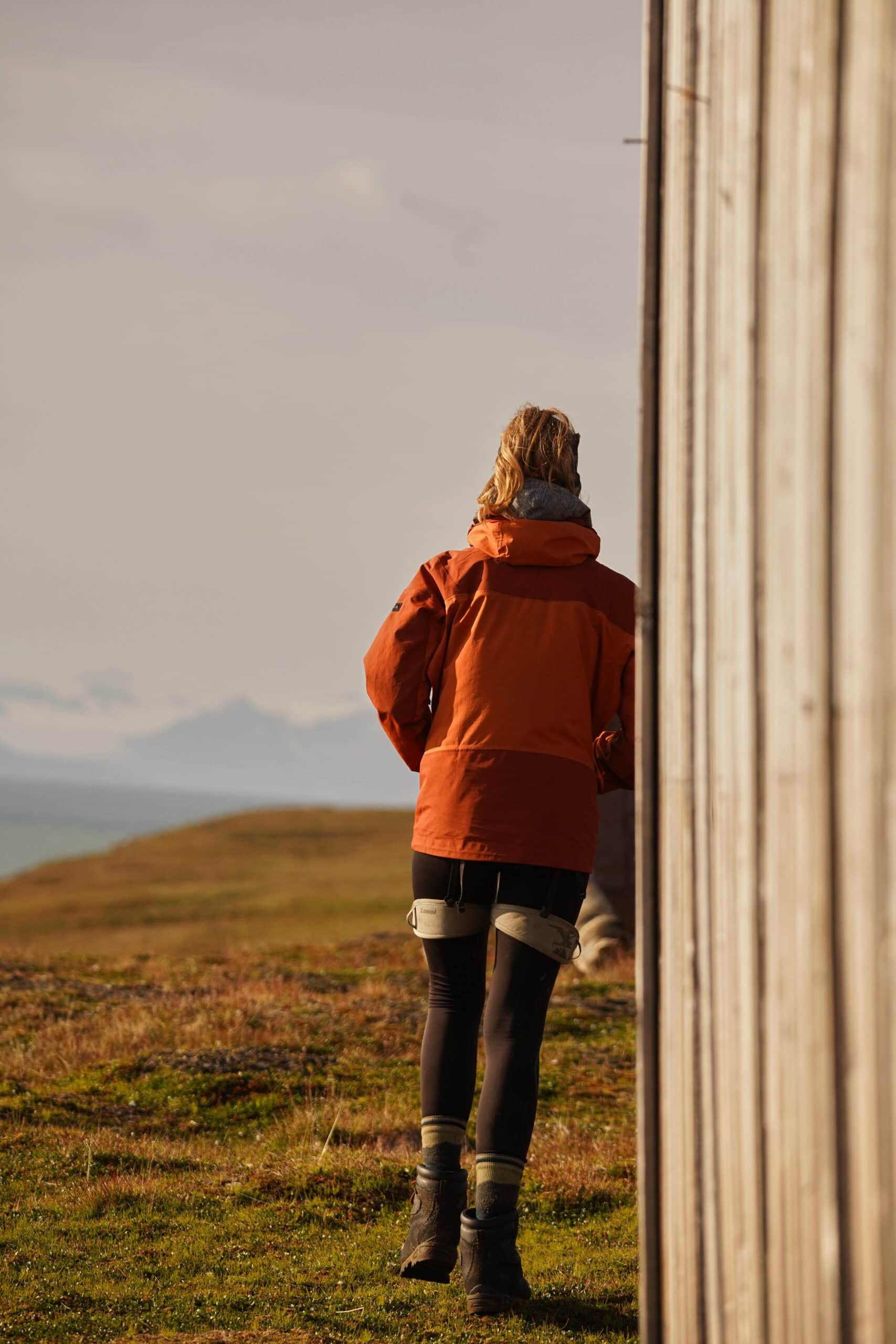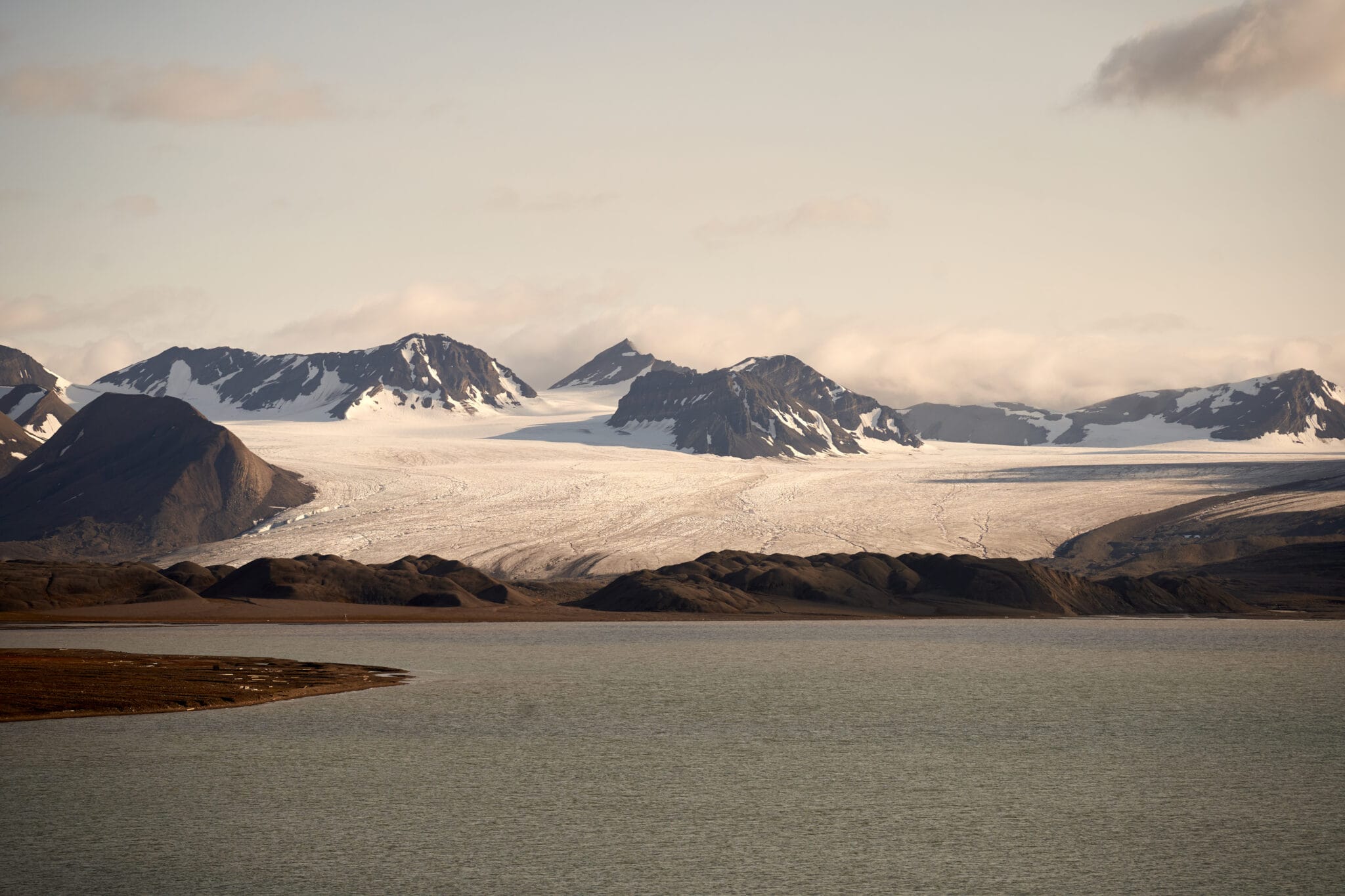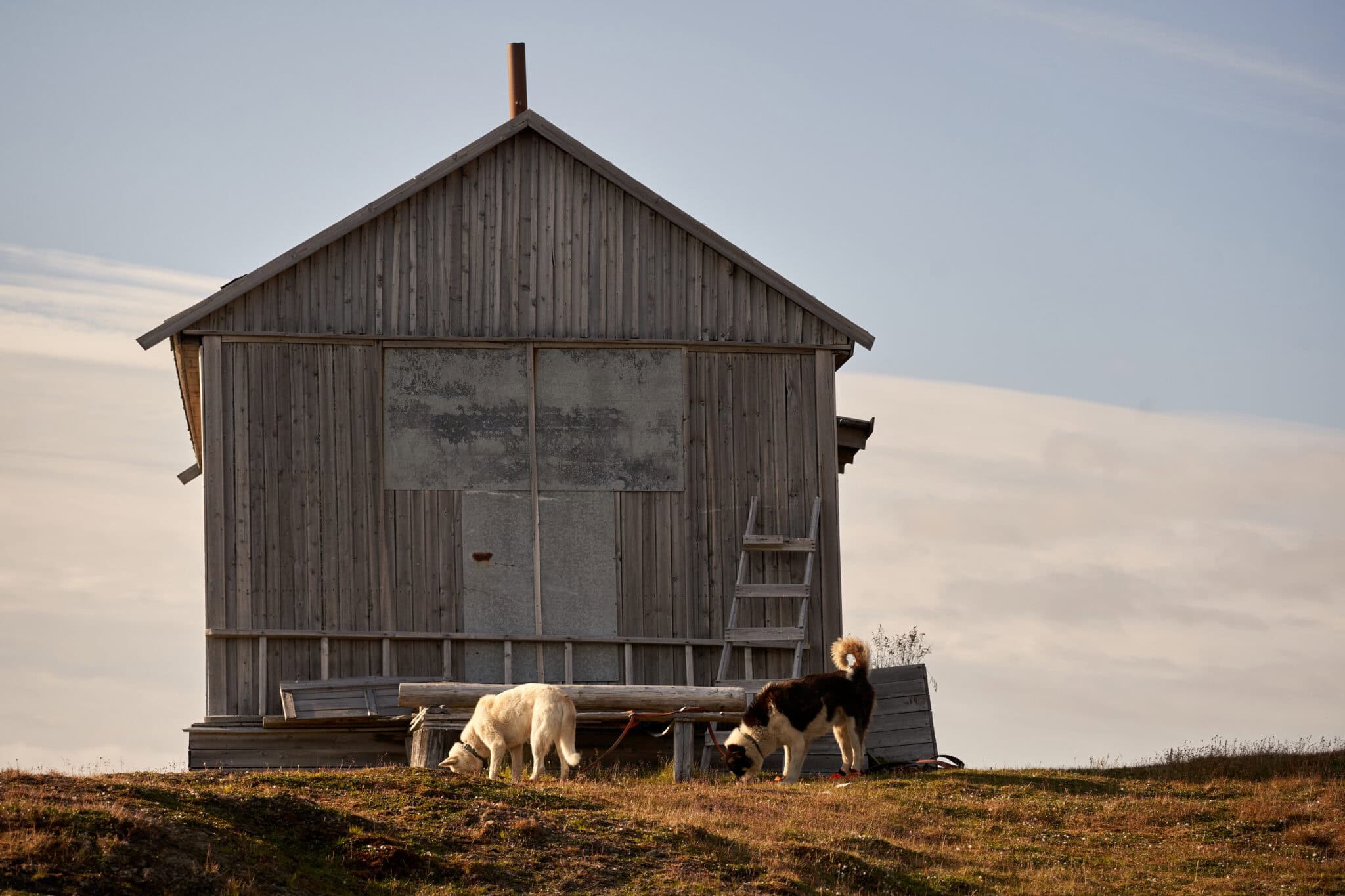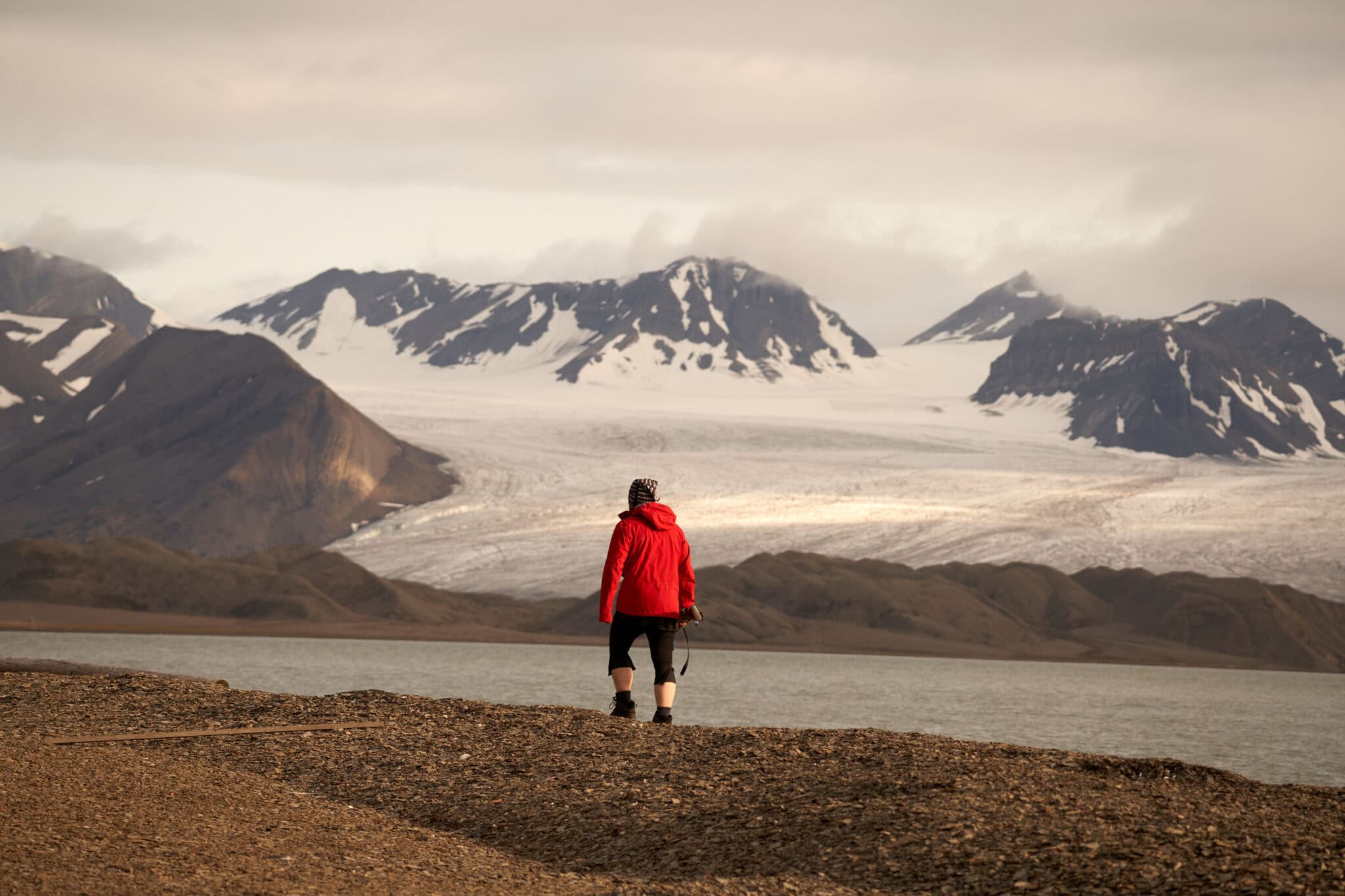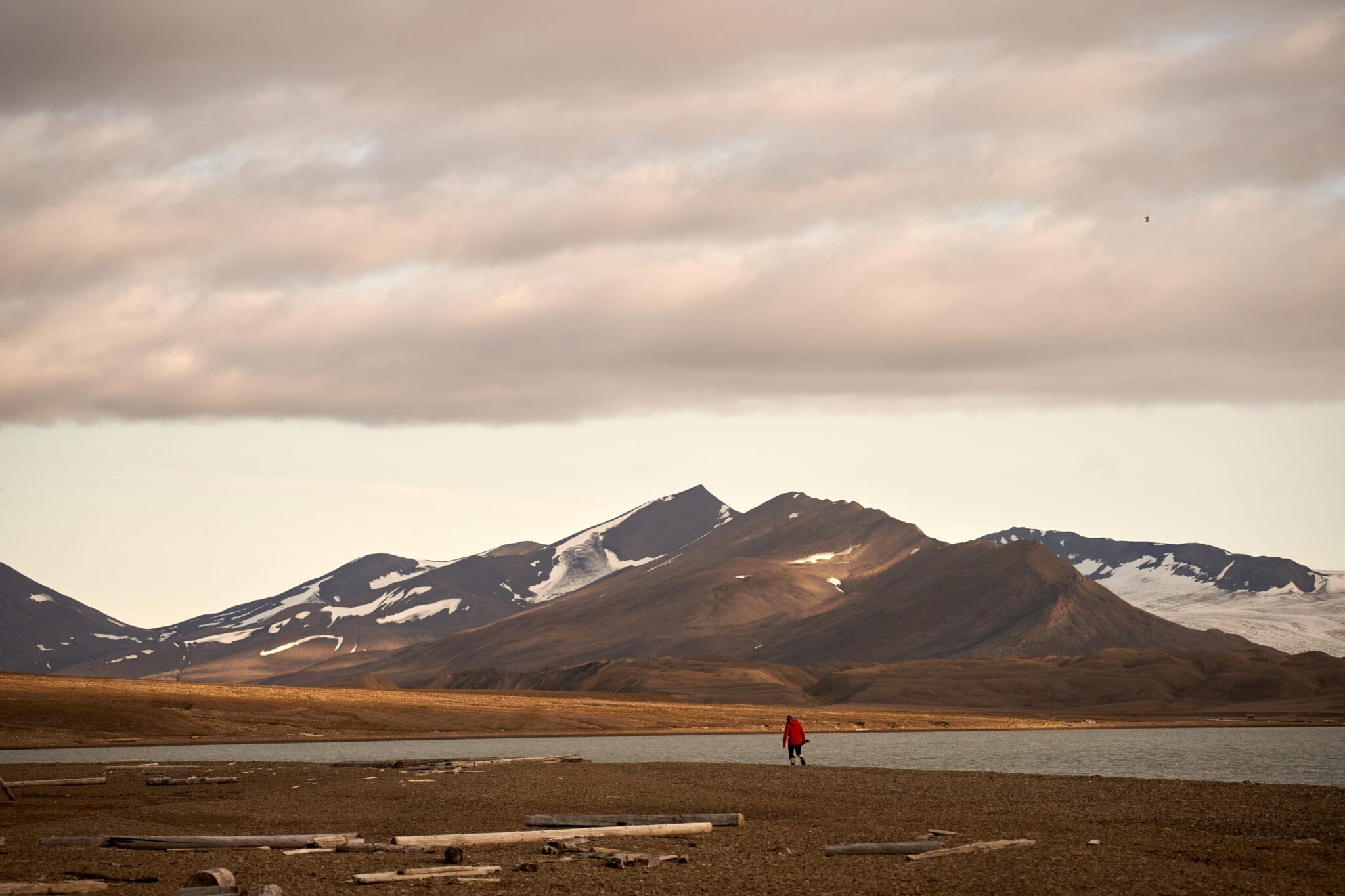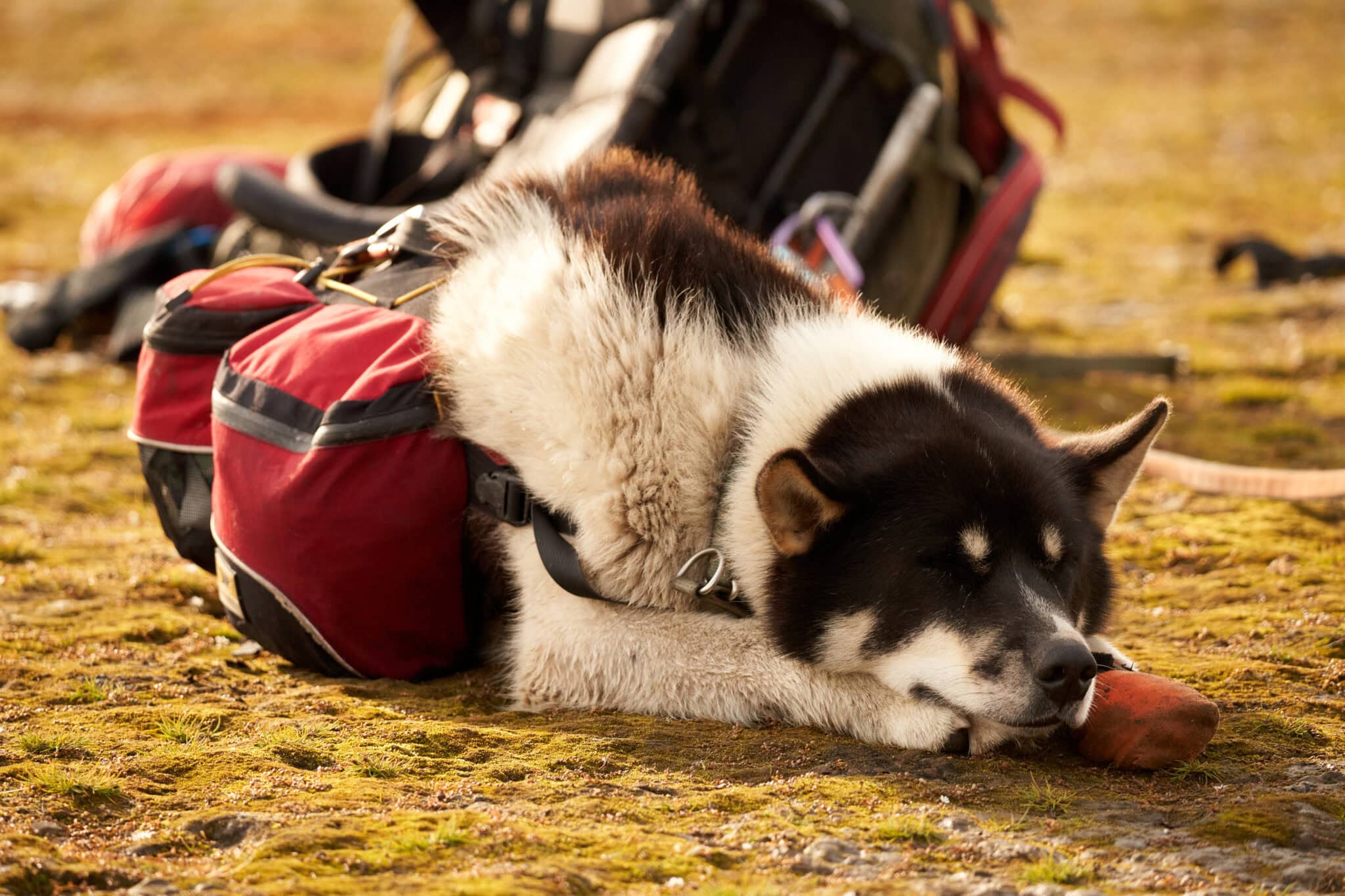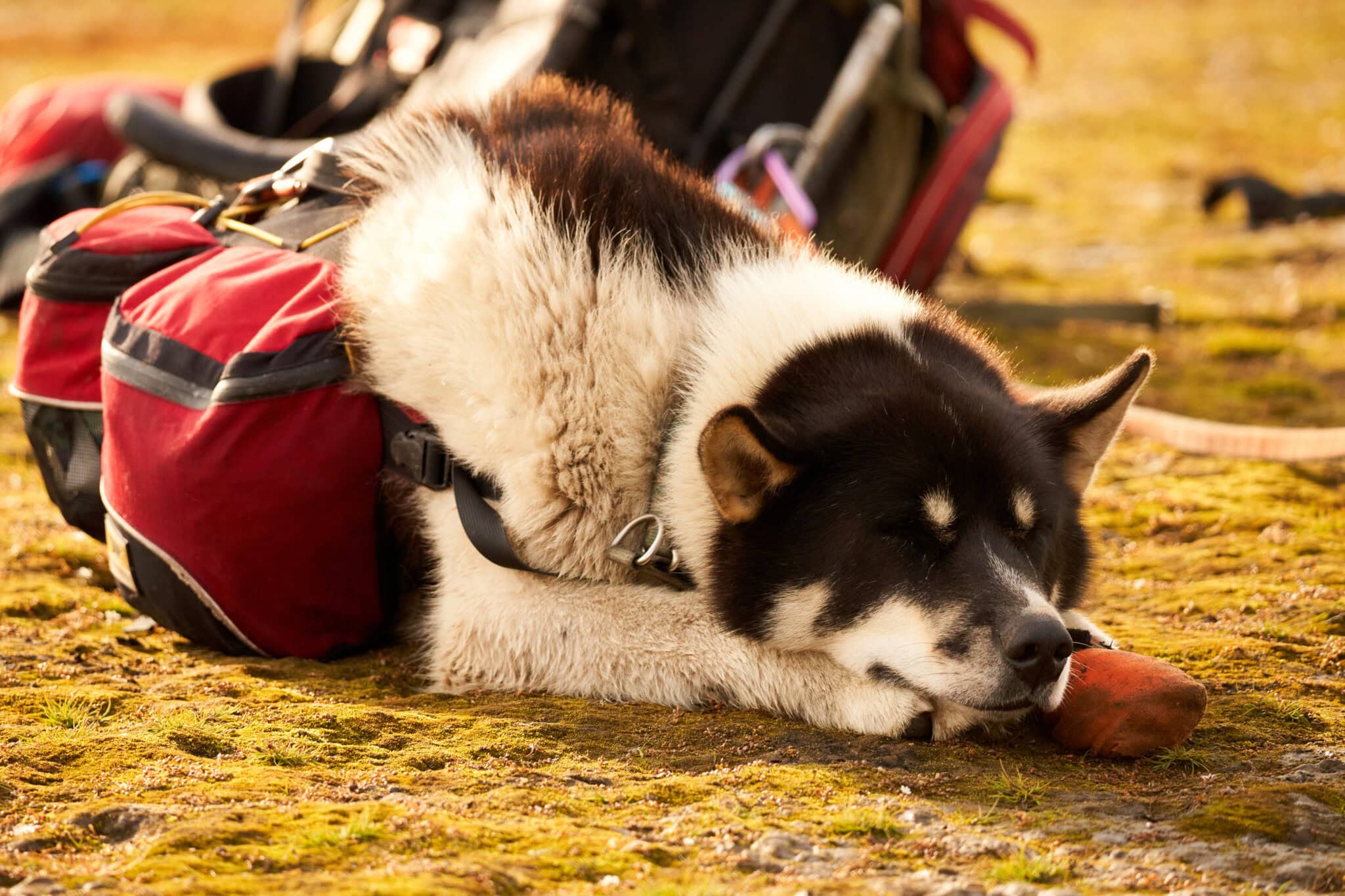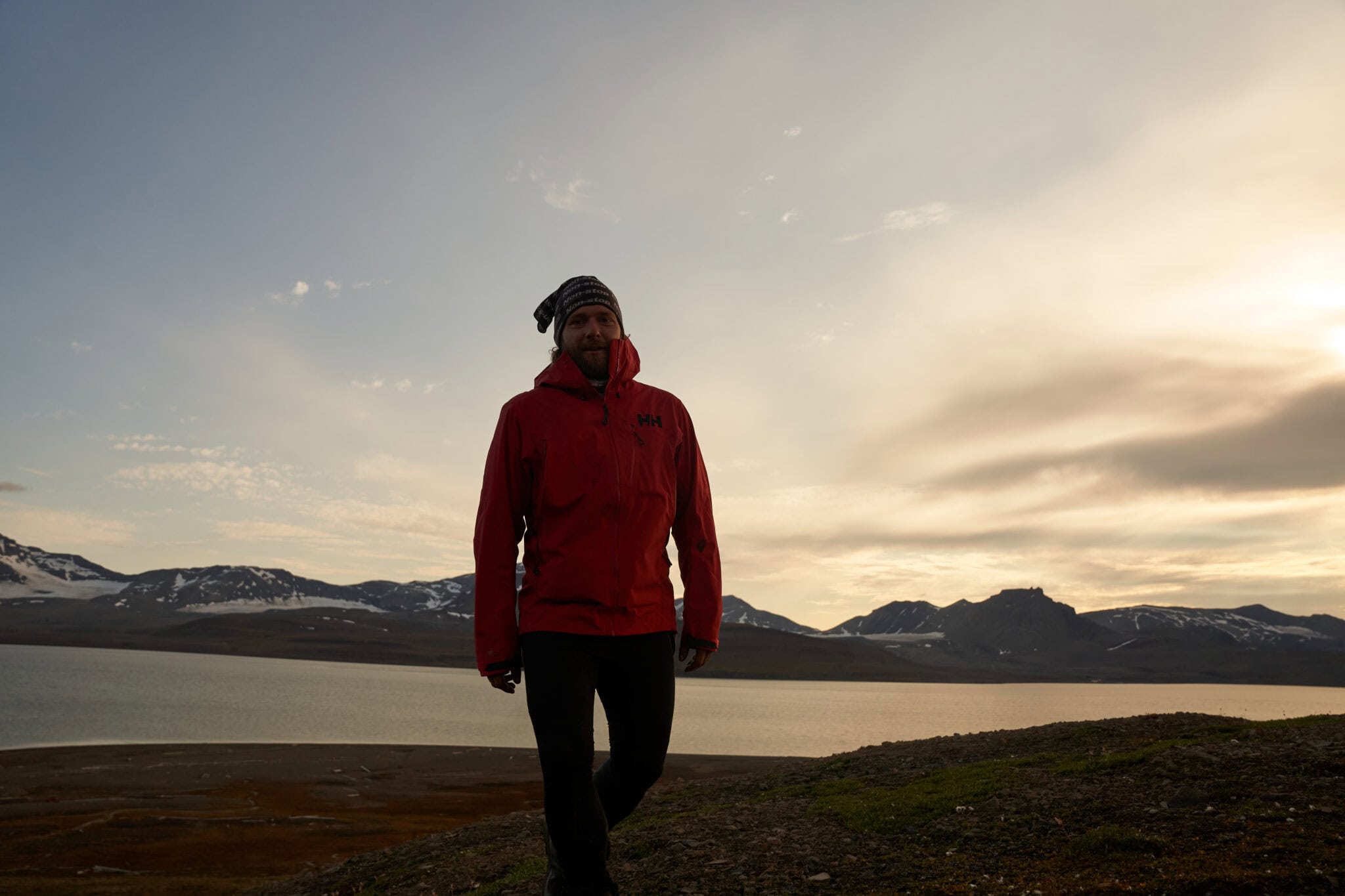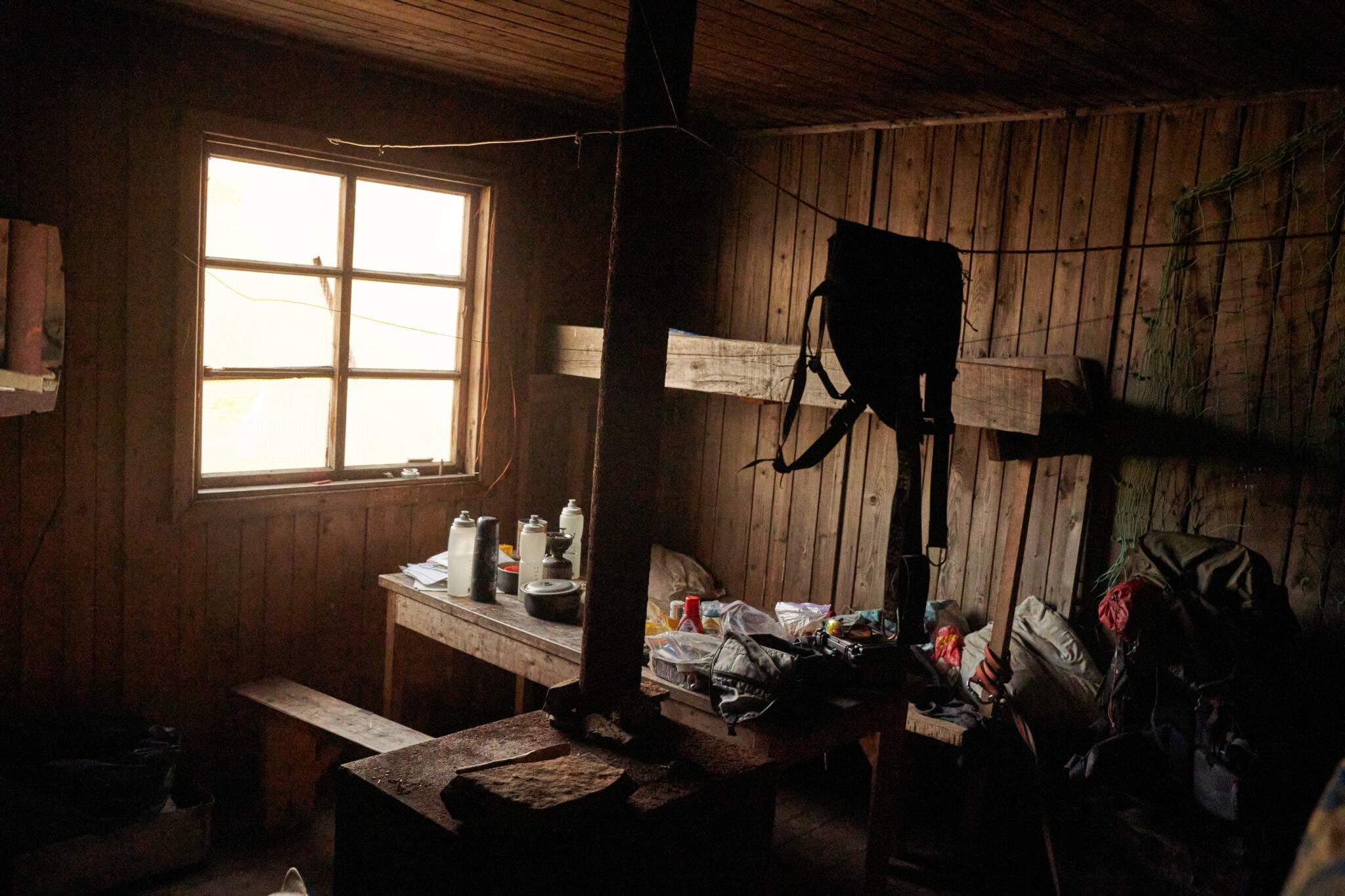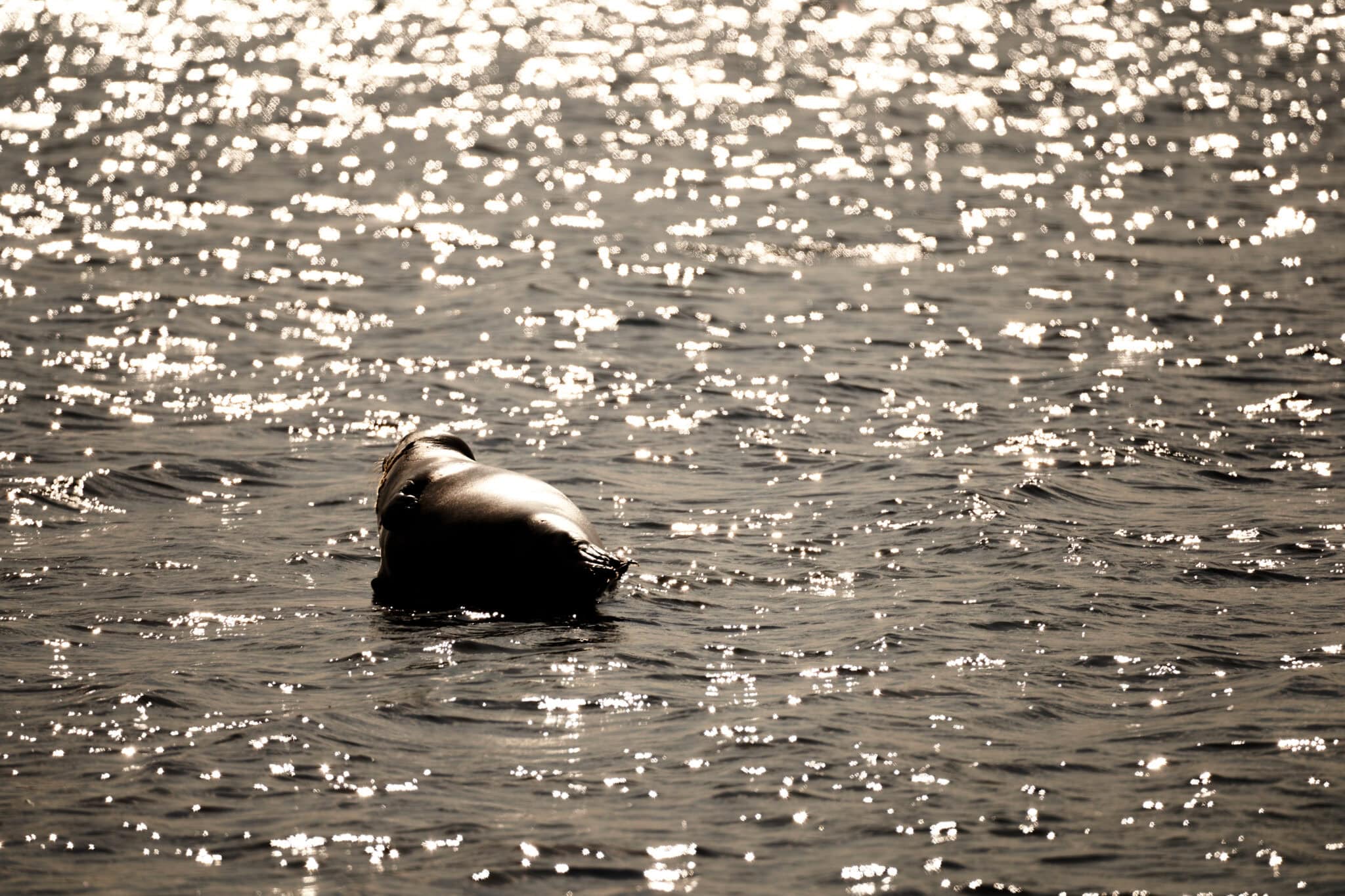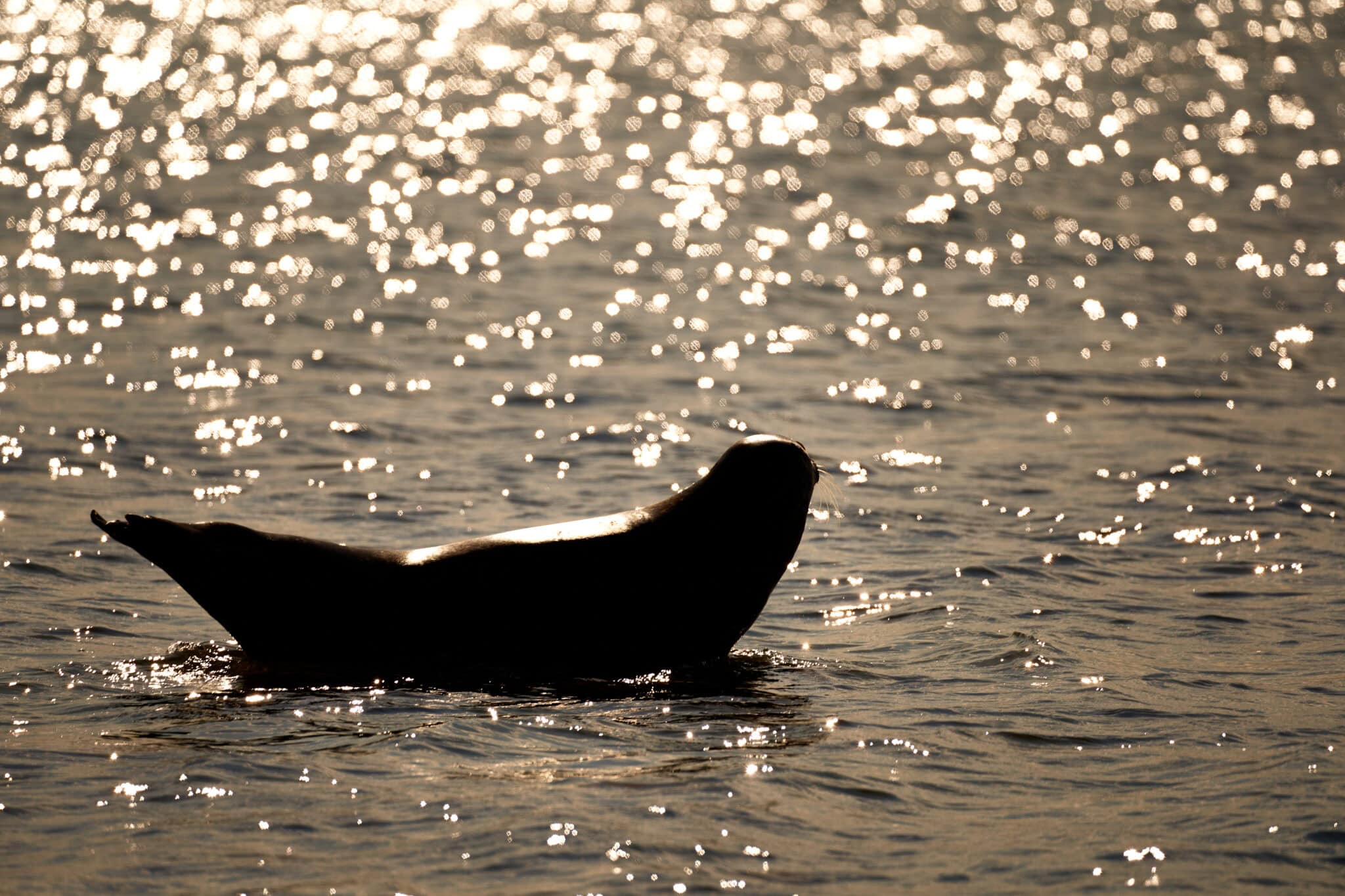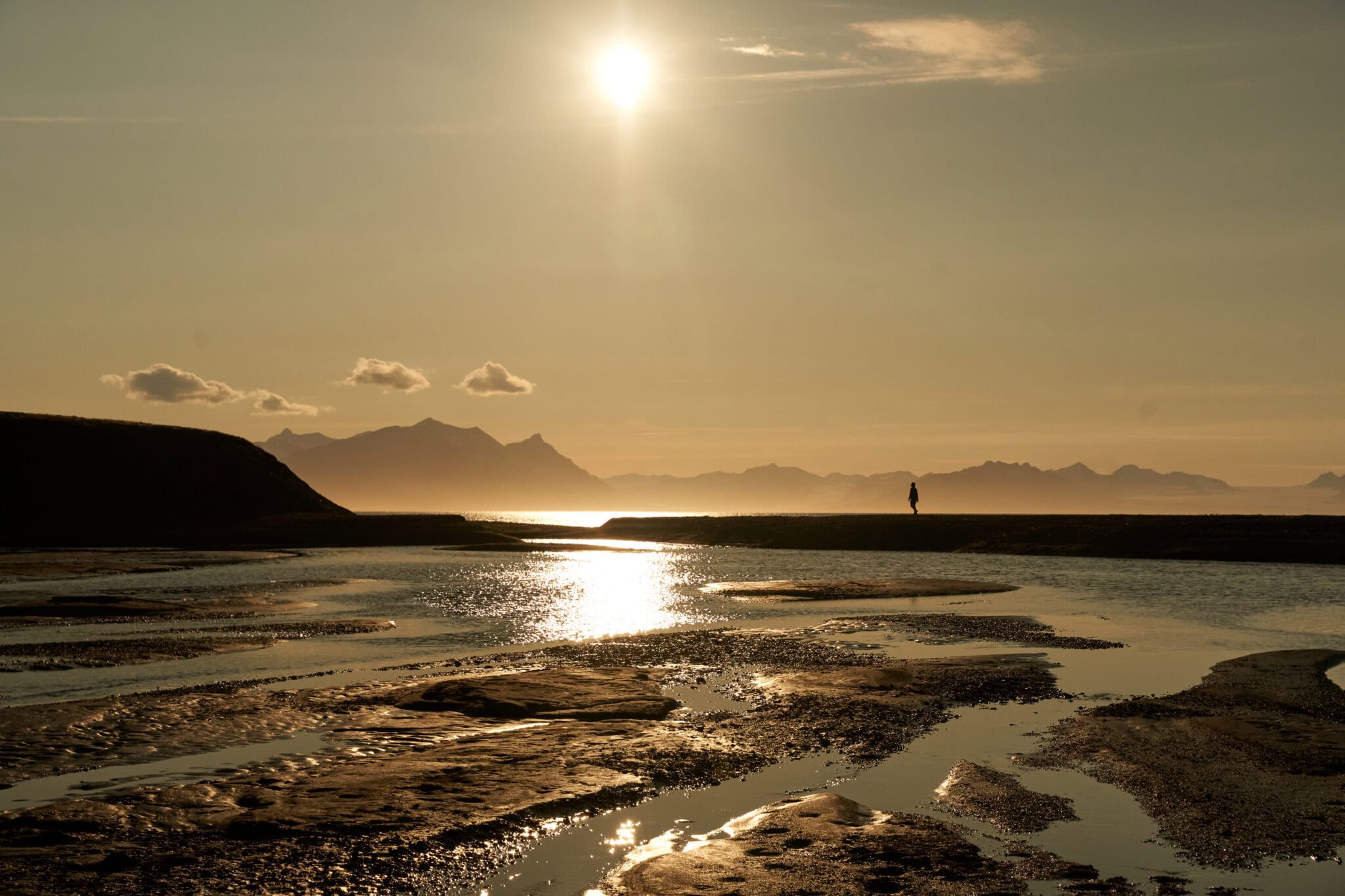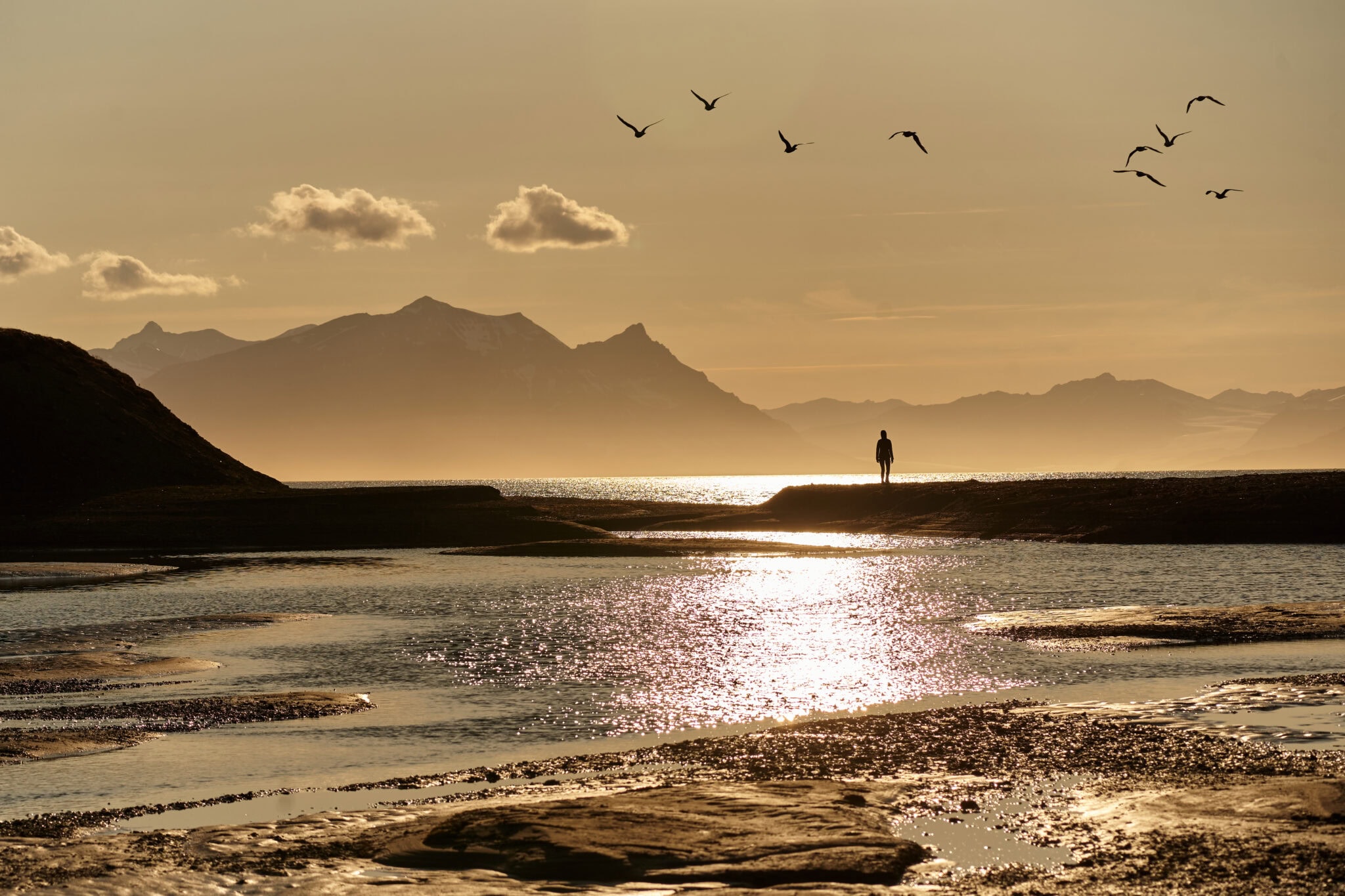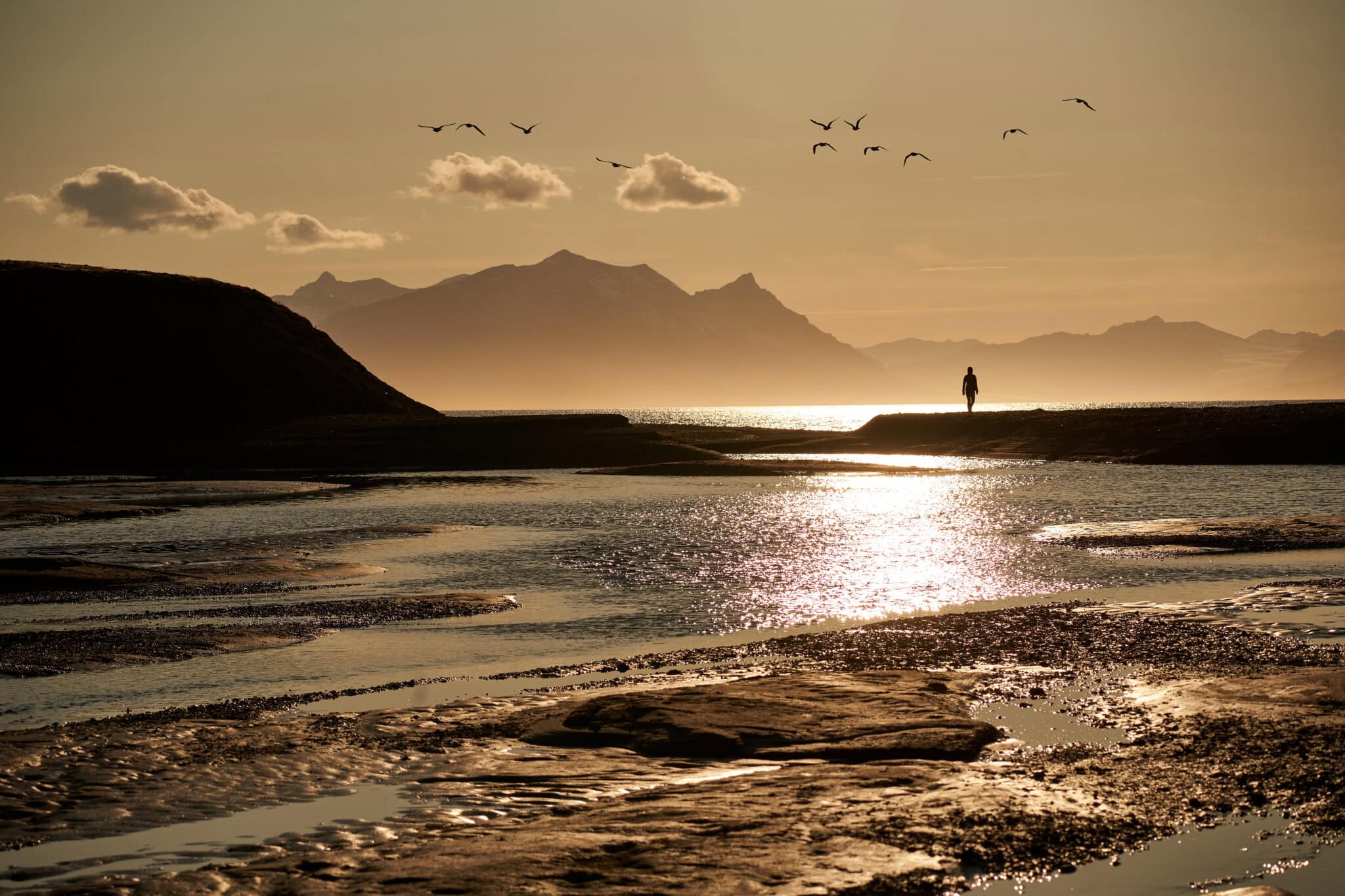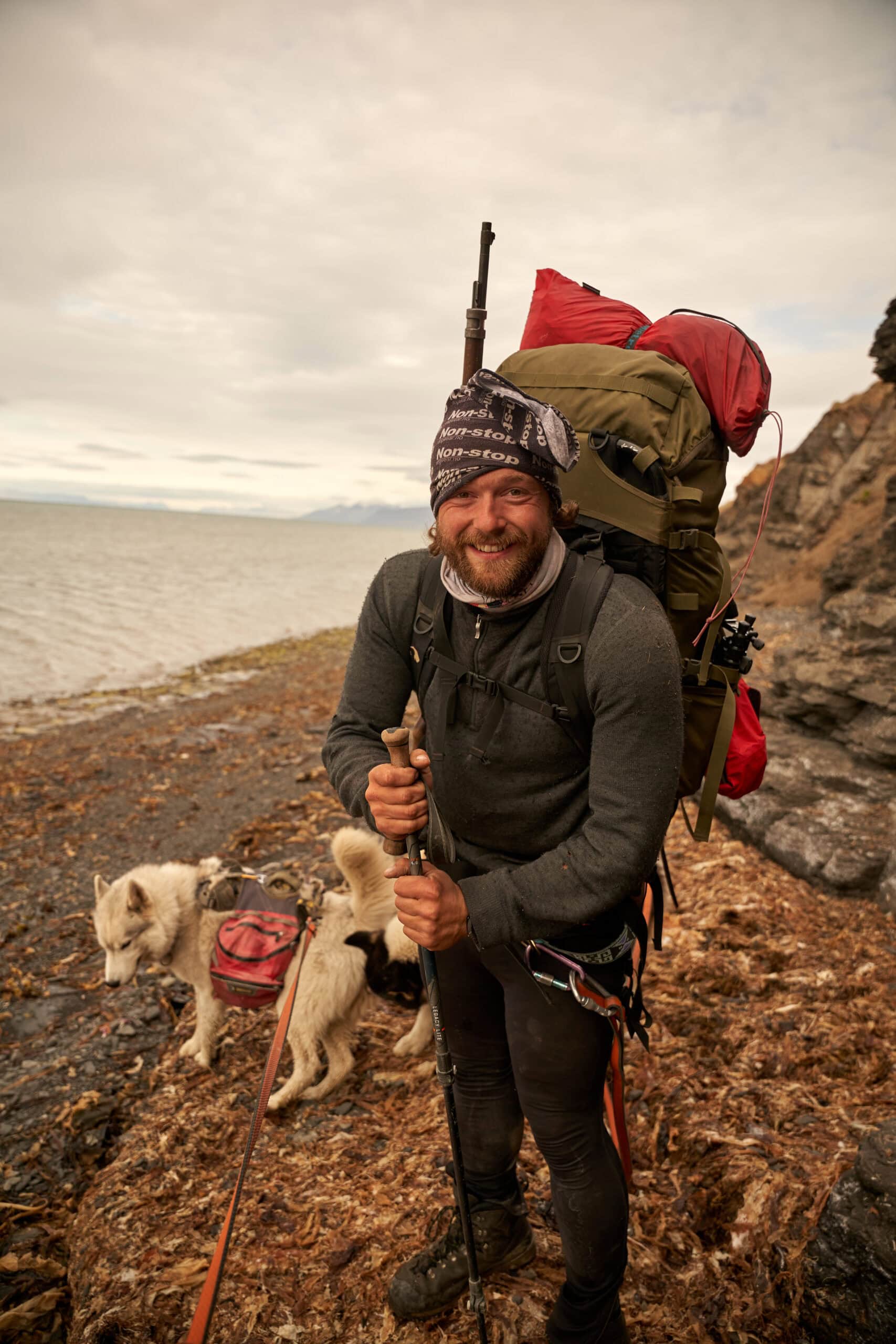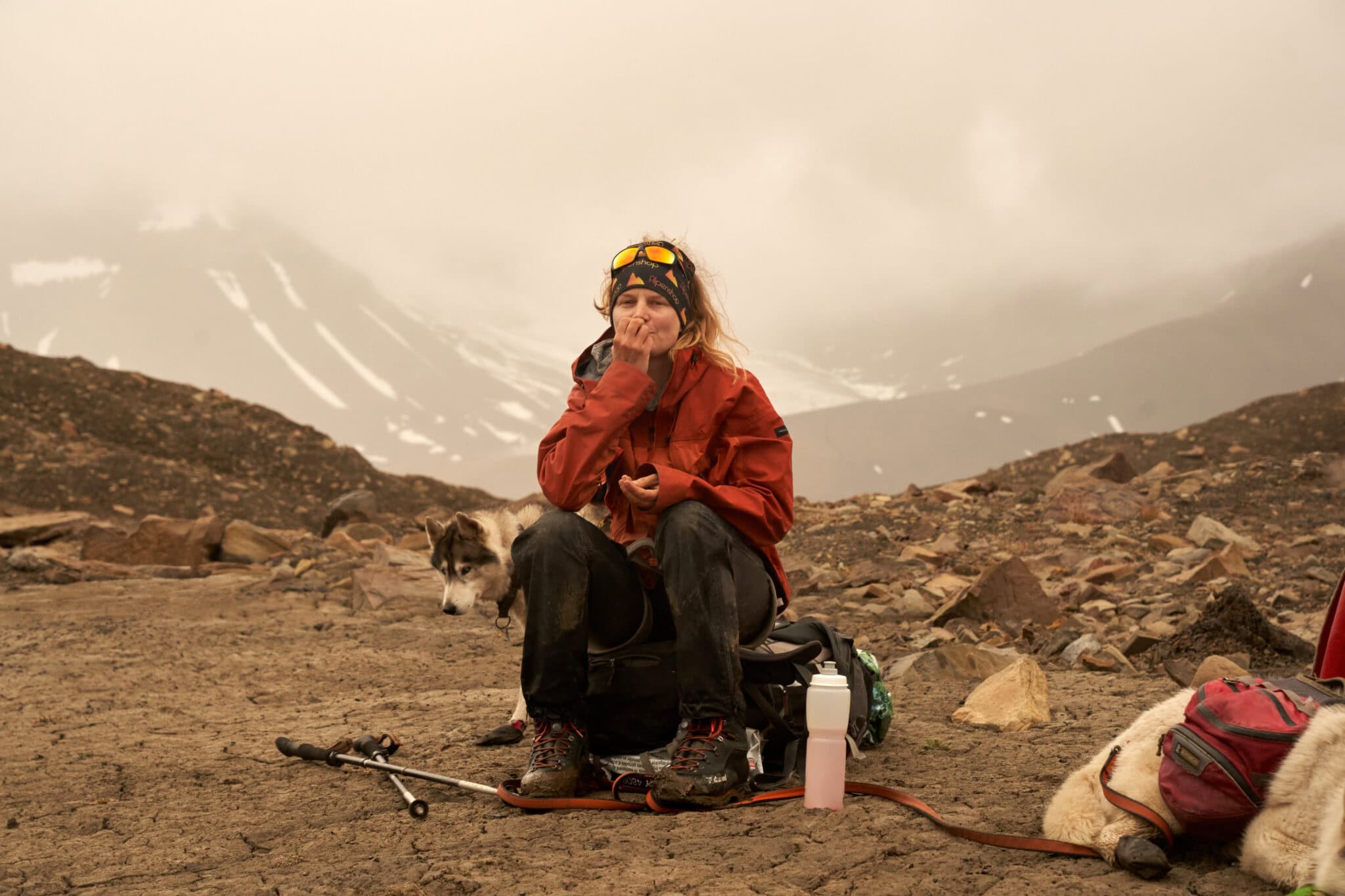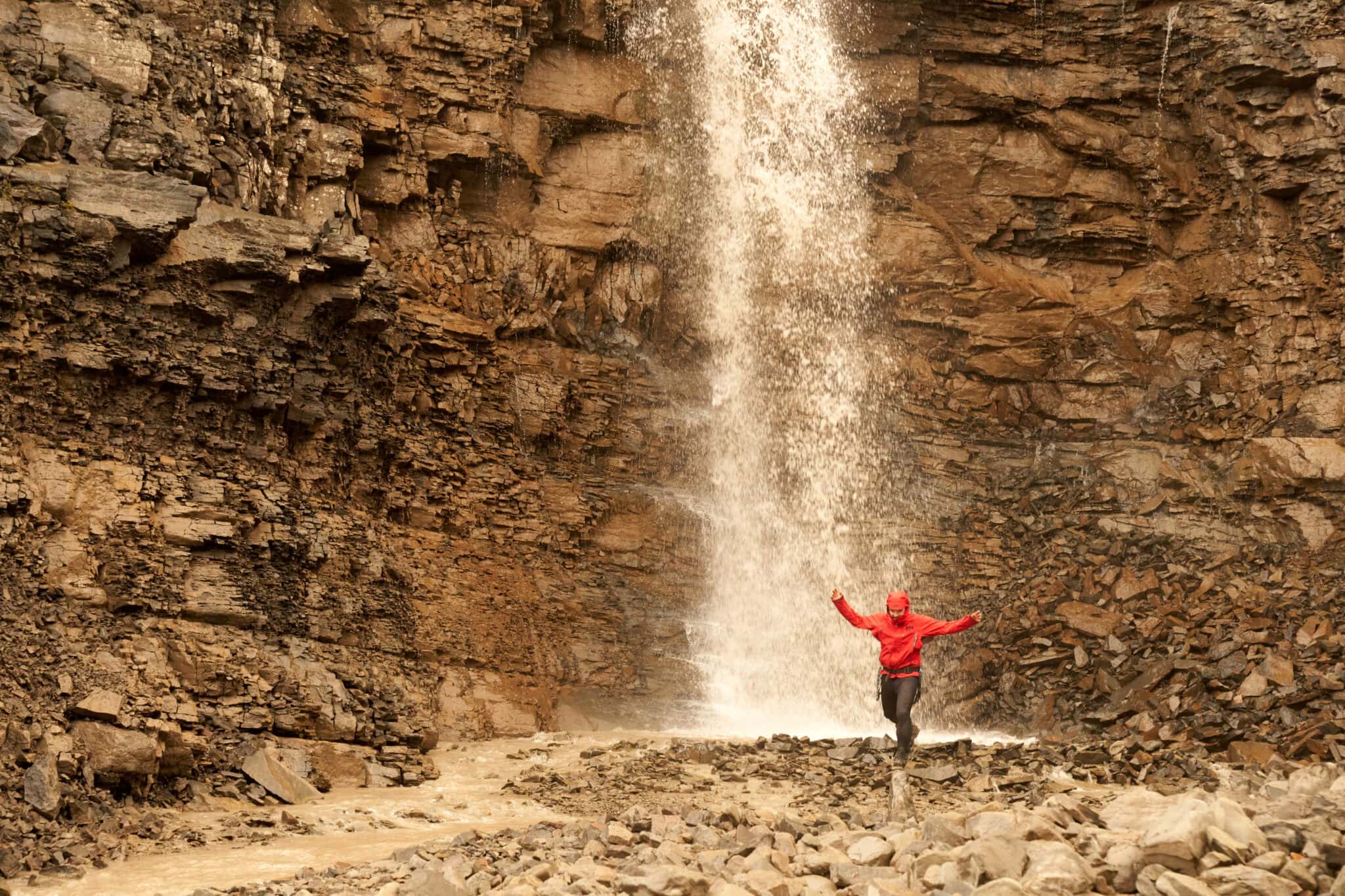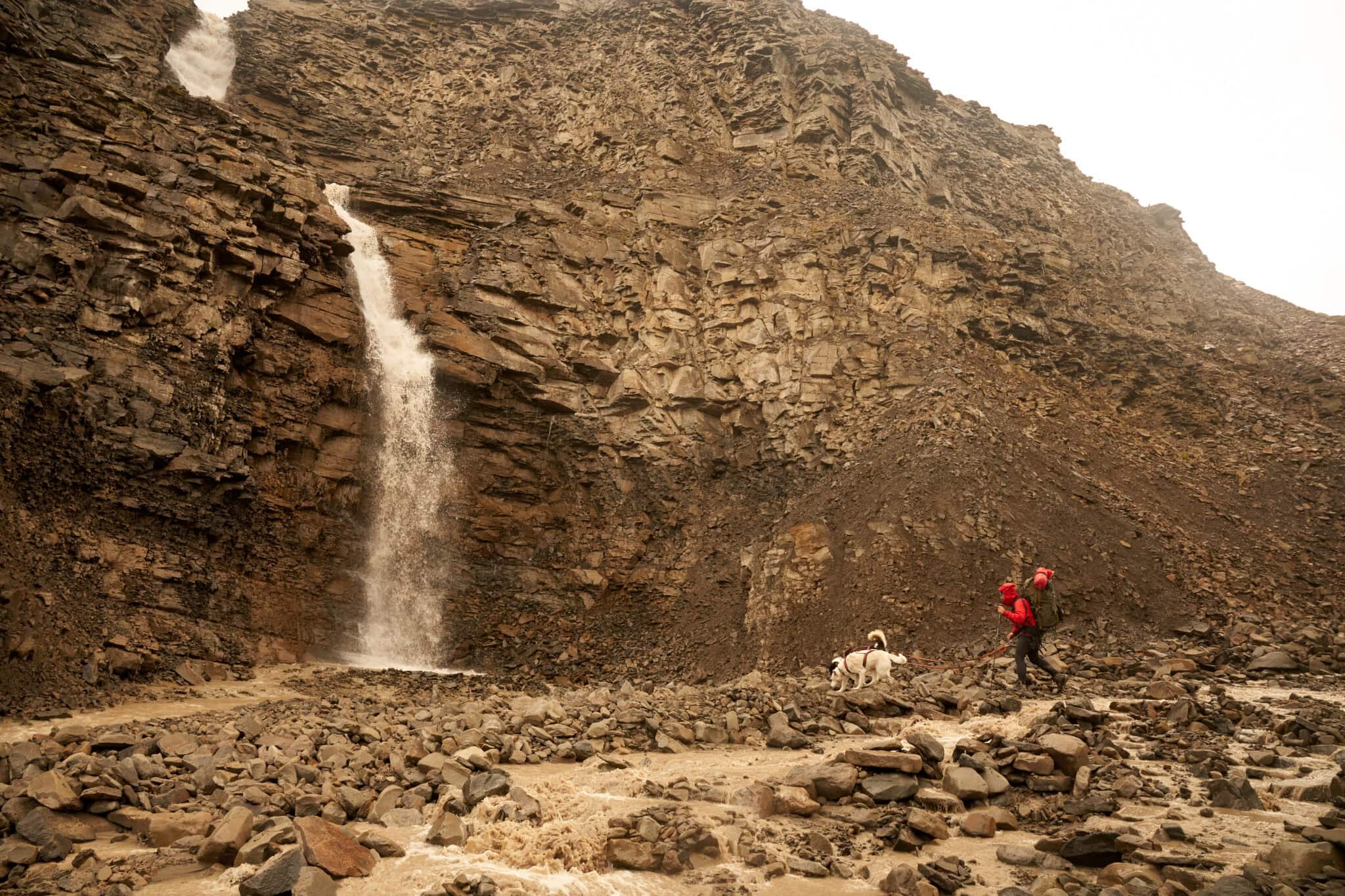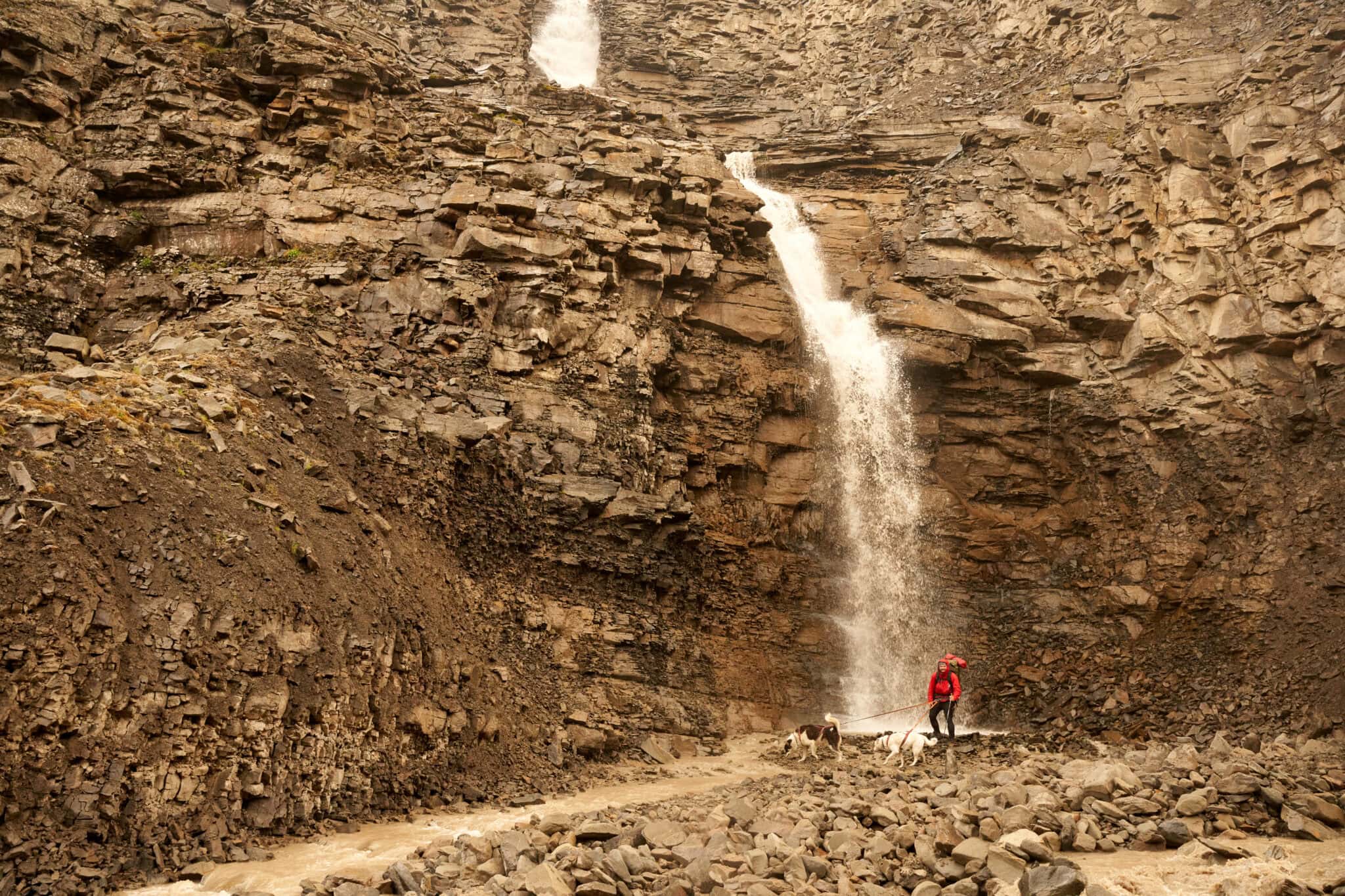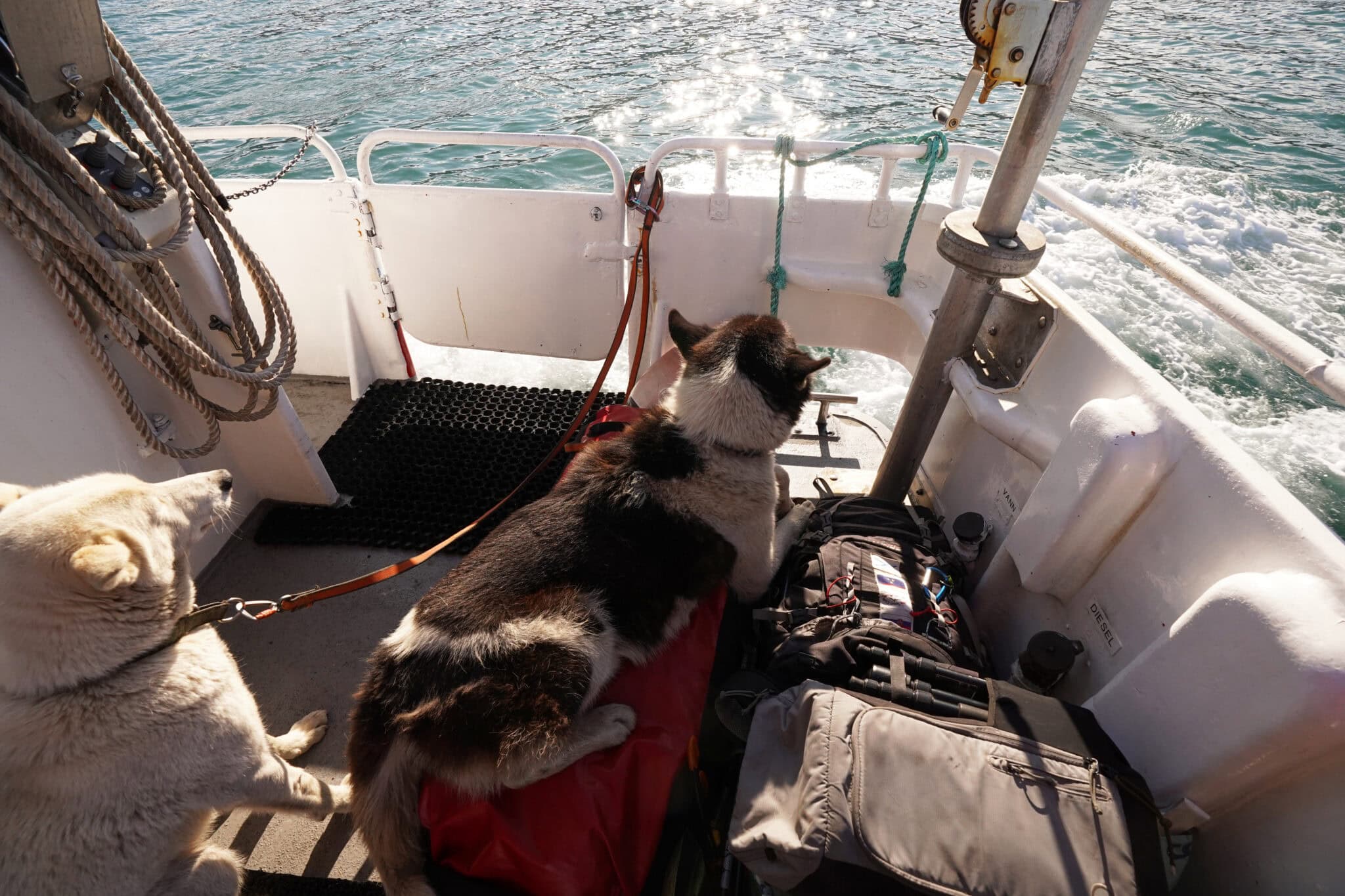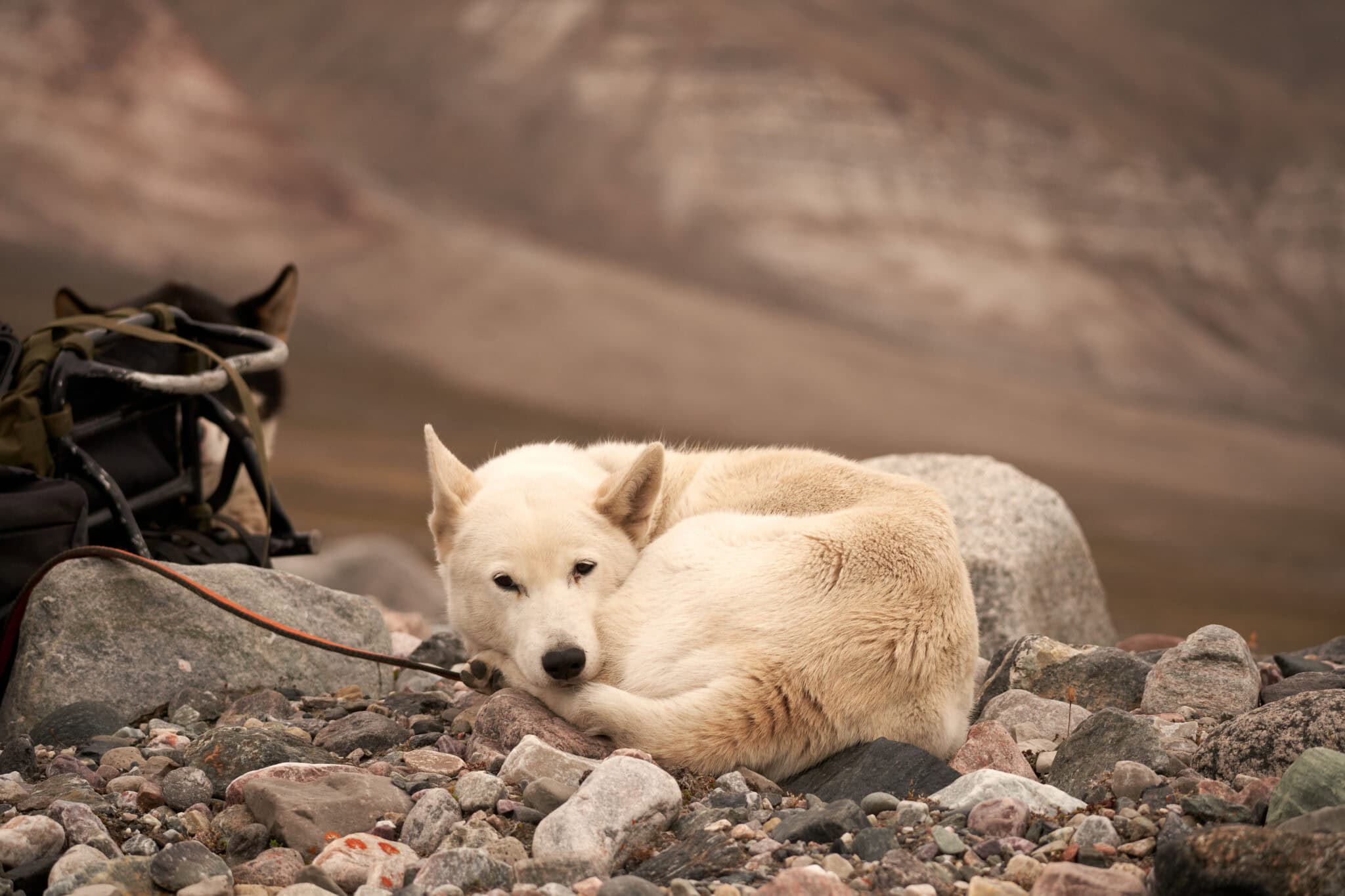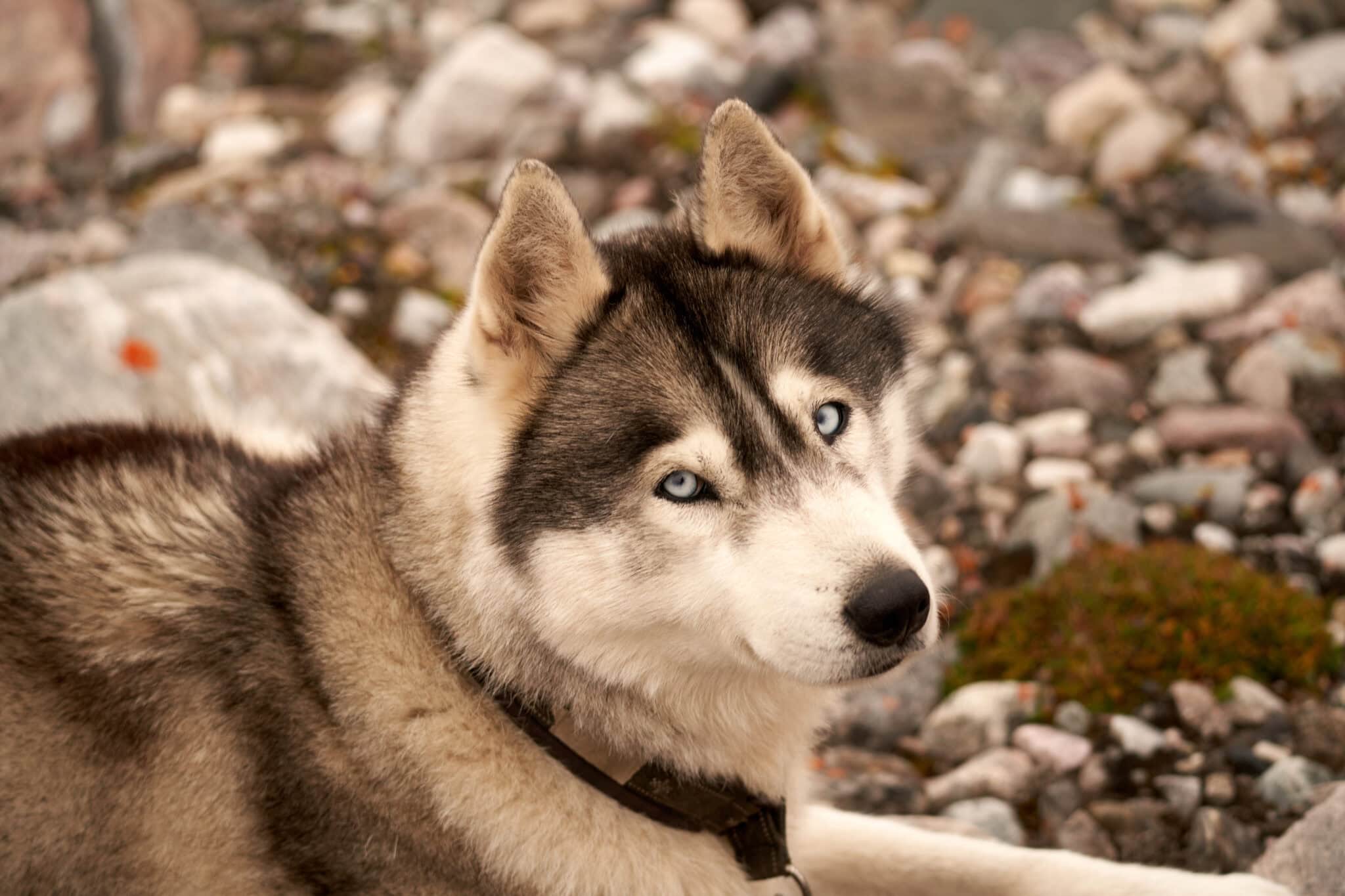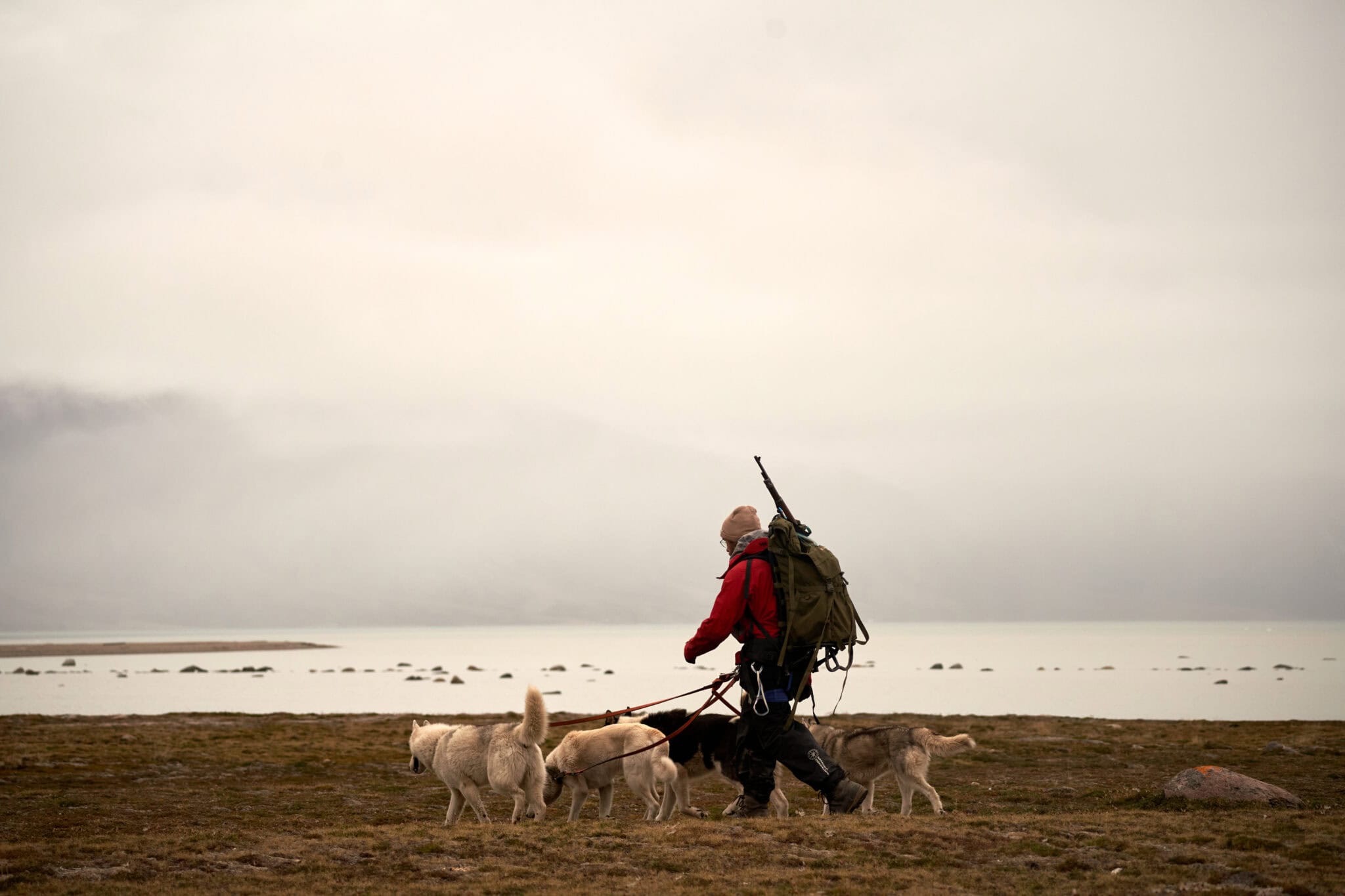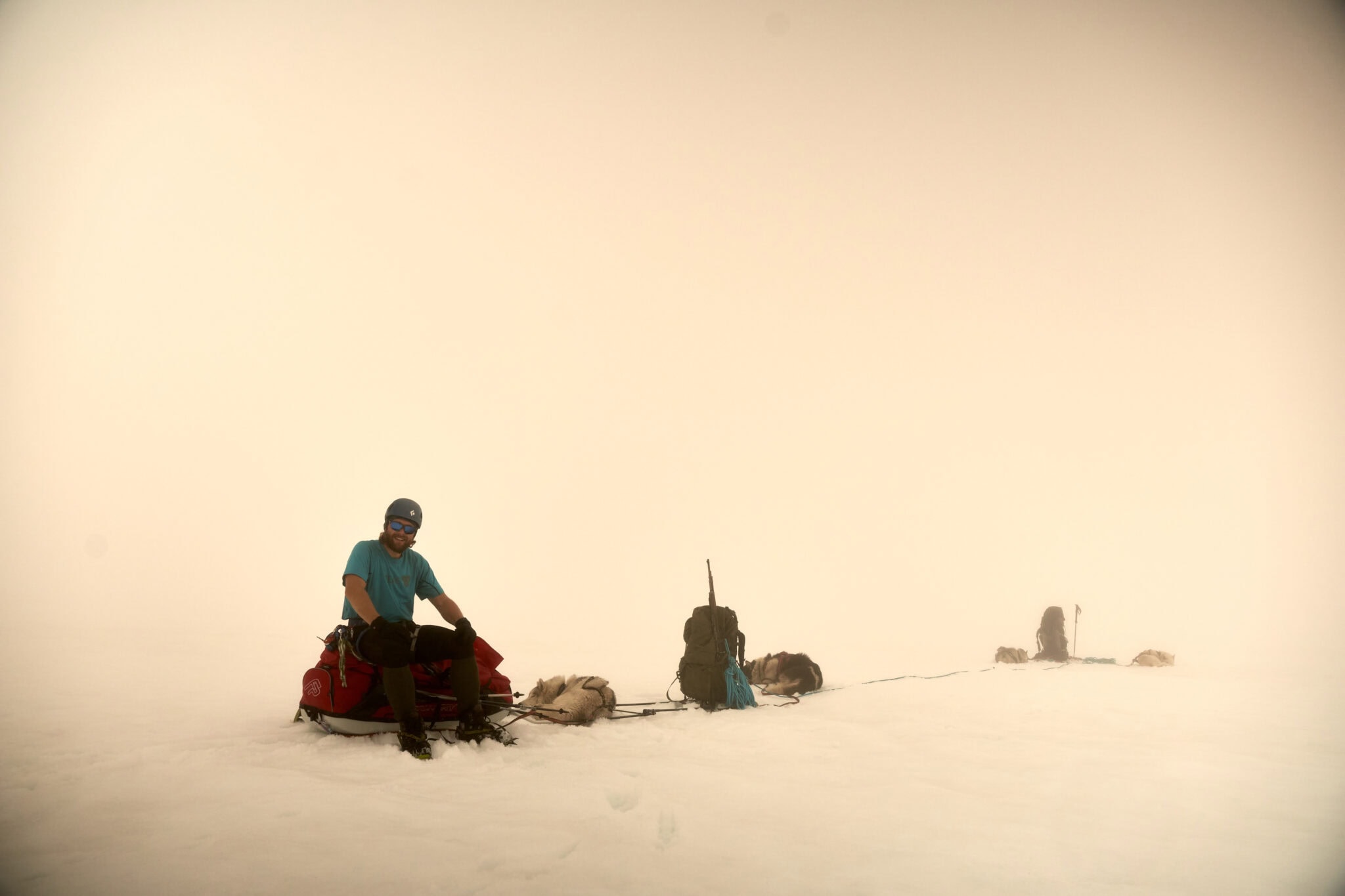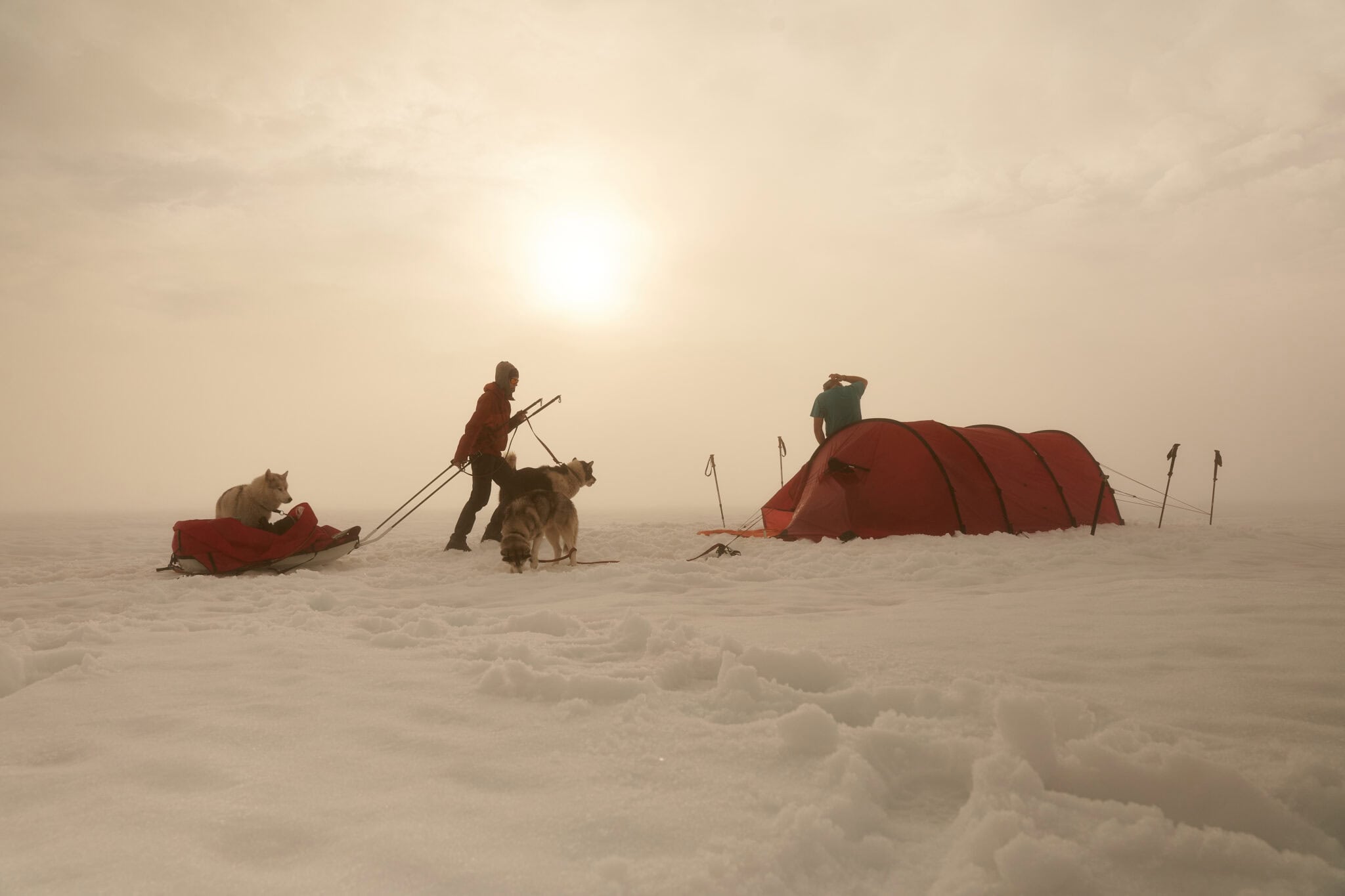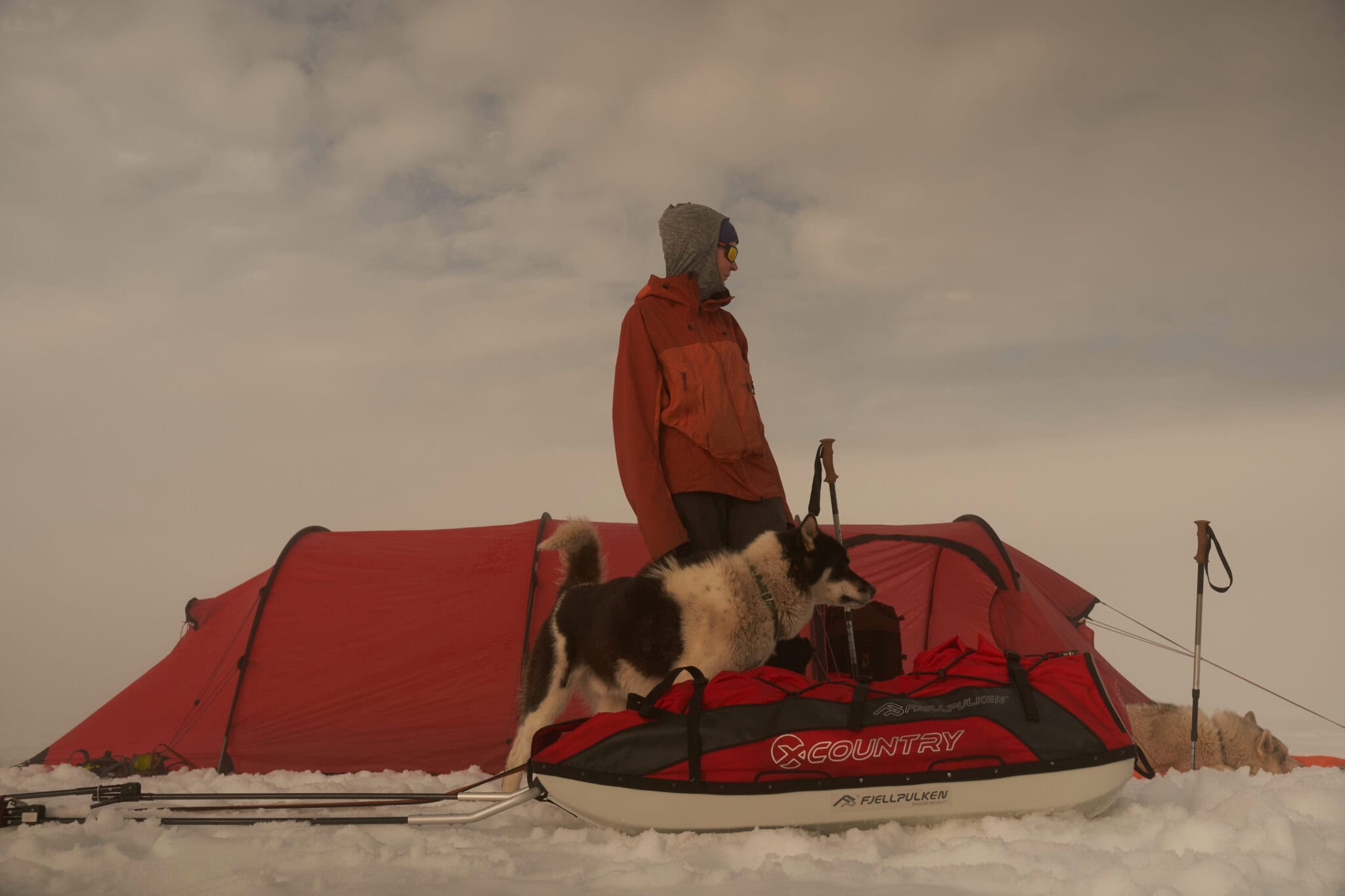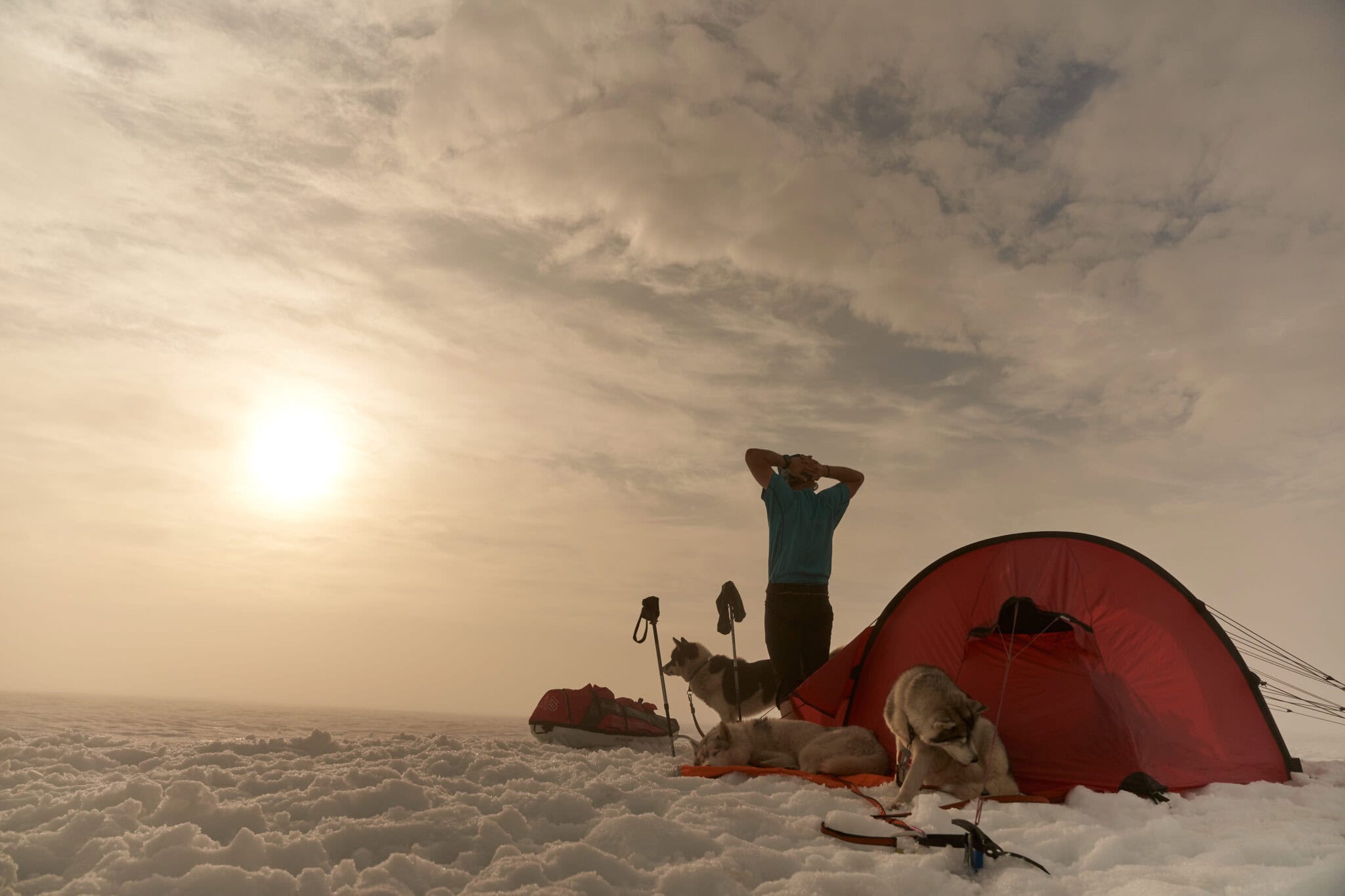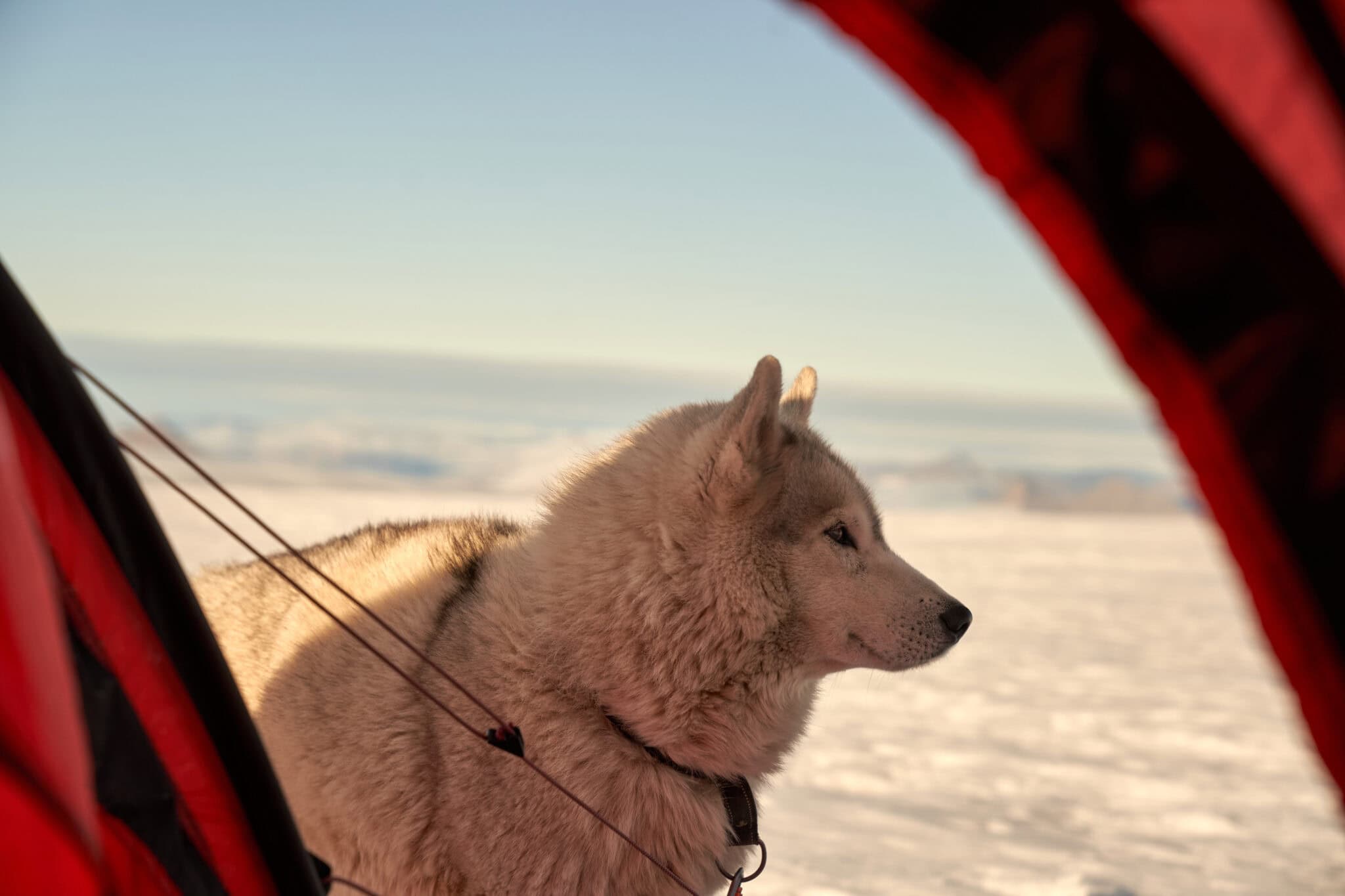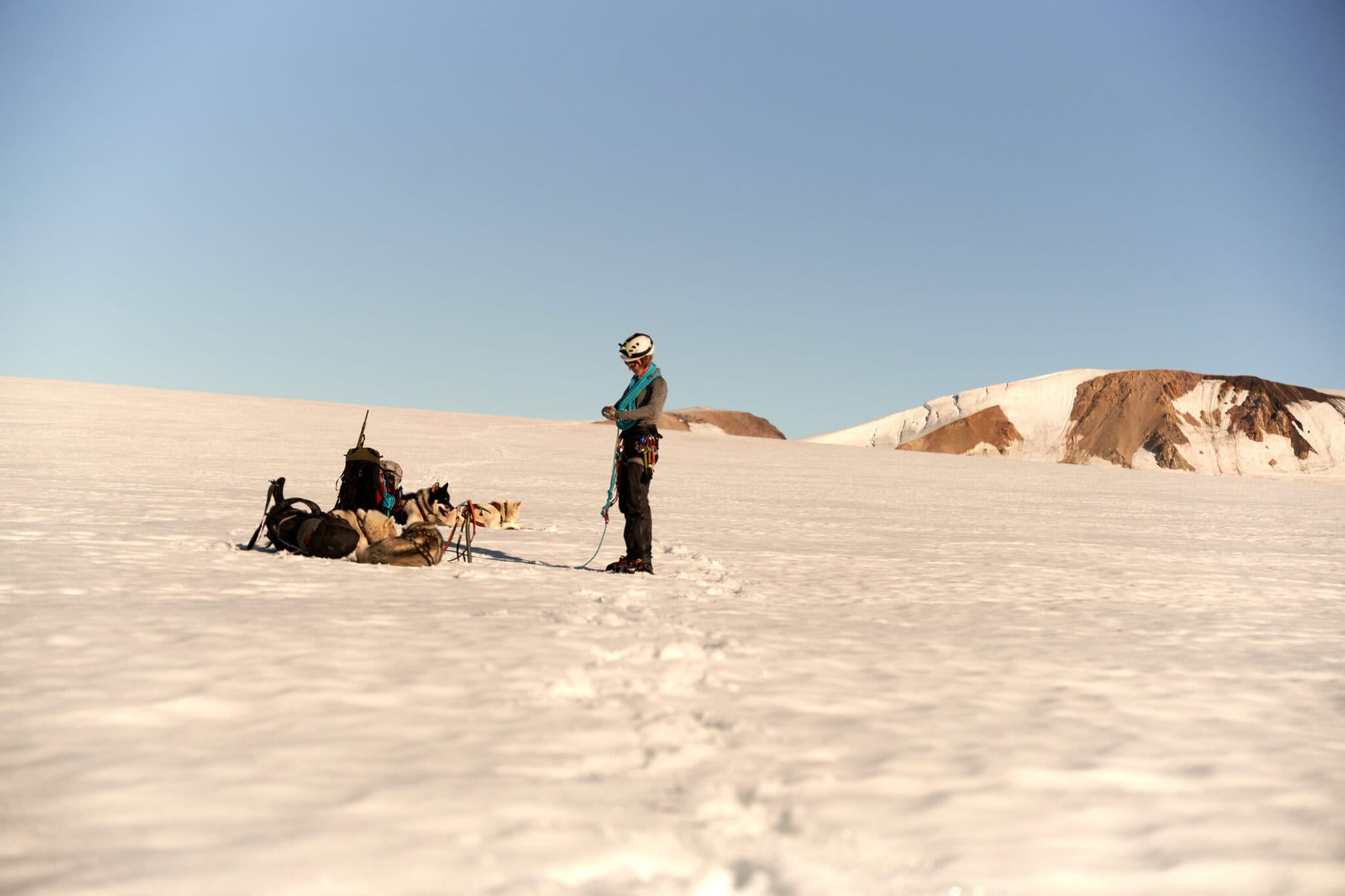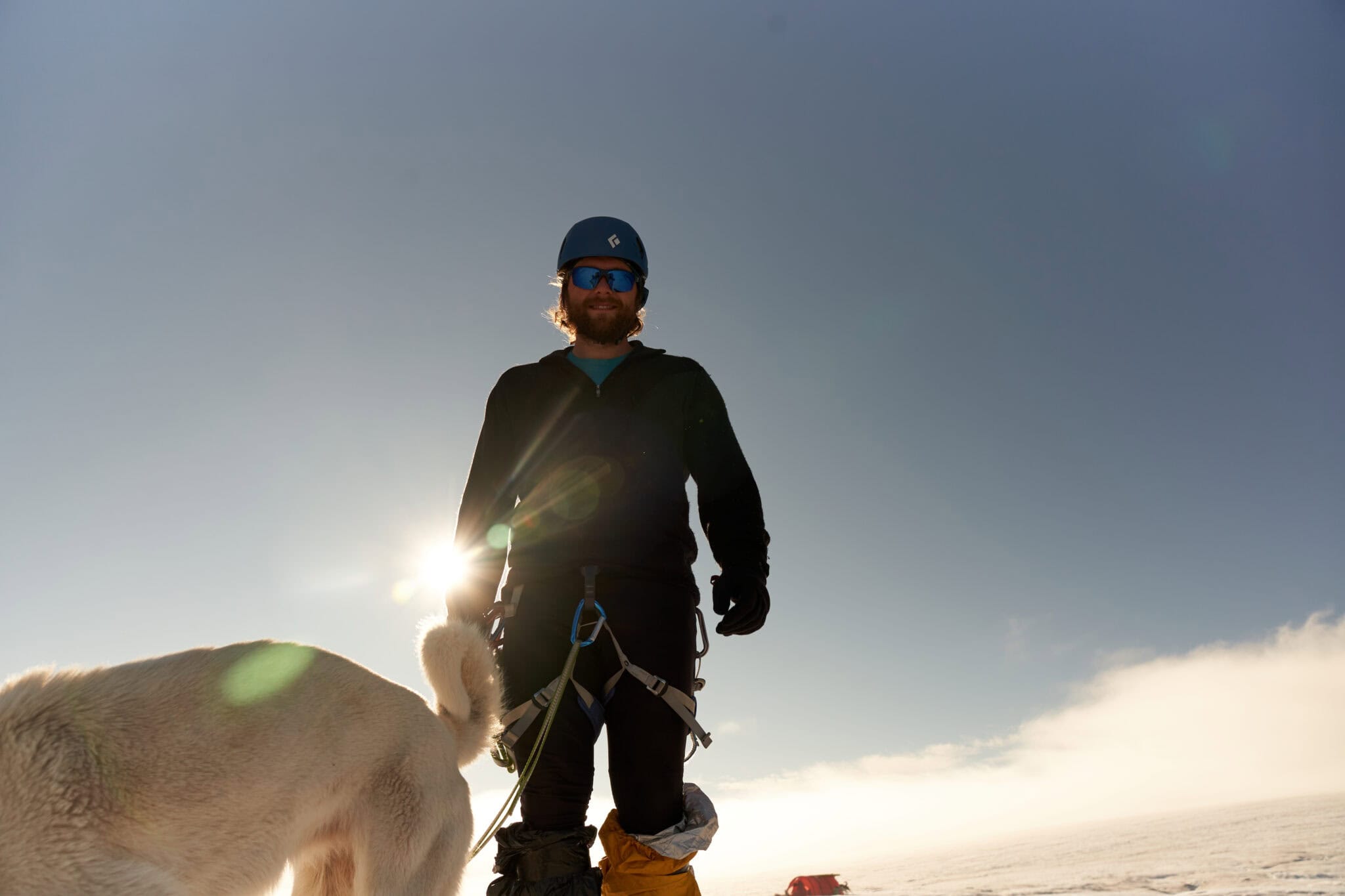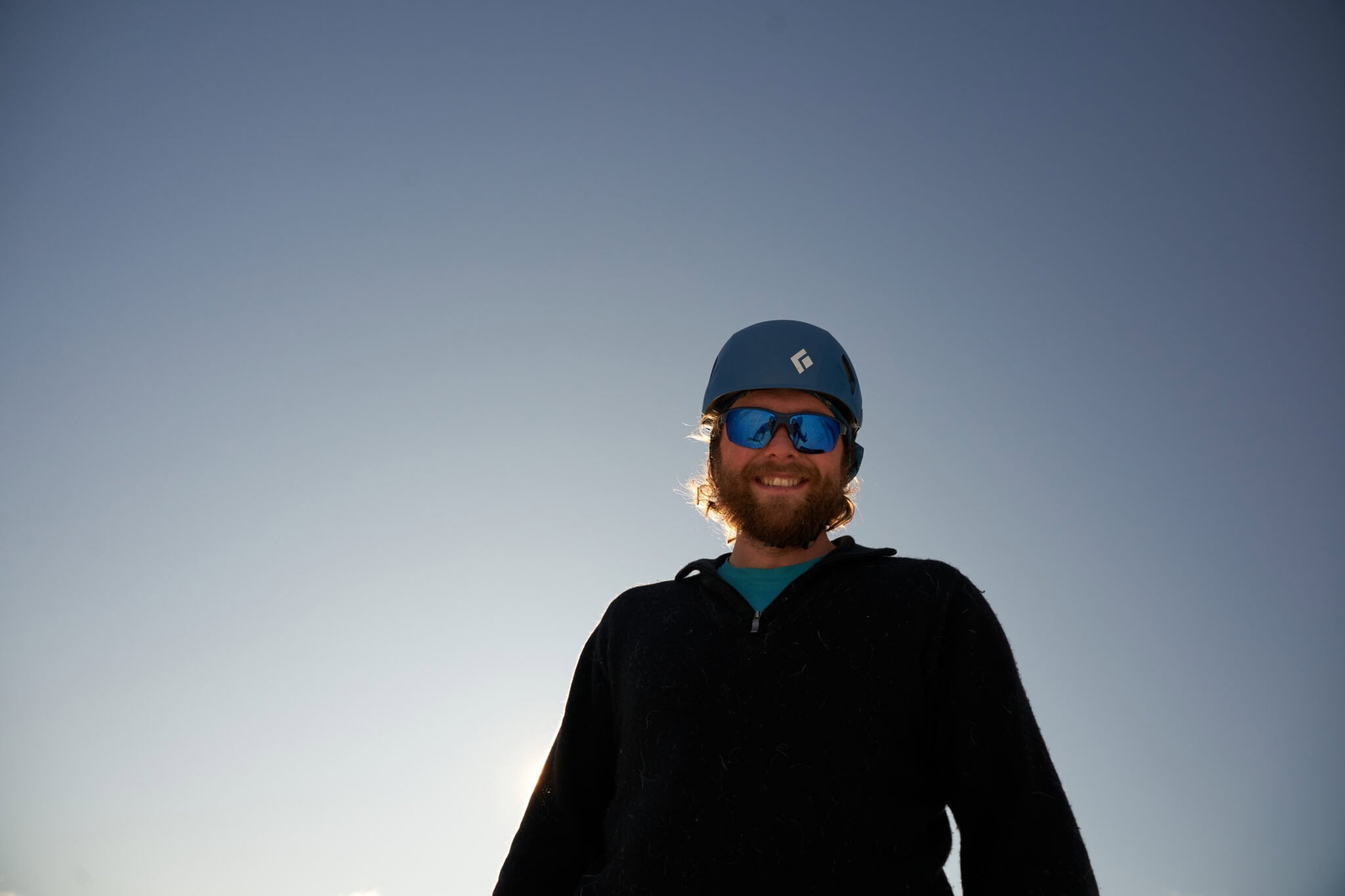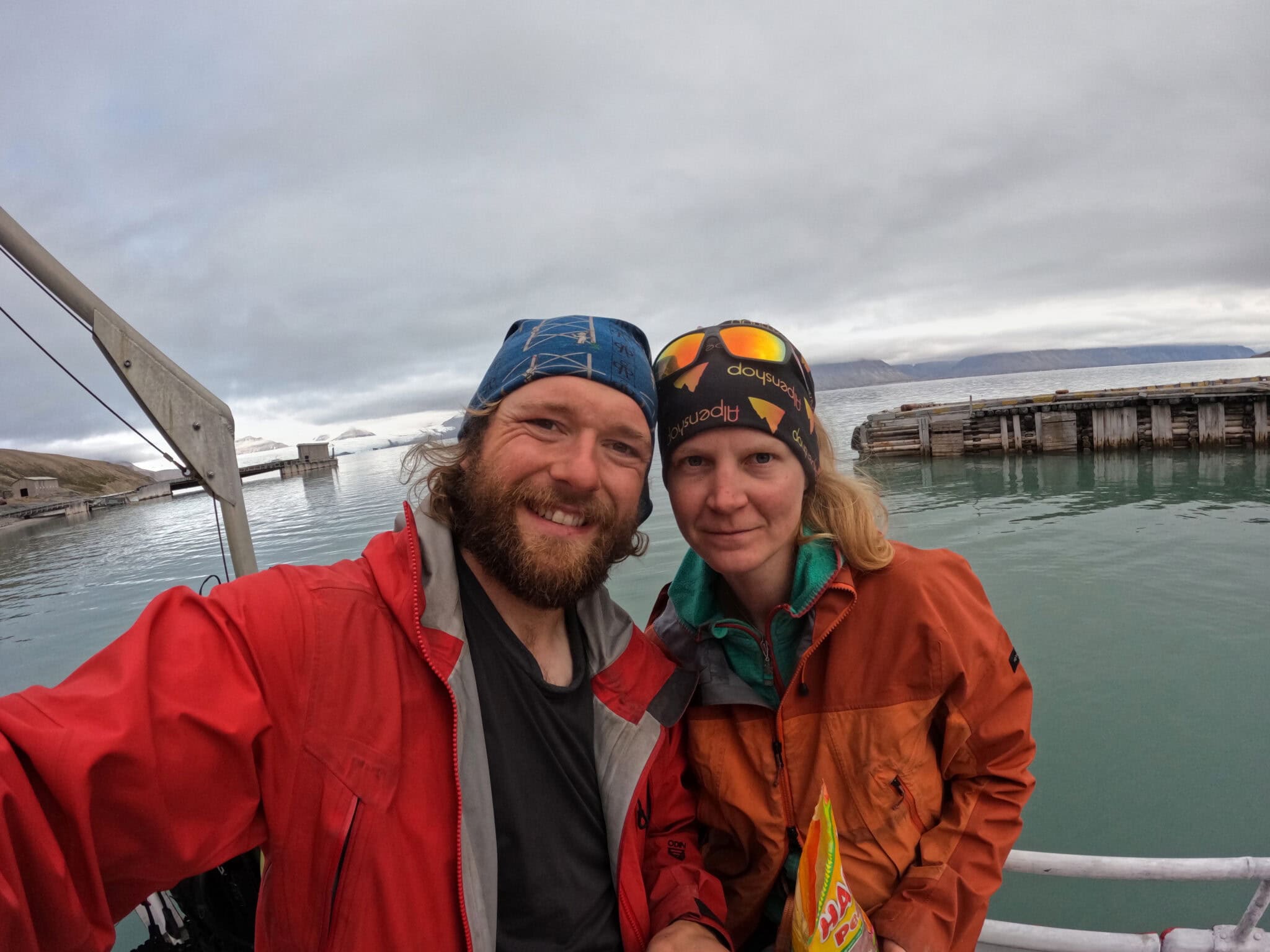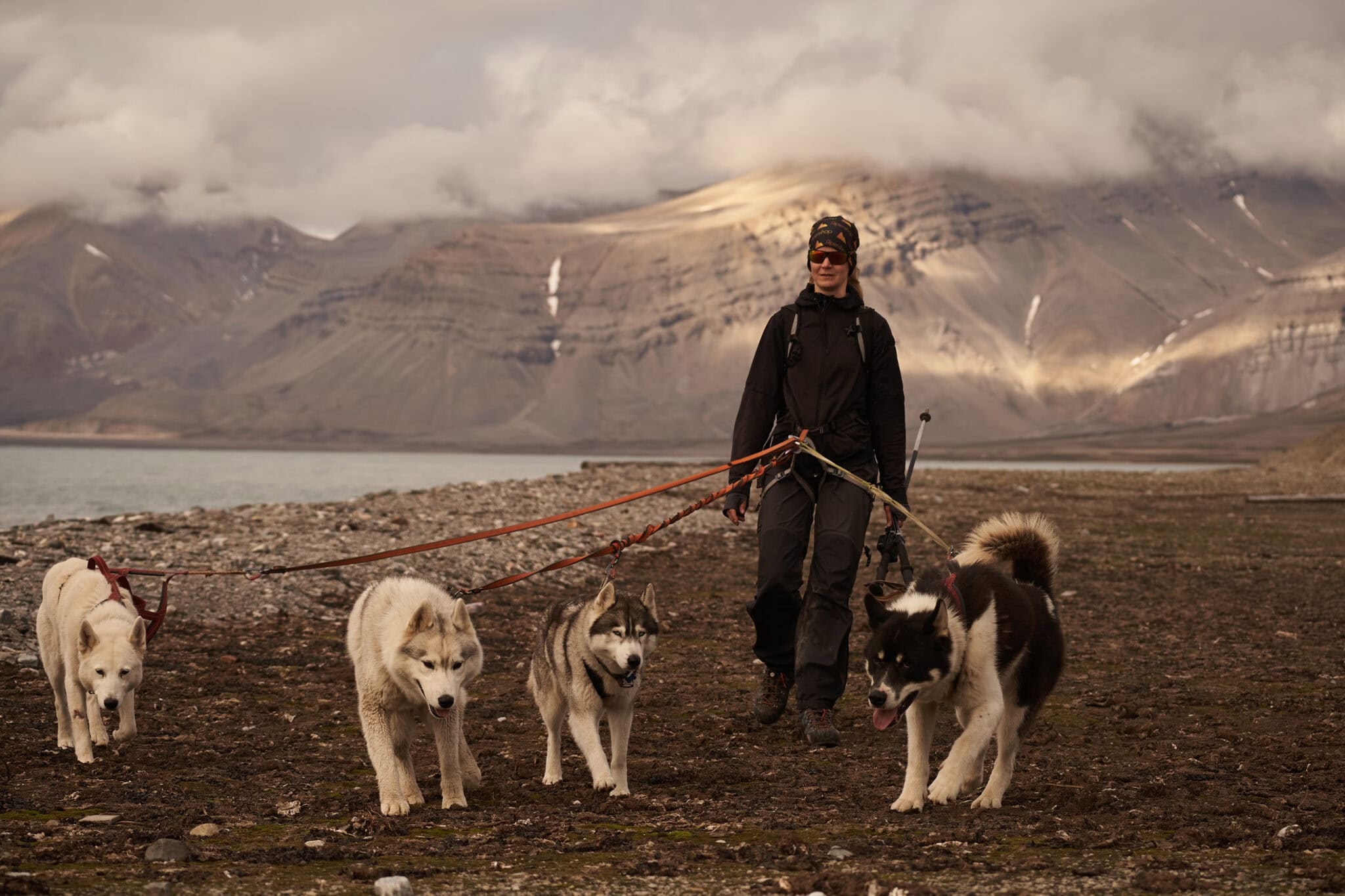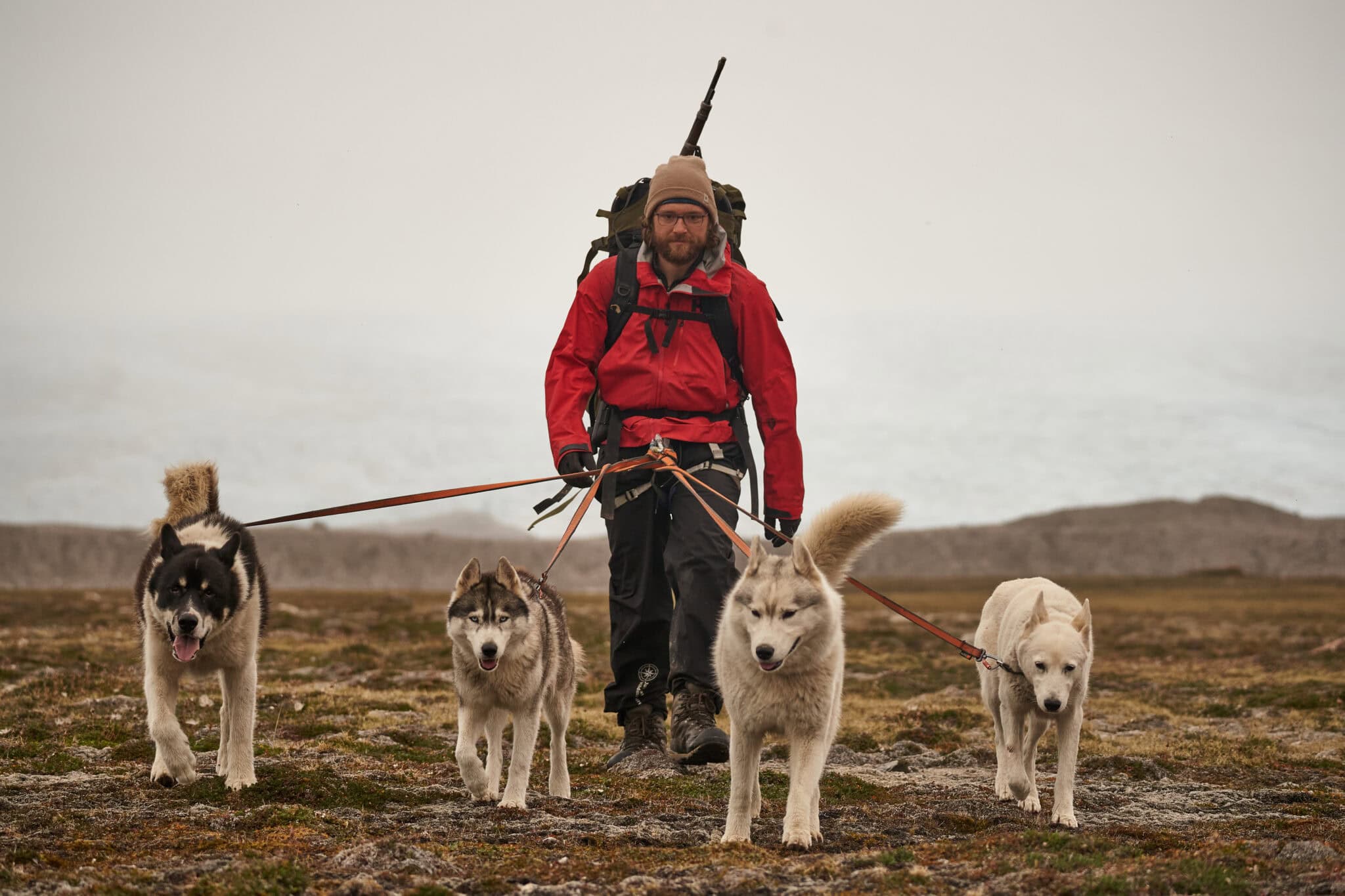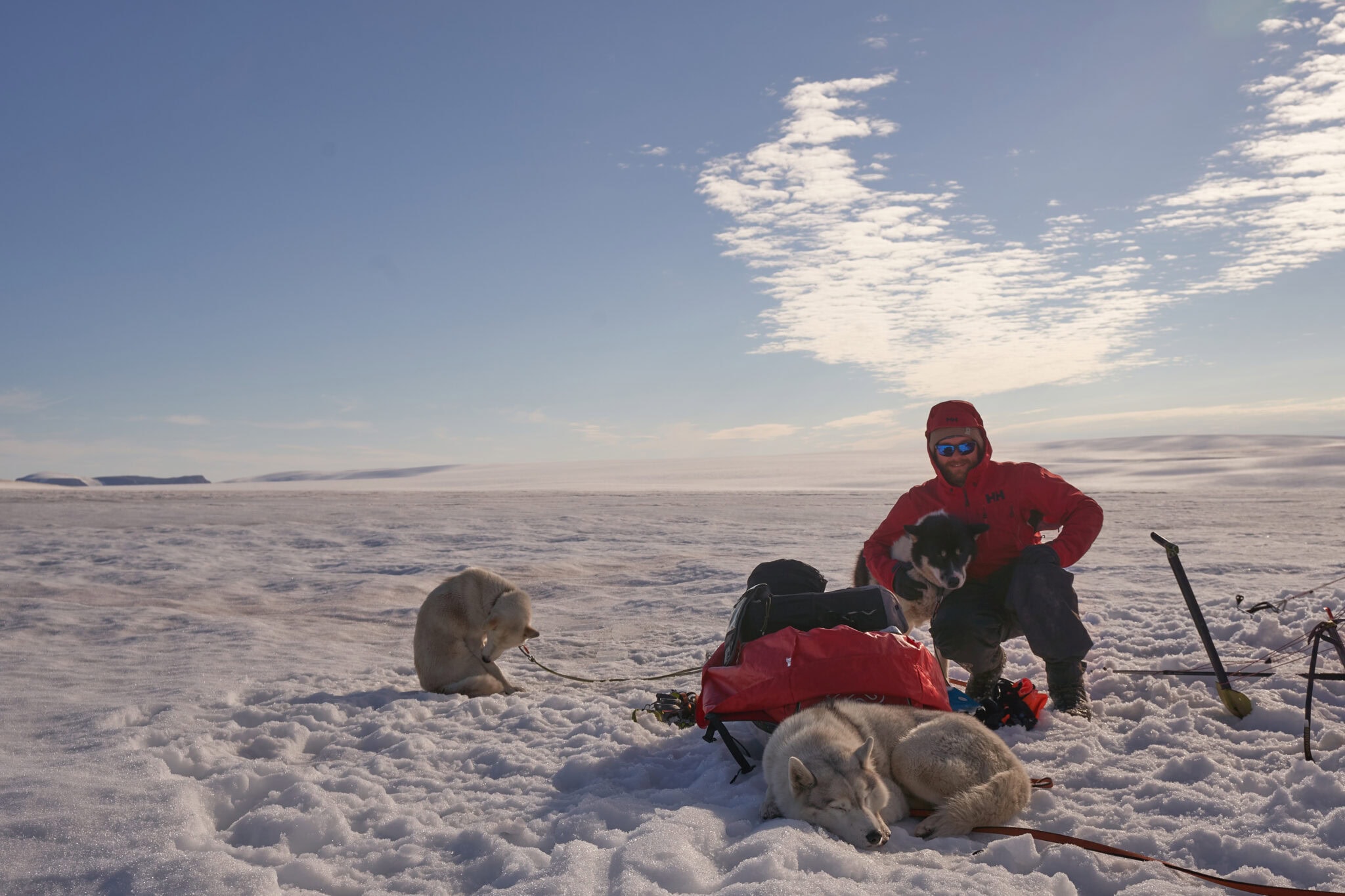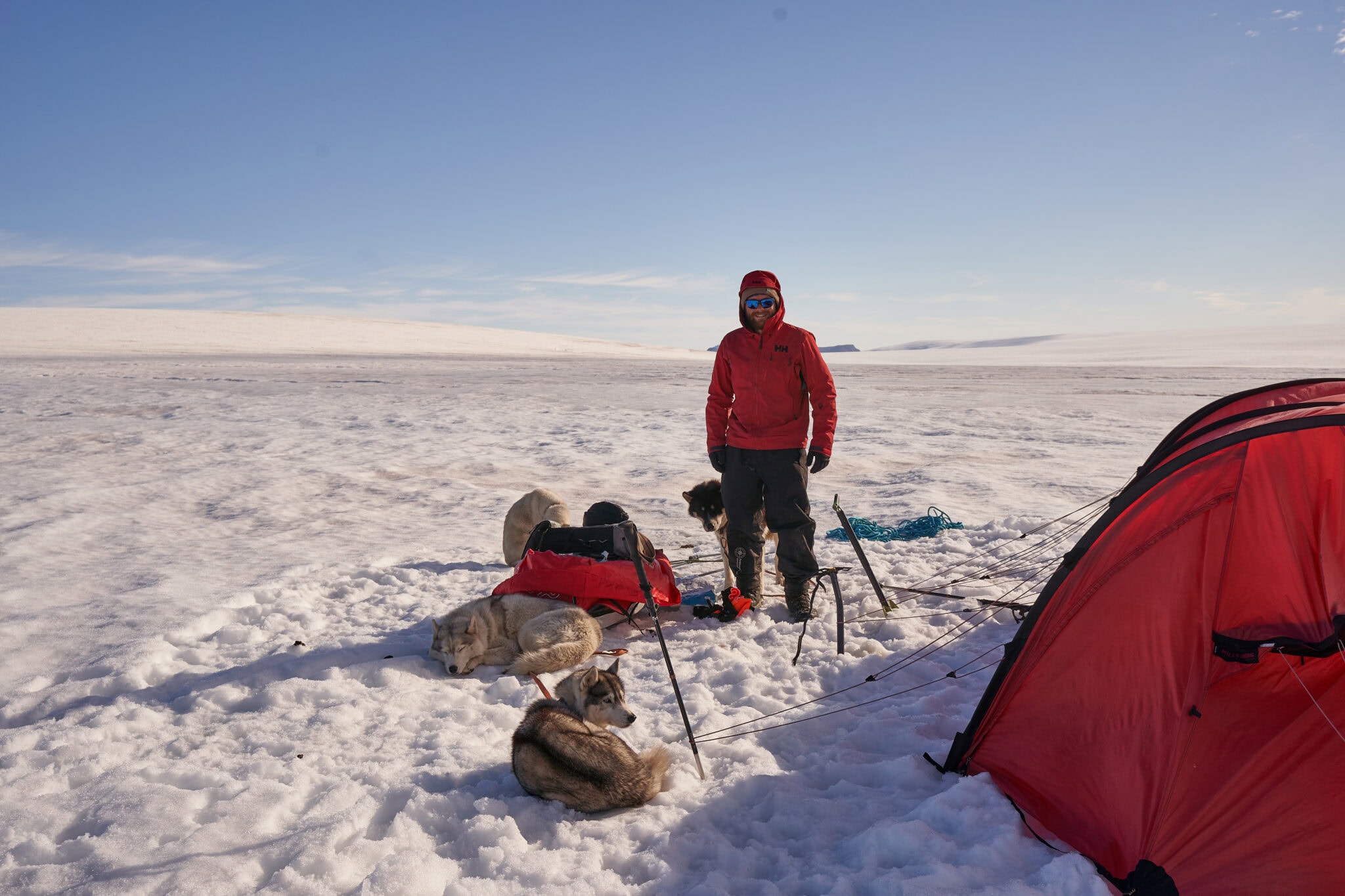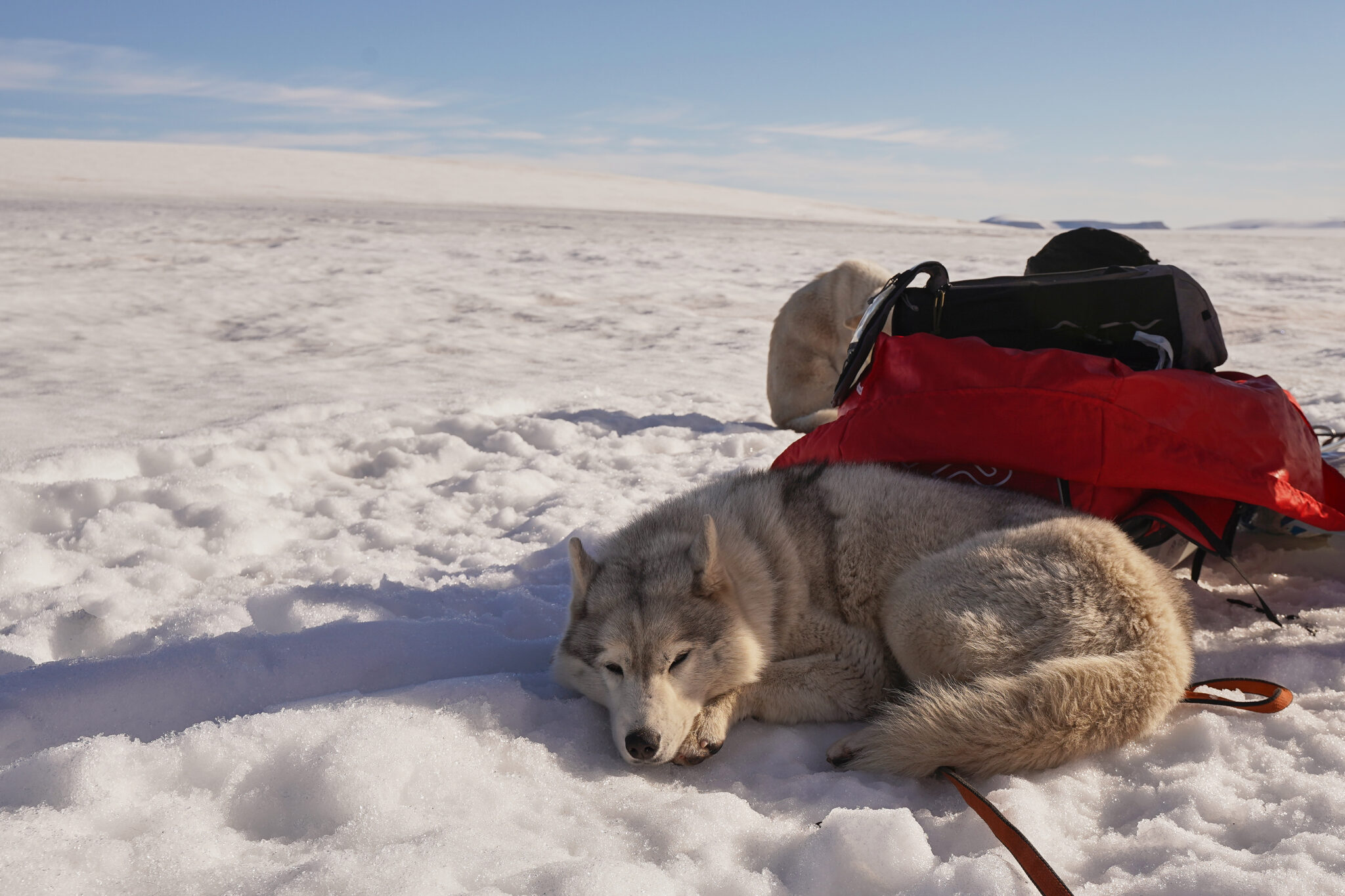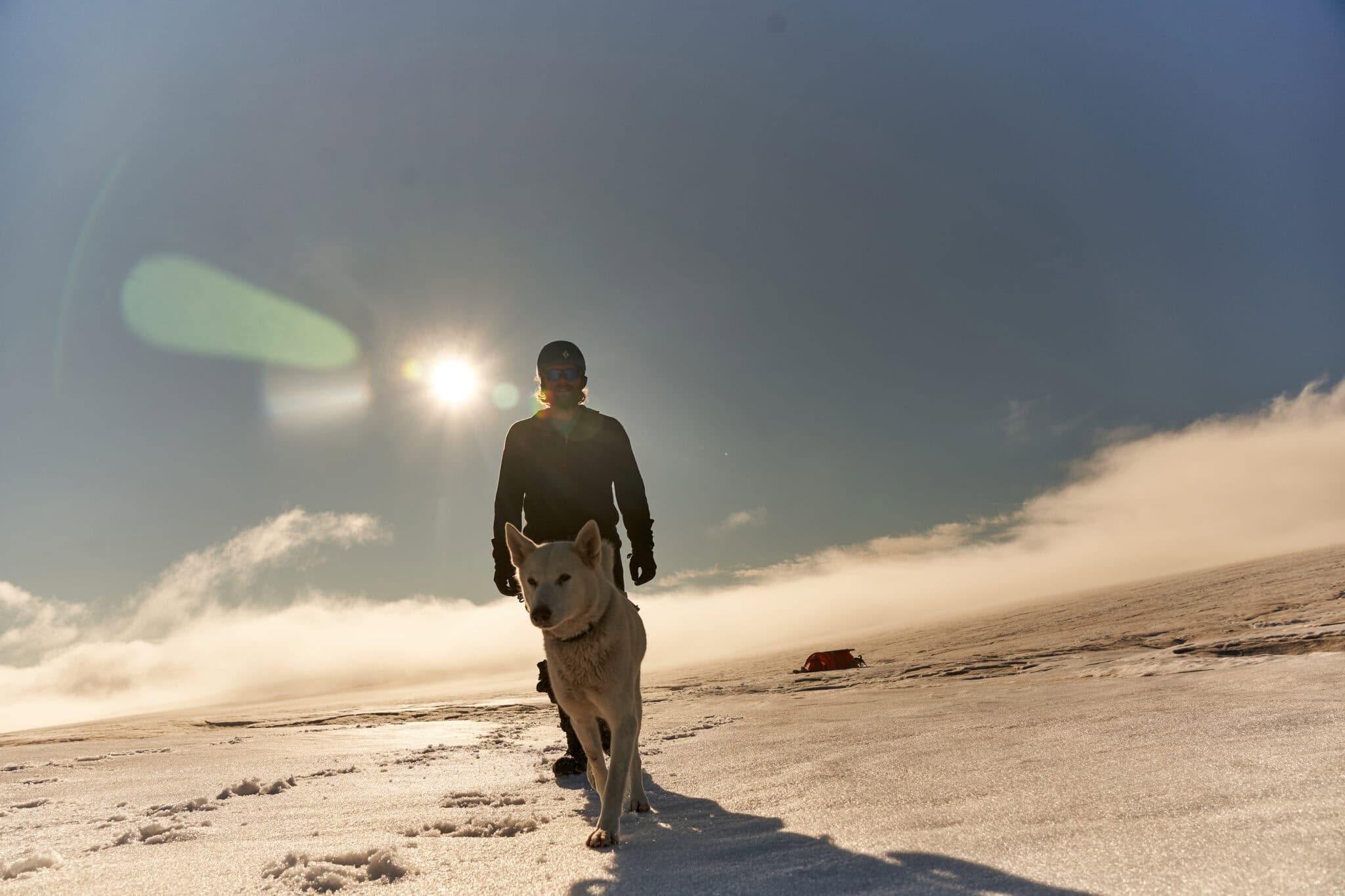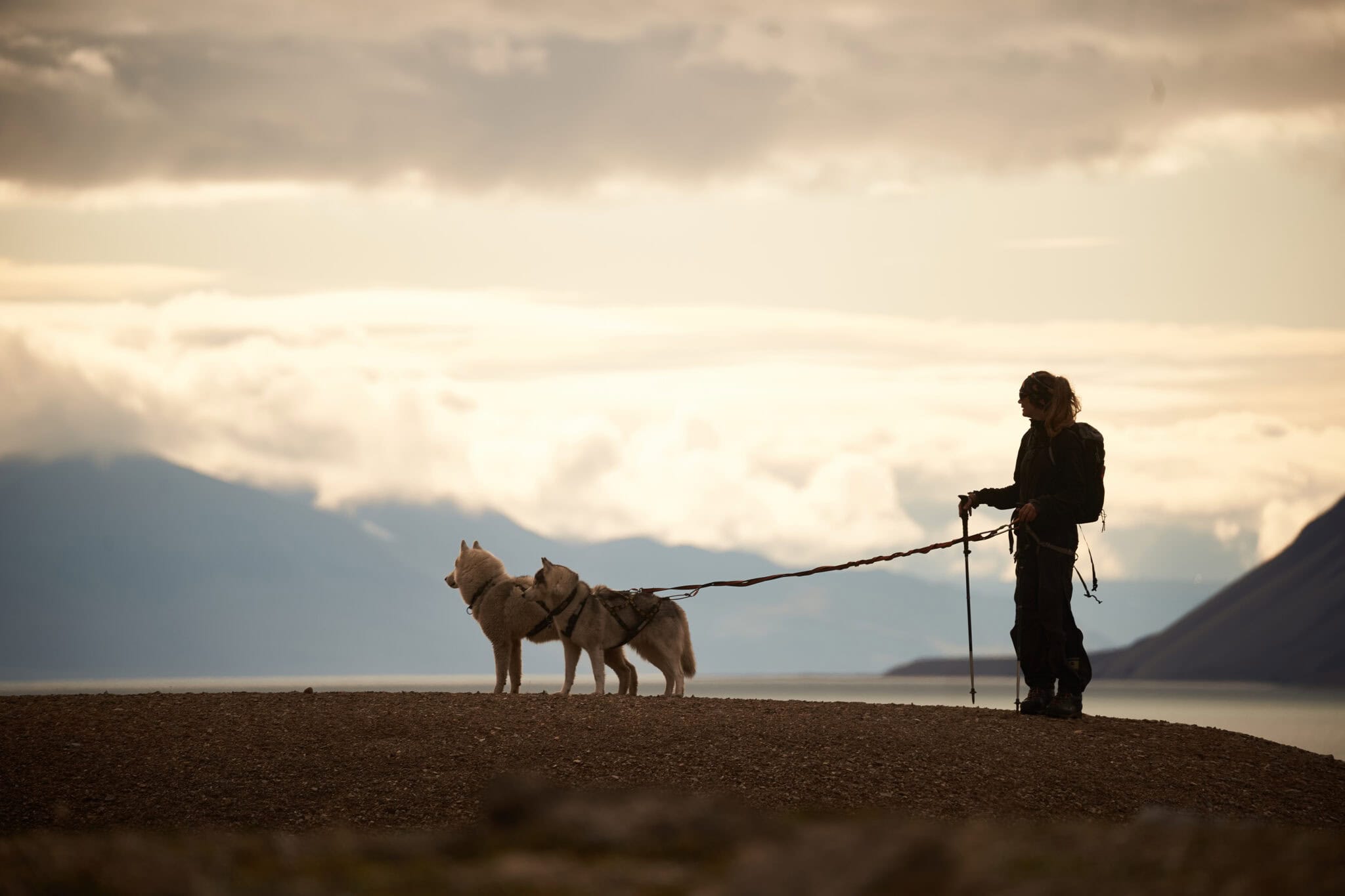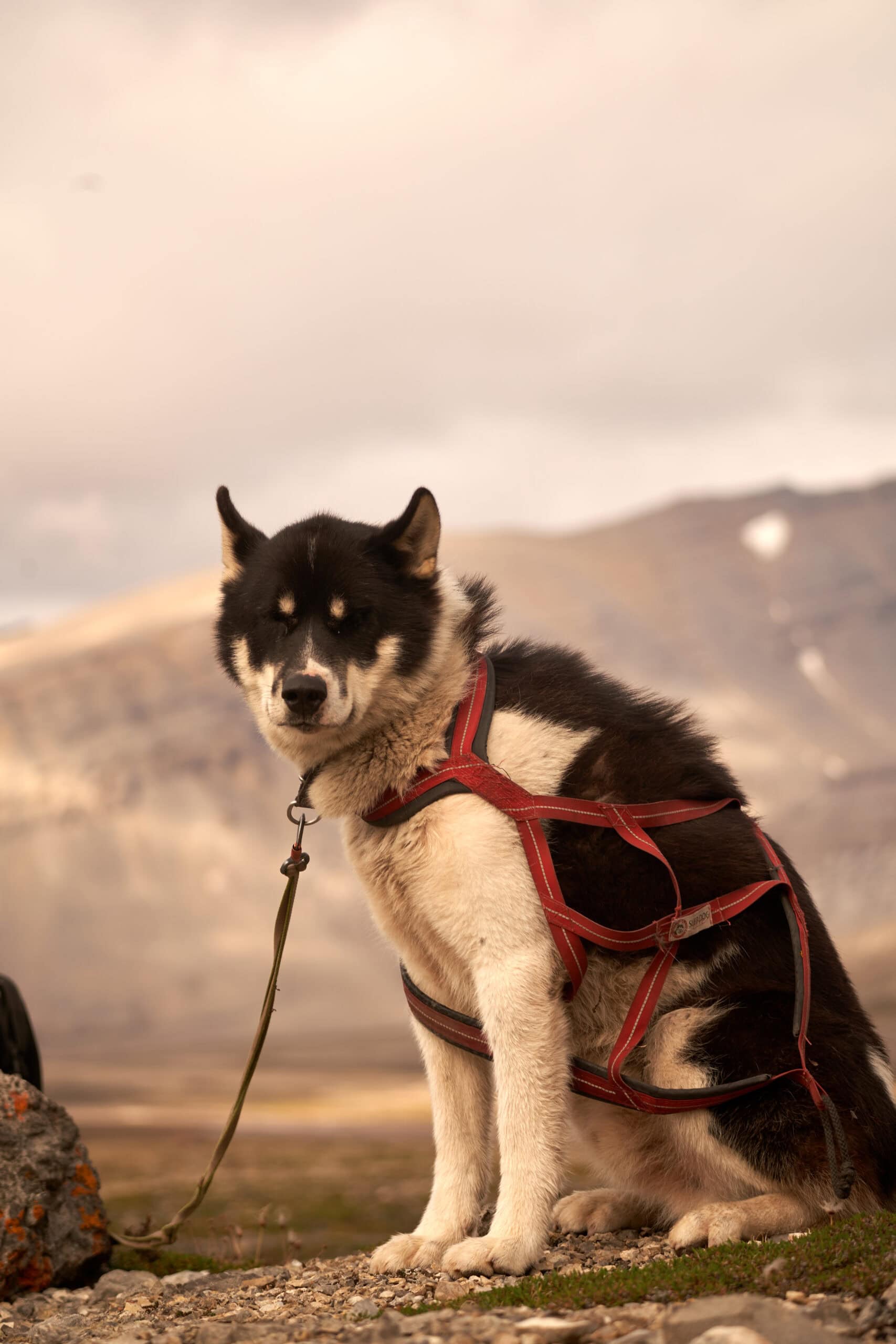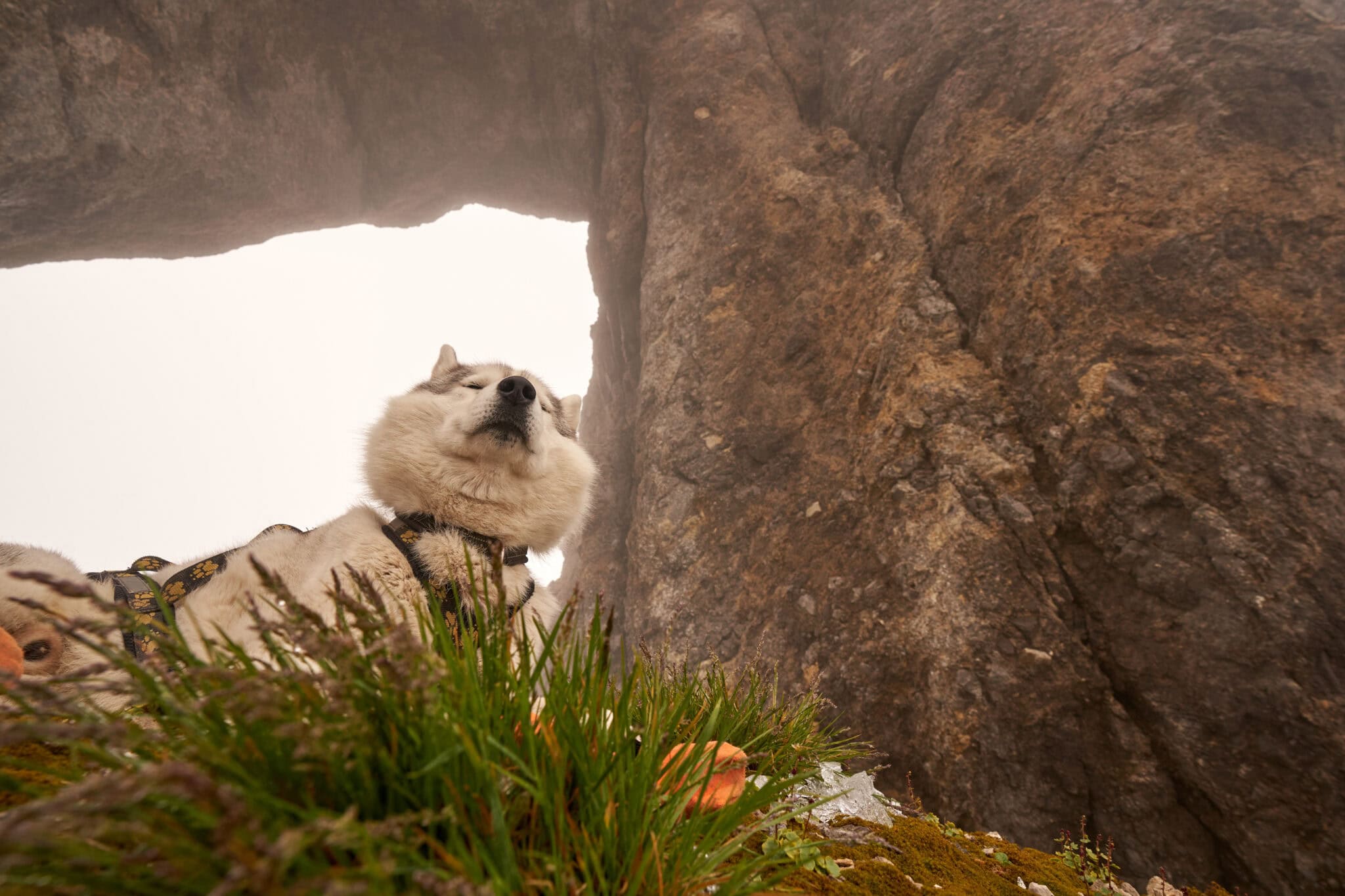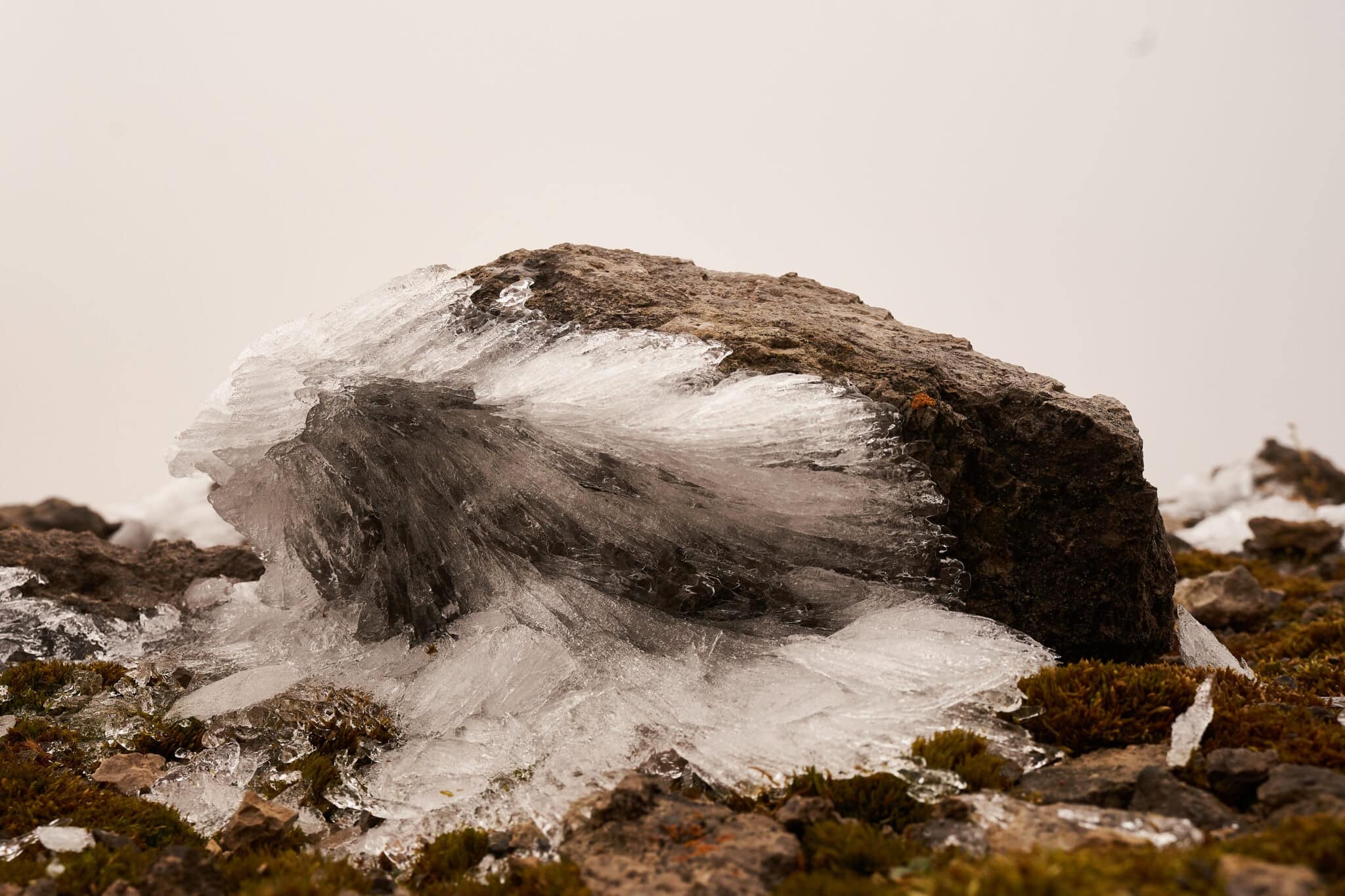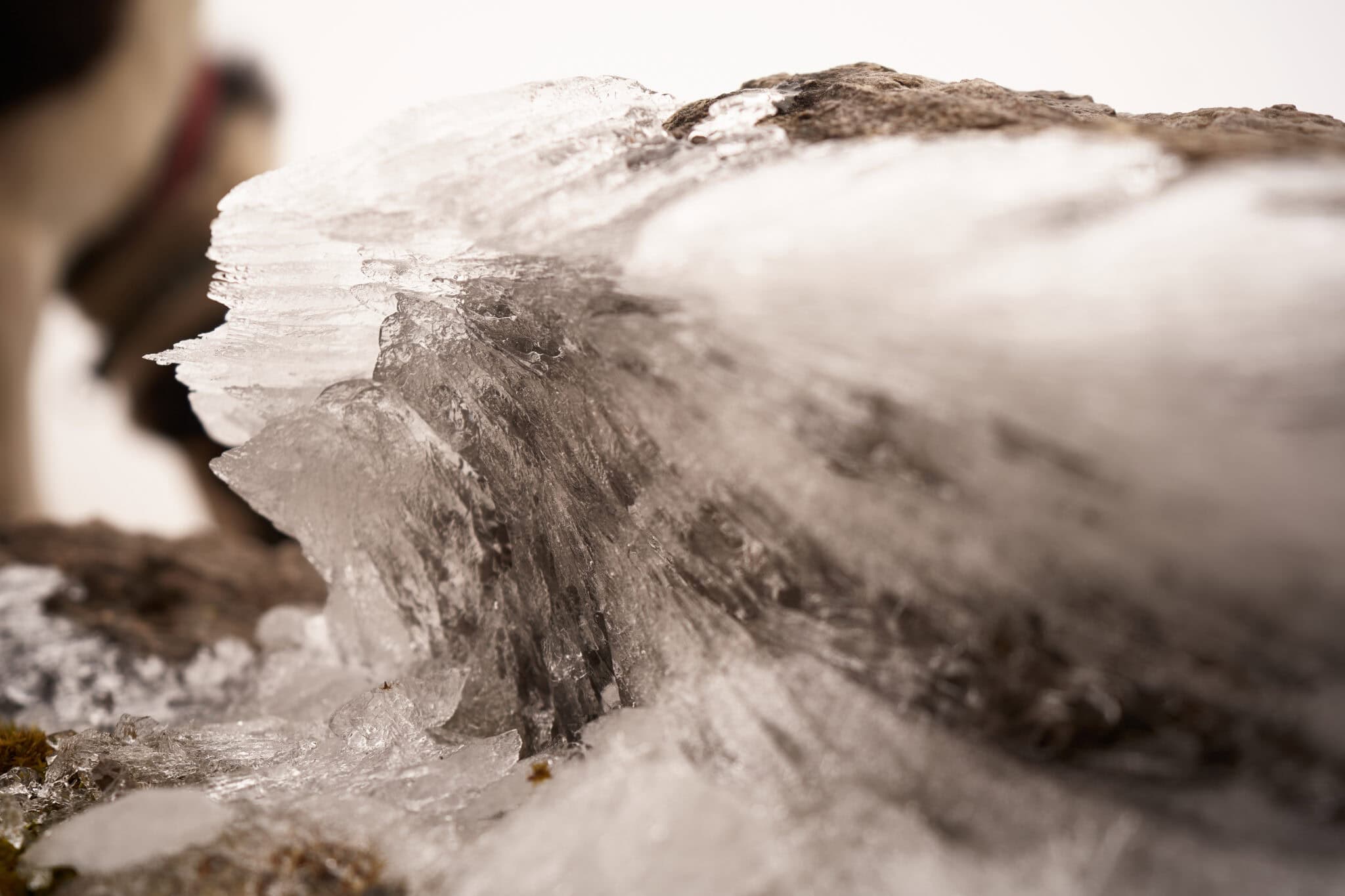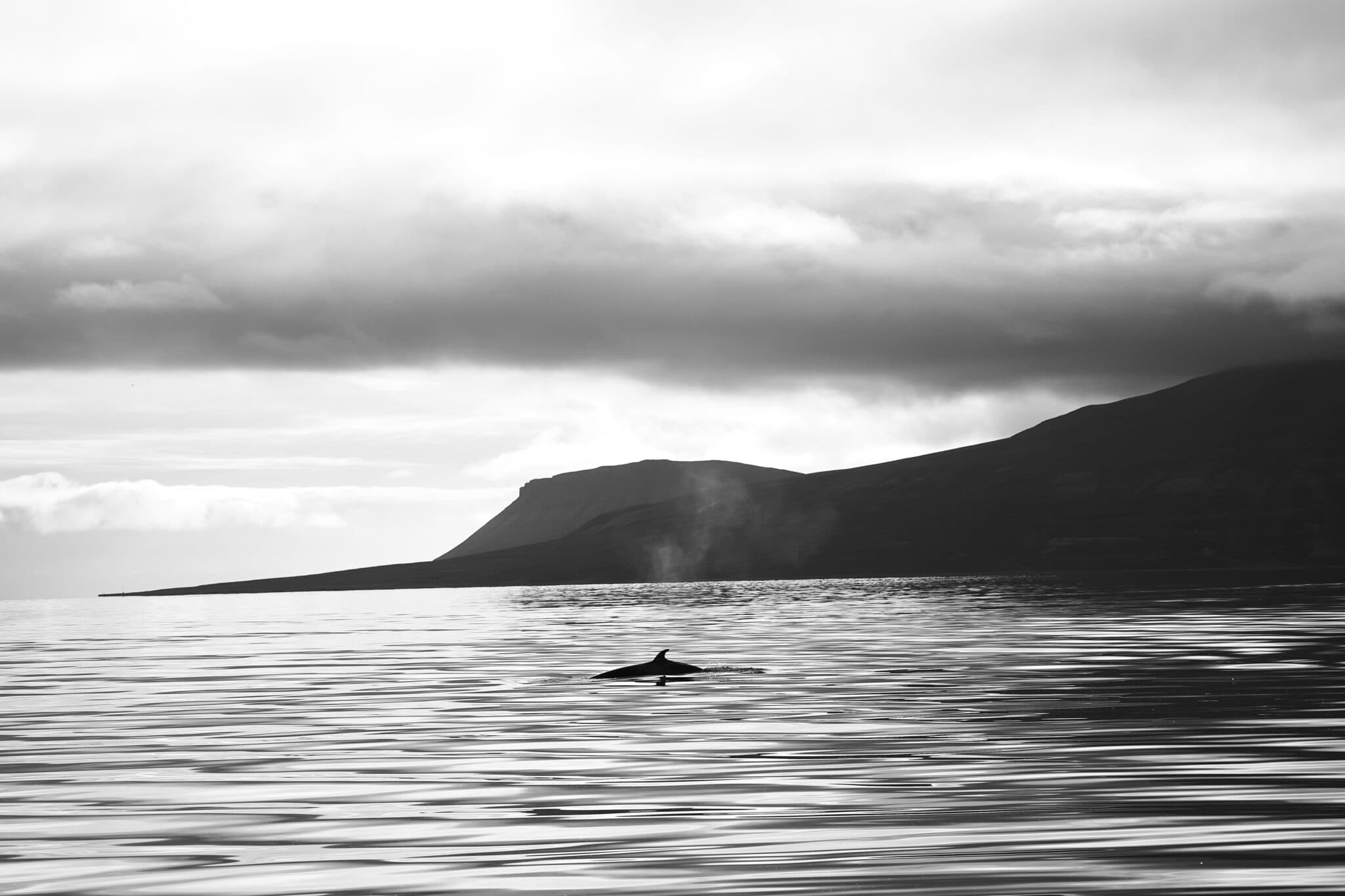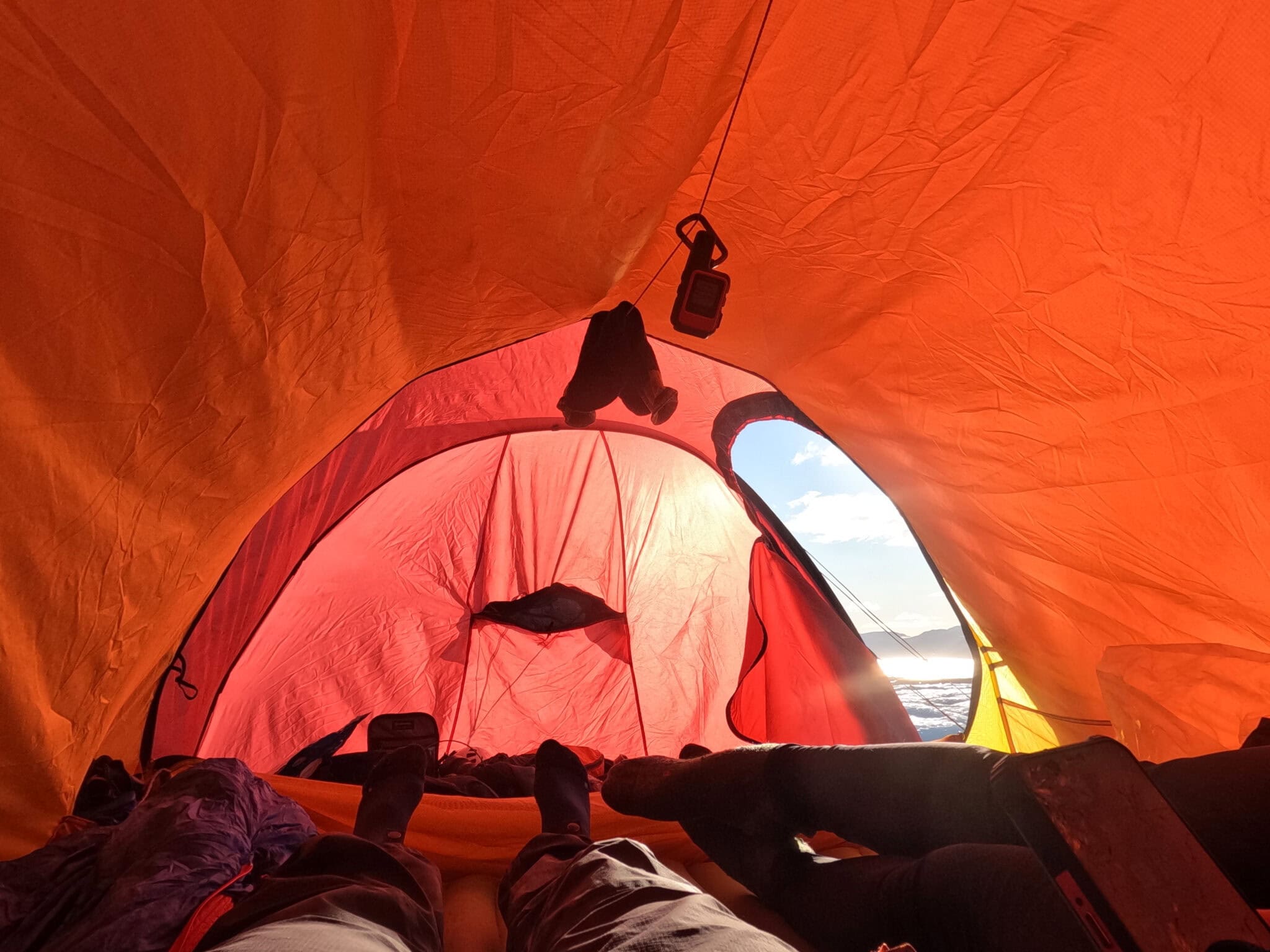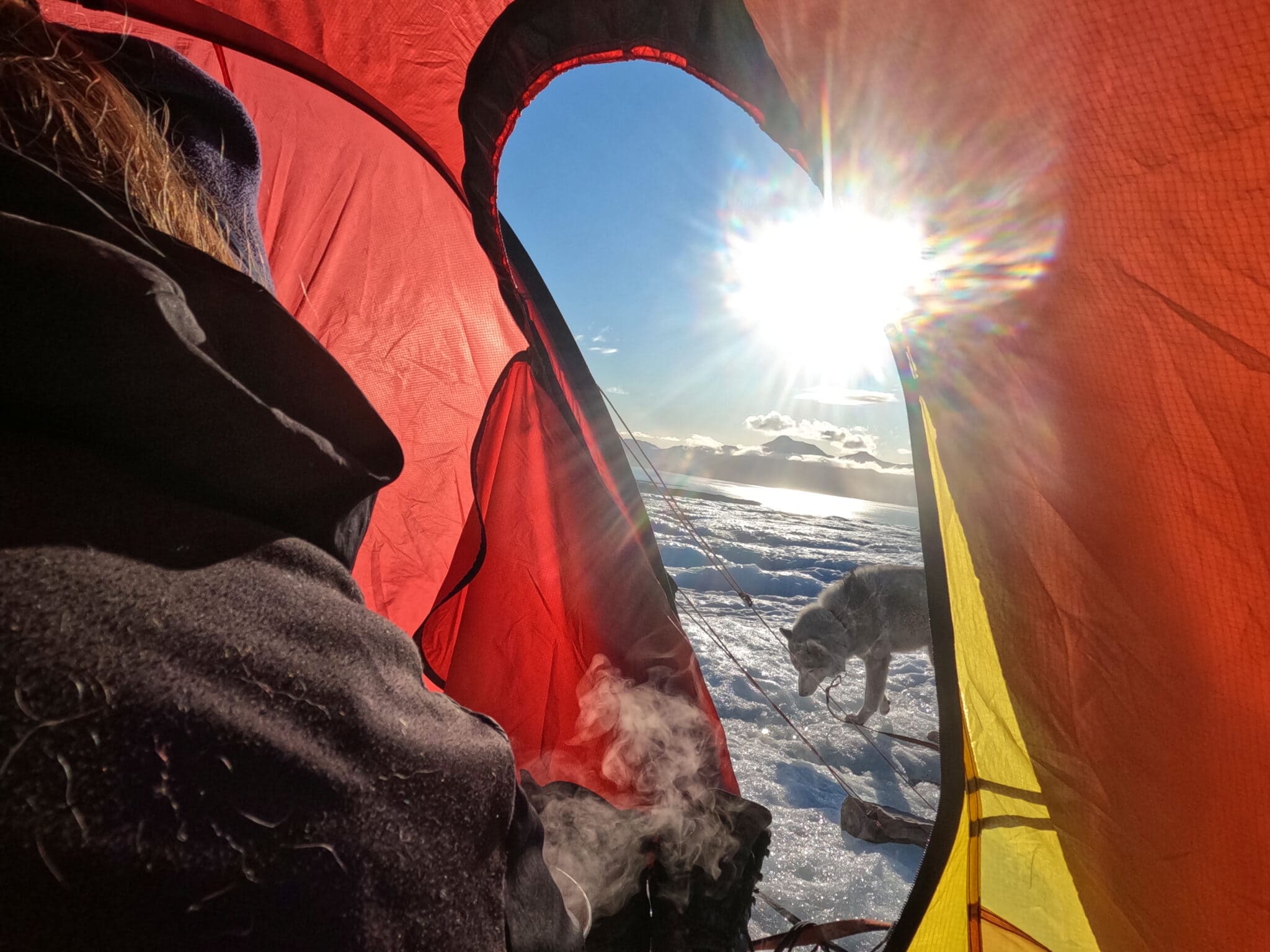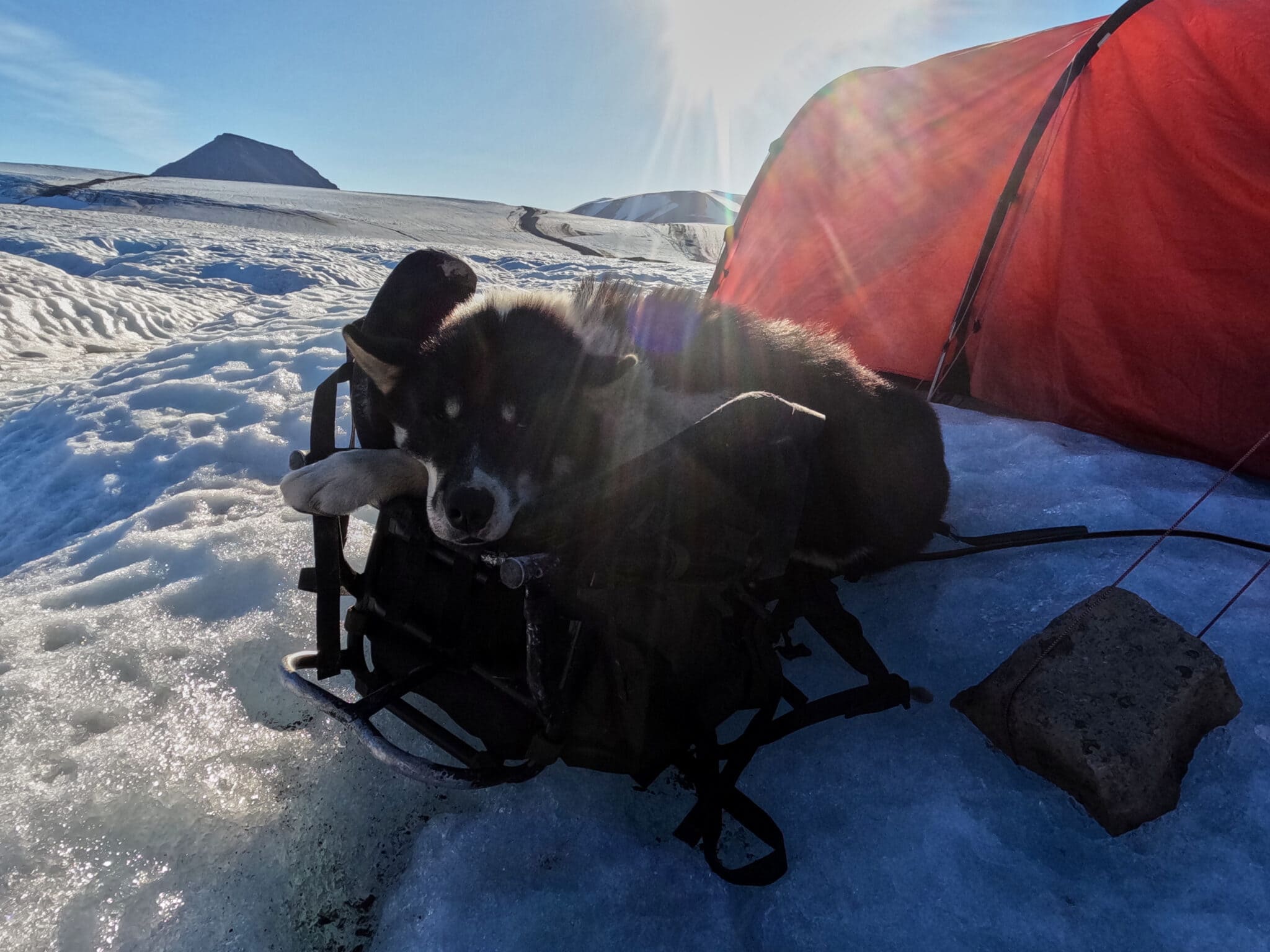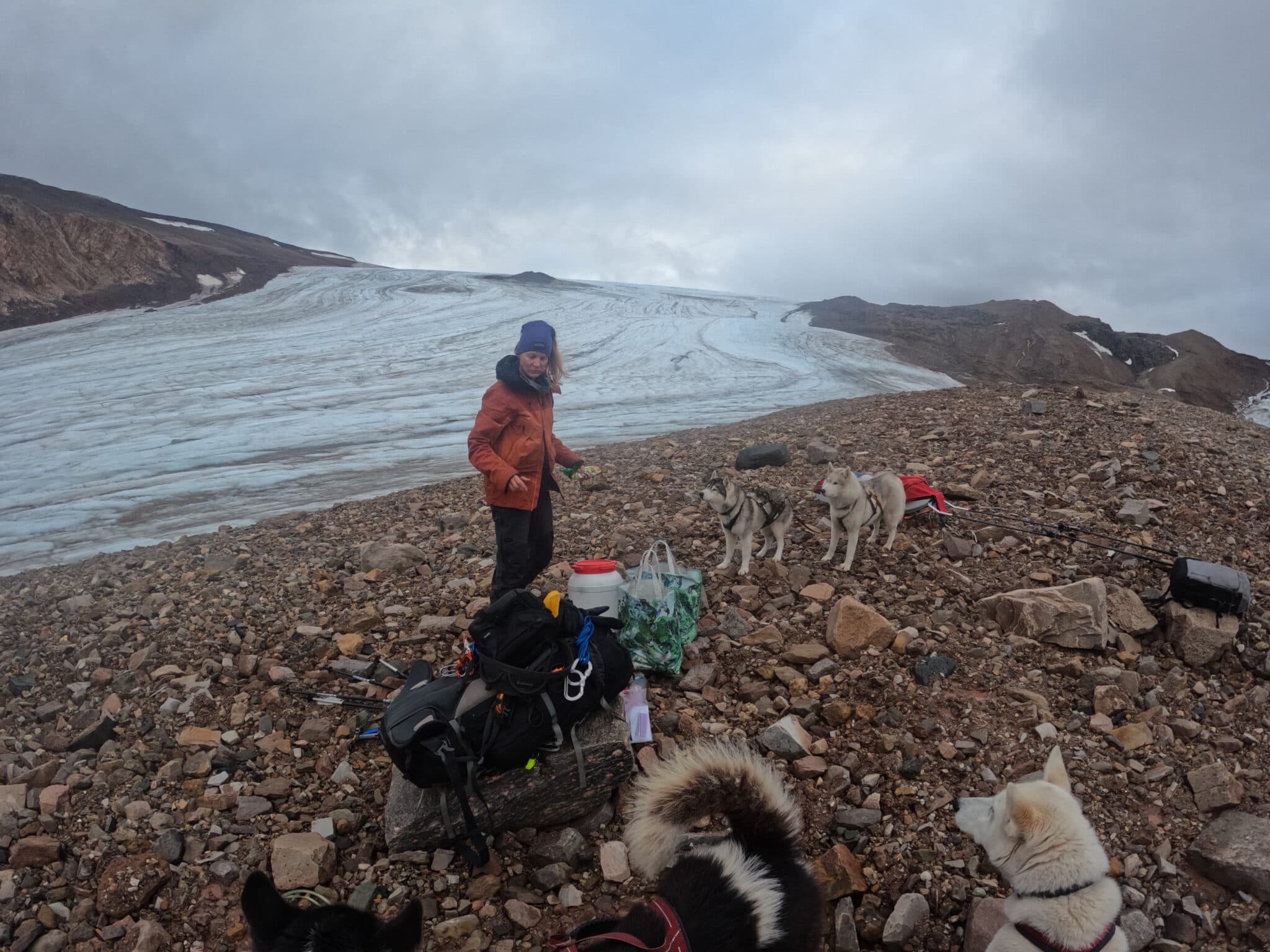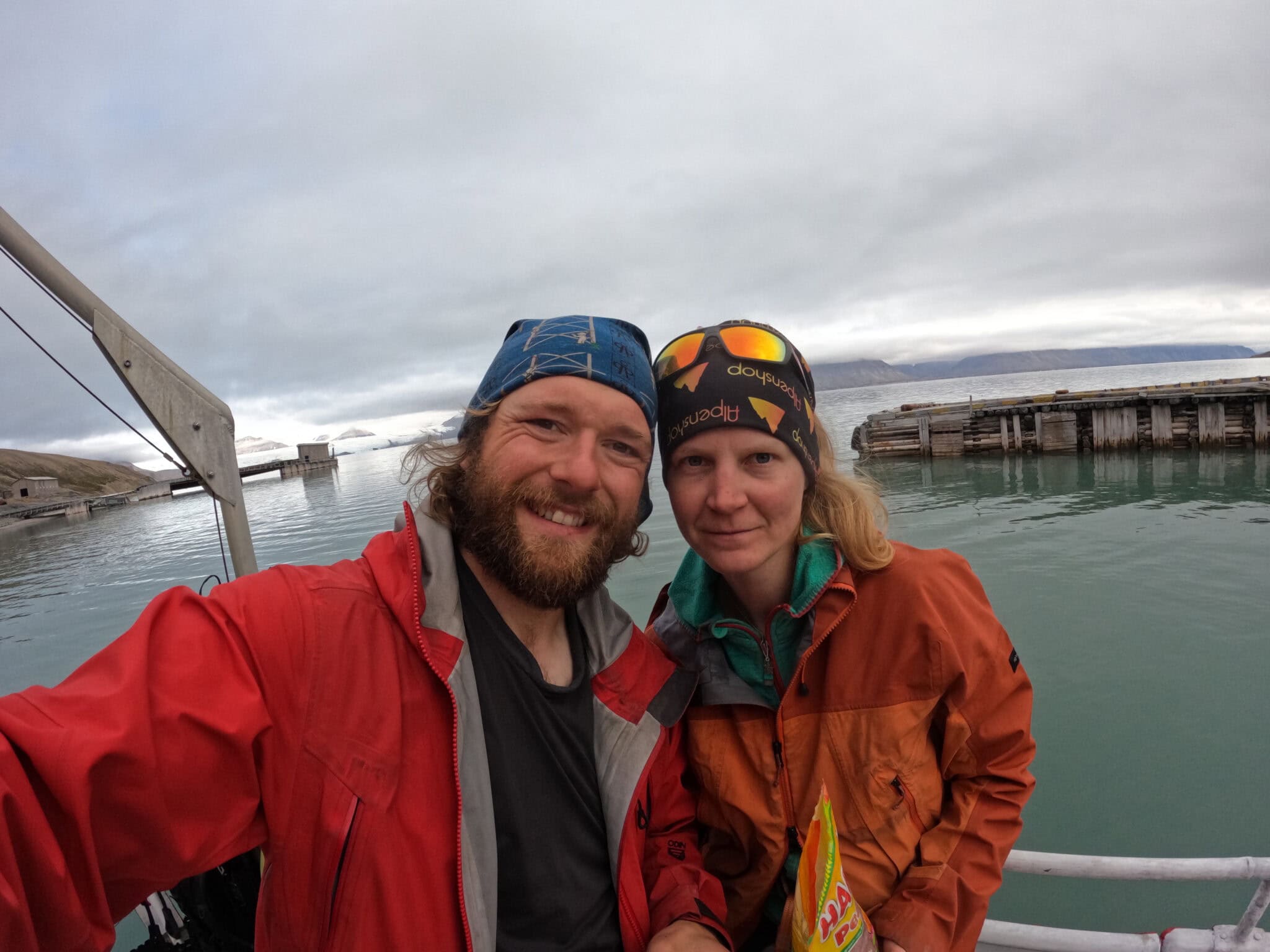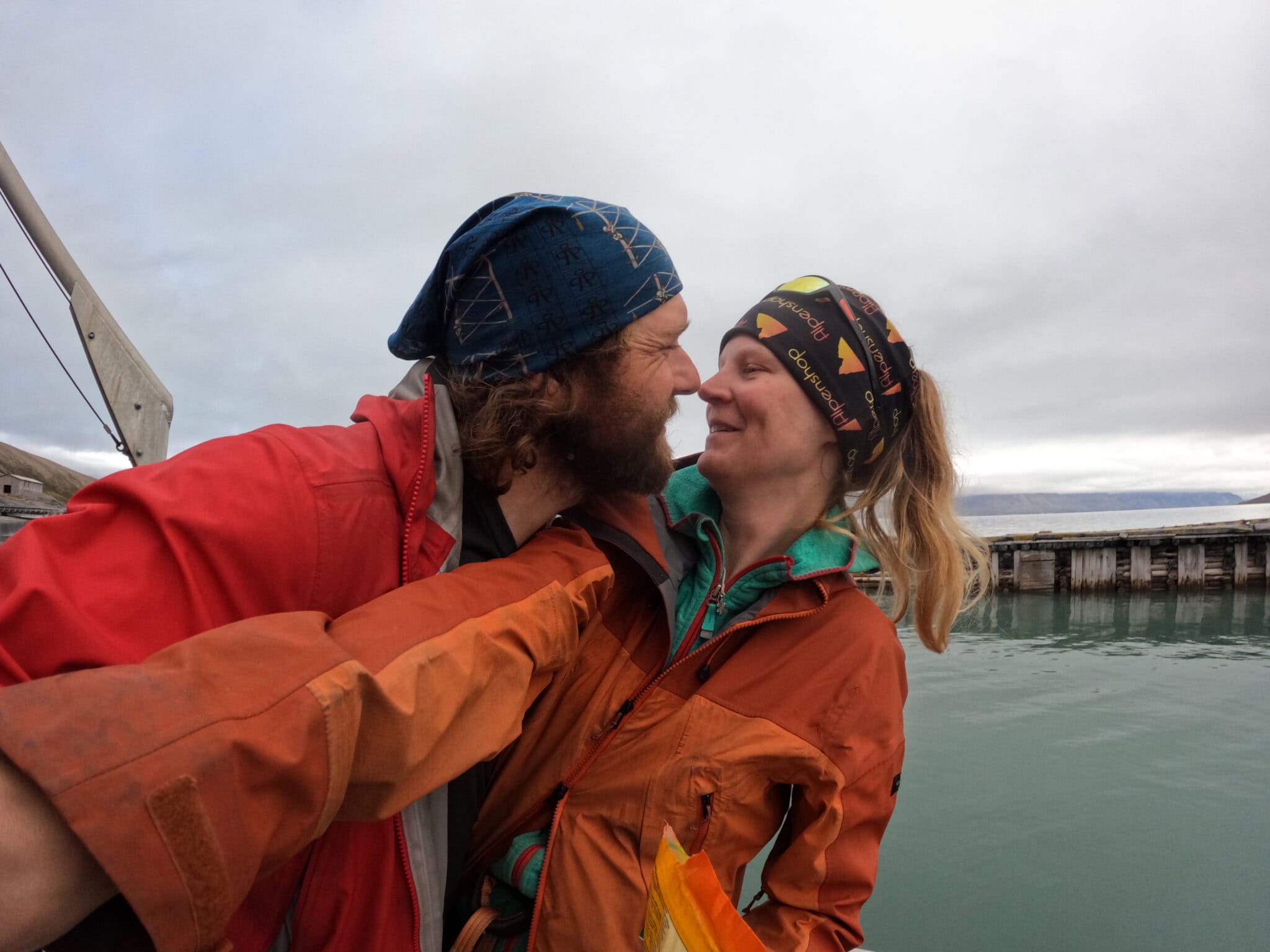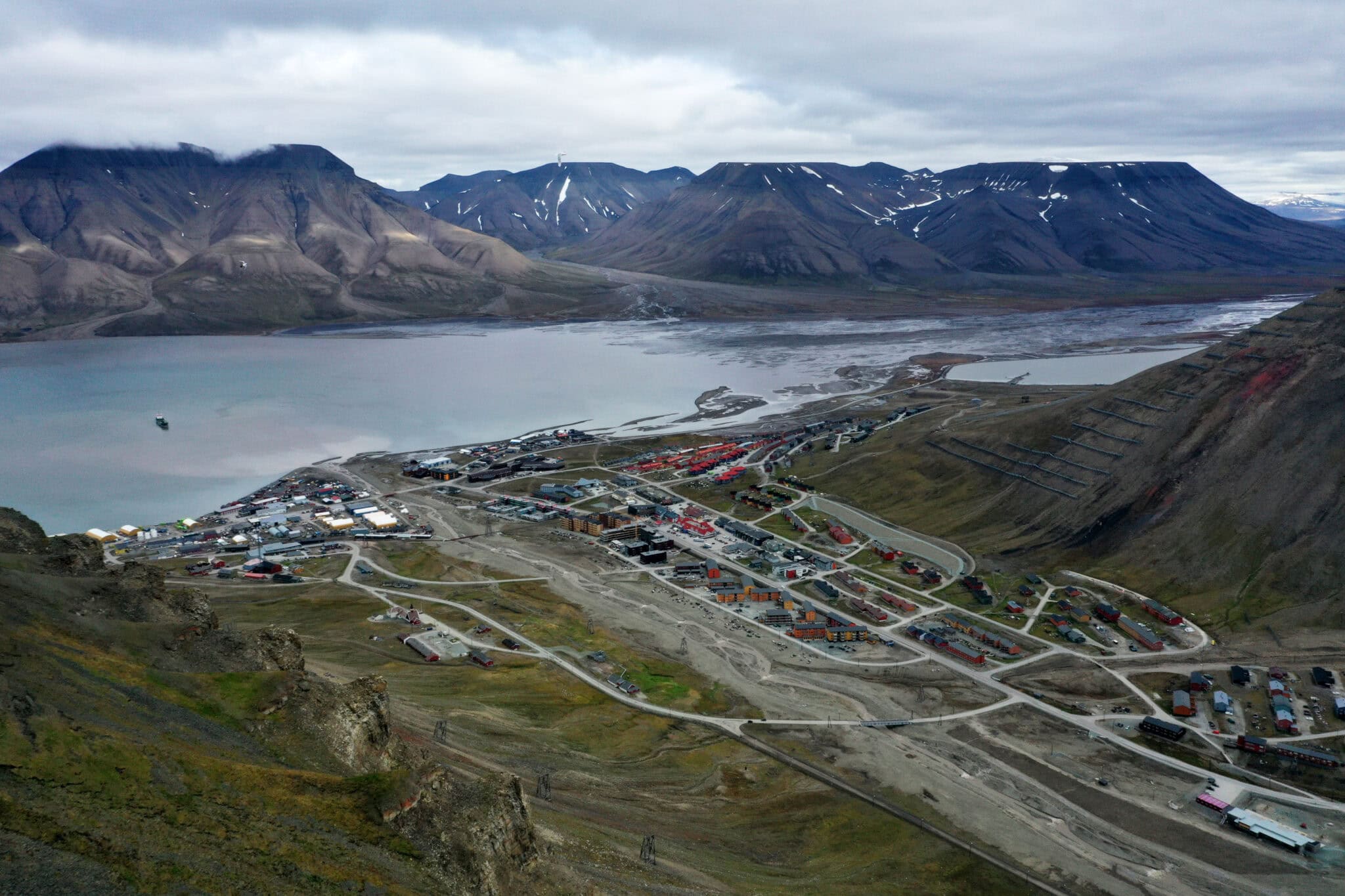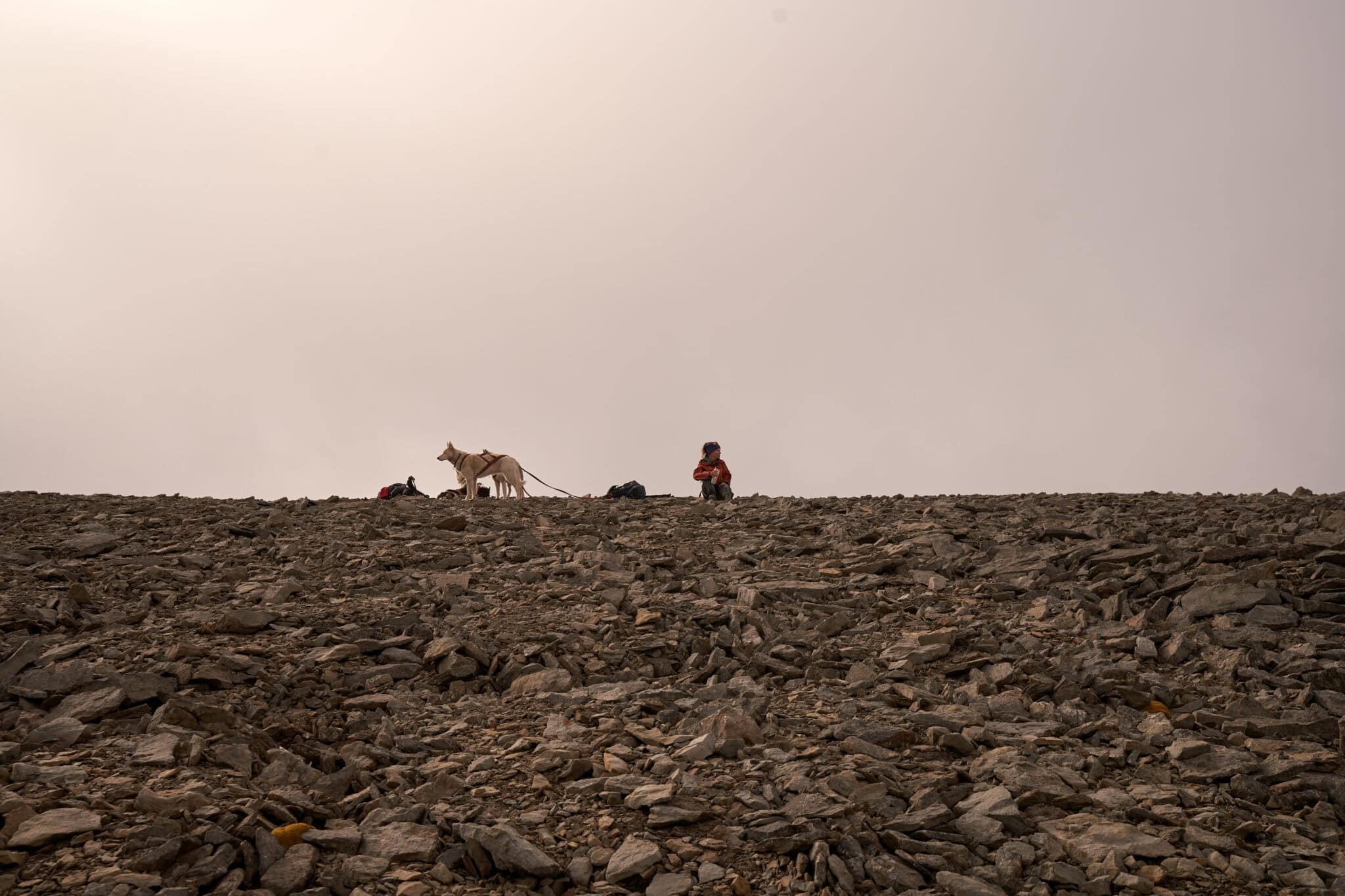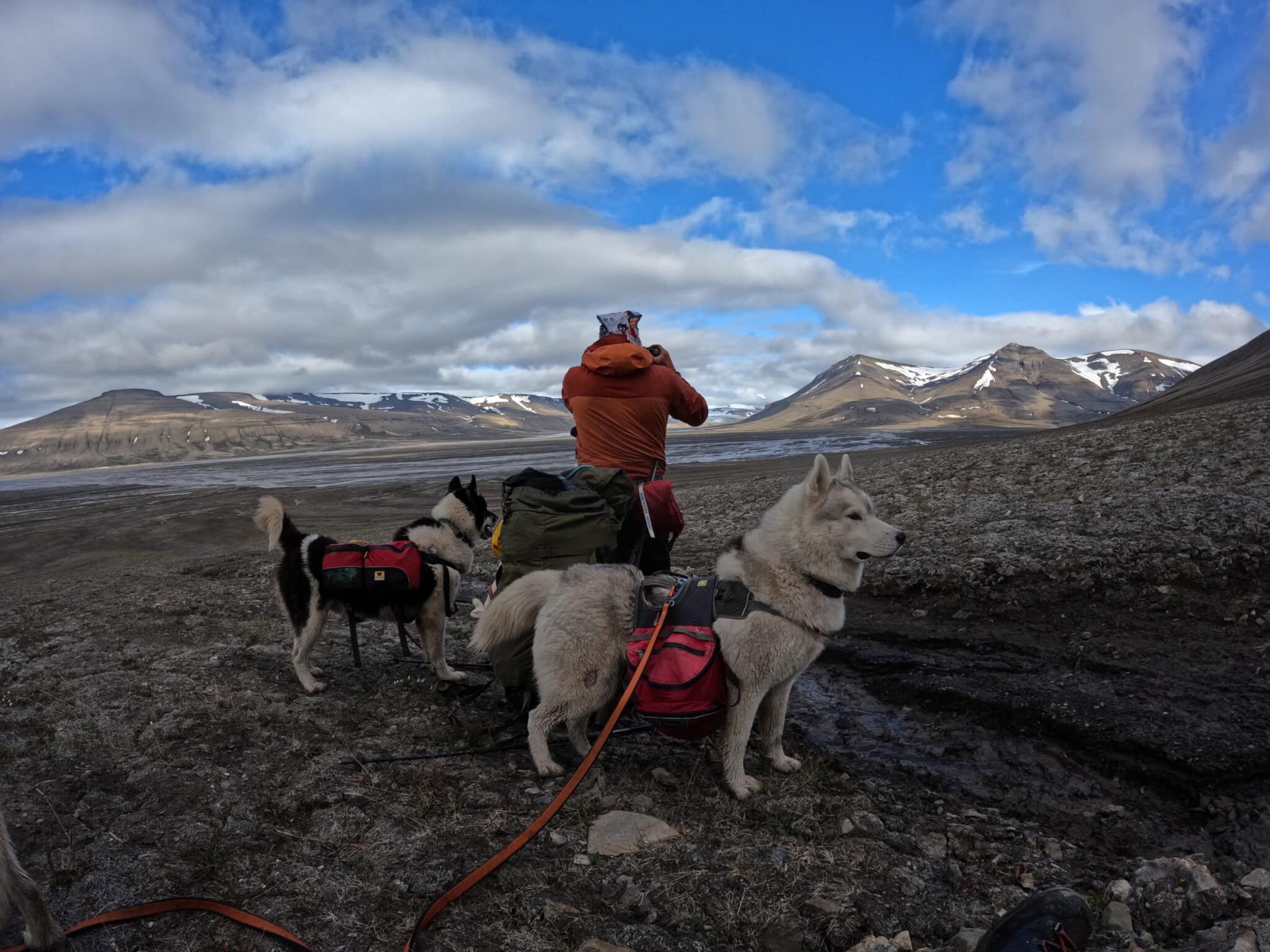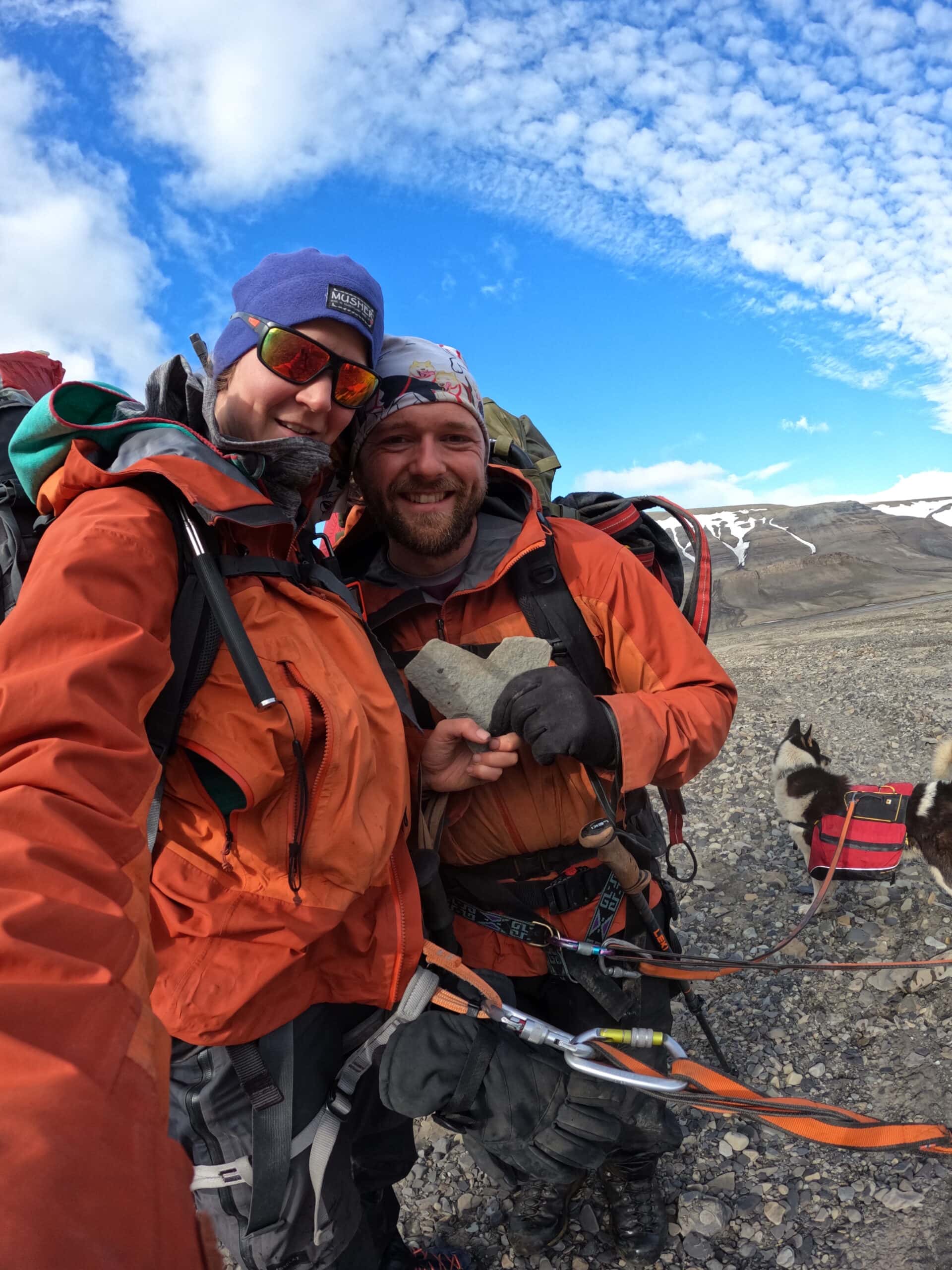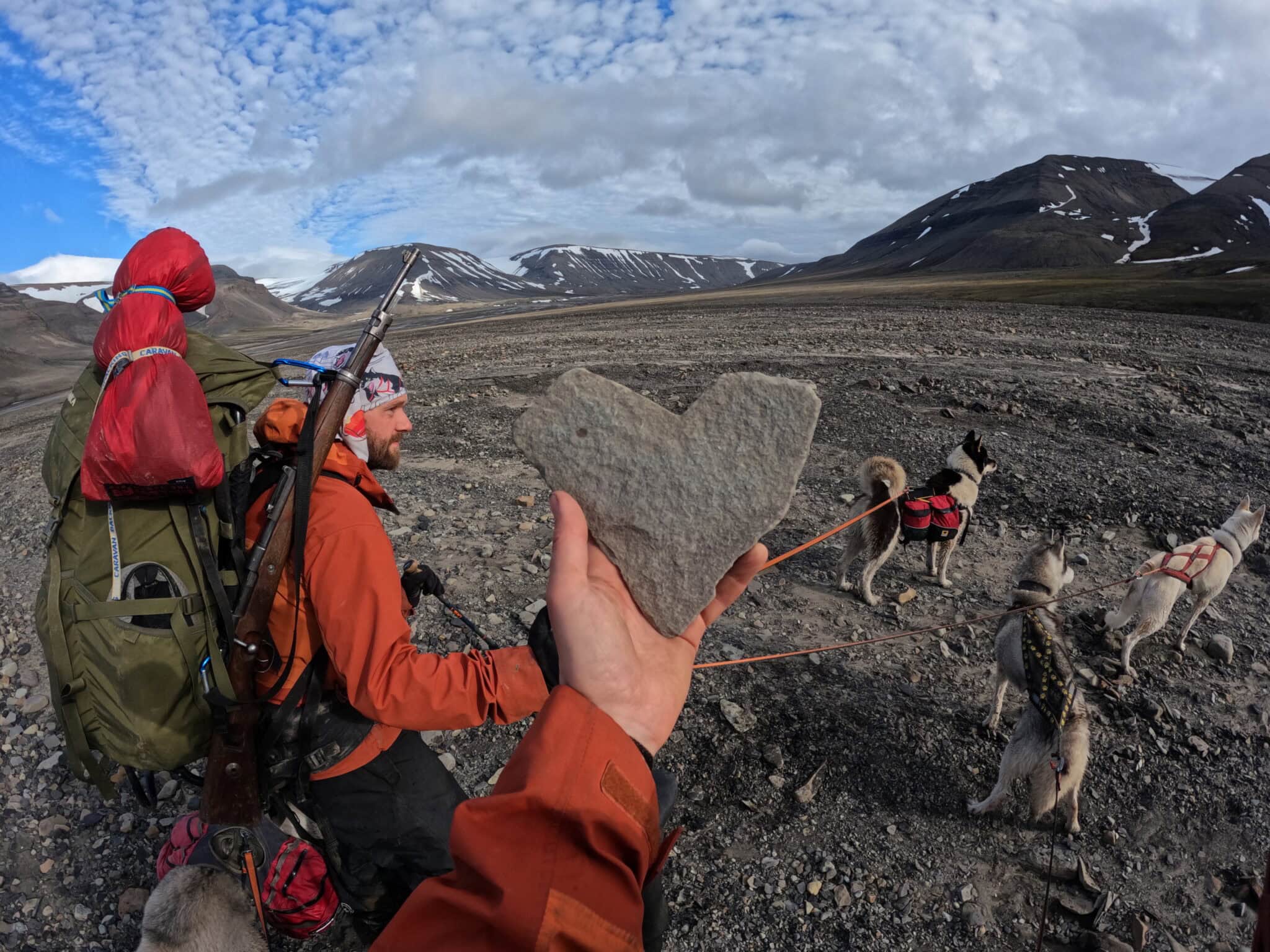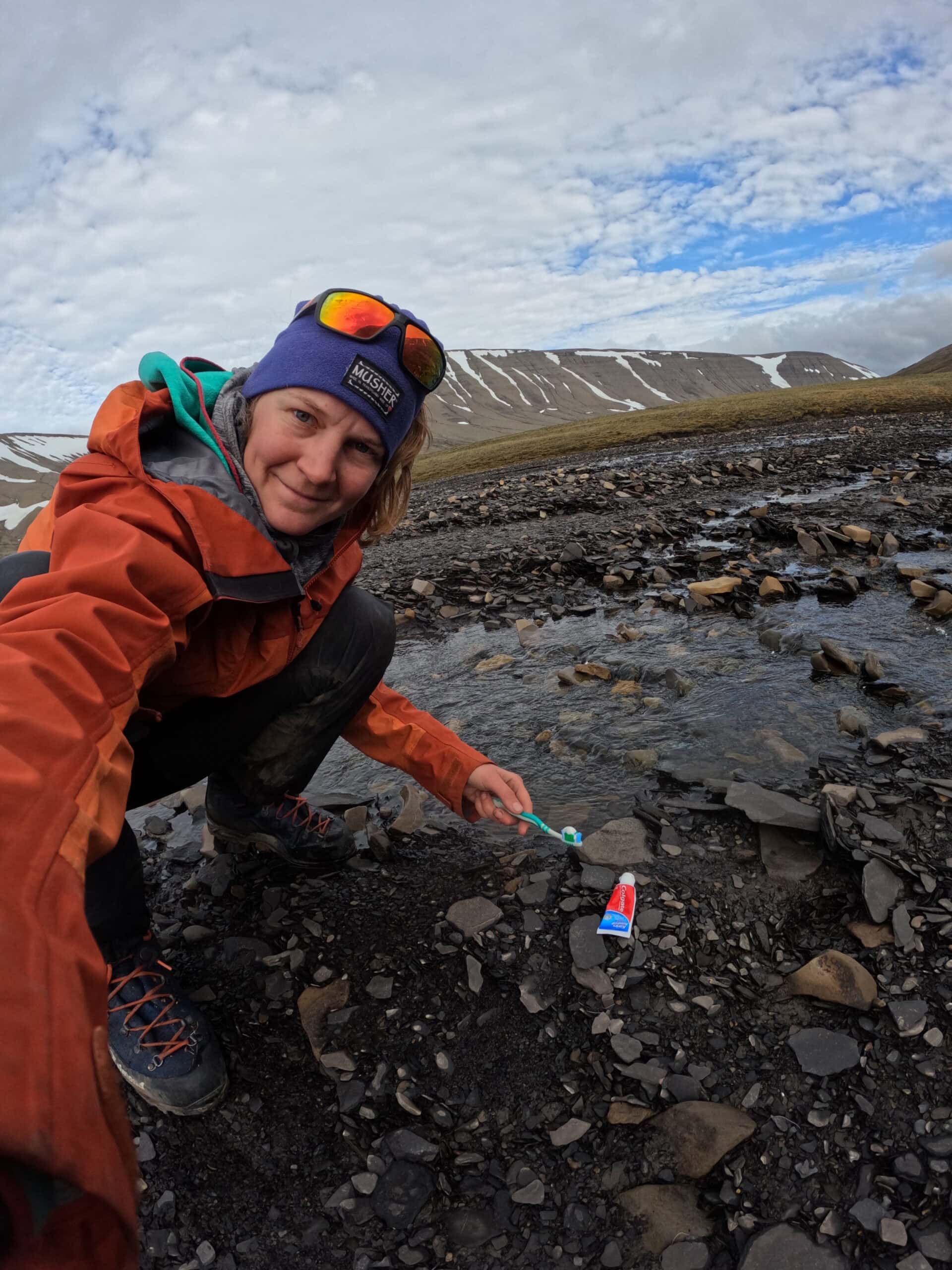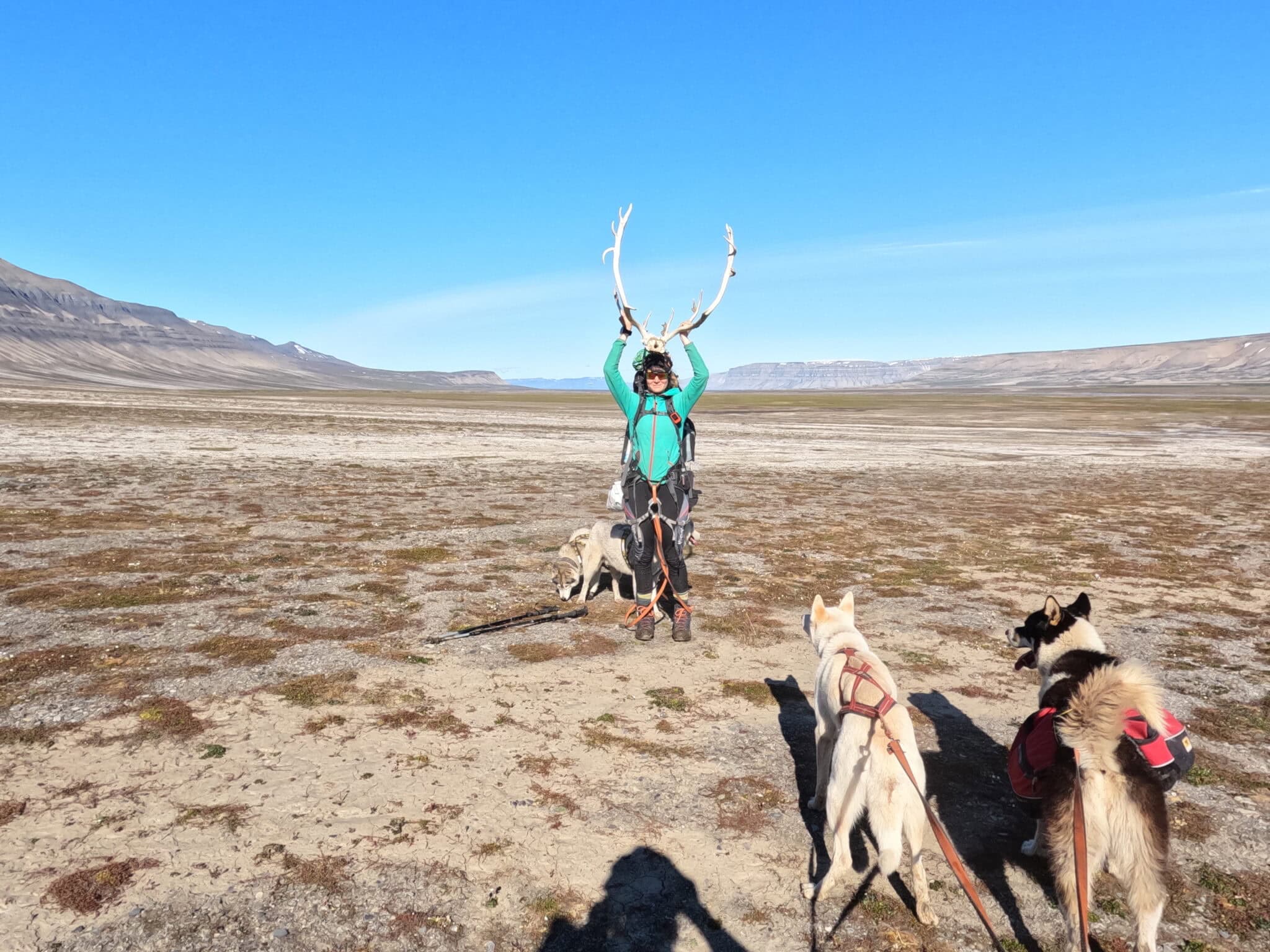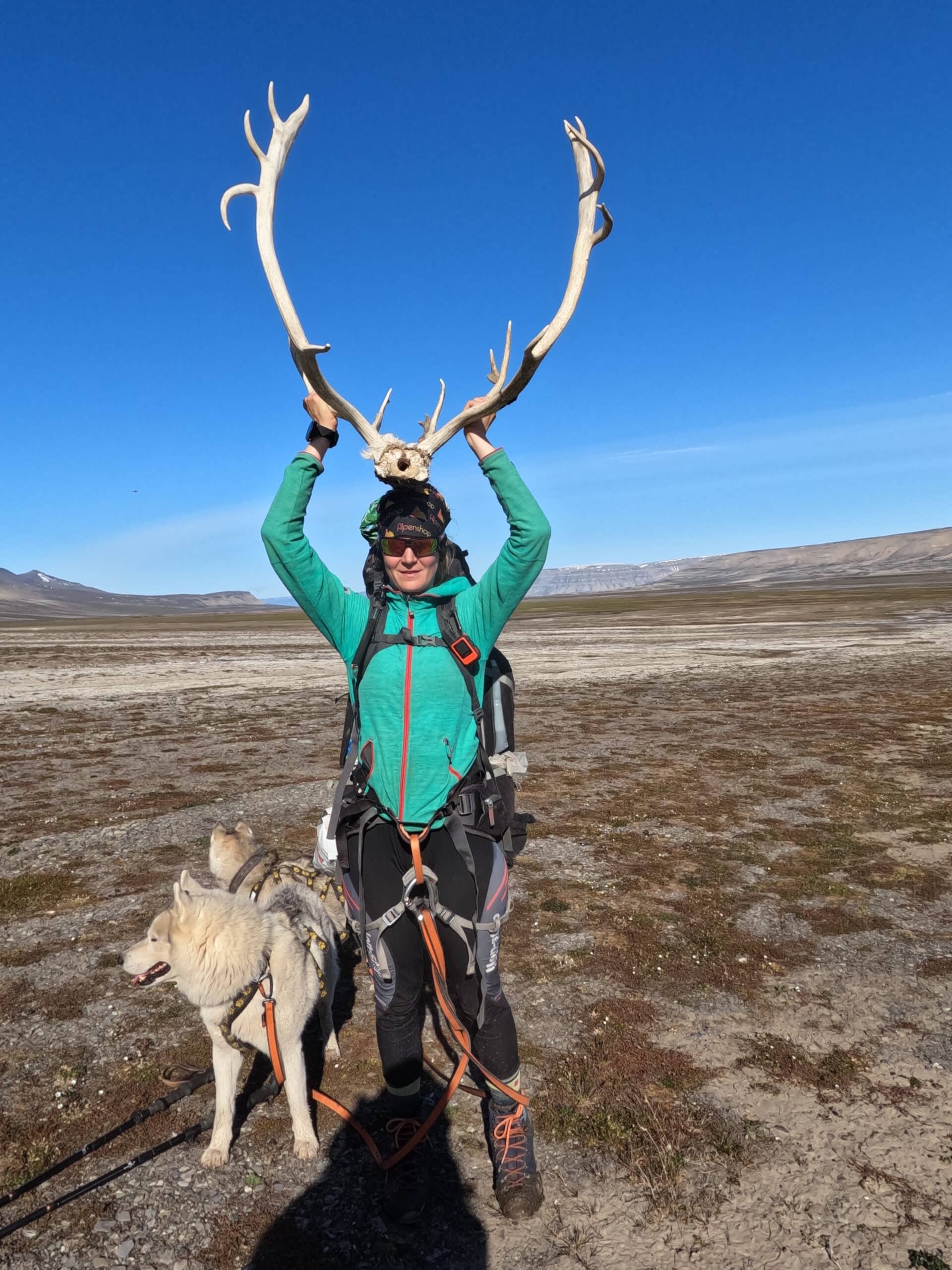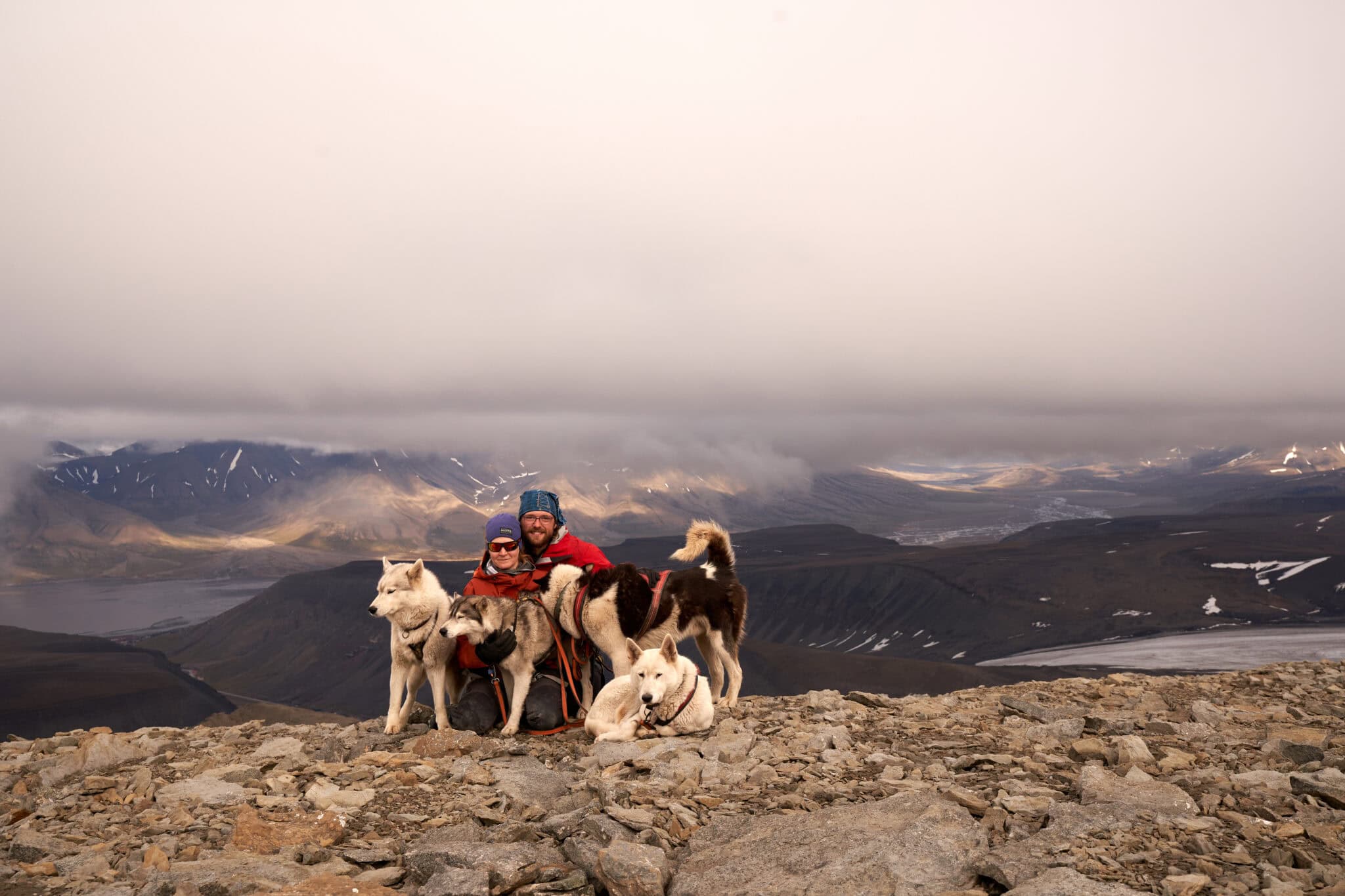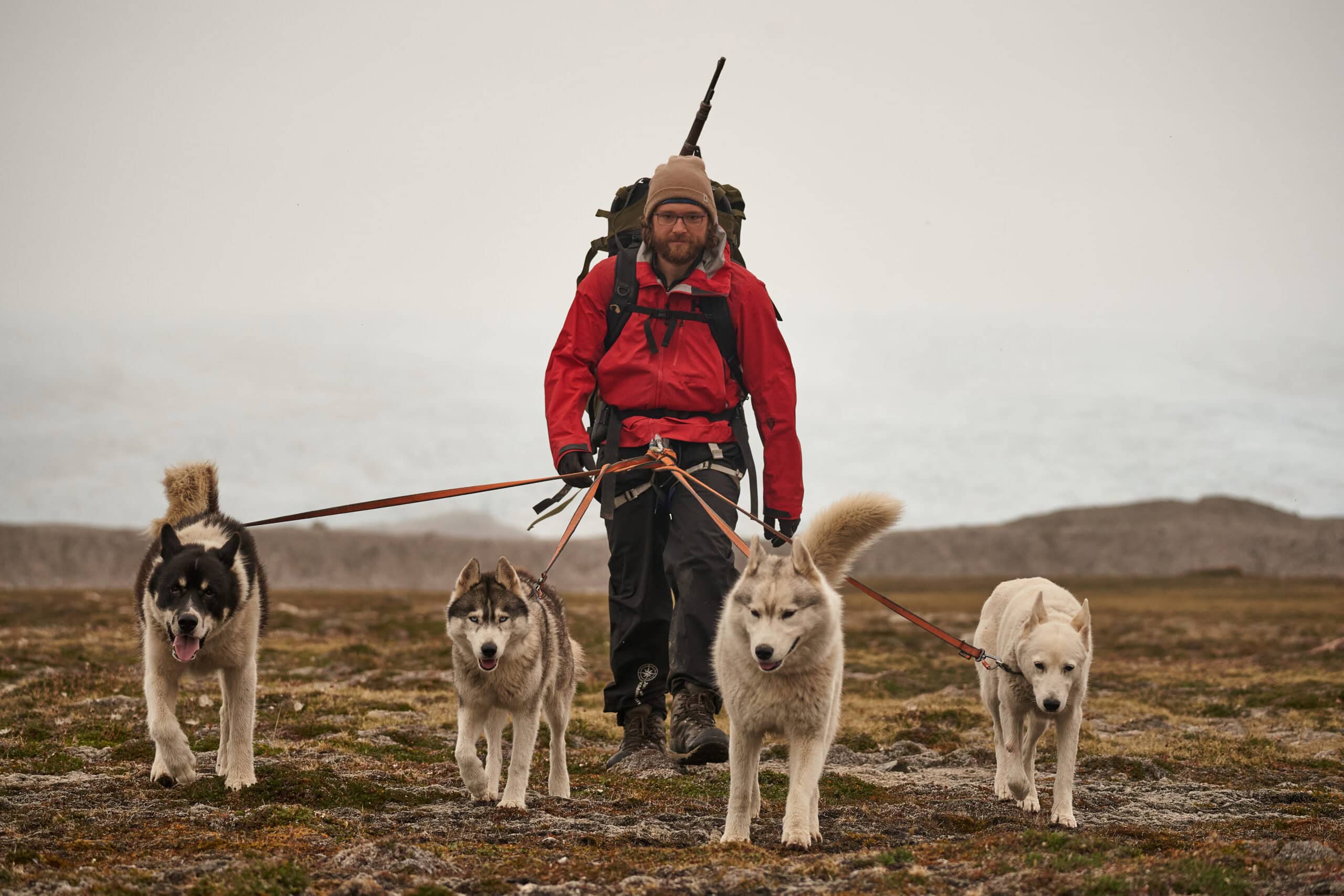
Svalbard, a small archipelago in the middle of the Arctic, lies in northern Norway. Taking on this challenge has been a dream of mine for a long time. You can approach this task in many ways, and anyone who knows me knows I won’t take the most comfortable one. Anyone who also knows my girlfriend Rebecca knows that where her definition of comfortable ends, mine has long since passed. So, my girlfriend and I have been planning our Svalbard trip over the last few months. The basic requirement for our project was that some of our dogs would come along, and that we wouldn’t book an external guide or join another group. Oh yes, and the fact that we wanted to be on the move for several days at a time, specifically in a tent, is, I think, self-explanatory.
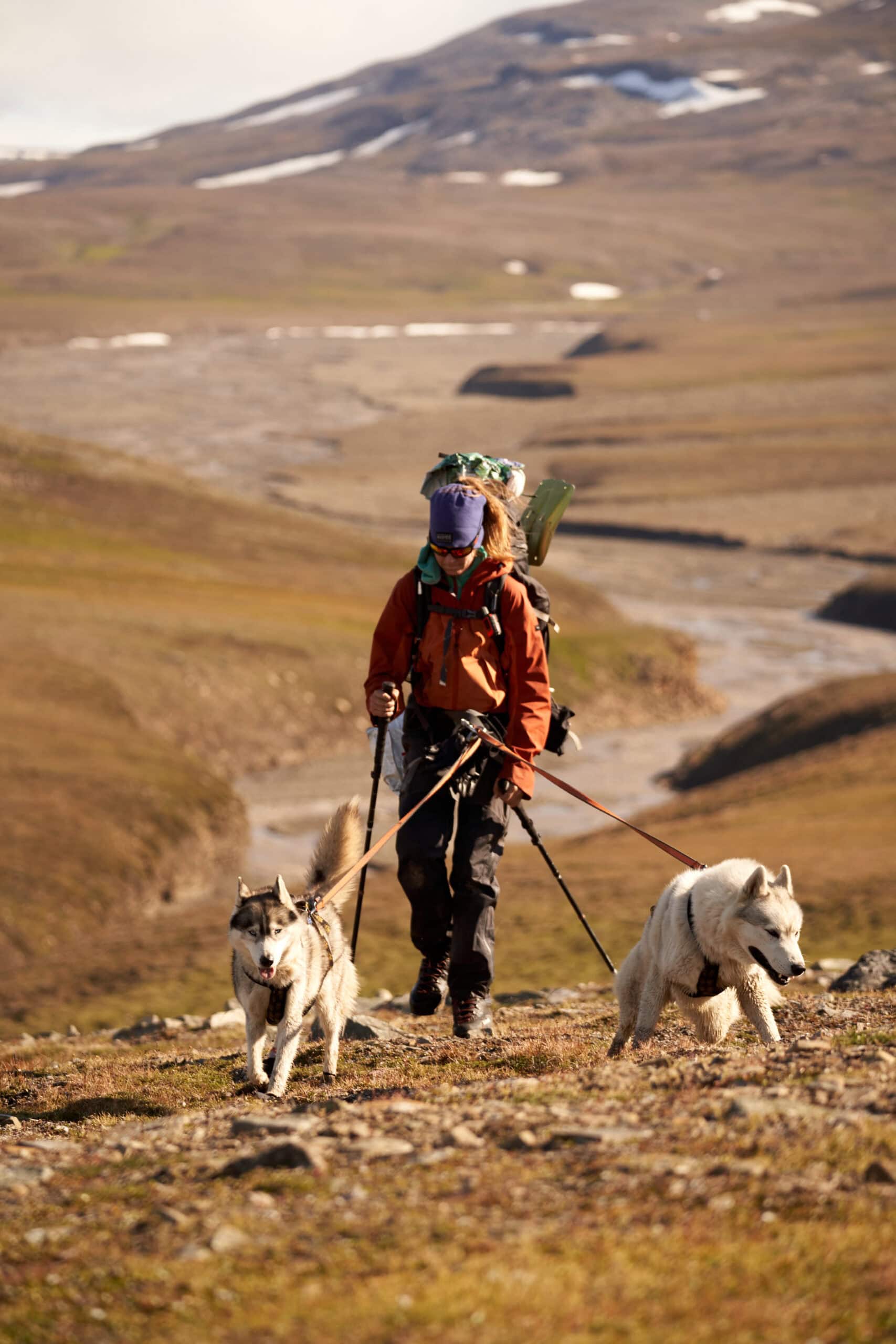
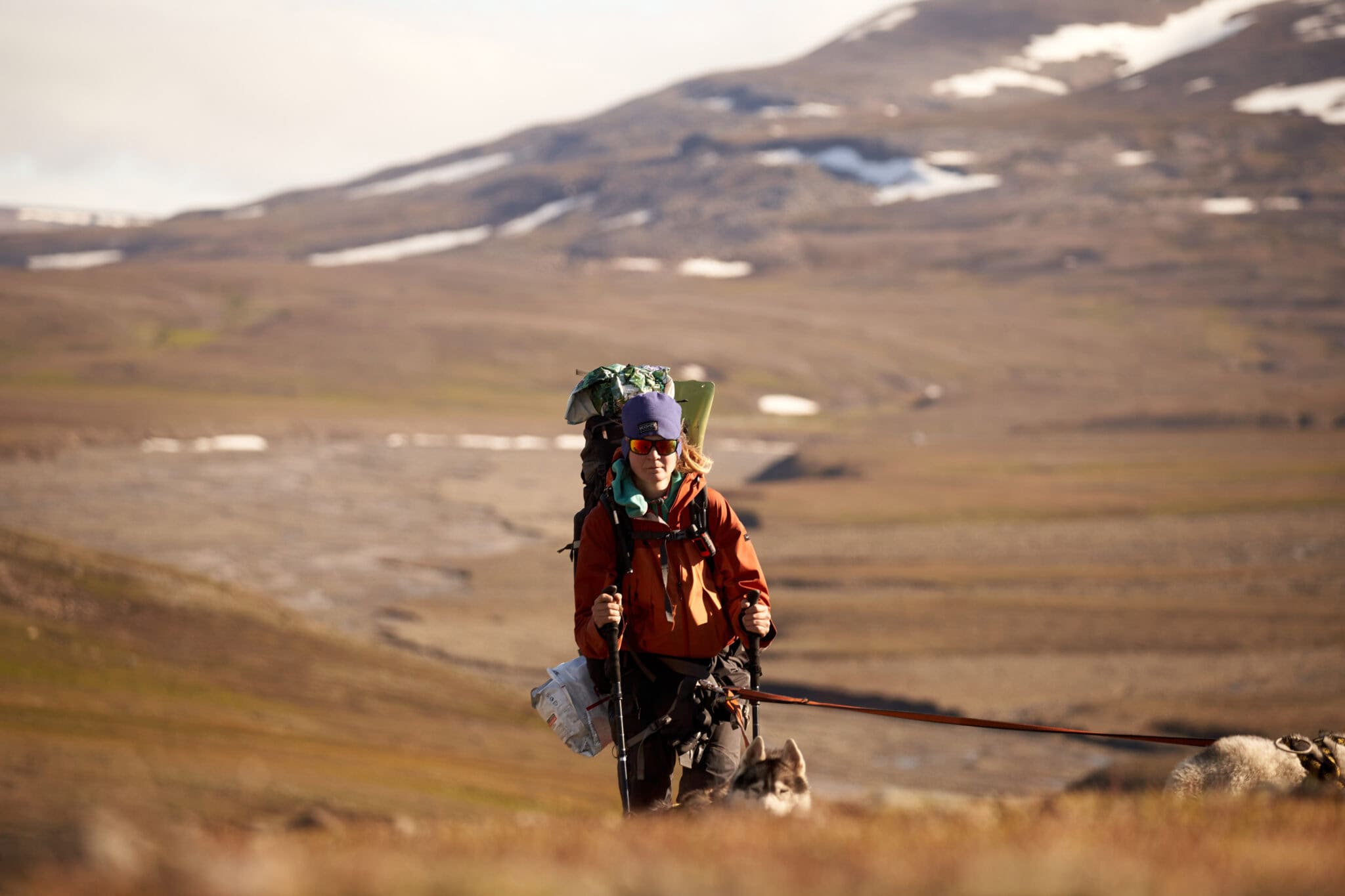
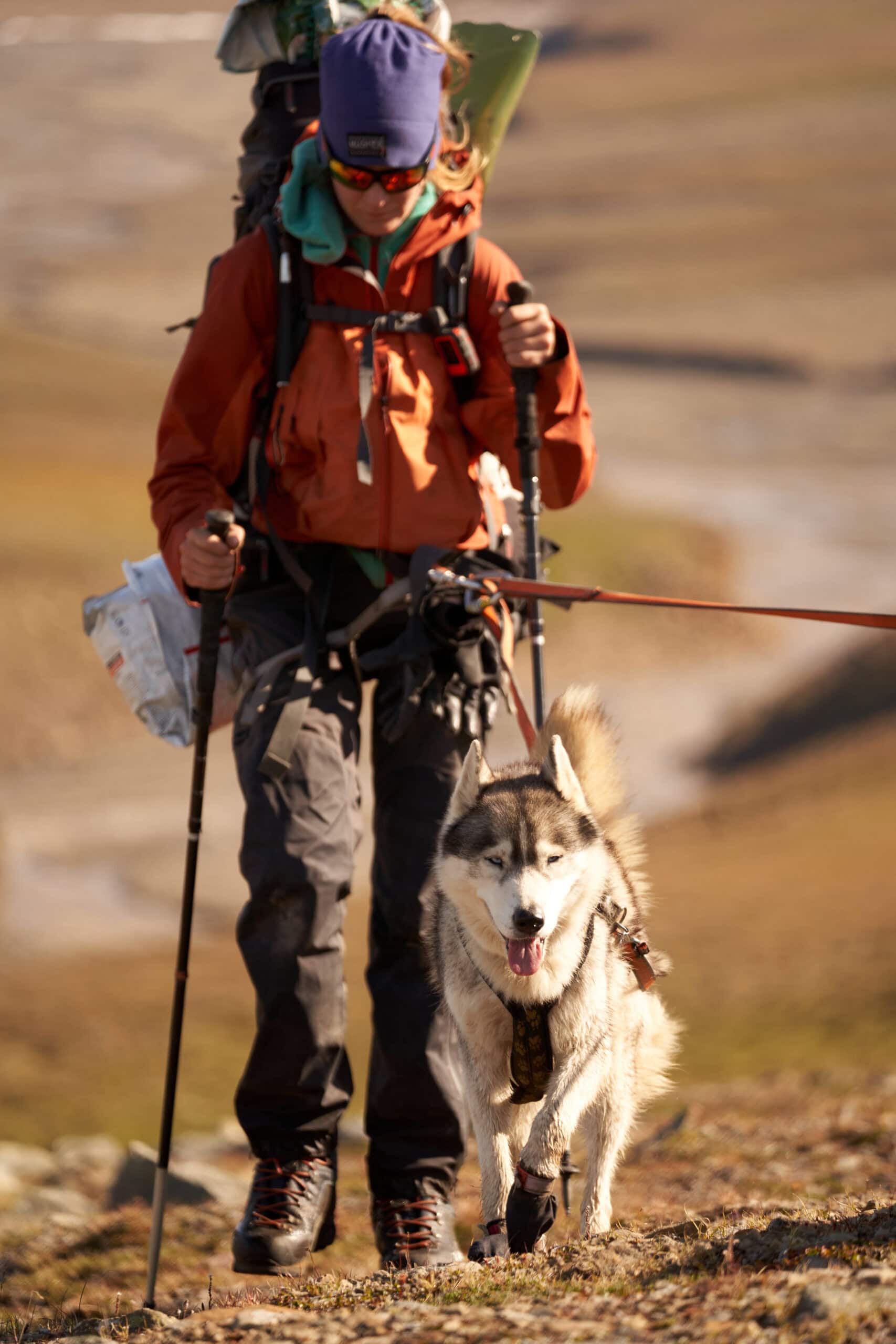
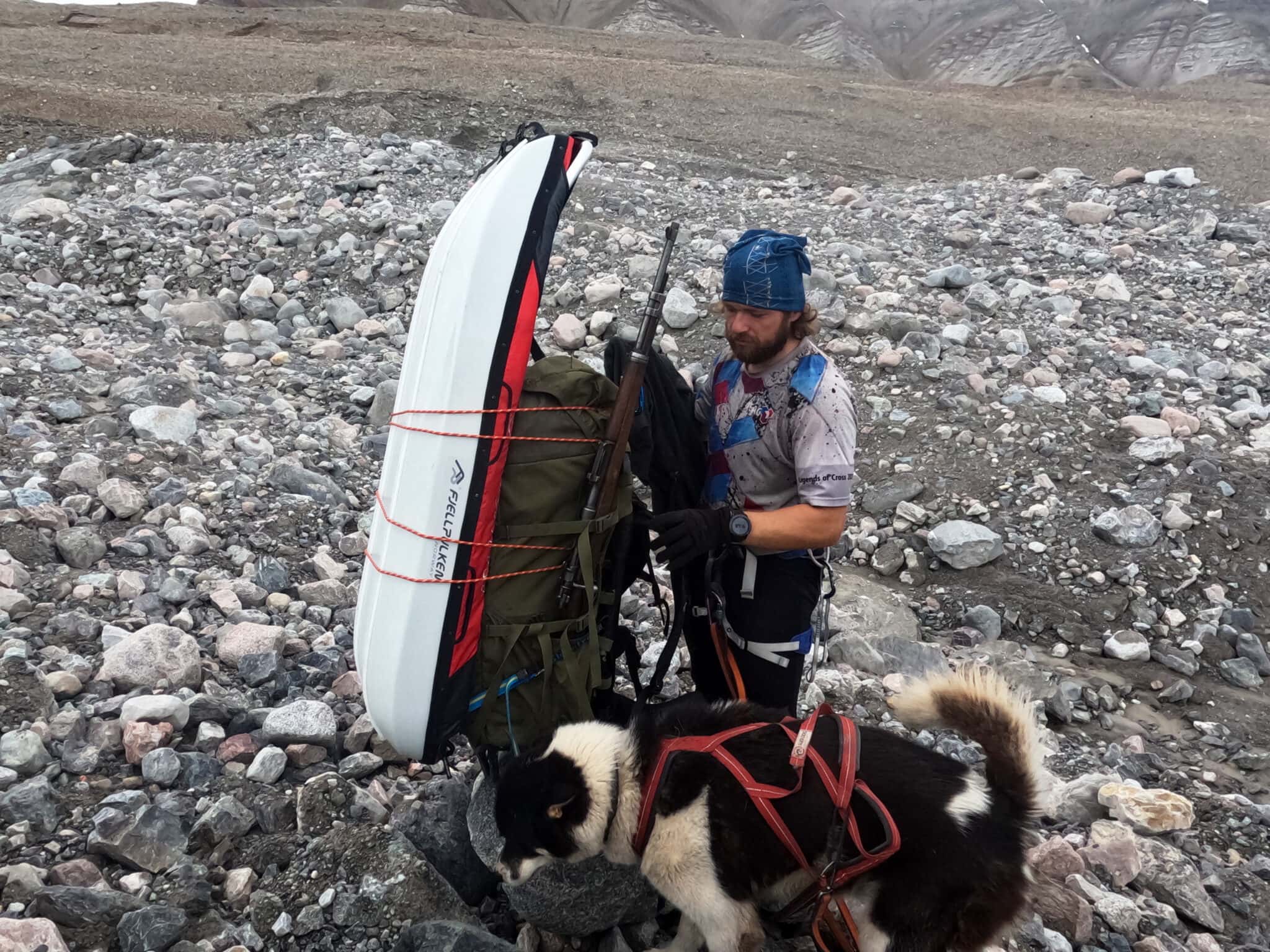
With these demands, the weight in the backpack easily climbs to over 30 kg.
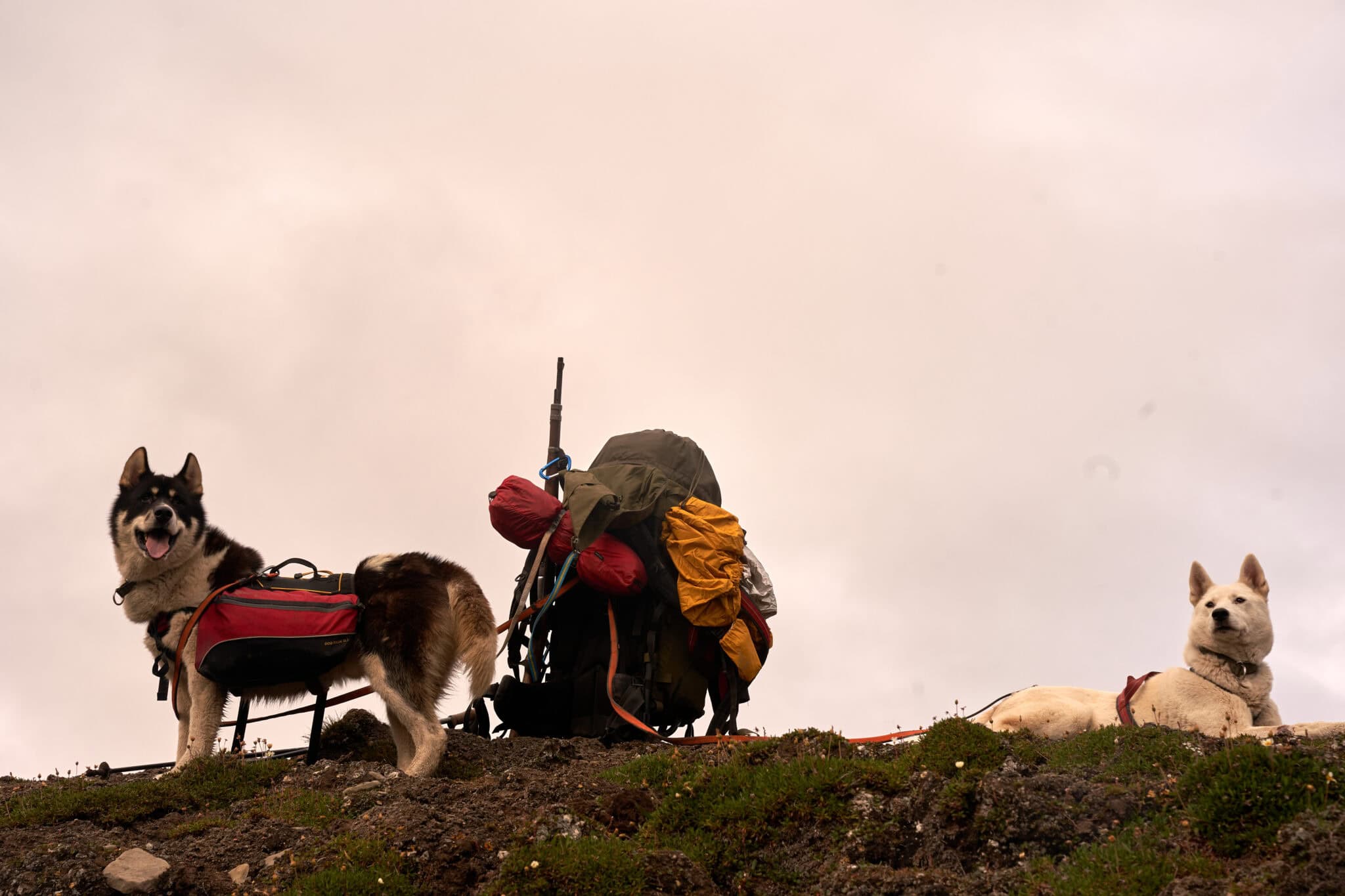
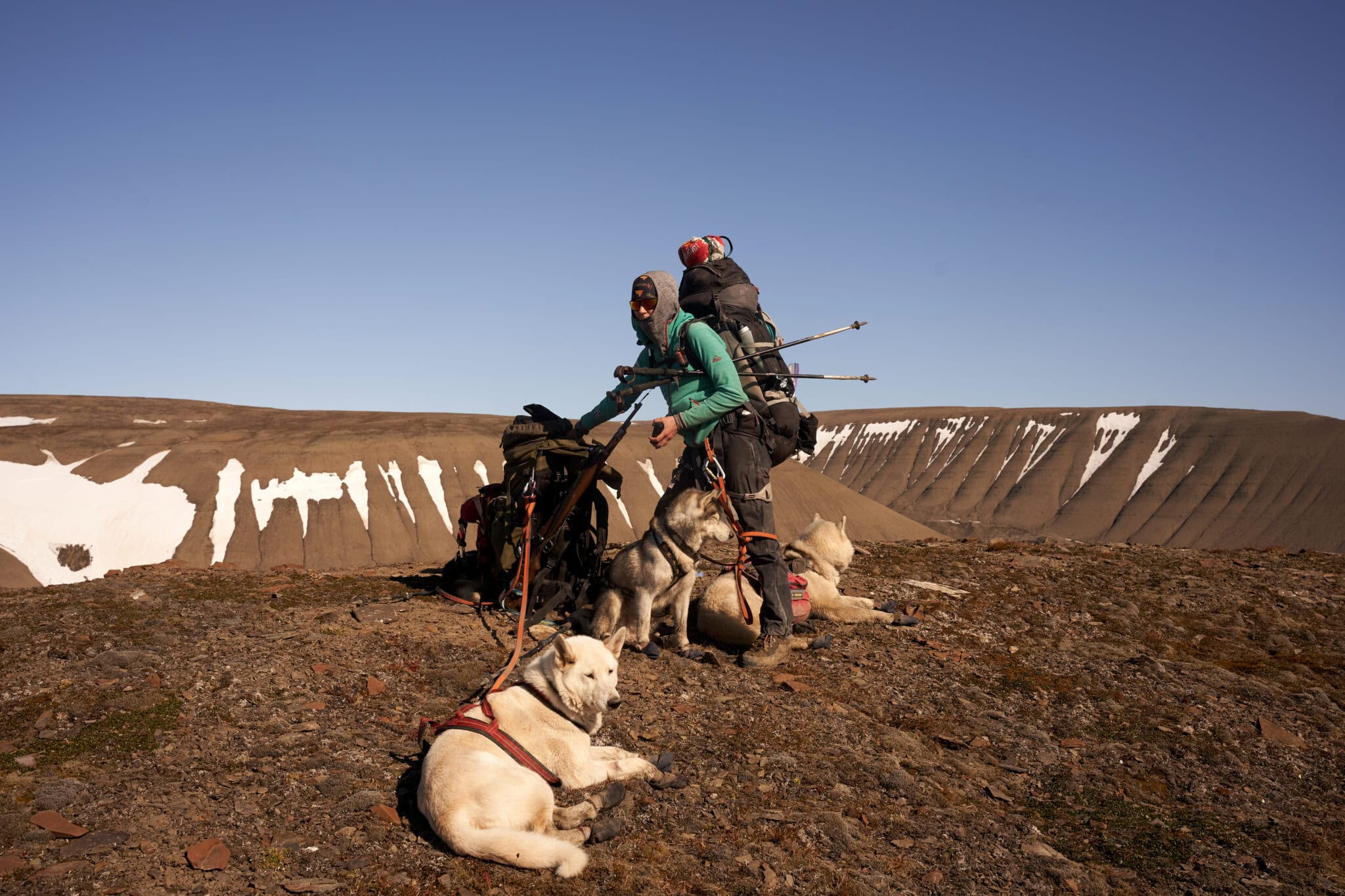
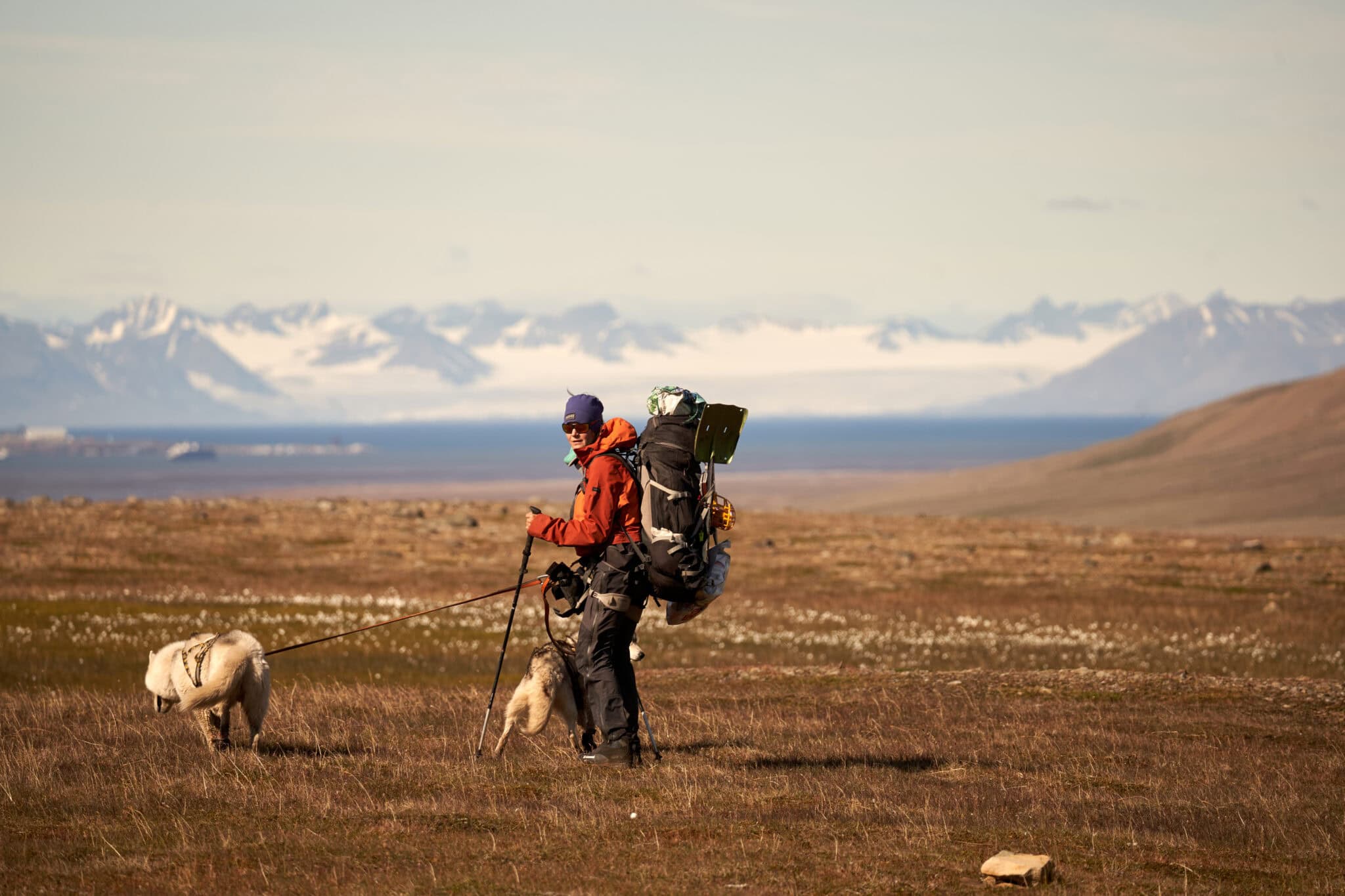
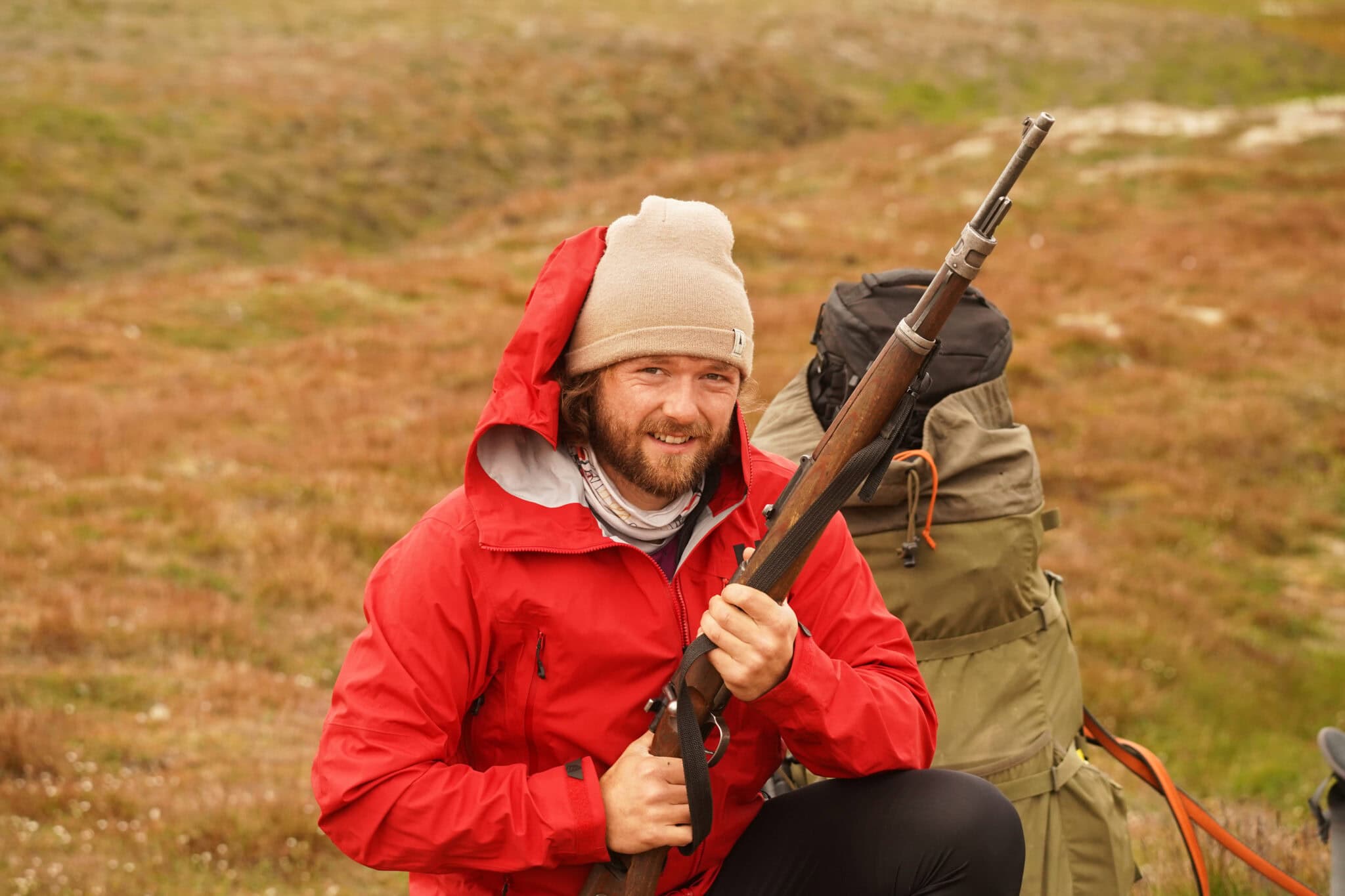
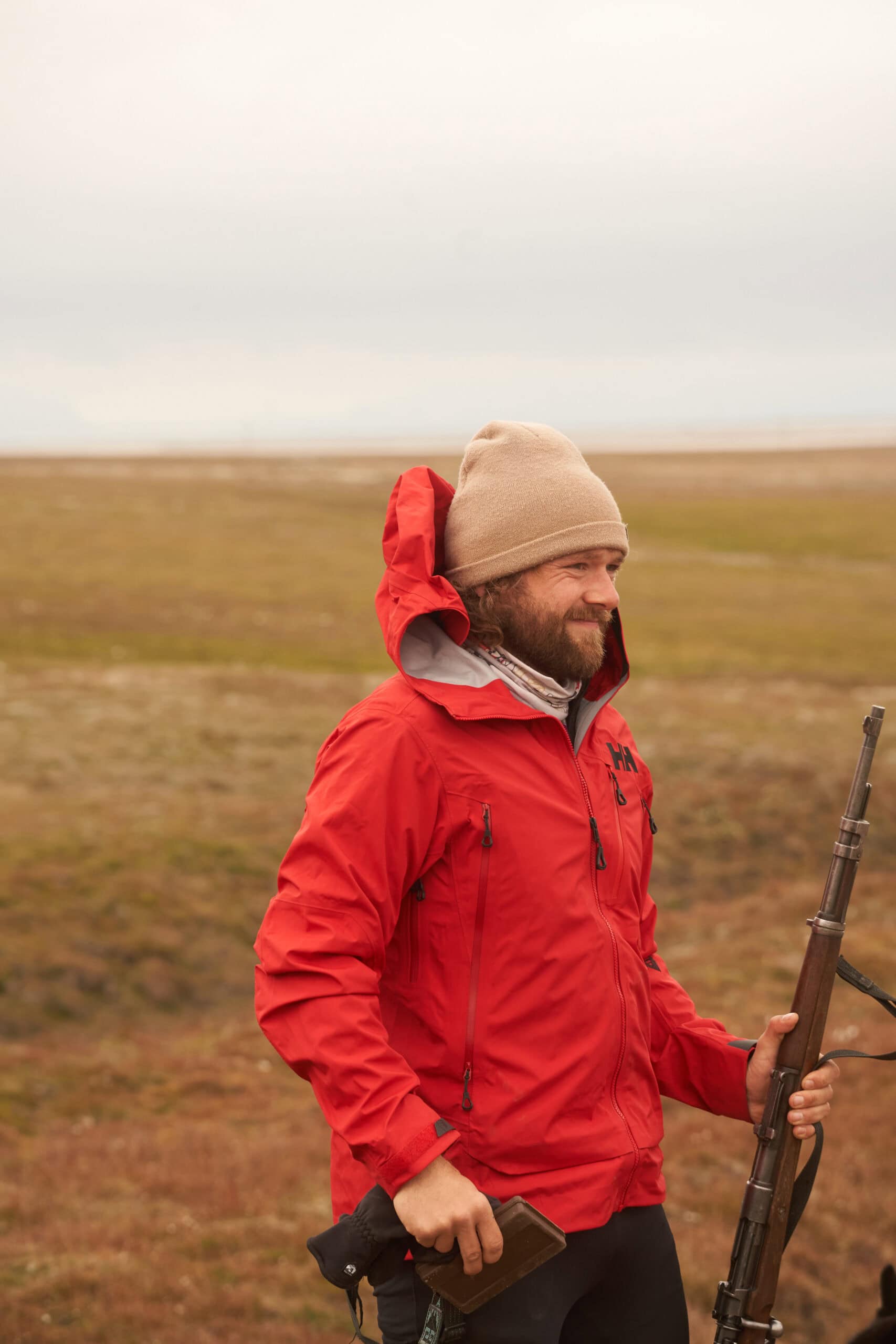
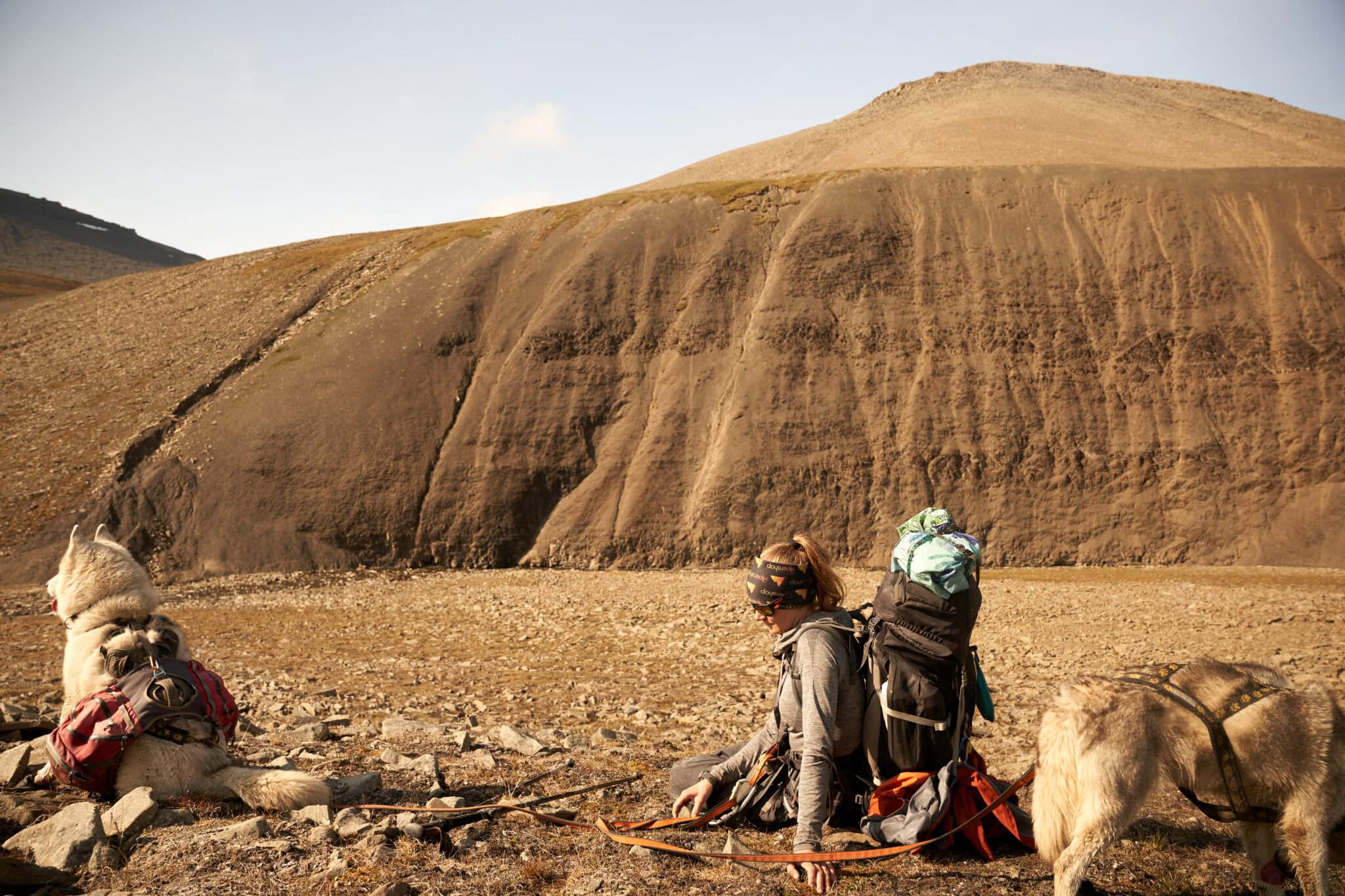
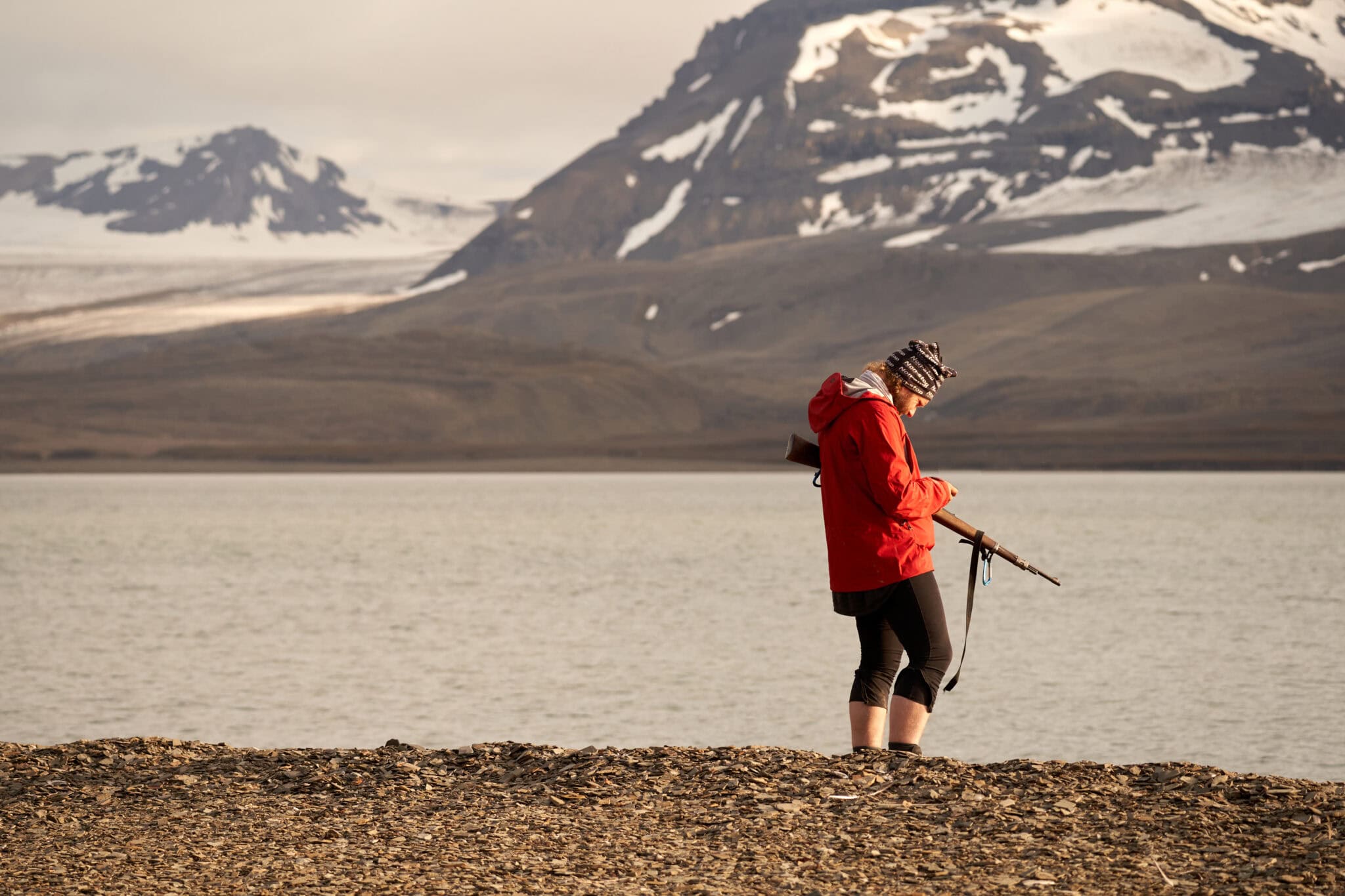
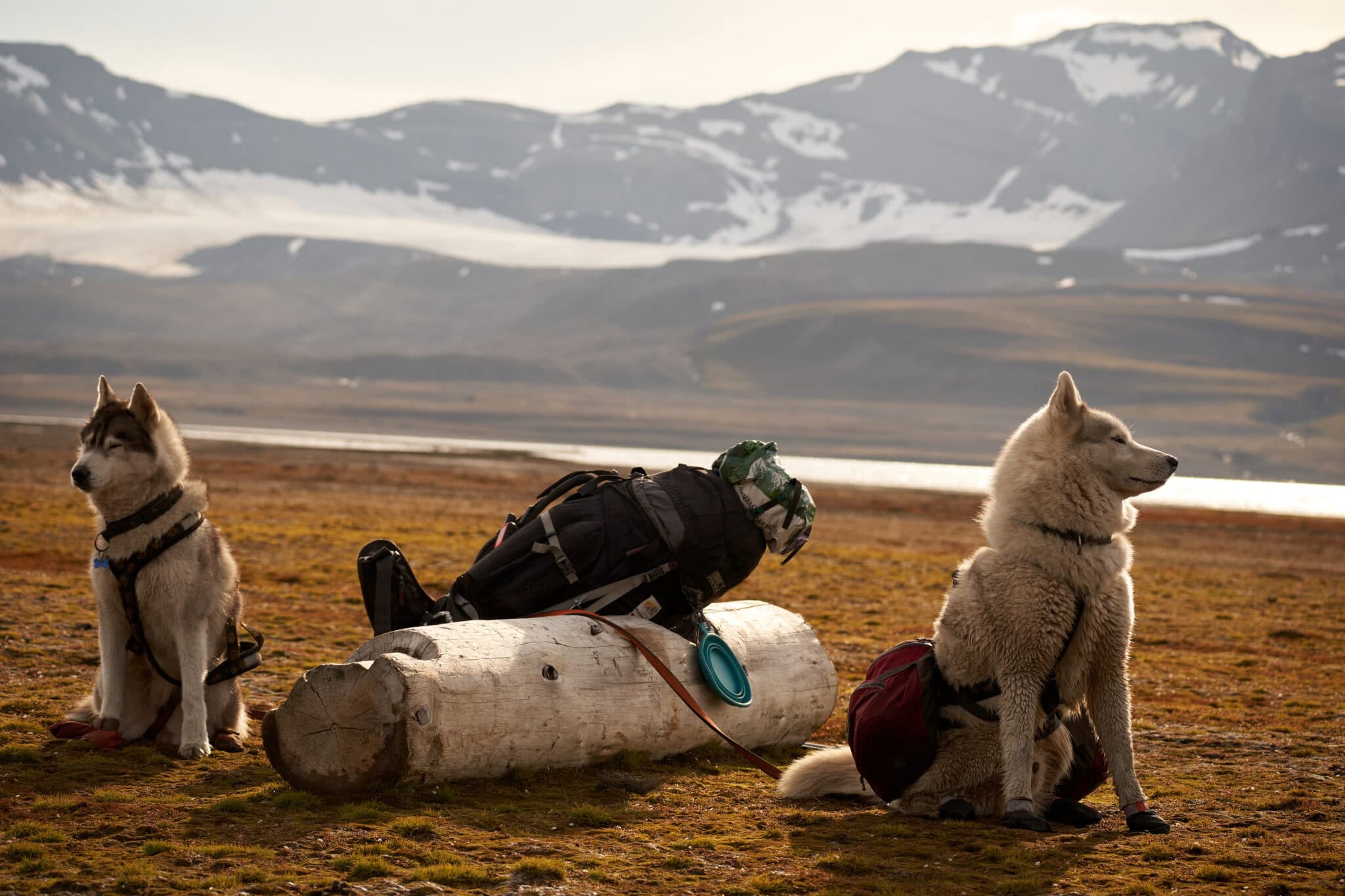
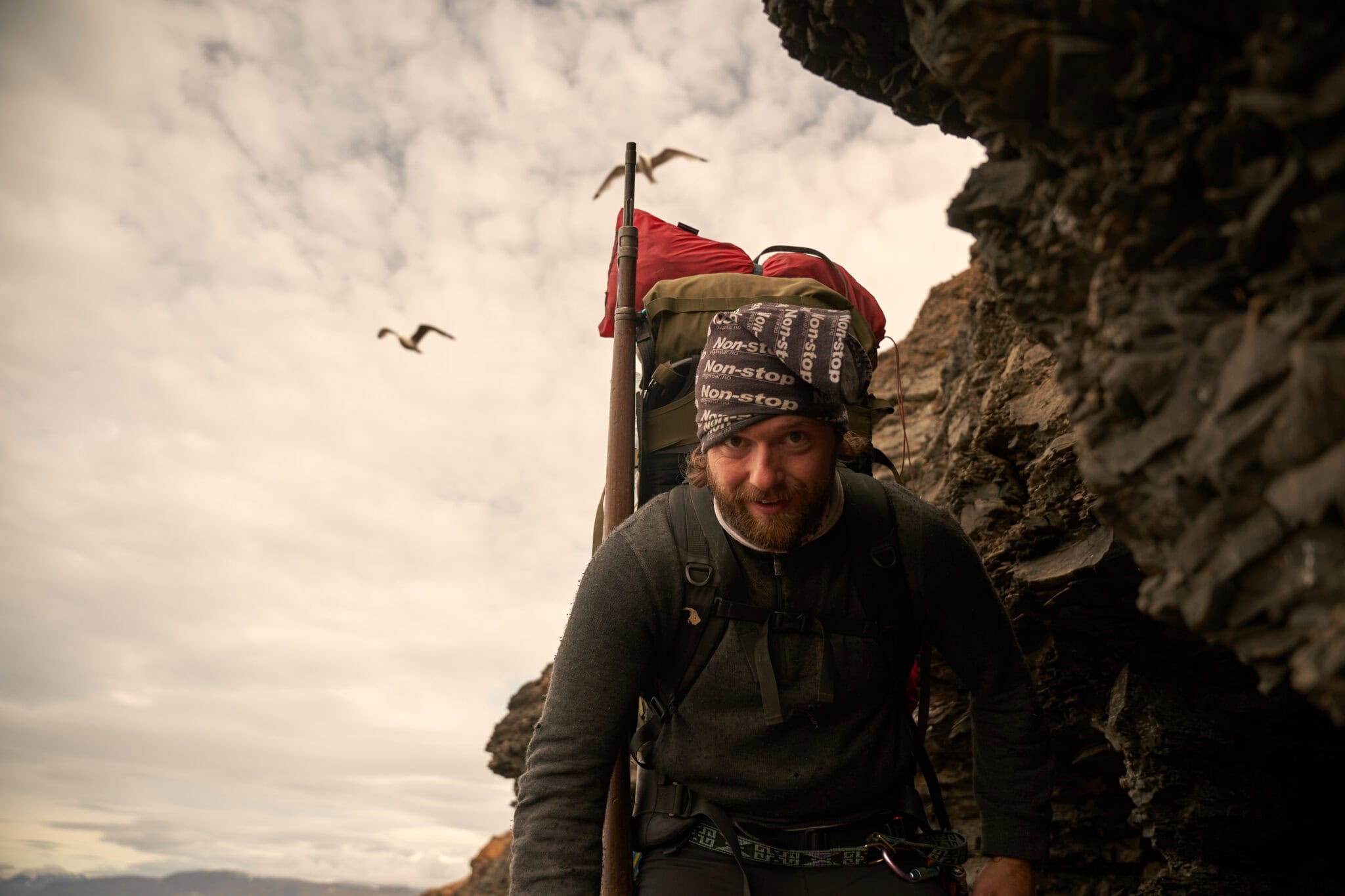
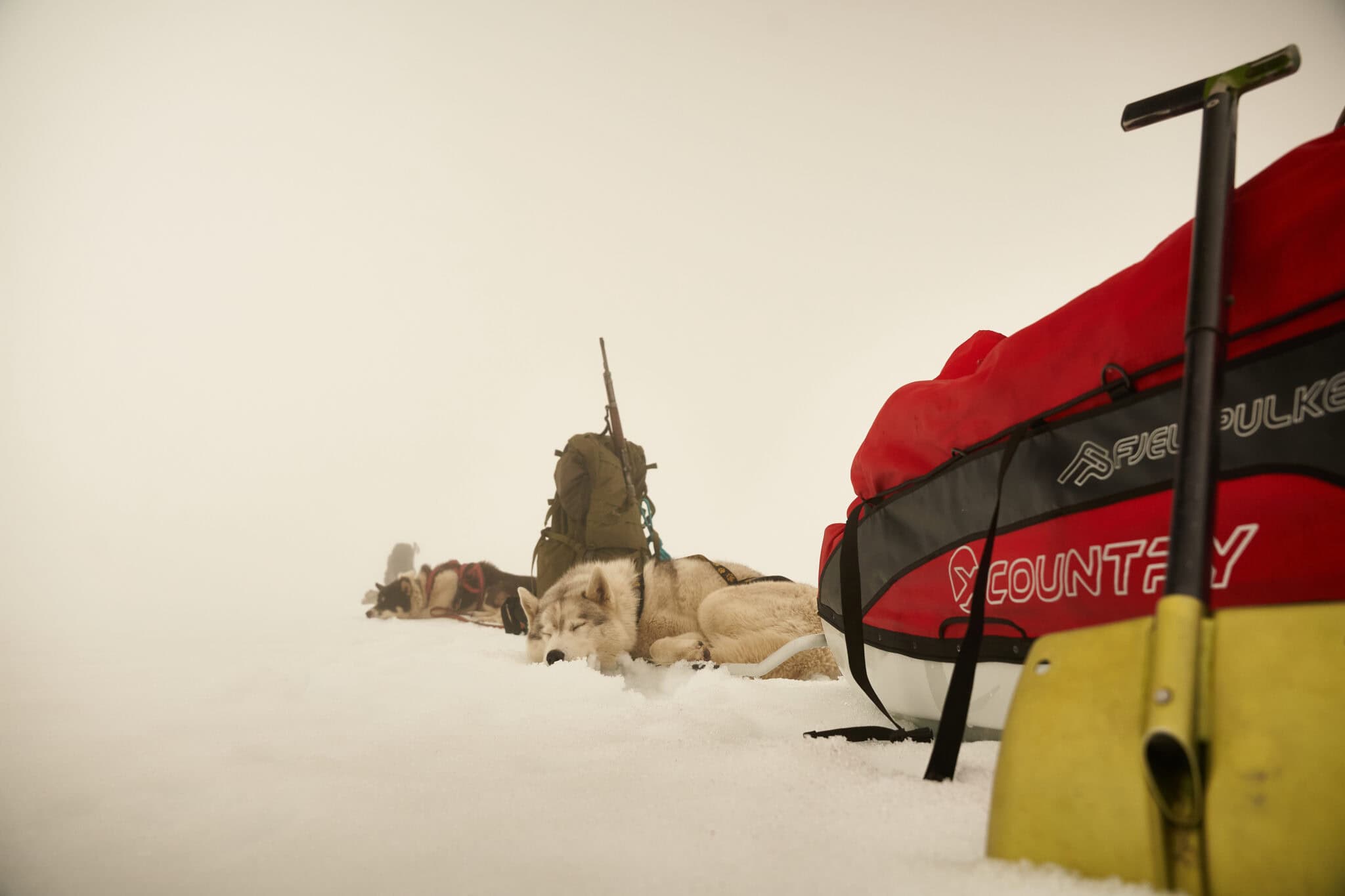
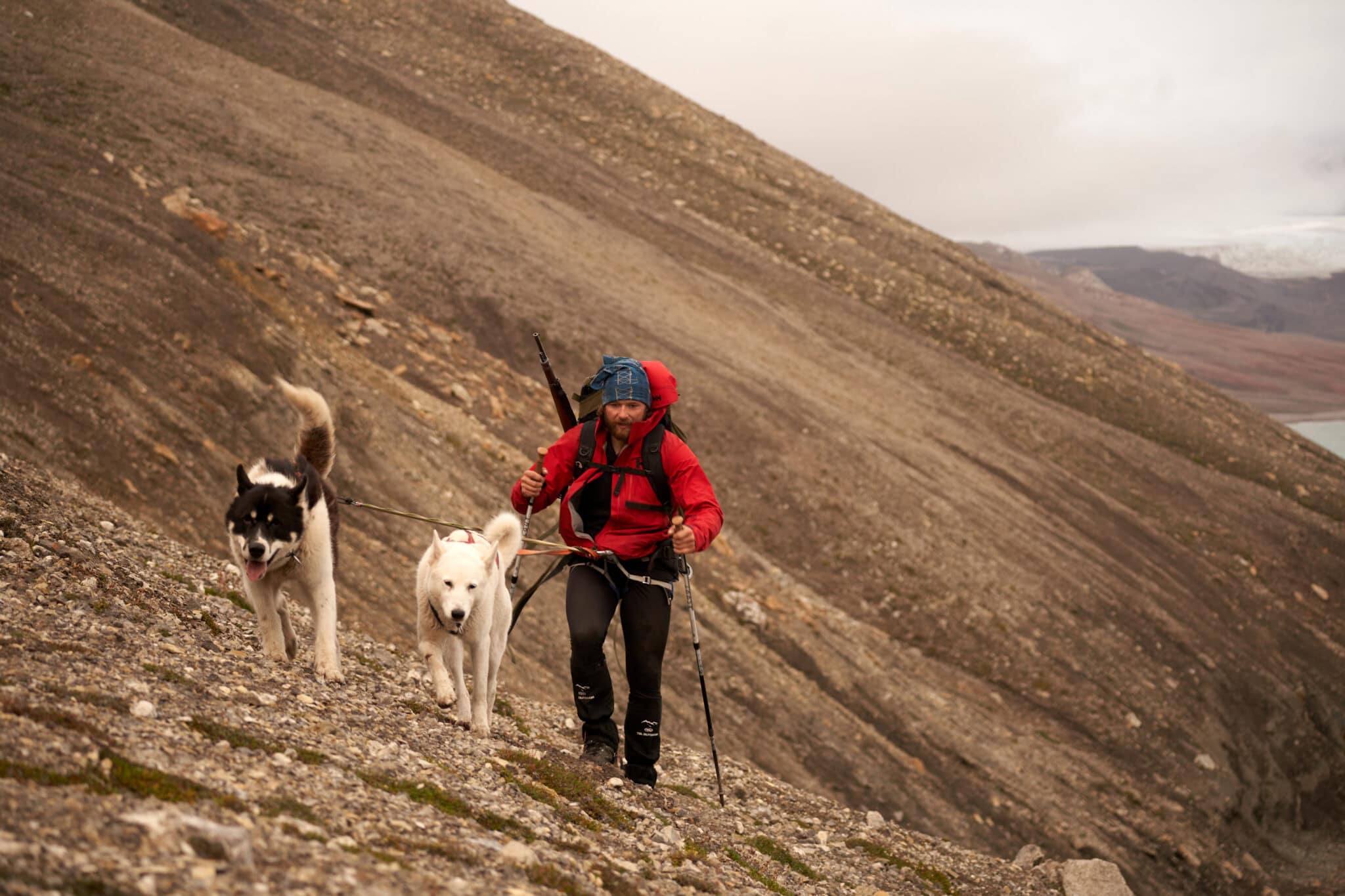
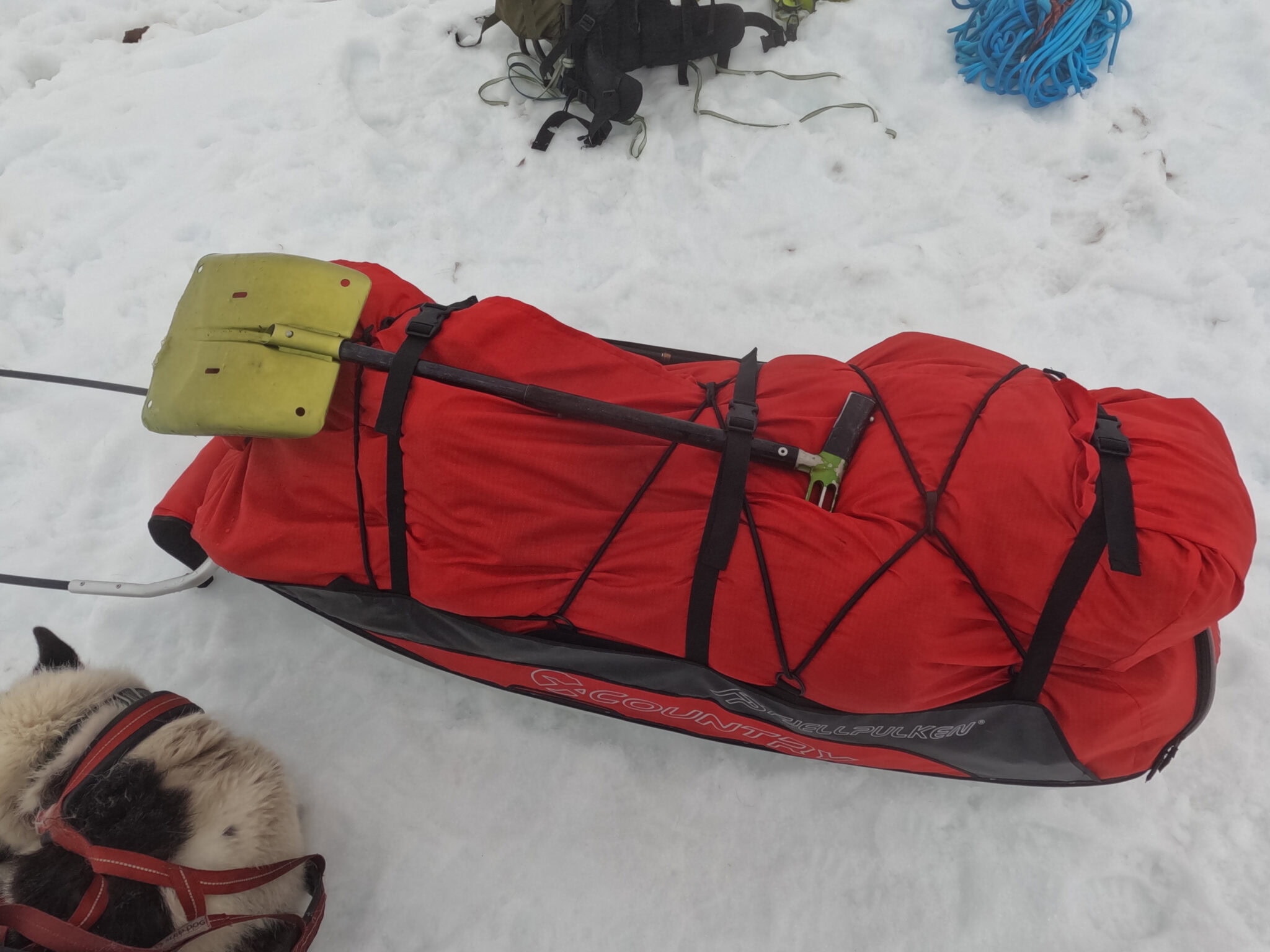
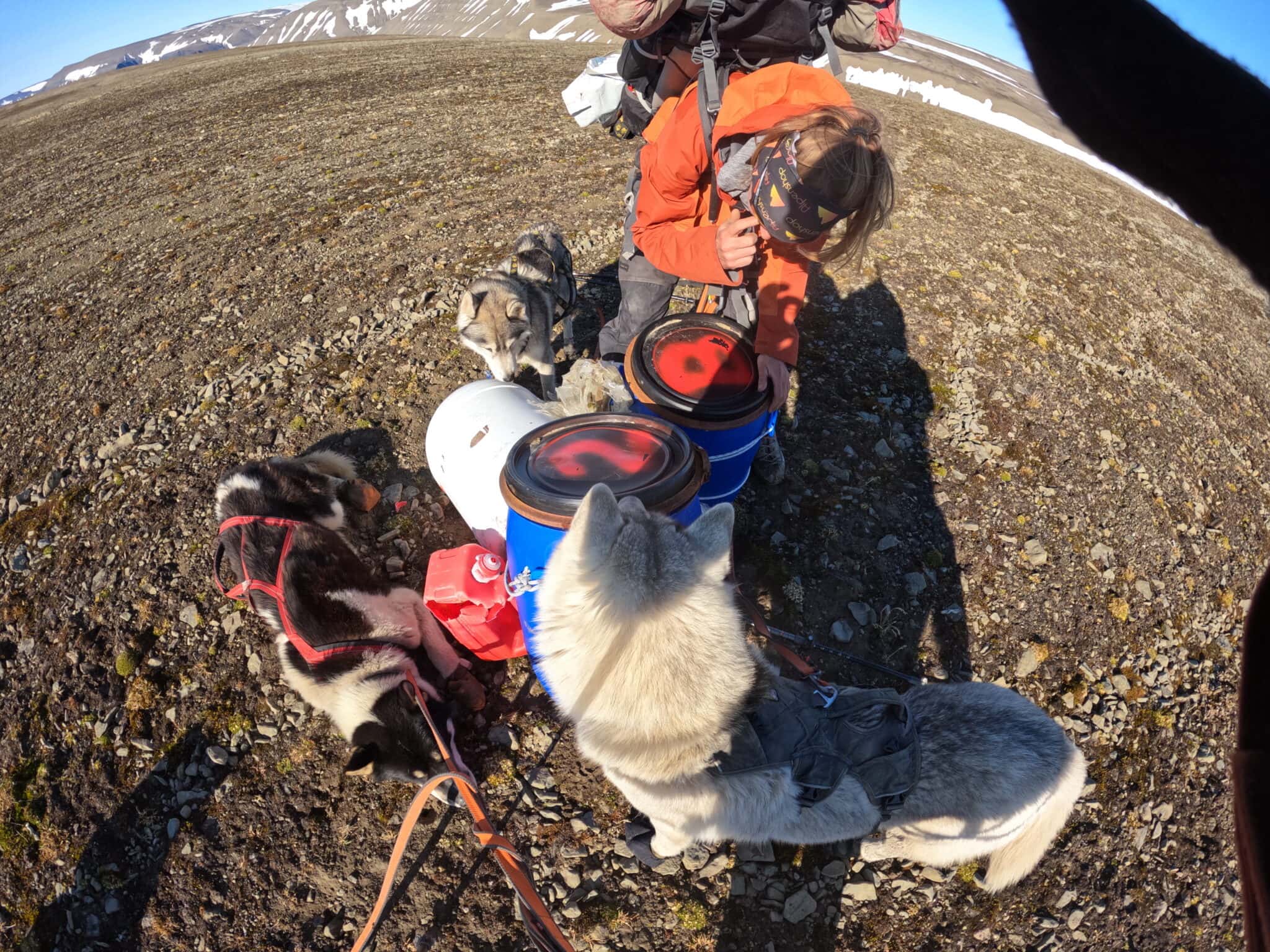
Every dog trekker will be laughing their heads off now, but the world is different here. You are required to carry a weapon, a satellite phone, and an emergency beacon, and it’s recommended to have a flare gun with you. Food for 10 days + dog food for the old ladies. The boys carried their own share. Everything was weighed in advance and calculated in Excel. We ended up with just over 65 kg of equipment, food, and dog food.
The prices in Longyearbyen take some getting used to. To put it in concrete terms, about double what they are in Sweden and thus more than twice as expensive as in Germany. Not to mention the costs for renting the weapon. Norwegian gun laws are restricted to the point that there are only two shops that rent weapons, and they charge moon prices. For that money, you could have easily bought one, but unfortunately, I wasn’t permitted to do that yet.
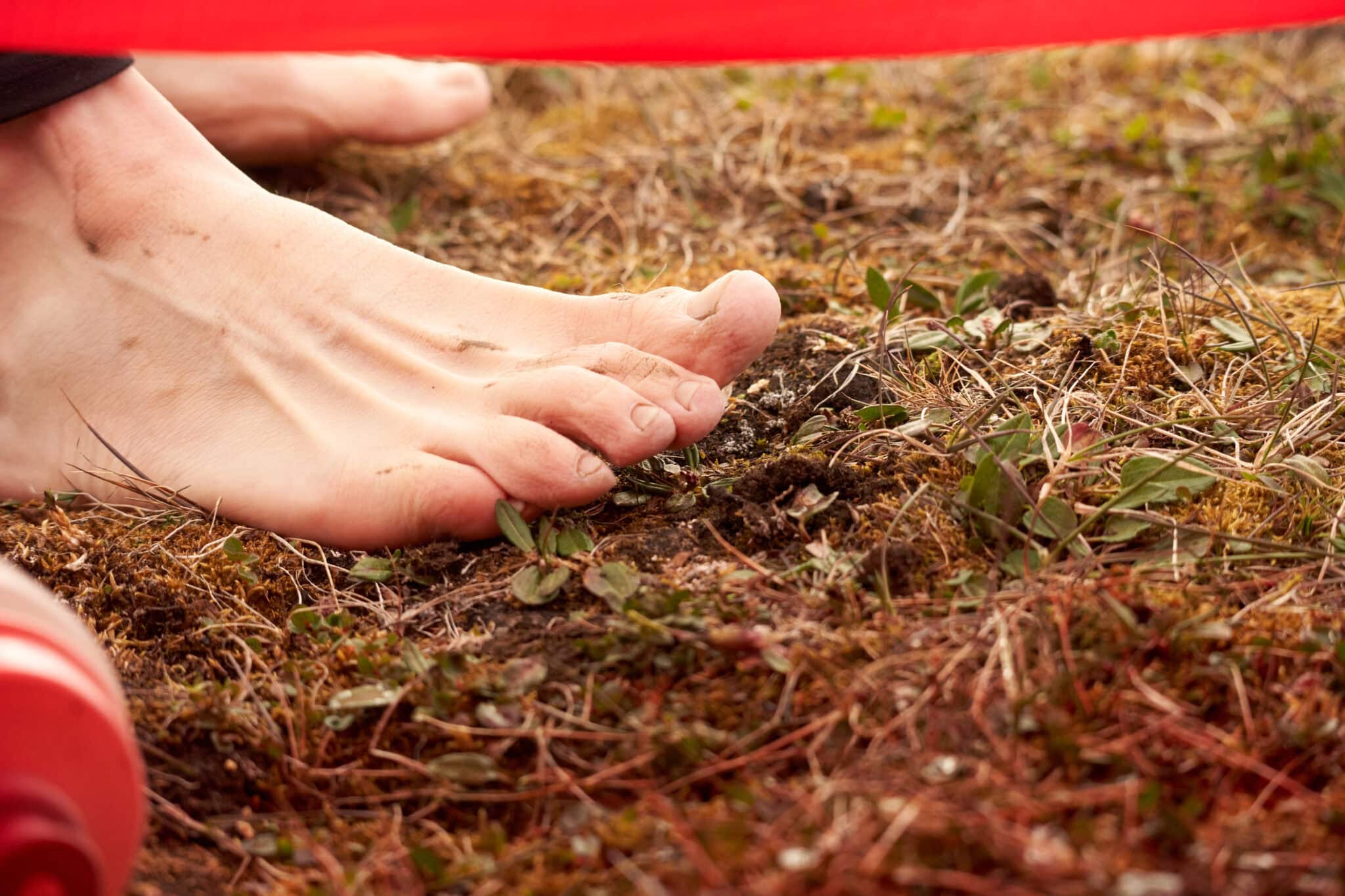
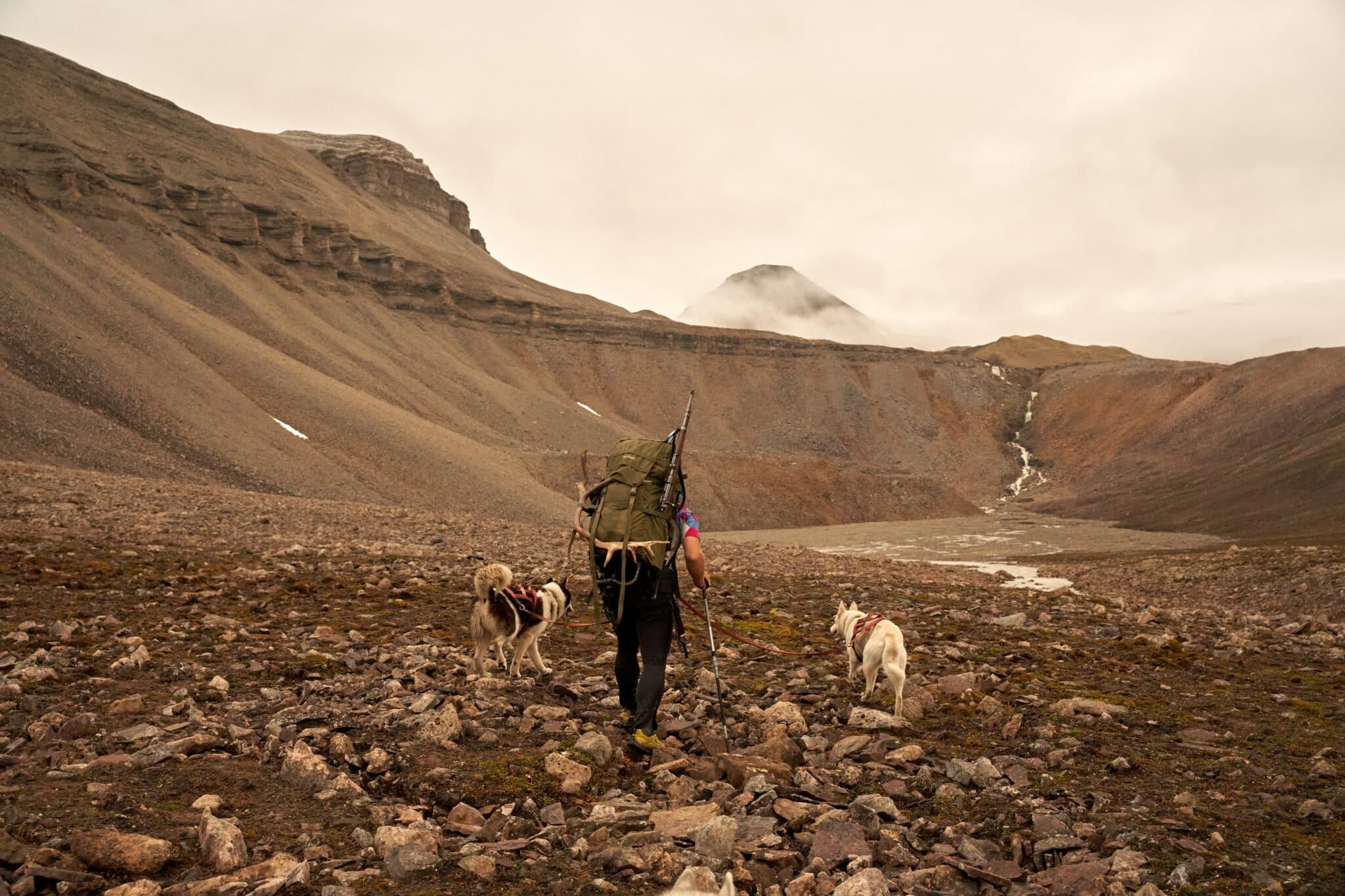
But now to the tour: after we organized dog food and a satellite phone, we continued along the gravel road heading east. Our idea was to push through to the east coast of Svalbard and then return via a different route. However, this was just an idea, and we kept everything open due to a lack of local knowledge. The backpack straps cut into our shoulders; we had to stop every kilometer to relieve our backs. It had nothing to do with joy; it was just damn heavy. We fought our way to the end of the road. From there, we headed into pathless terrain; the soft ground made us sink in a few centimeters every time, making walking difficult.
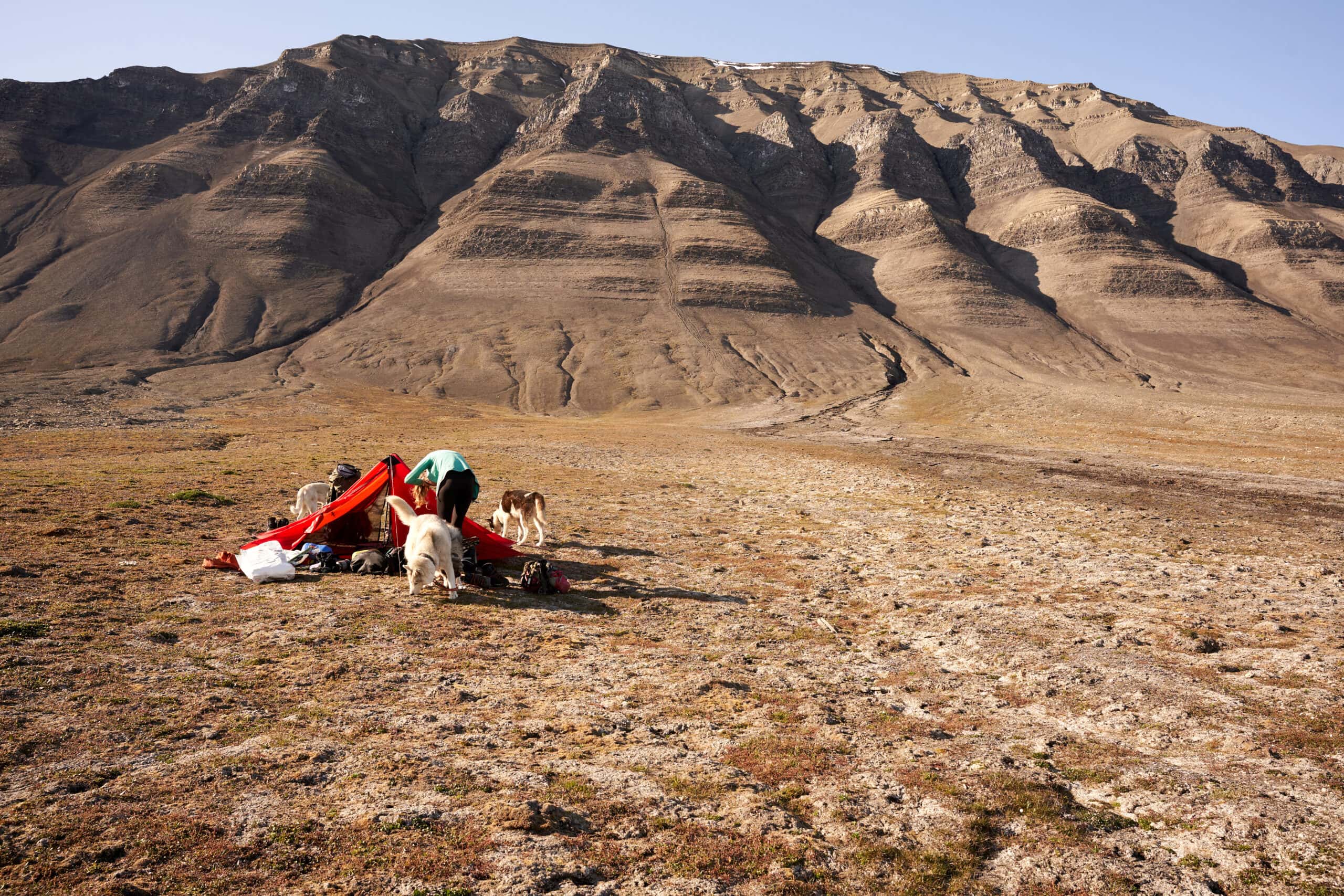
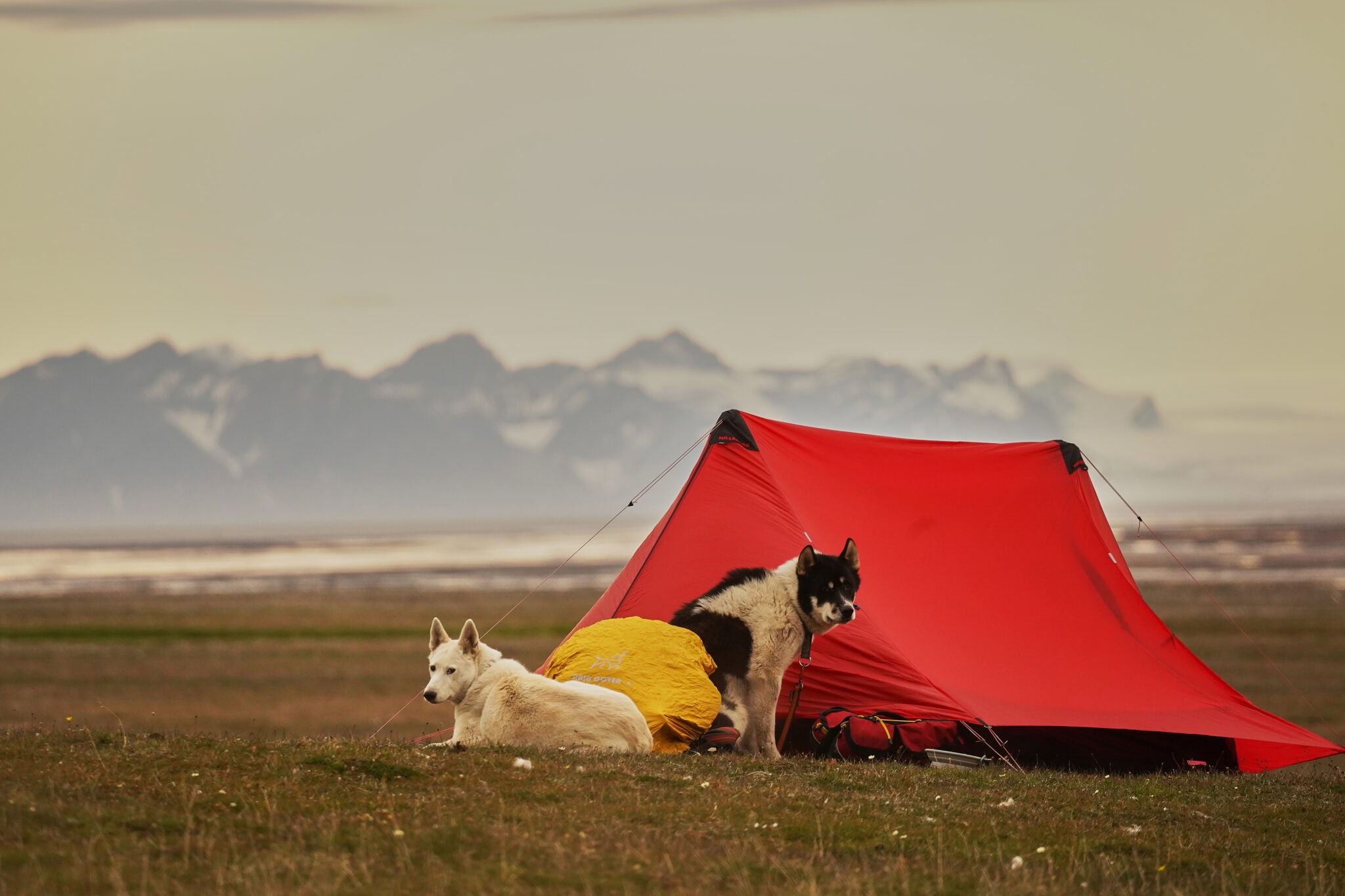
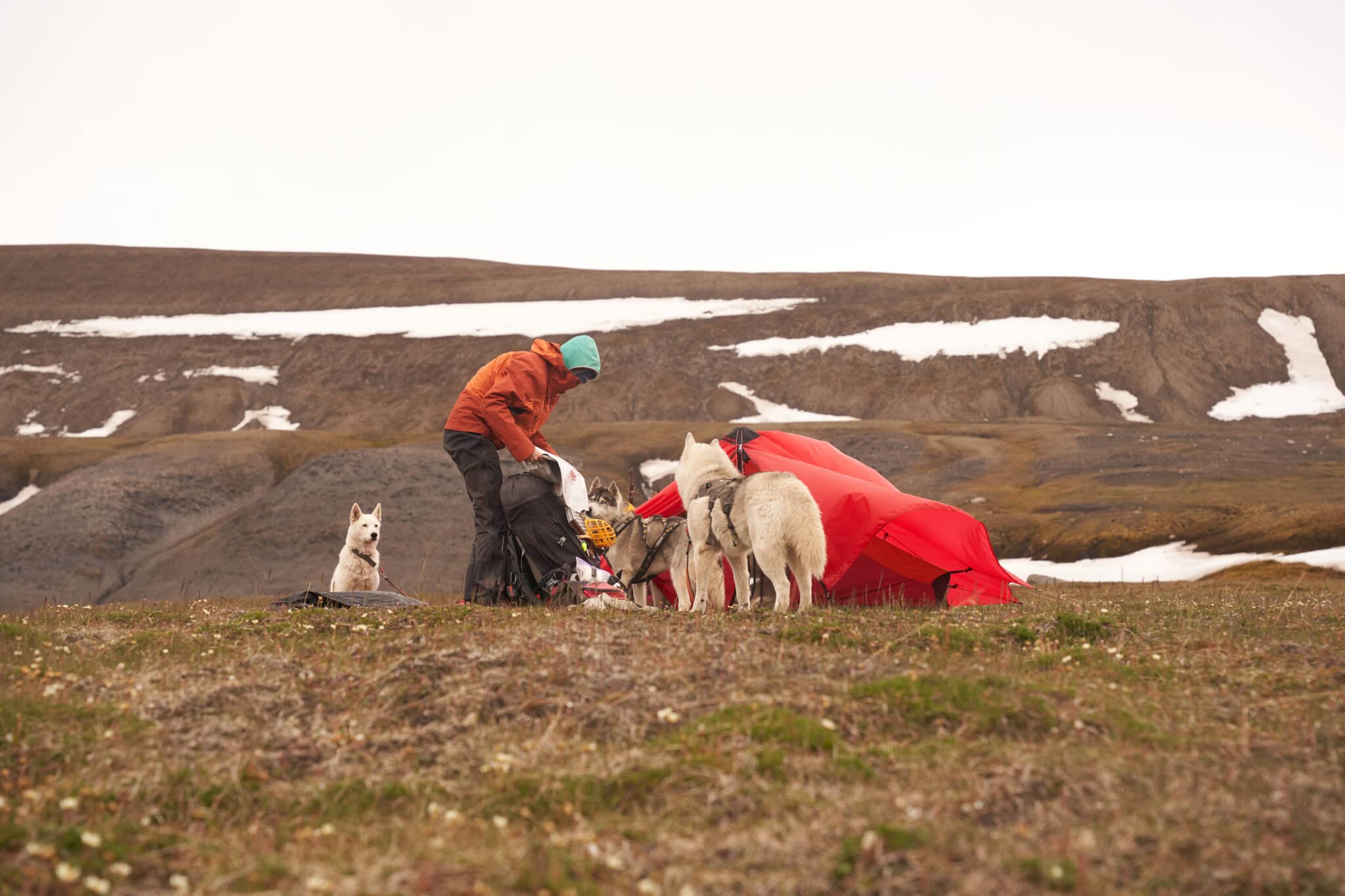
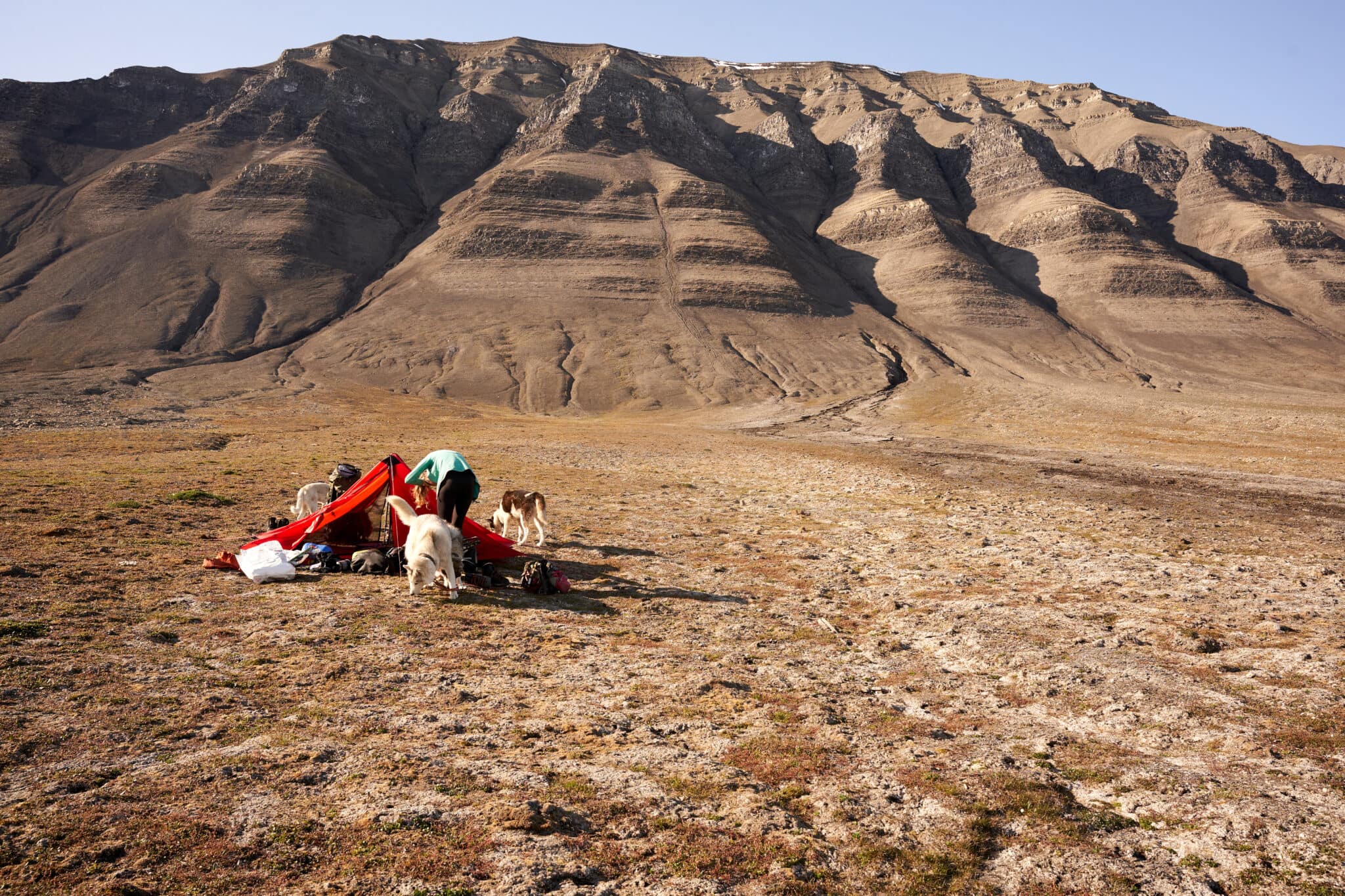
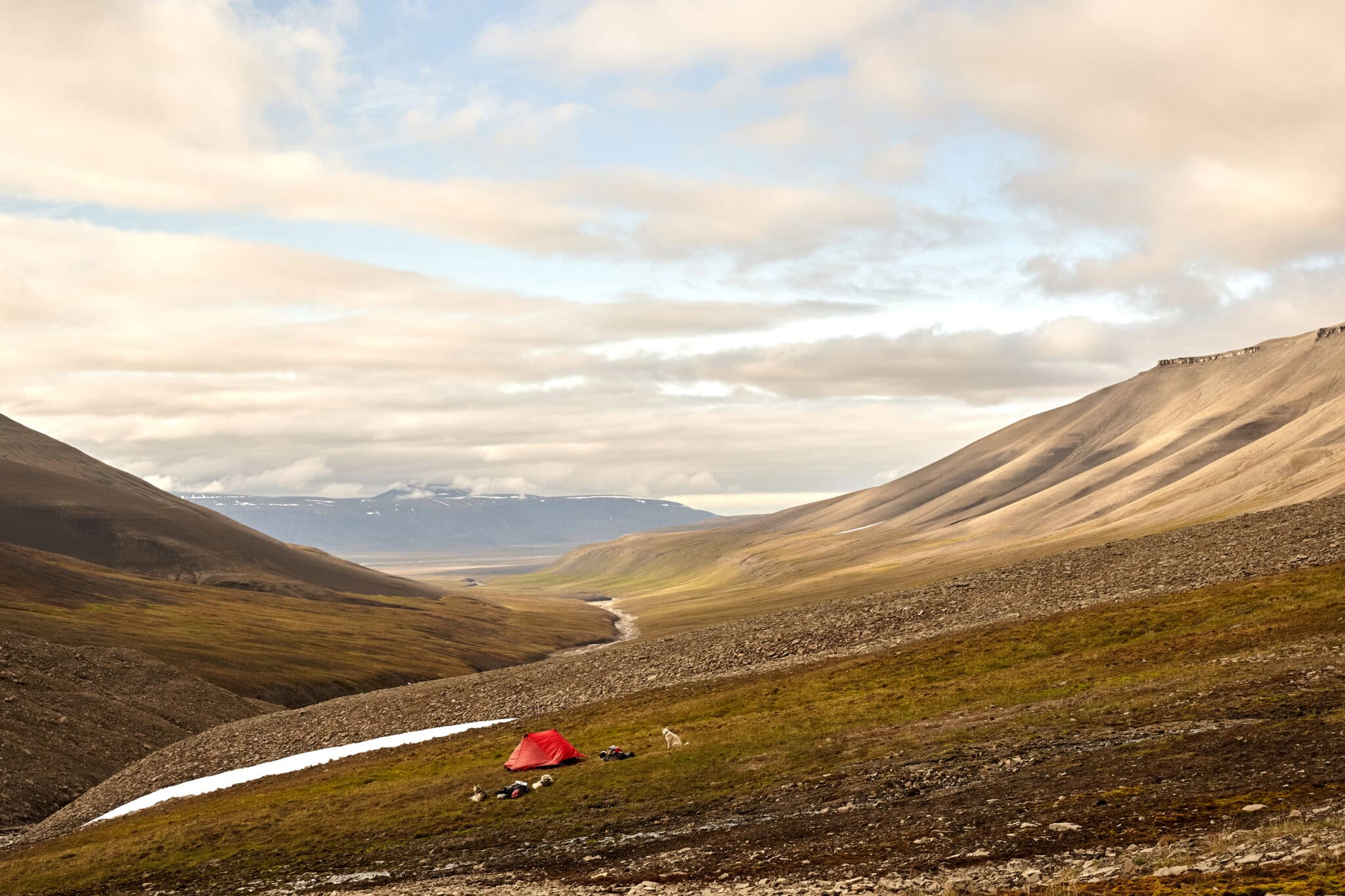
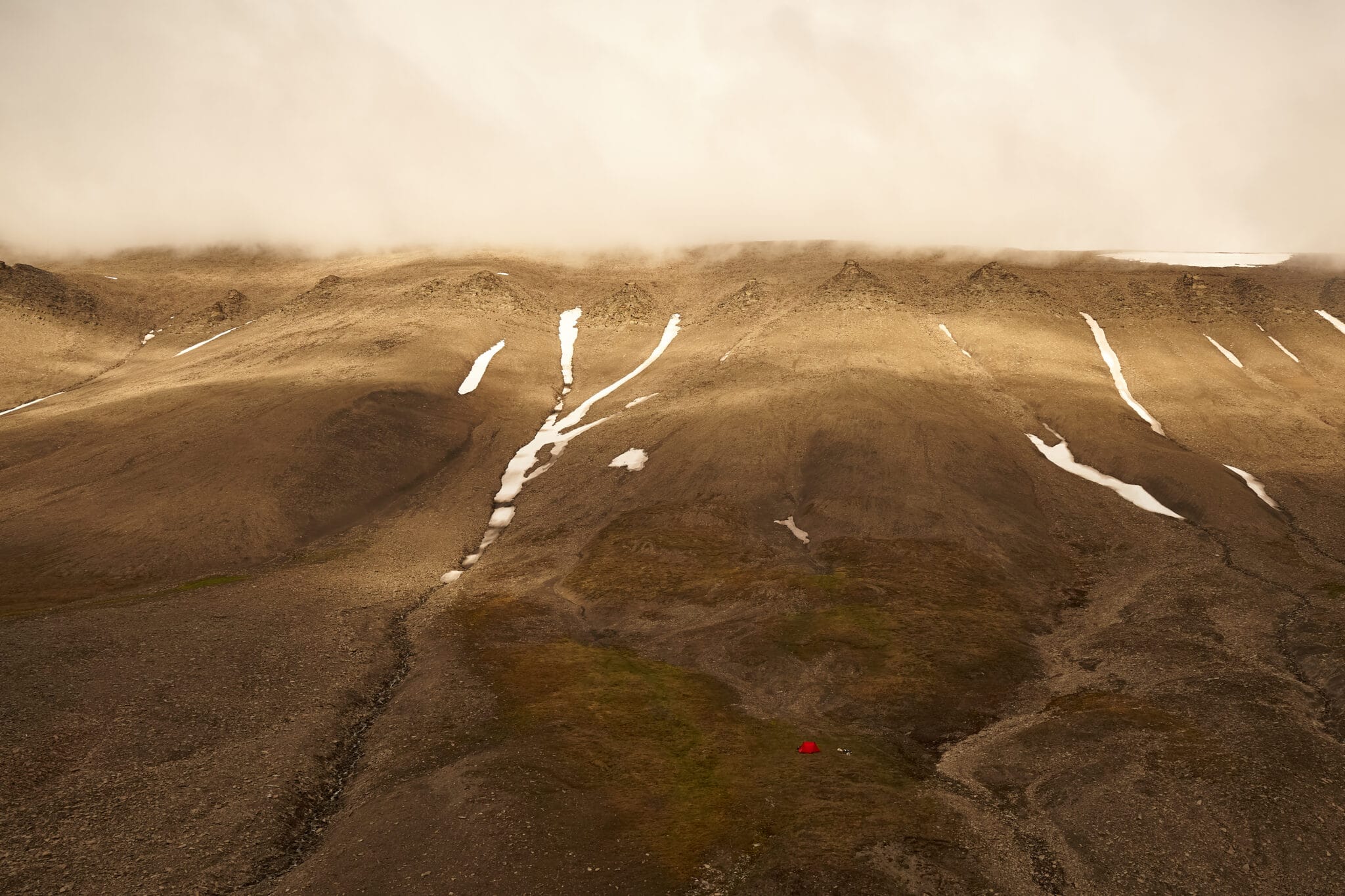
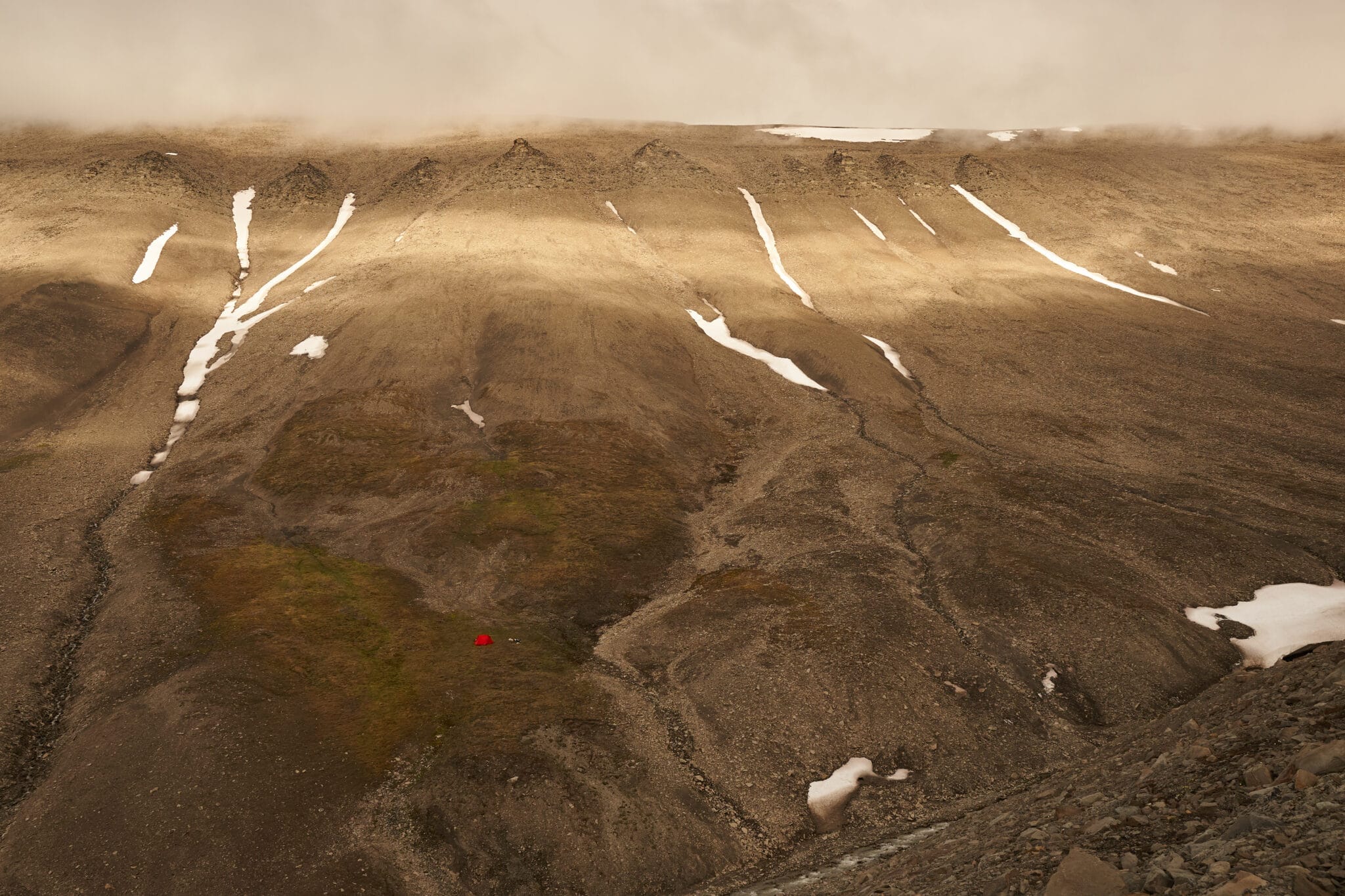
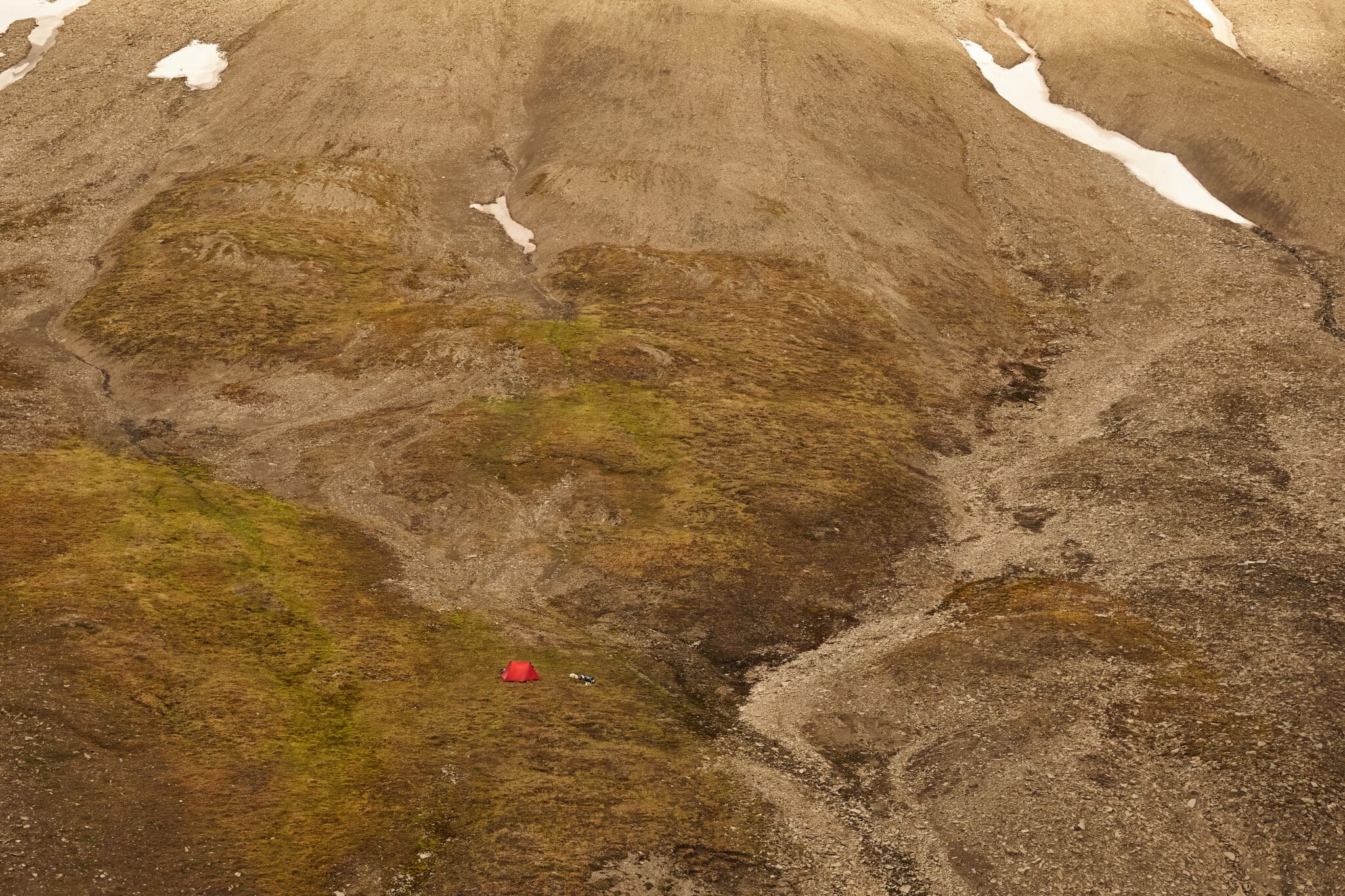
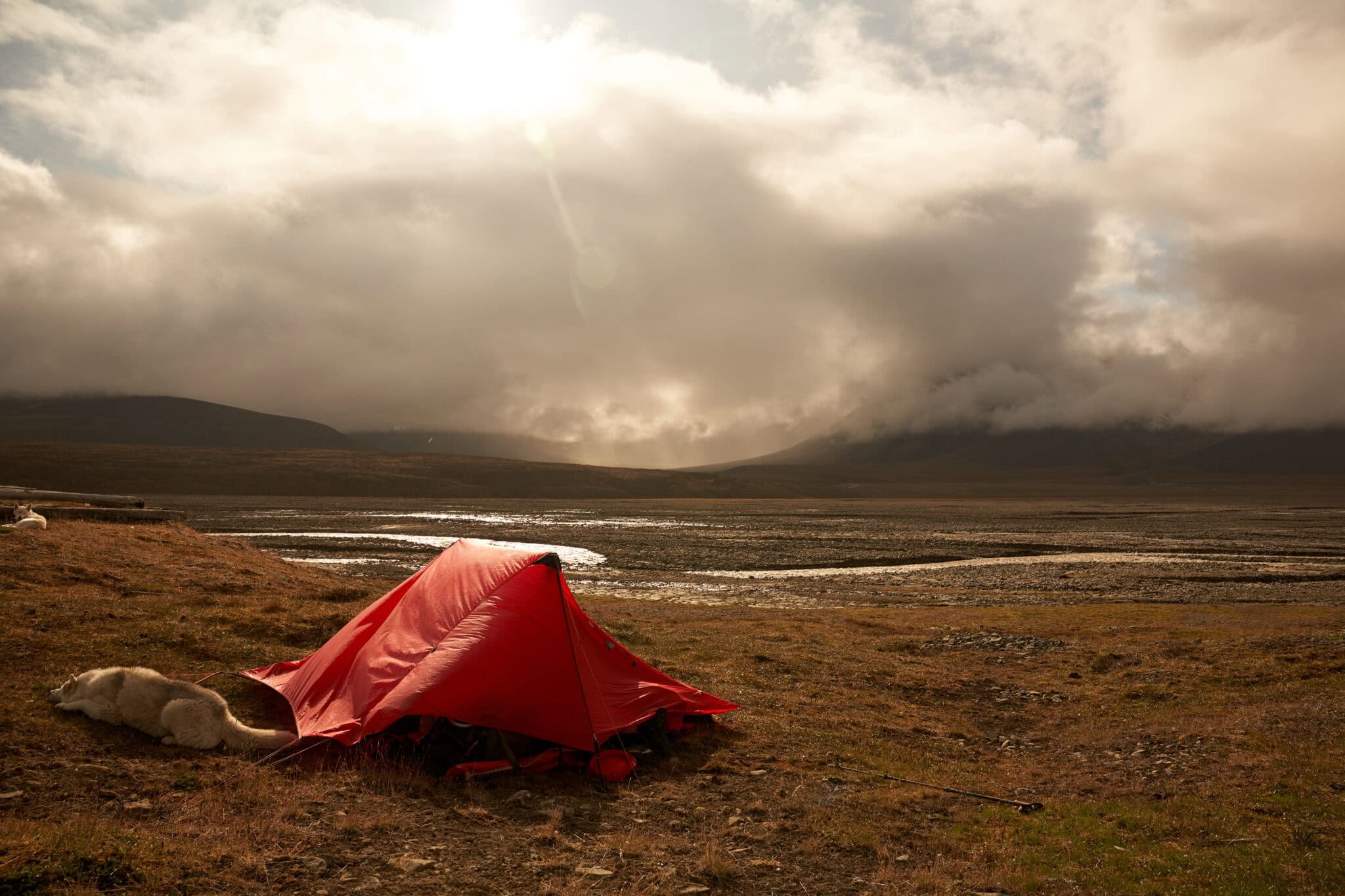
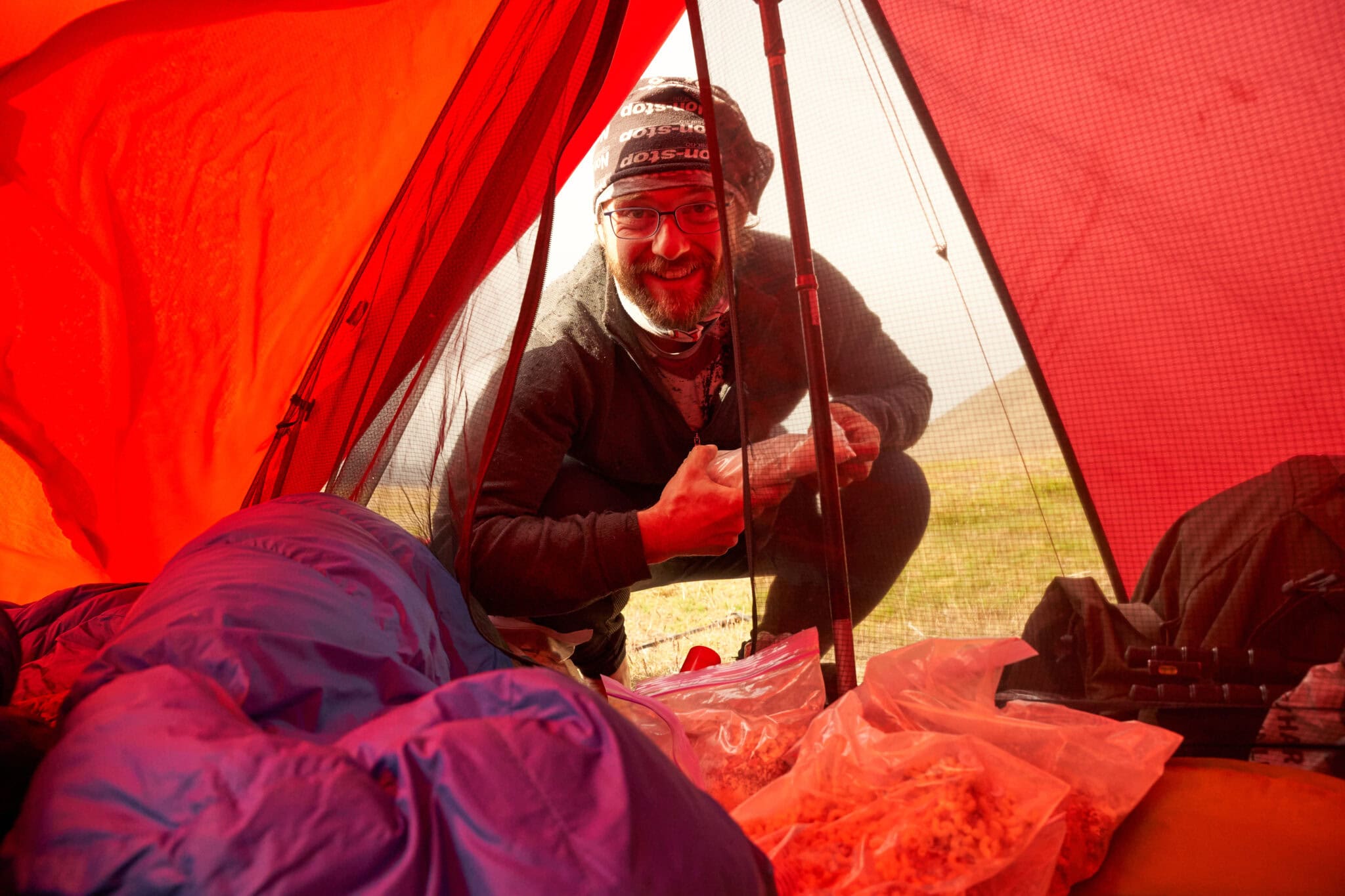
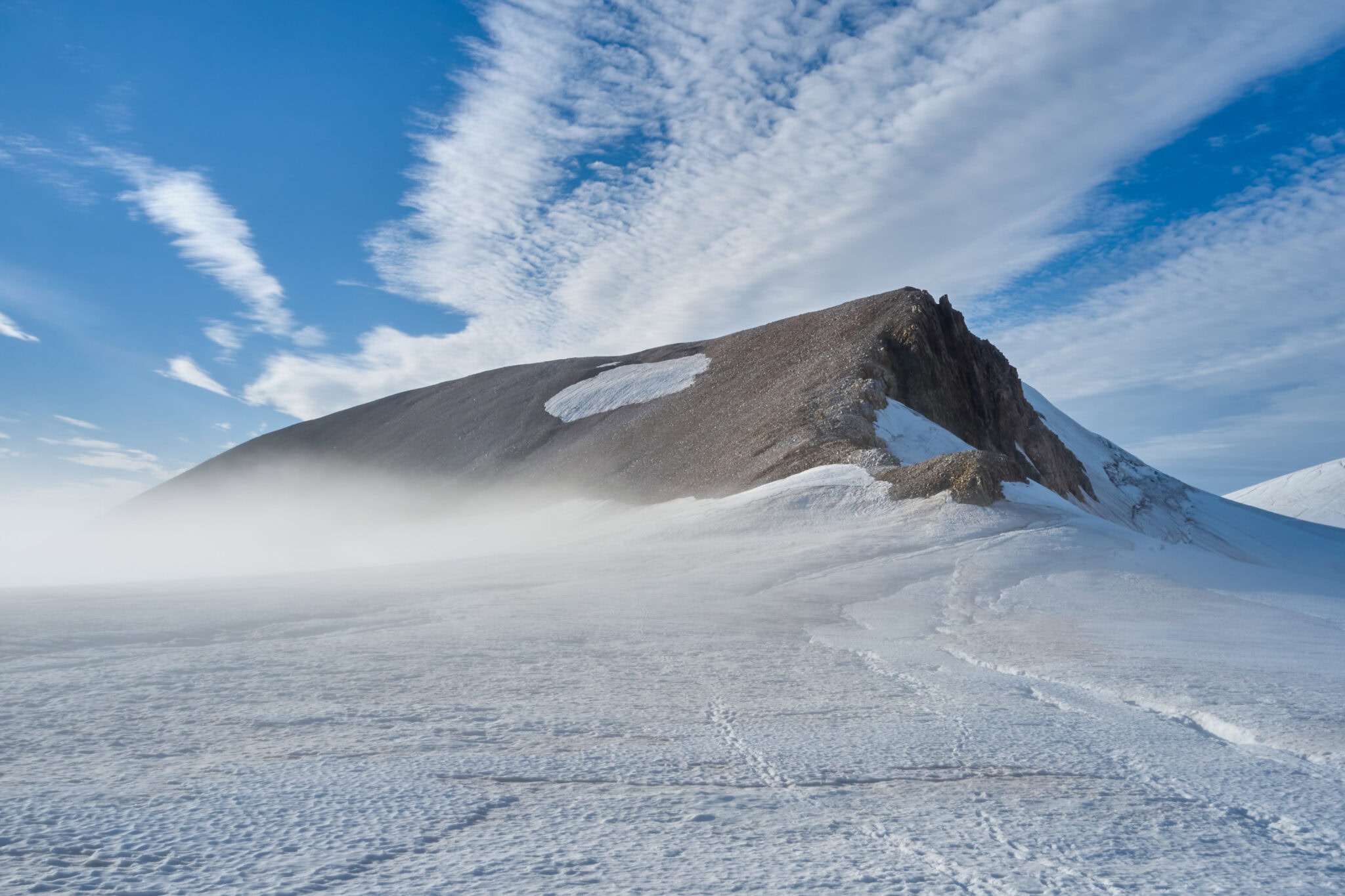
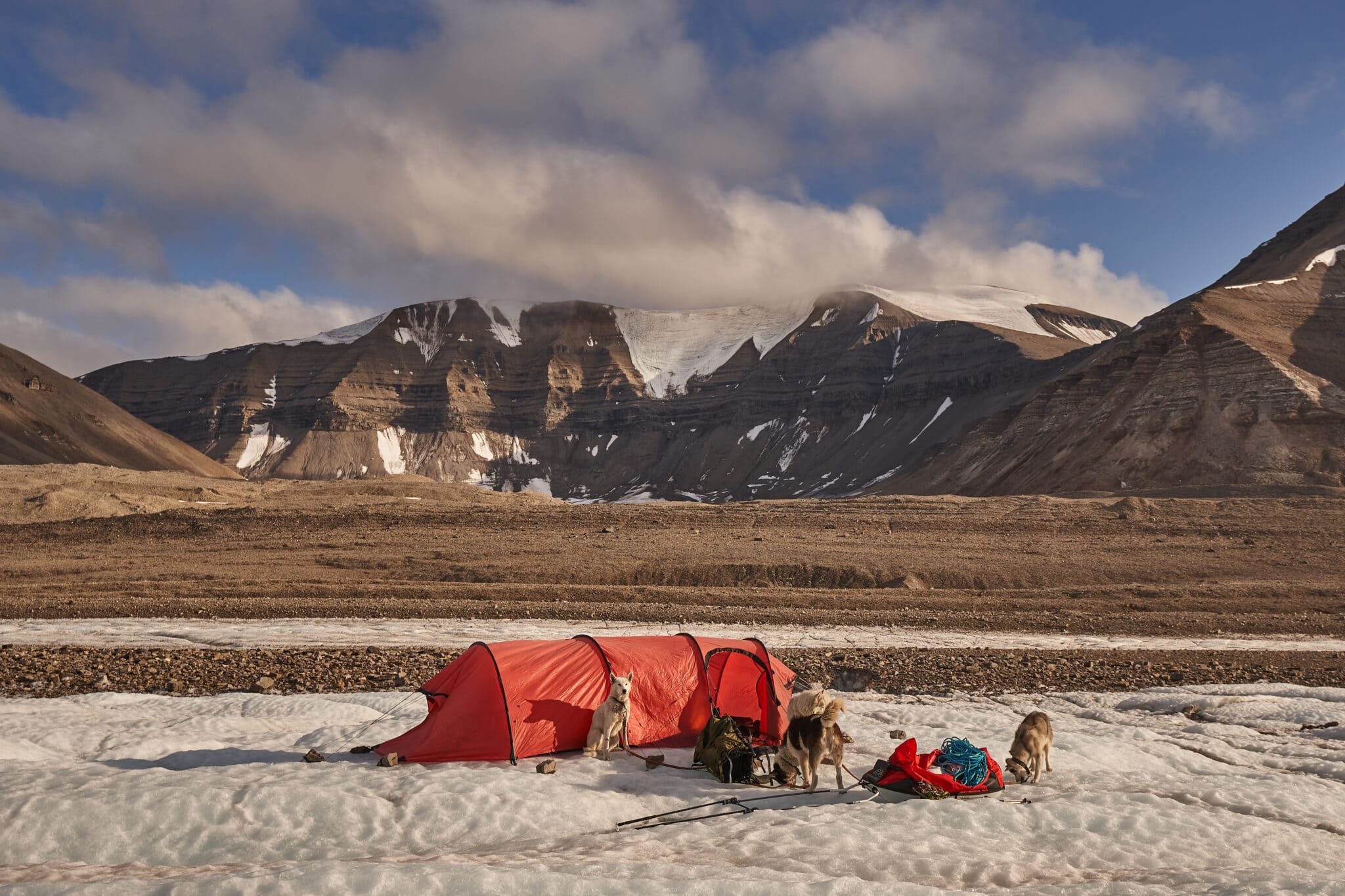
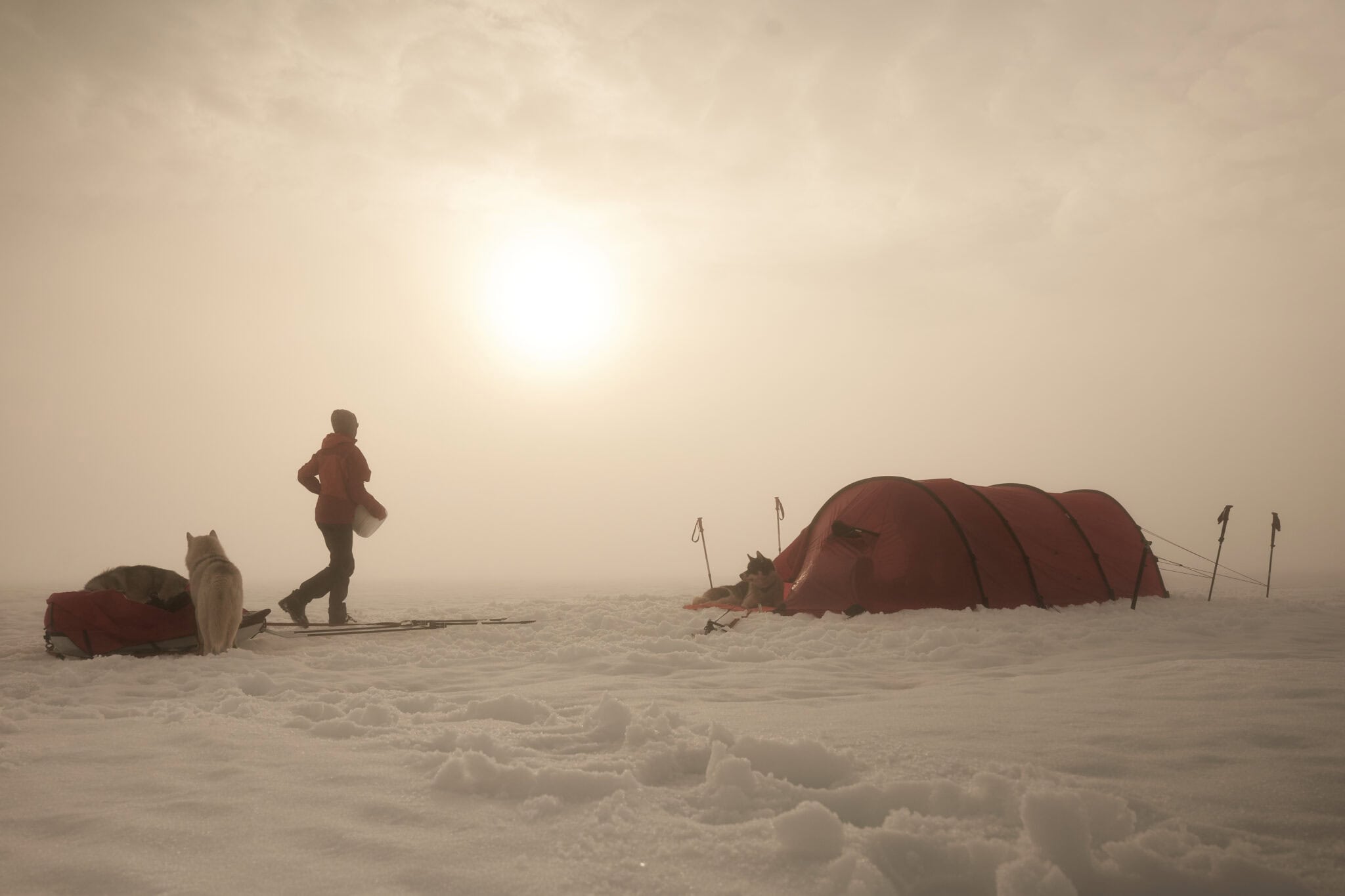
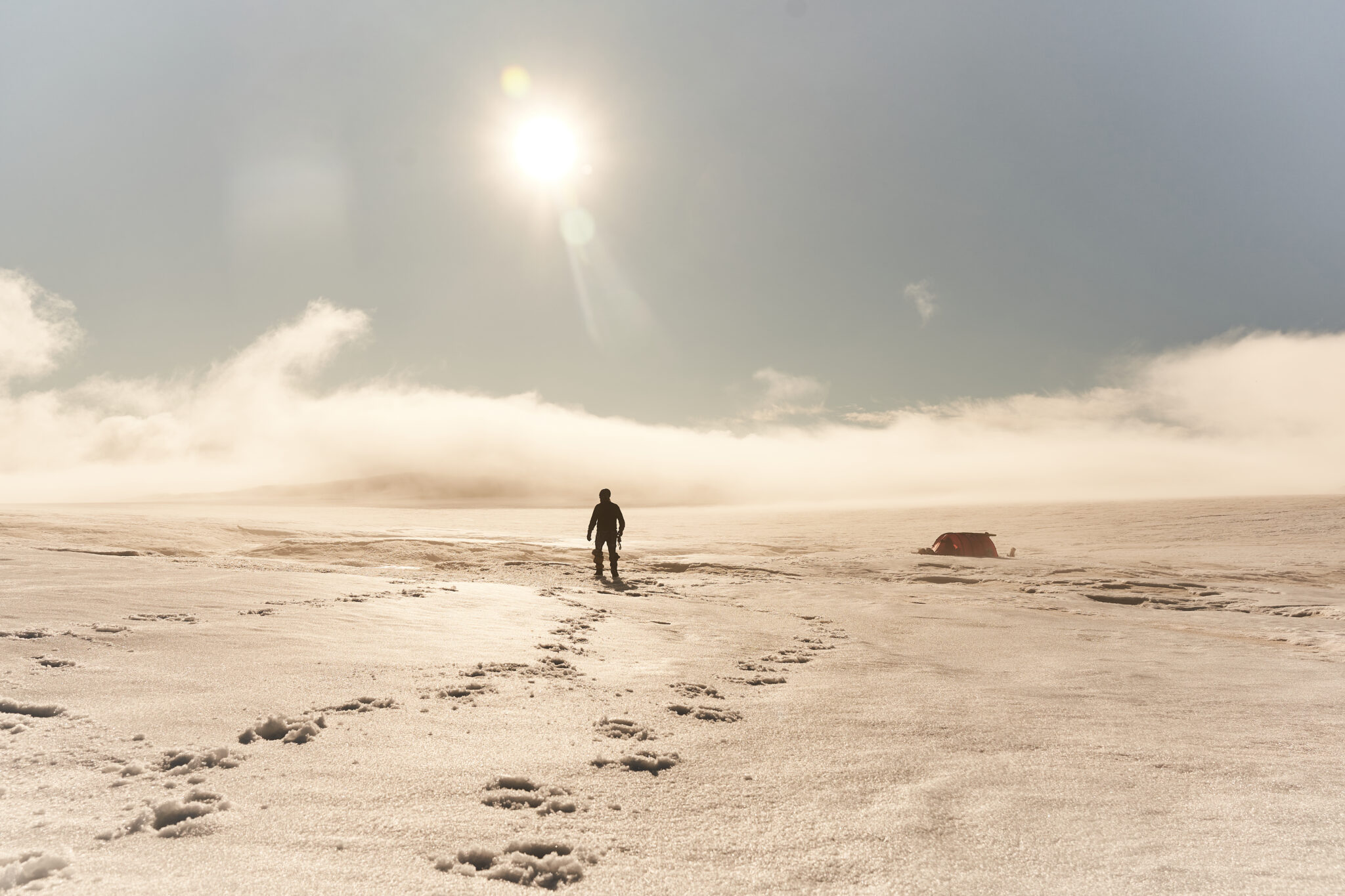
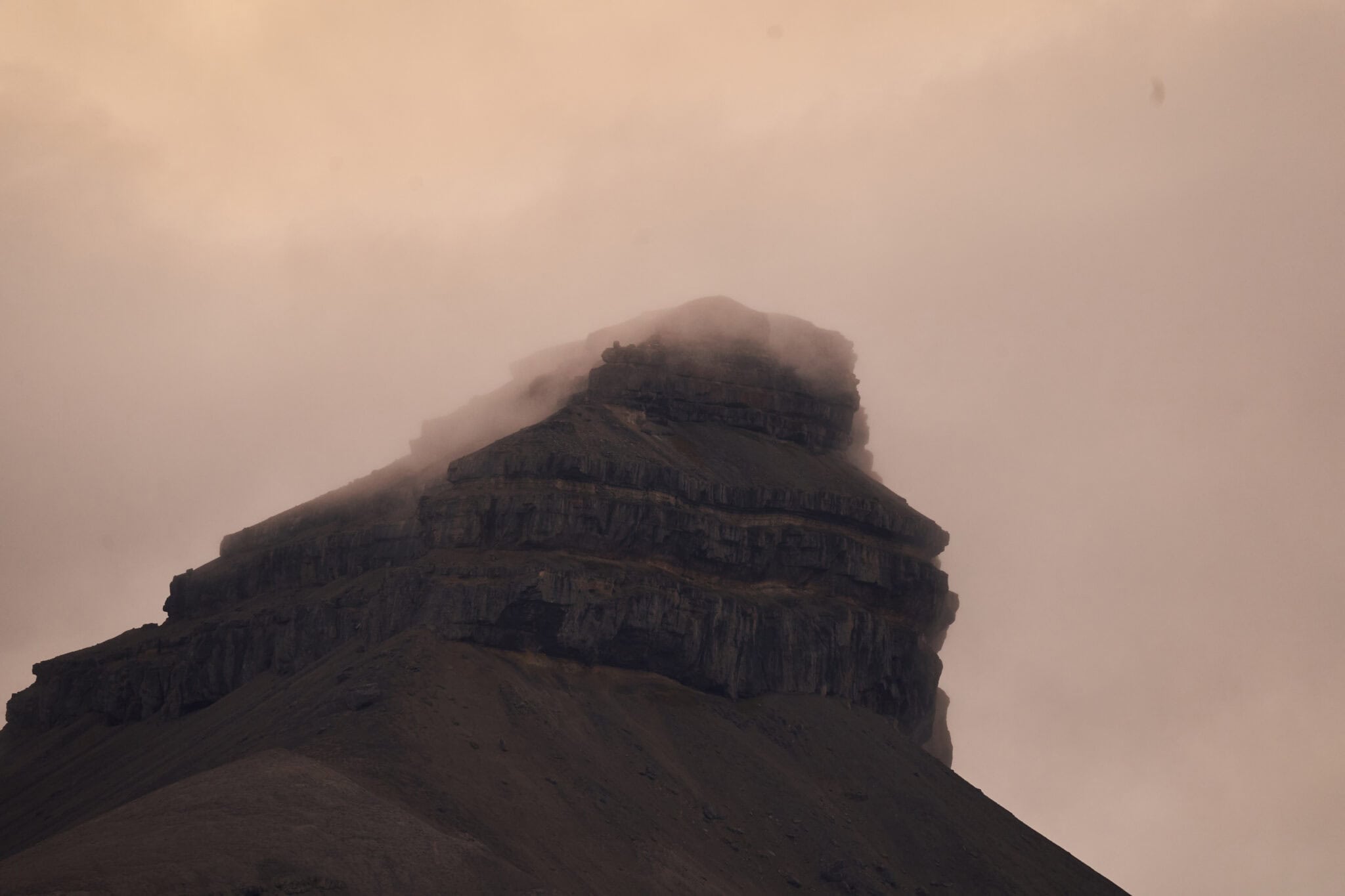
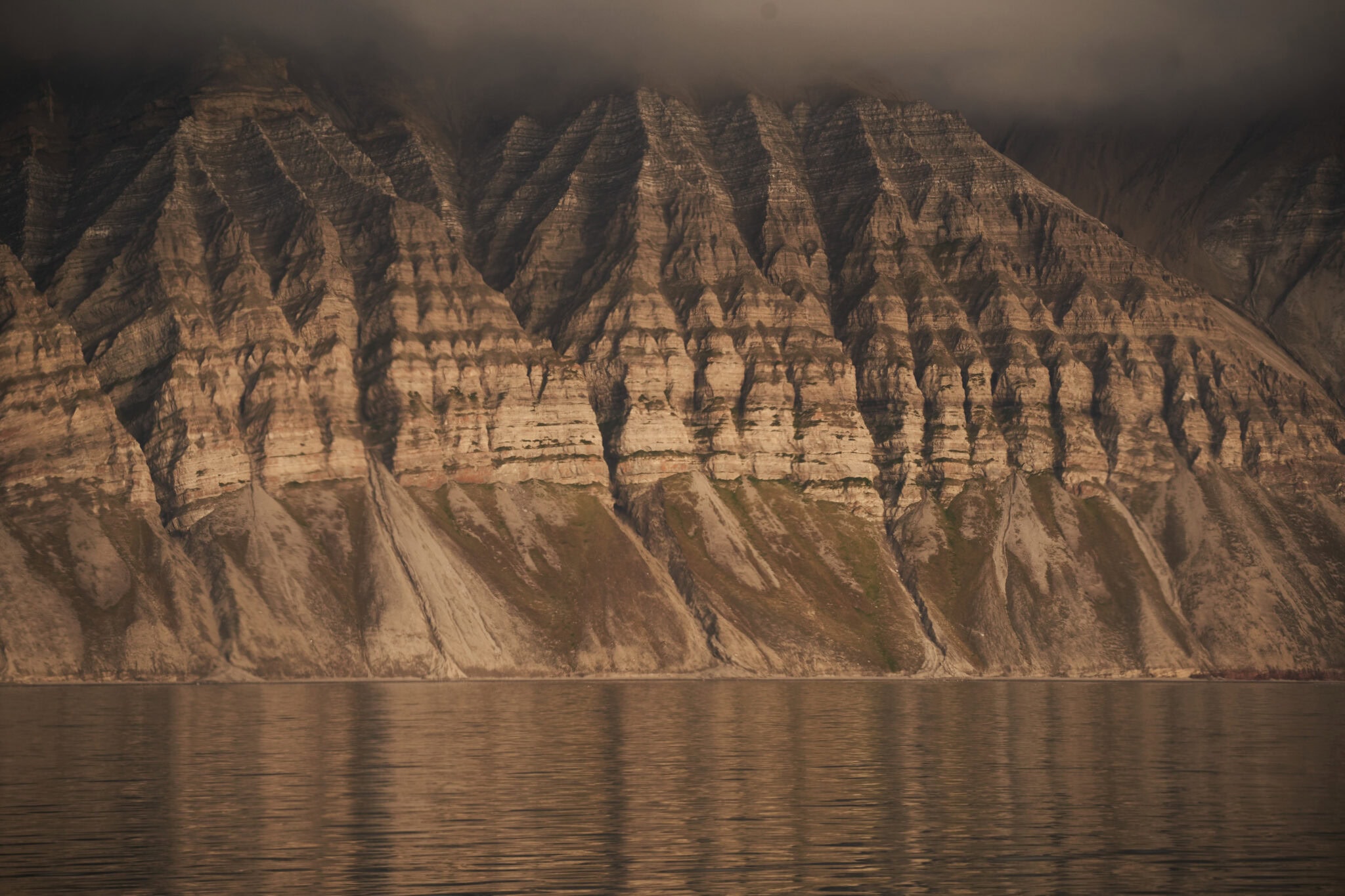
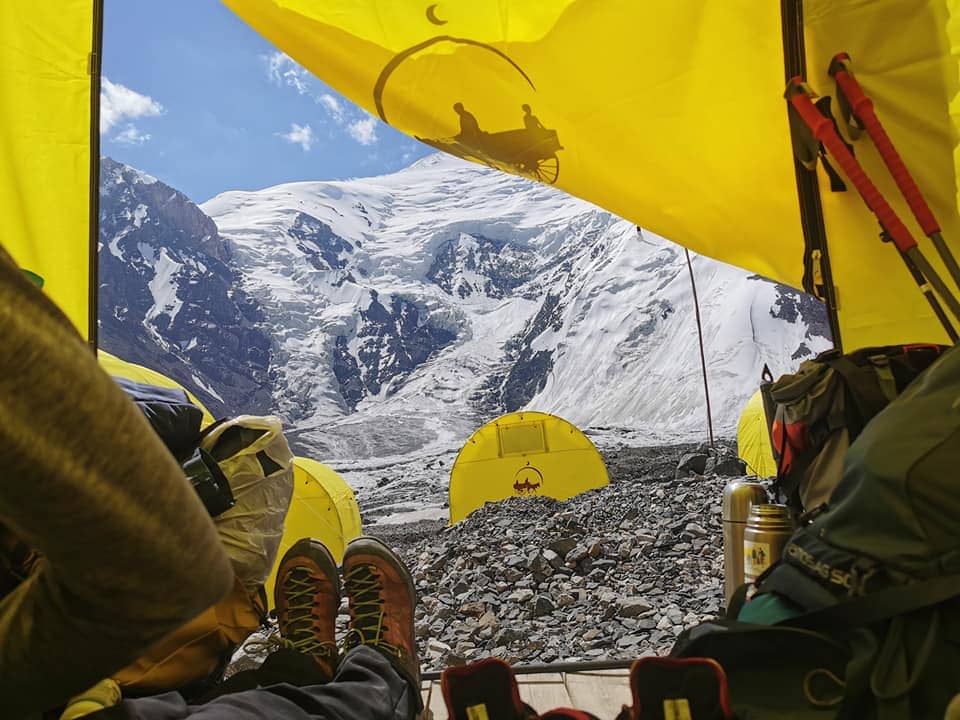
Our tent camp at the foot of one of the mountains with the typical Svalbard shape.
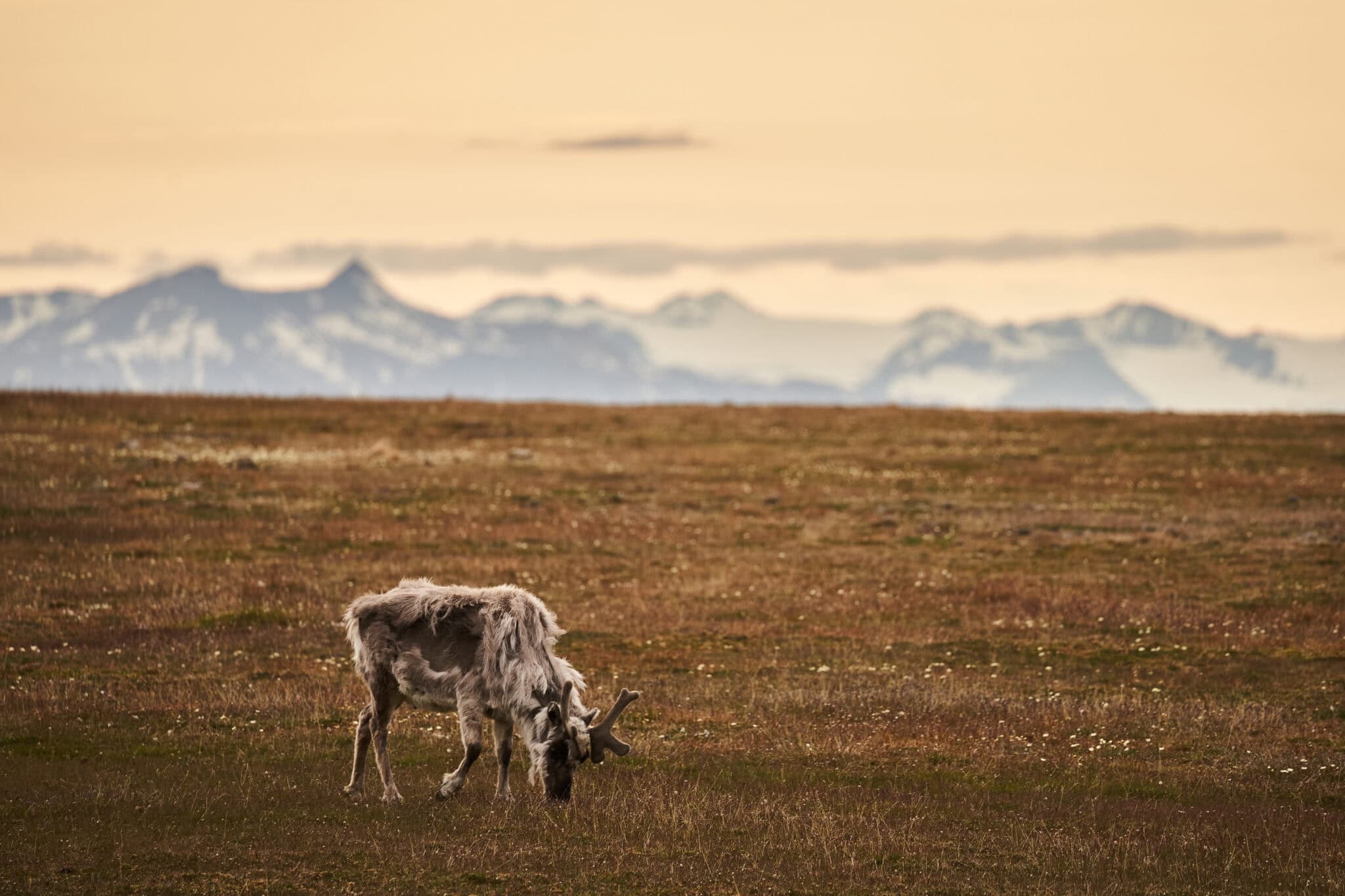
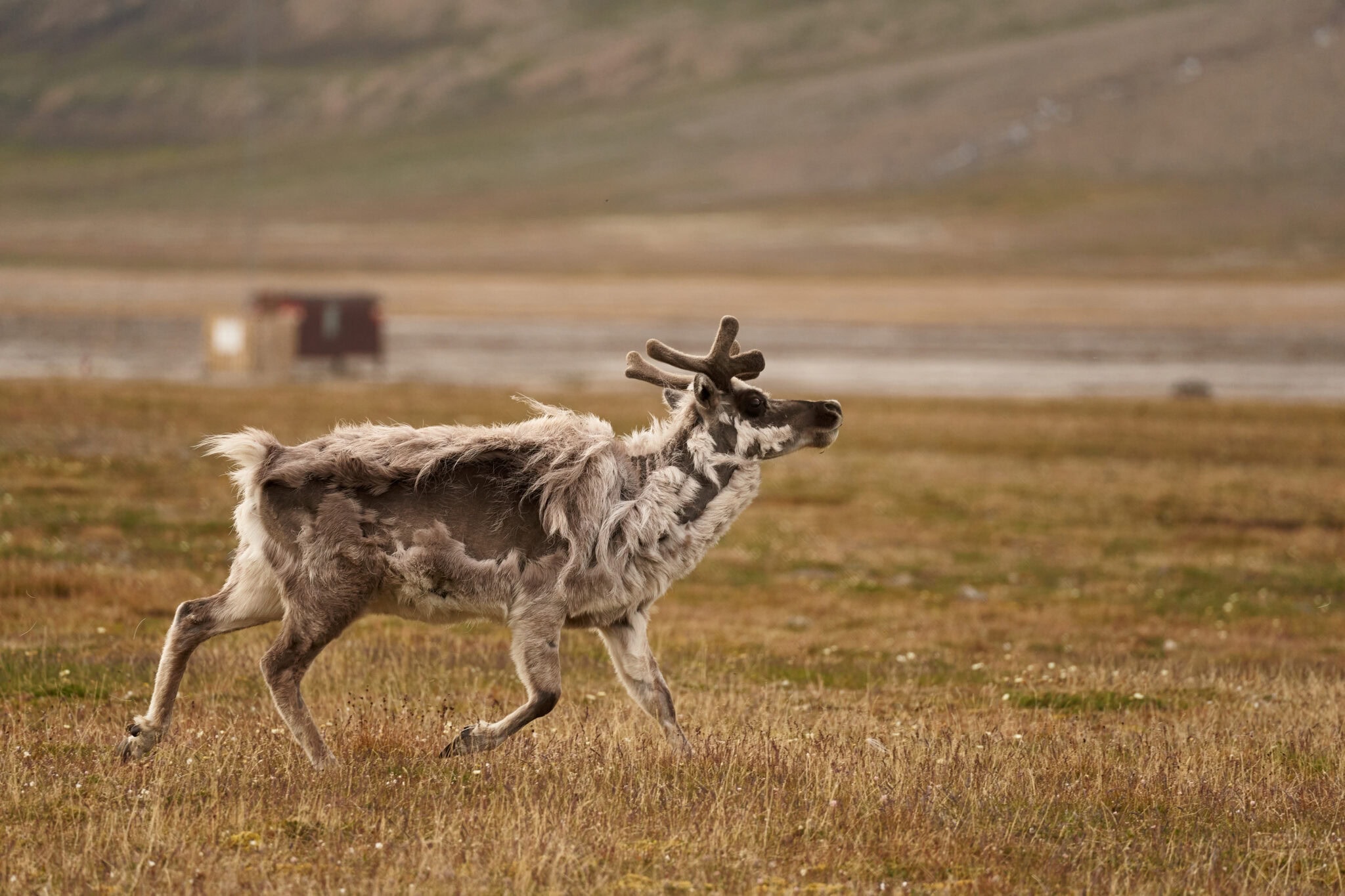
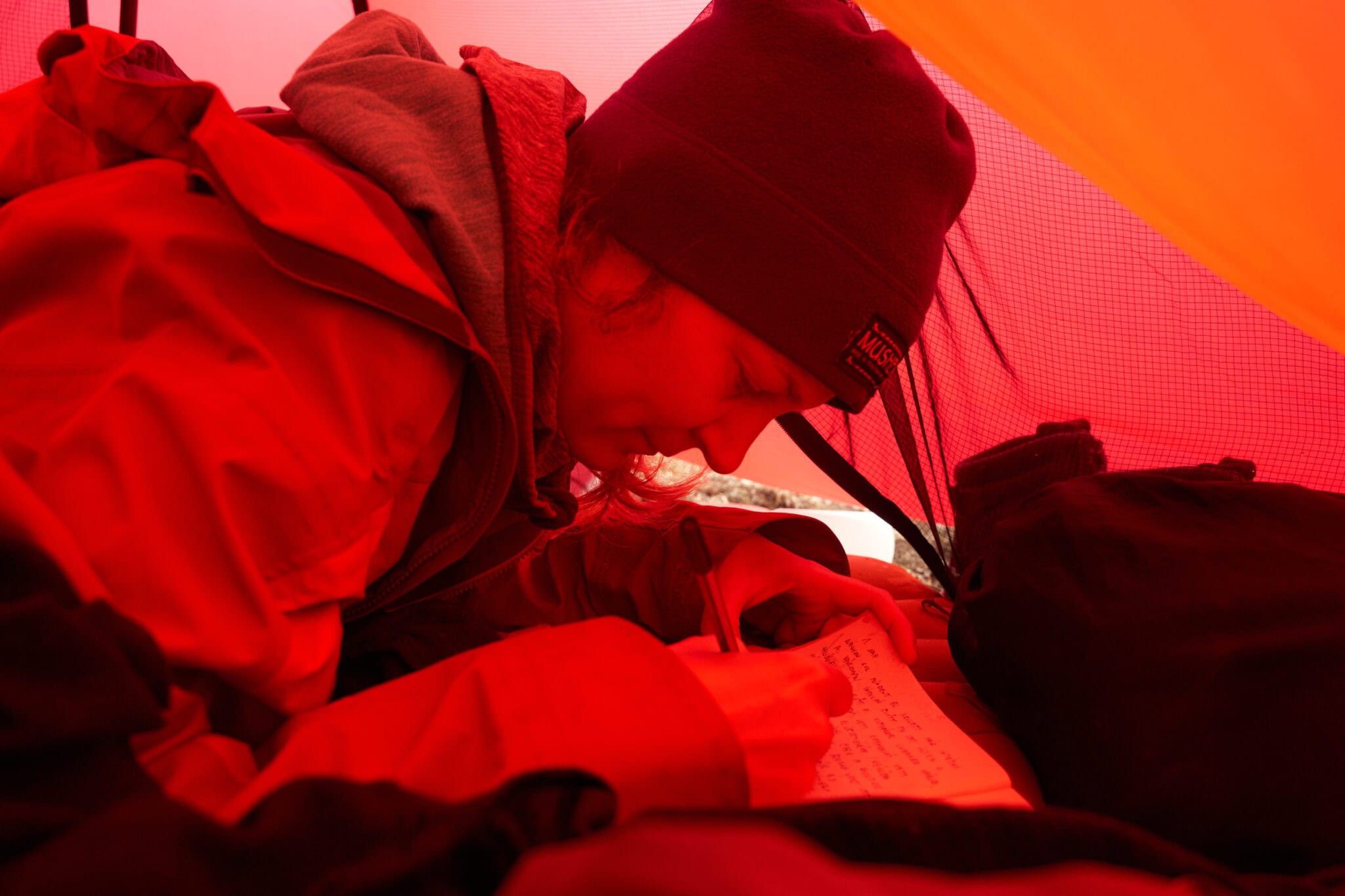
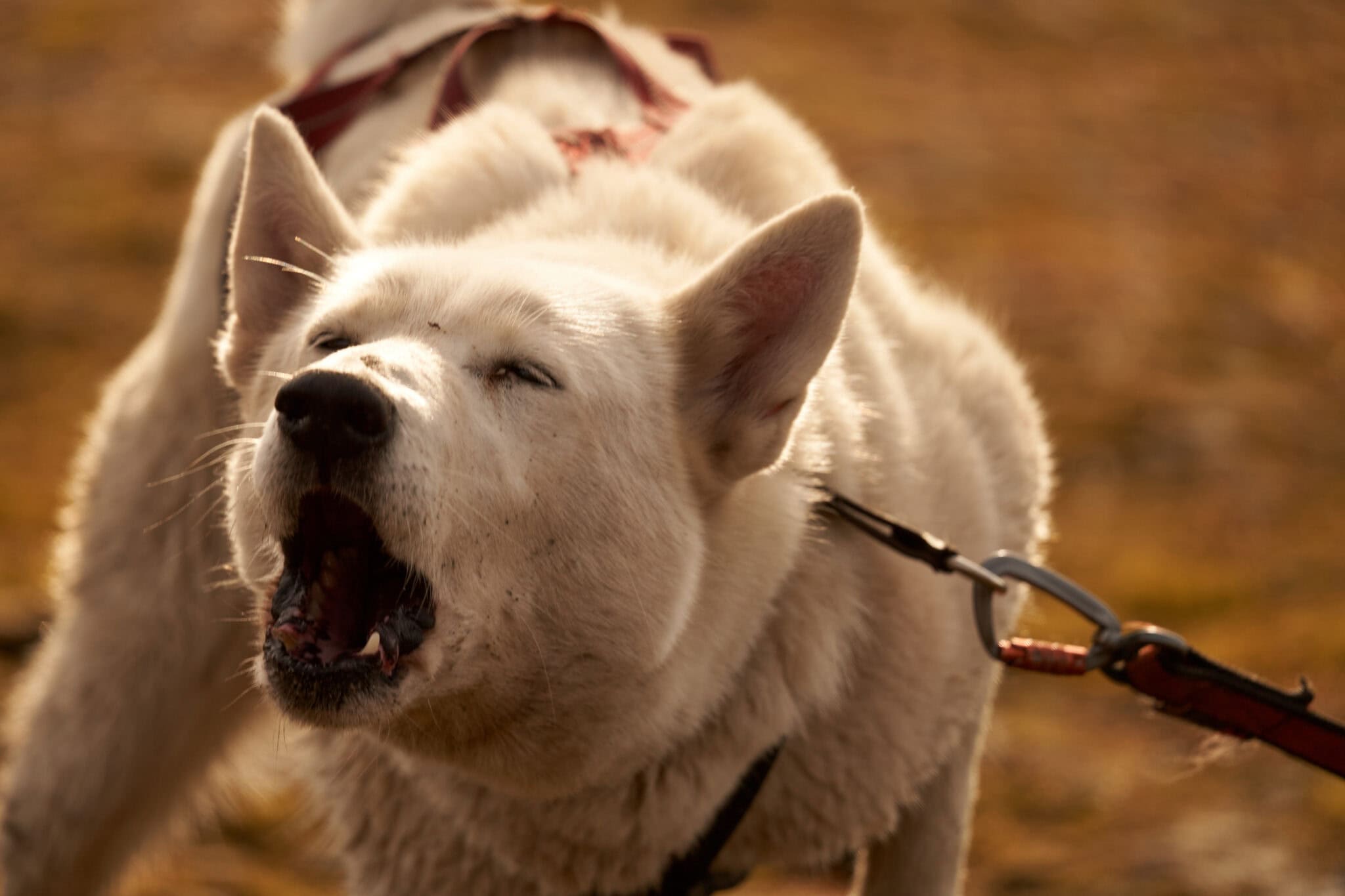
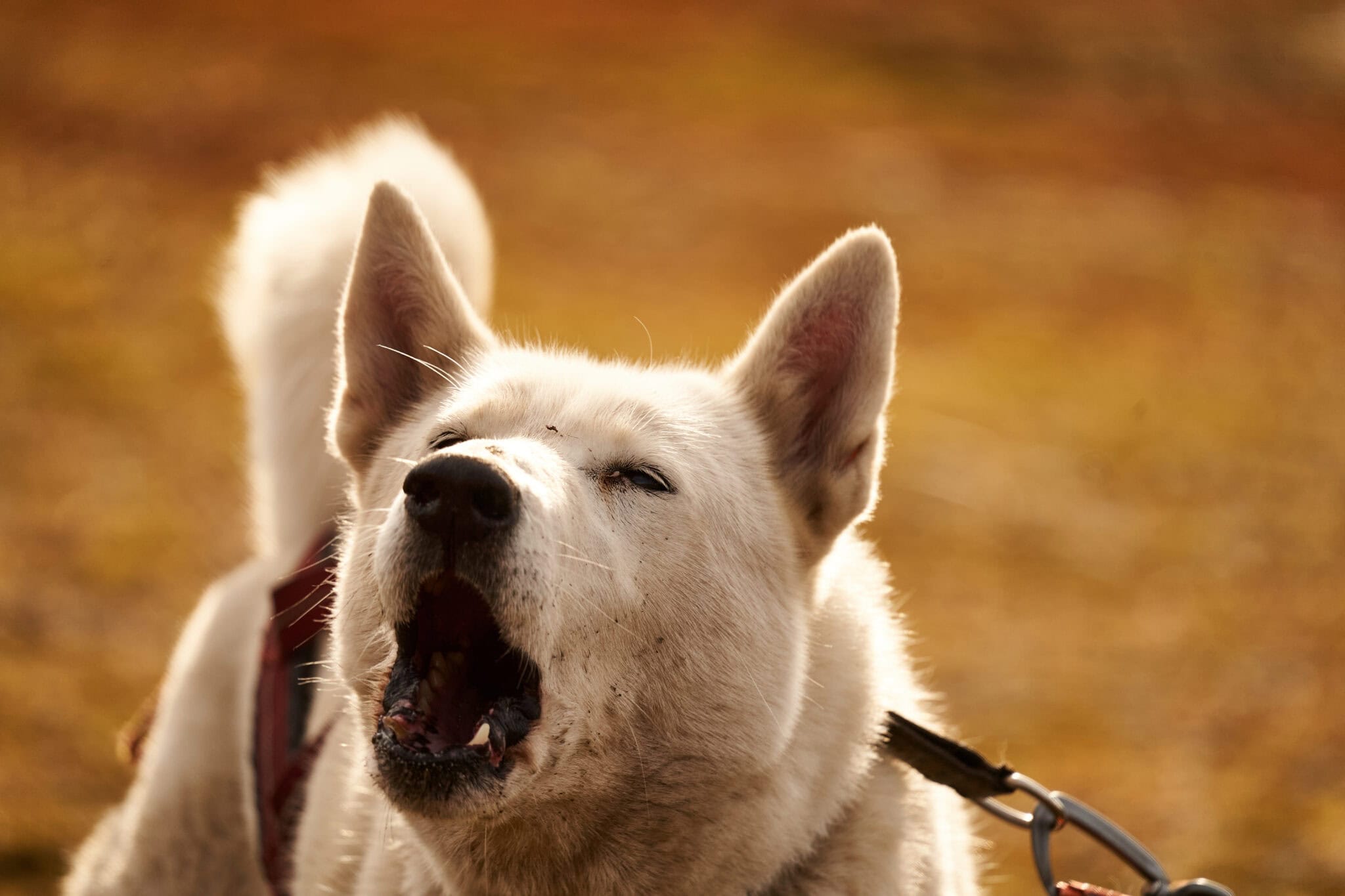
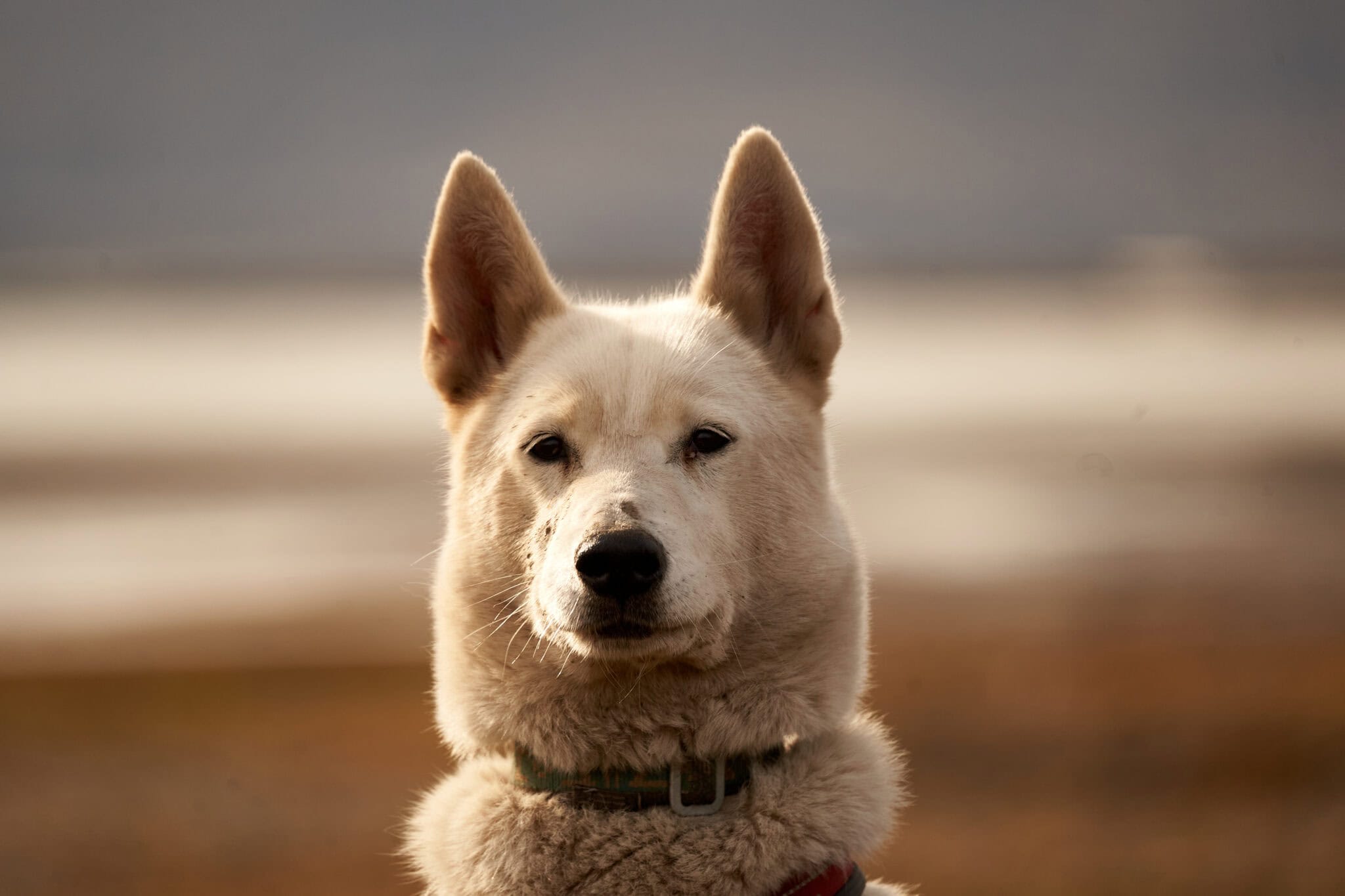
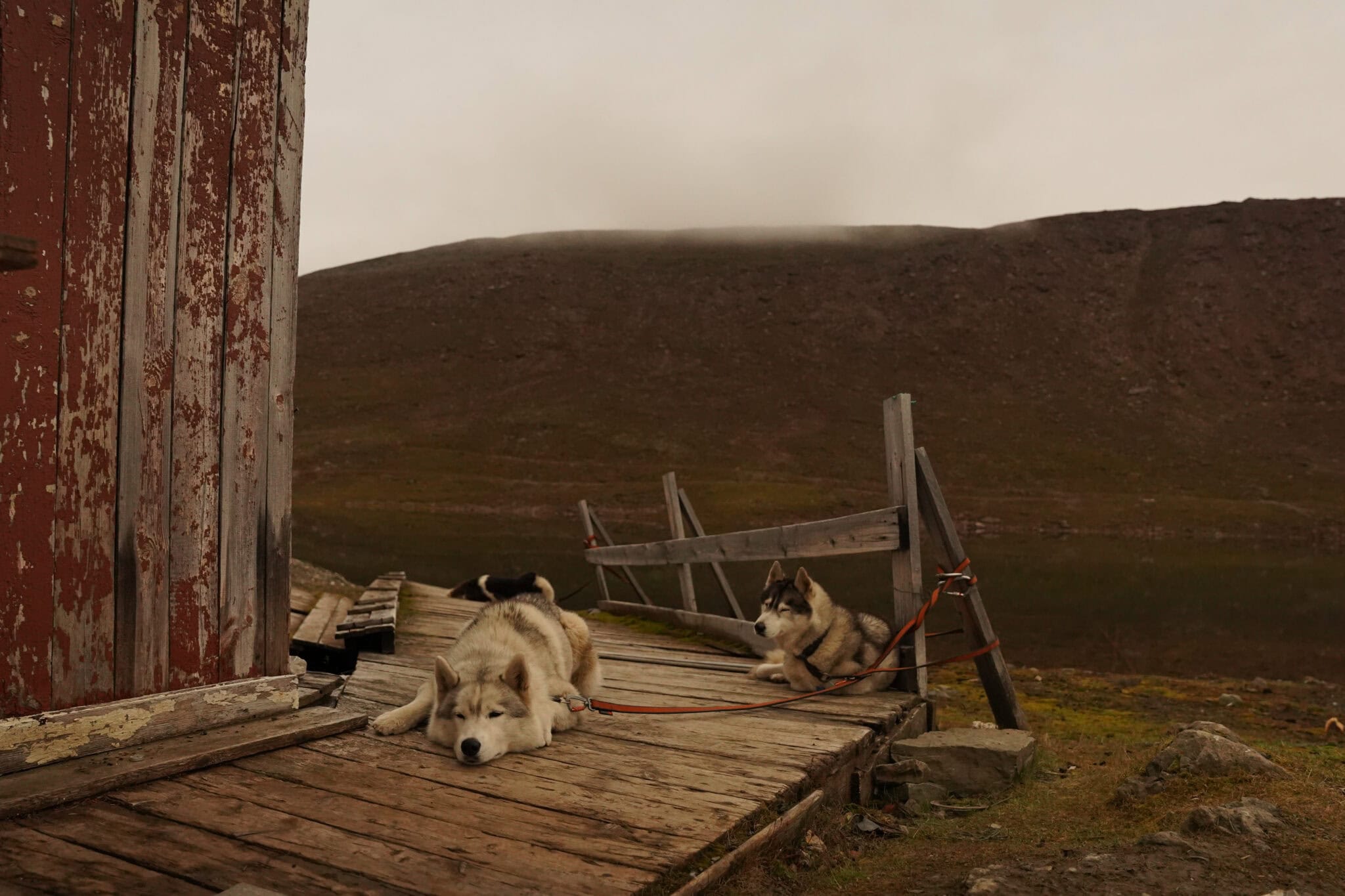
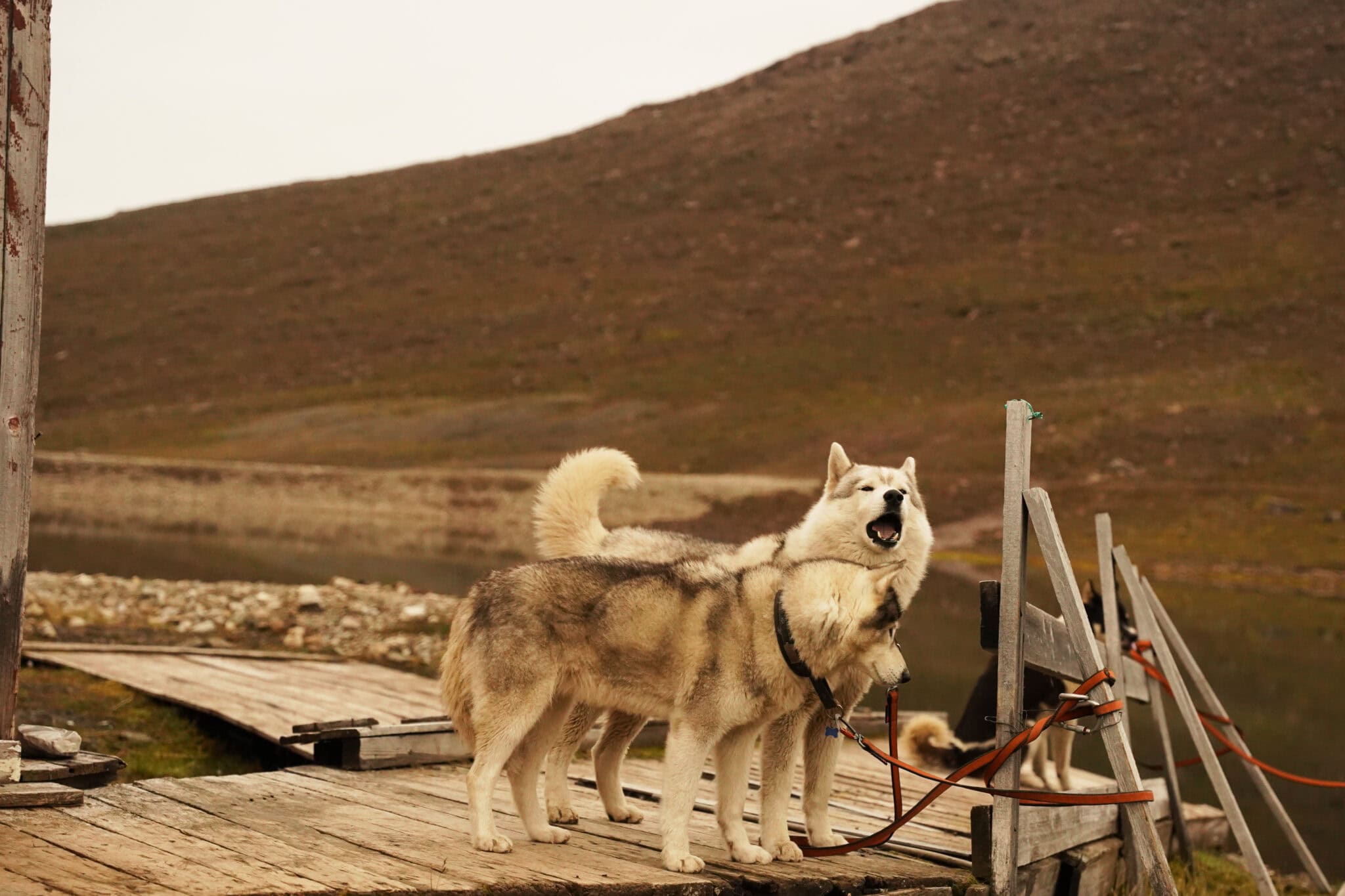
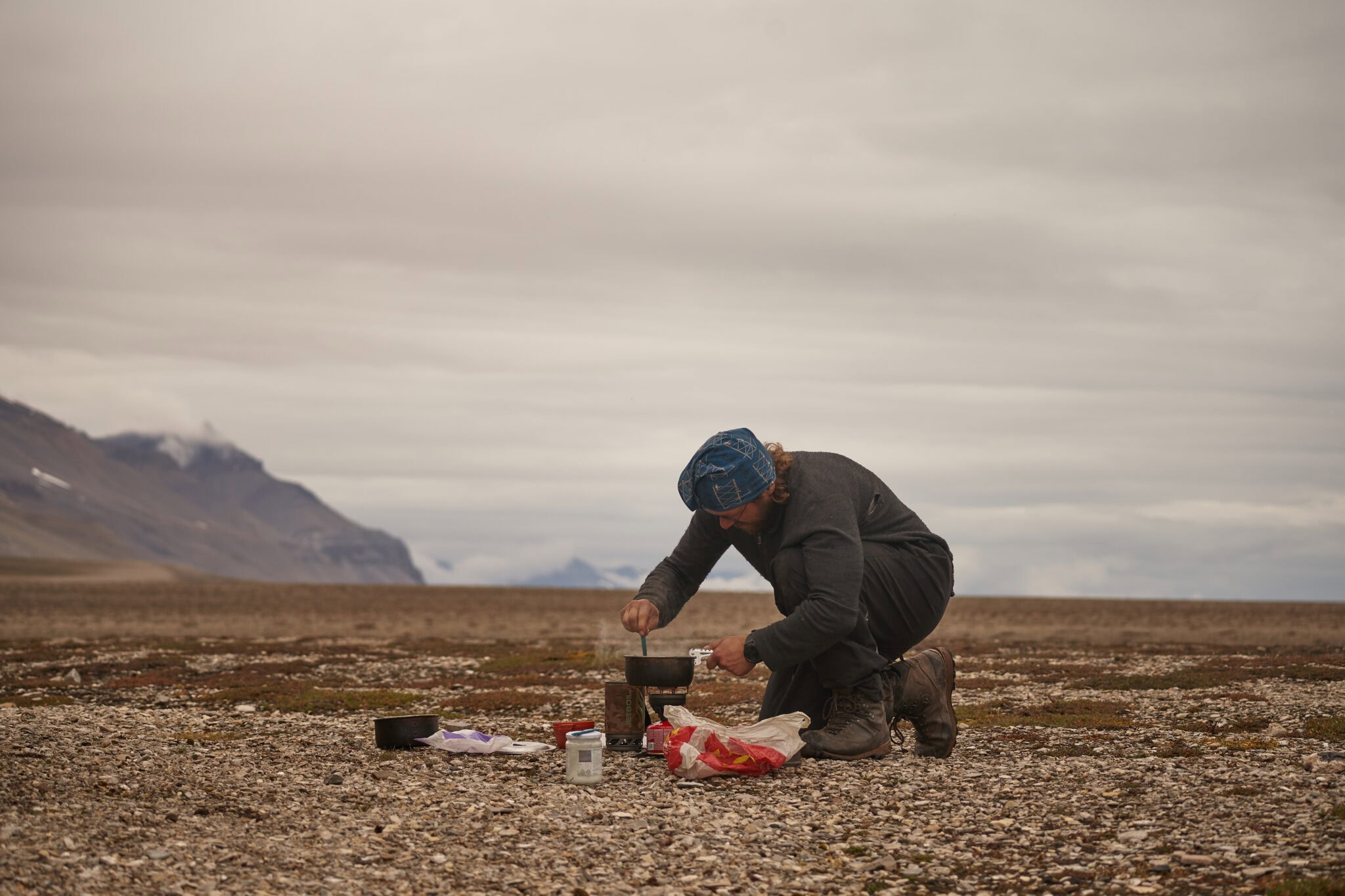
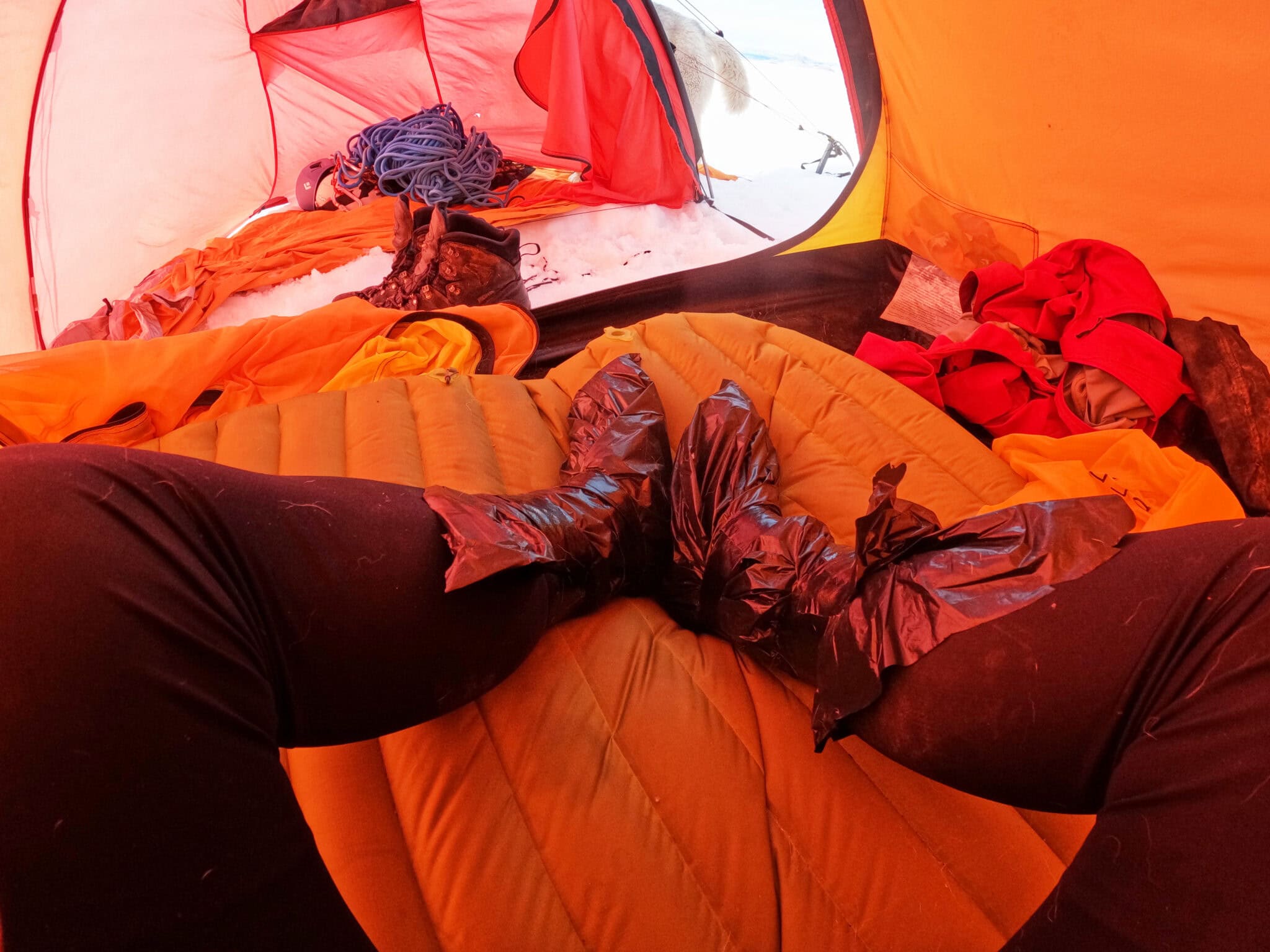
We didn’t get far after leaving the road; the backpacks were simply too heavy and everything was too exhausting. We decided to end the day with a warm meal of pasta with tomato and bell pepper cream. The reindeer up here seemed smaller and stockier than their Swedish counterparts, but they aren’t any less stupid because of it. They follow you and circle around us just like the reindeer in Lapland. The night was quite quiet; Taiga barked twice and woke us up. A quick check outside gave the all-clear; as suspected, it was reindeer that had discovered us and were making their rounds. The mattress was super soft, and we slept like logs until the next morning. Breakfast consisted of muesli and bread. Rebecca refused to eat muesli; according to her, the consistency reminds her more of something else than something you can eat. We agreed that we would only take bread with spread for her, and my morning meal consisted of both. Eating only muesli wouldn’t be a problem for me in itself, but not when I have someone sitting next to me enjoying their bread. Bread, hahaha—you travel about 1,300 kilometers toward the North Pole only to realize in the tent that the breakfast bread comes from the same German region as I do. East Westphalia (bread from Gütersloh, unbelievable).
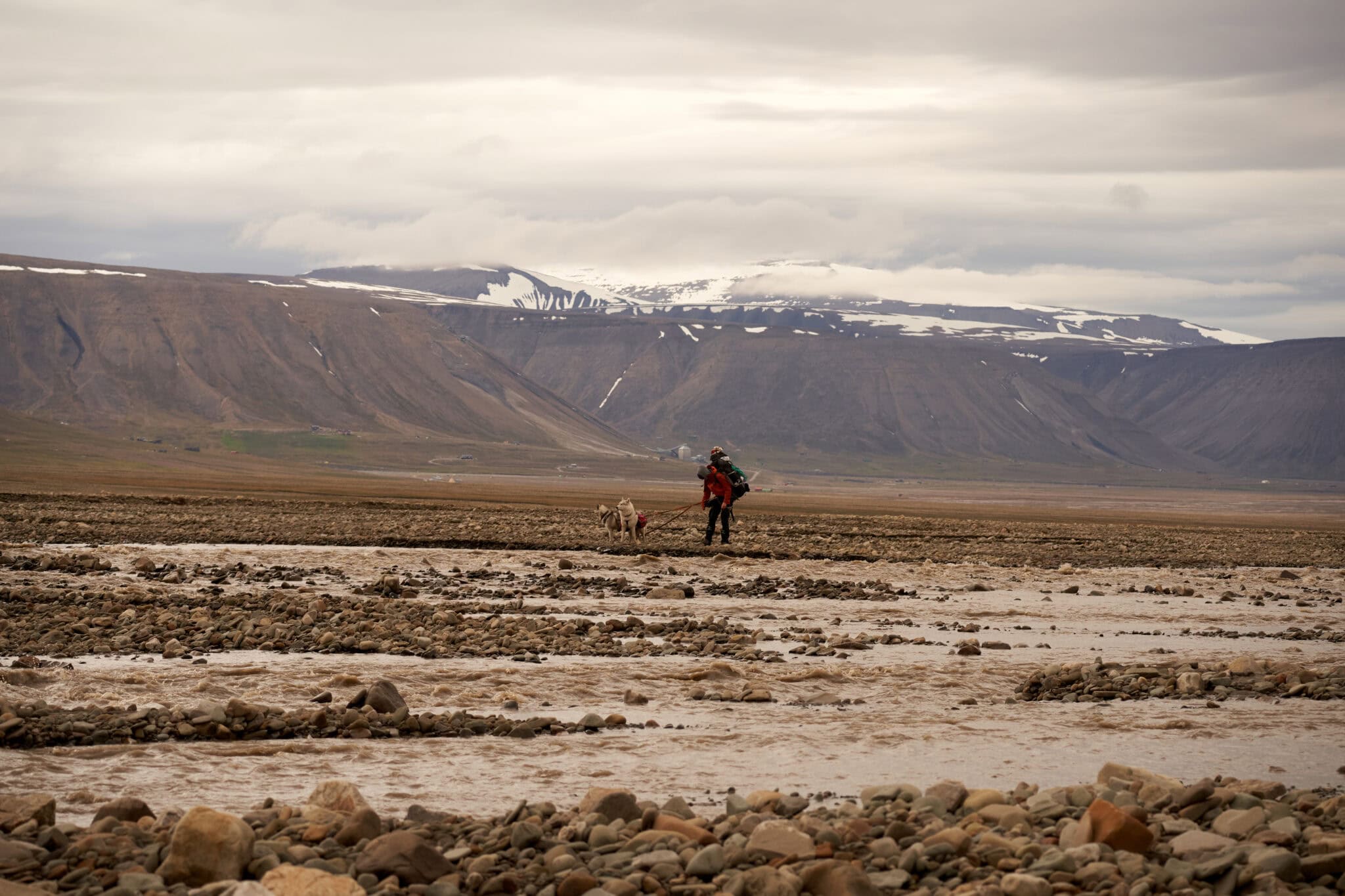
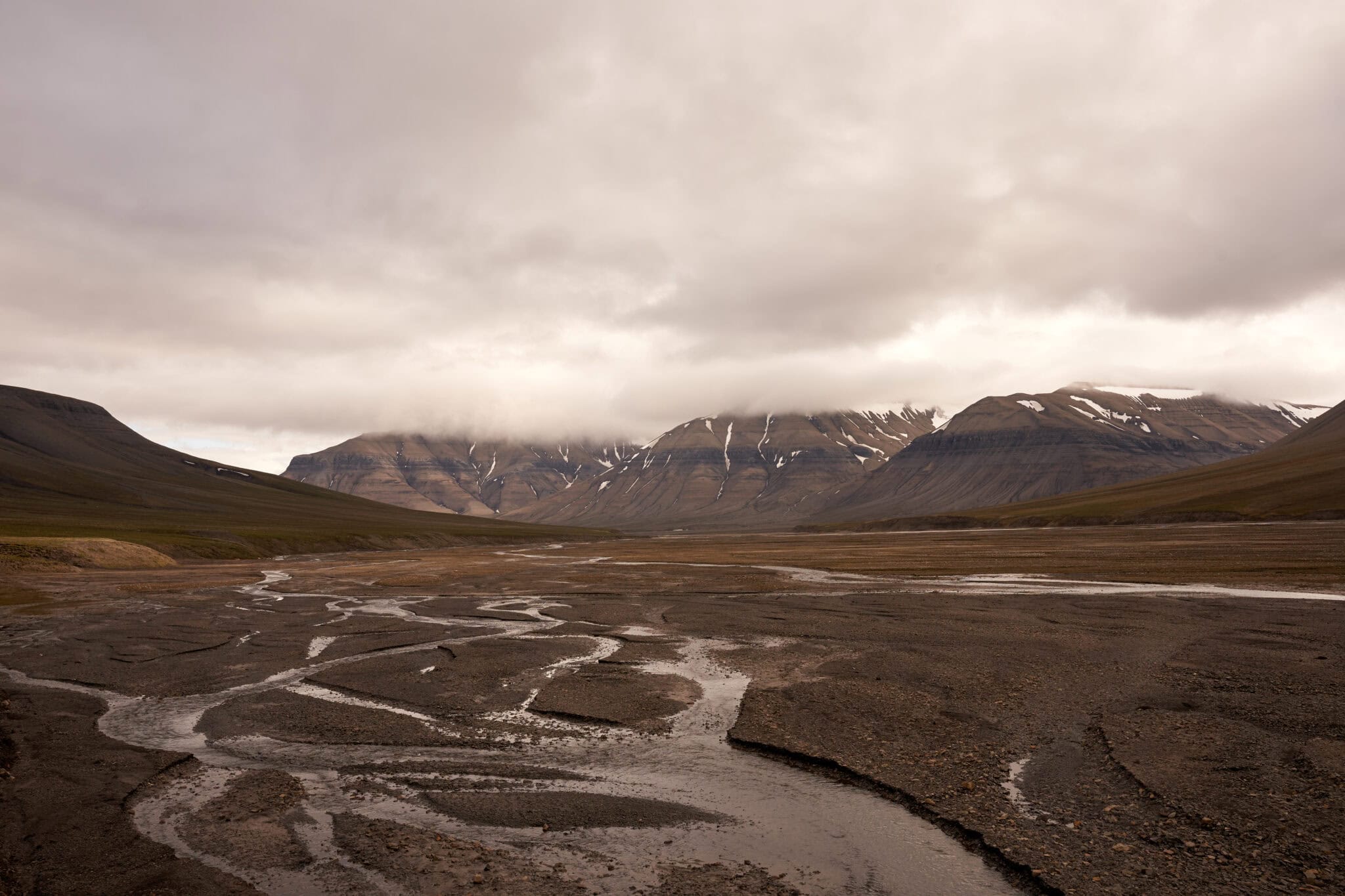
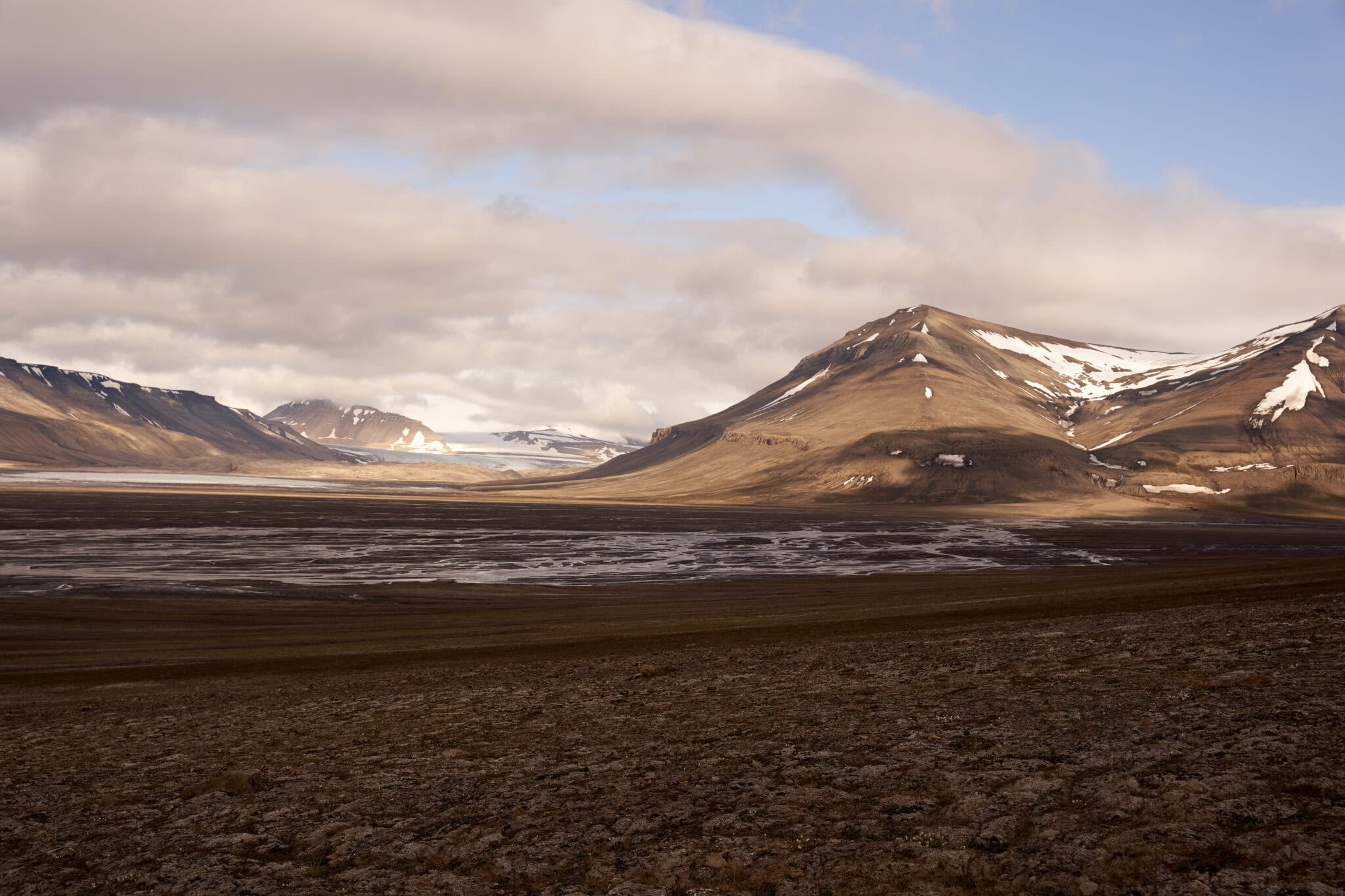
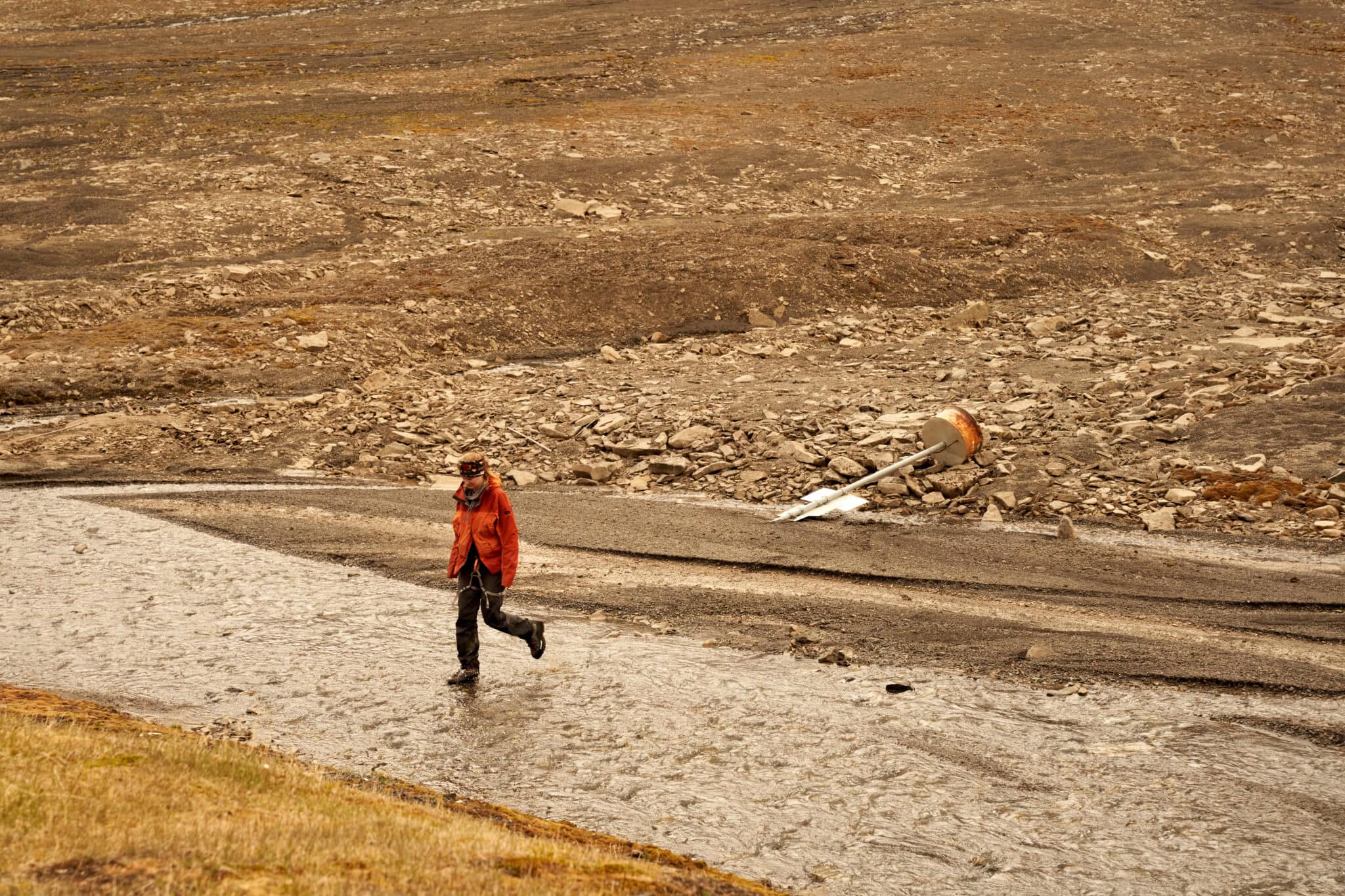
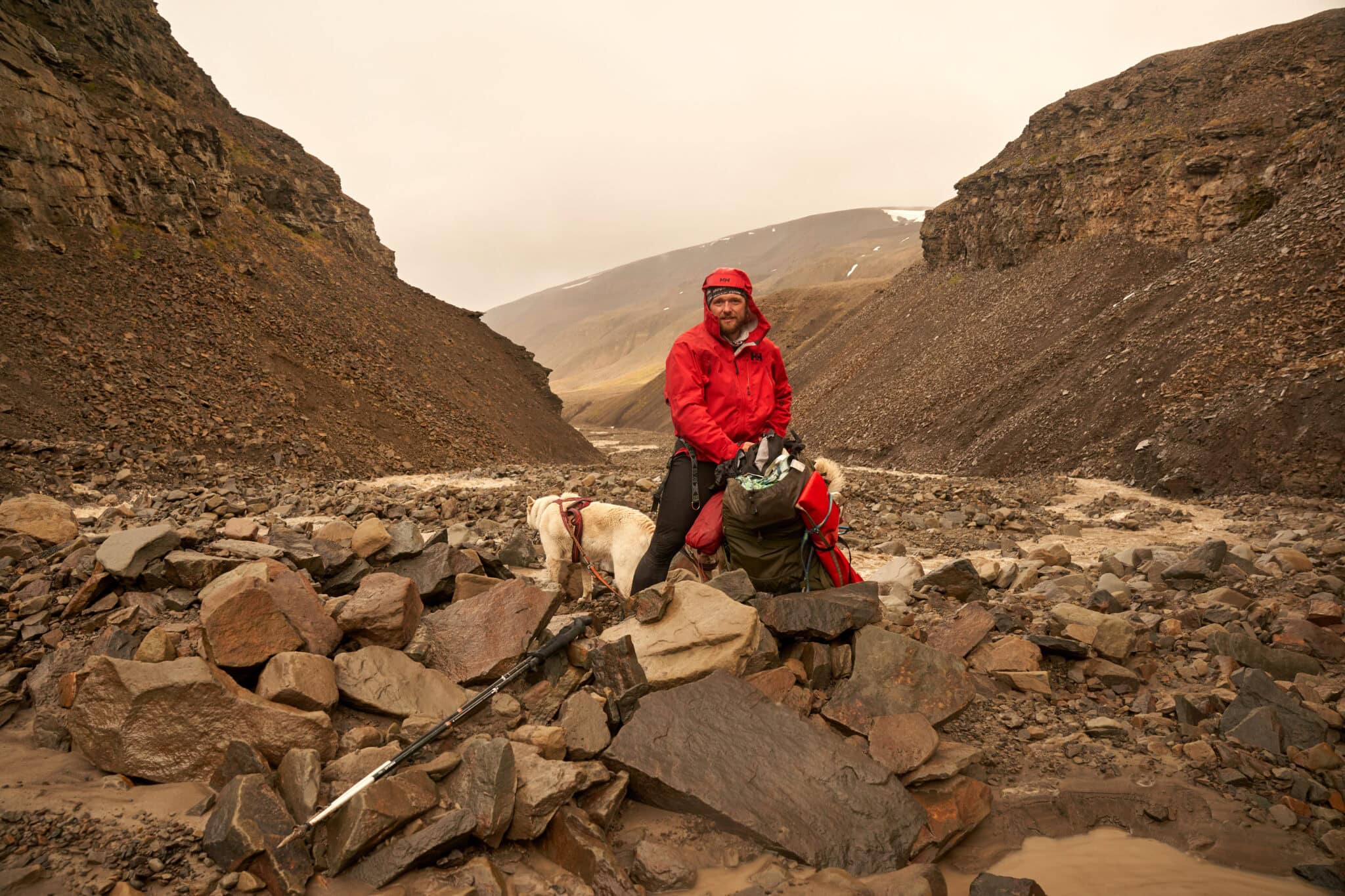
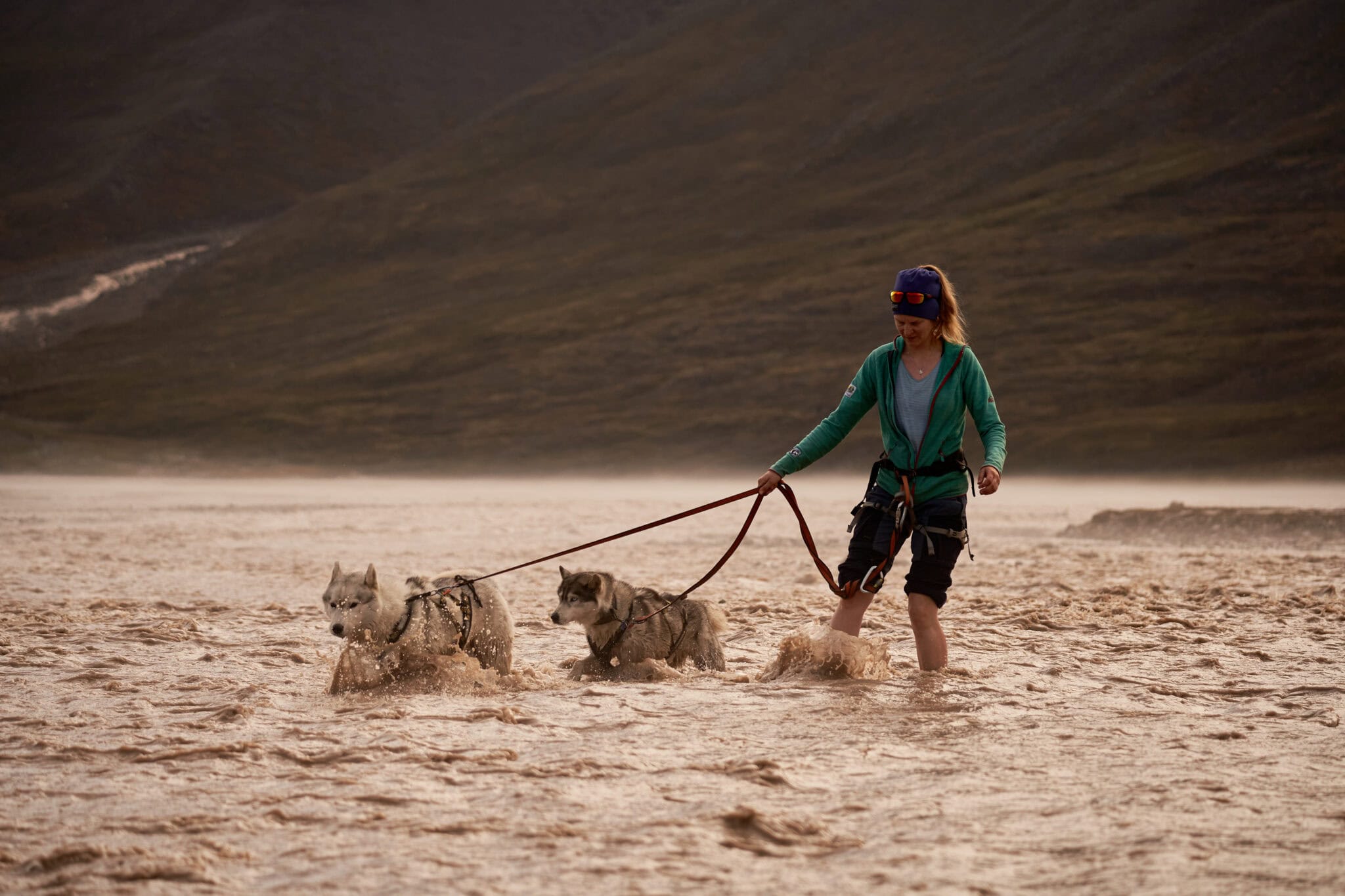
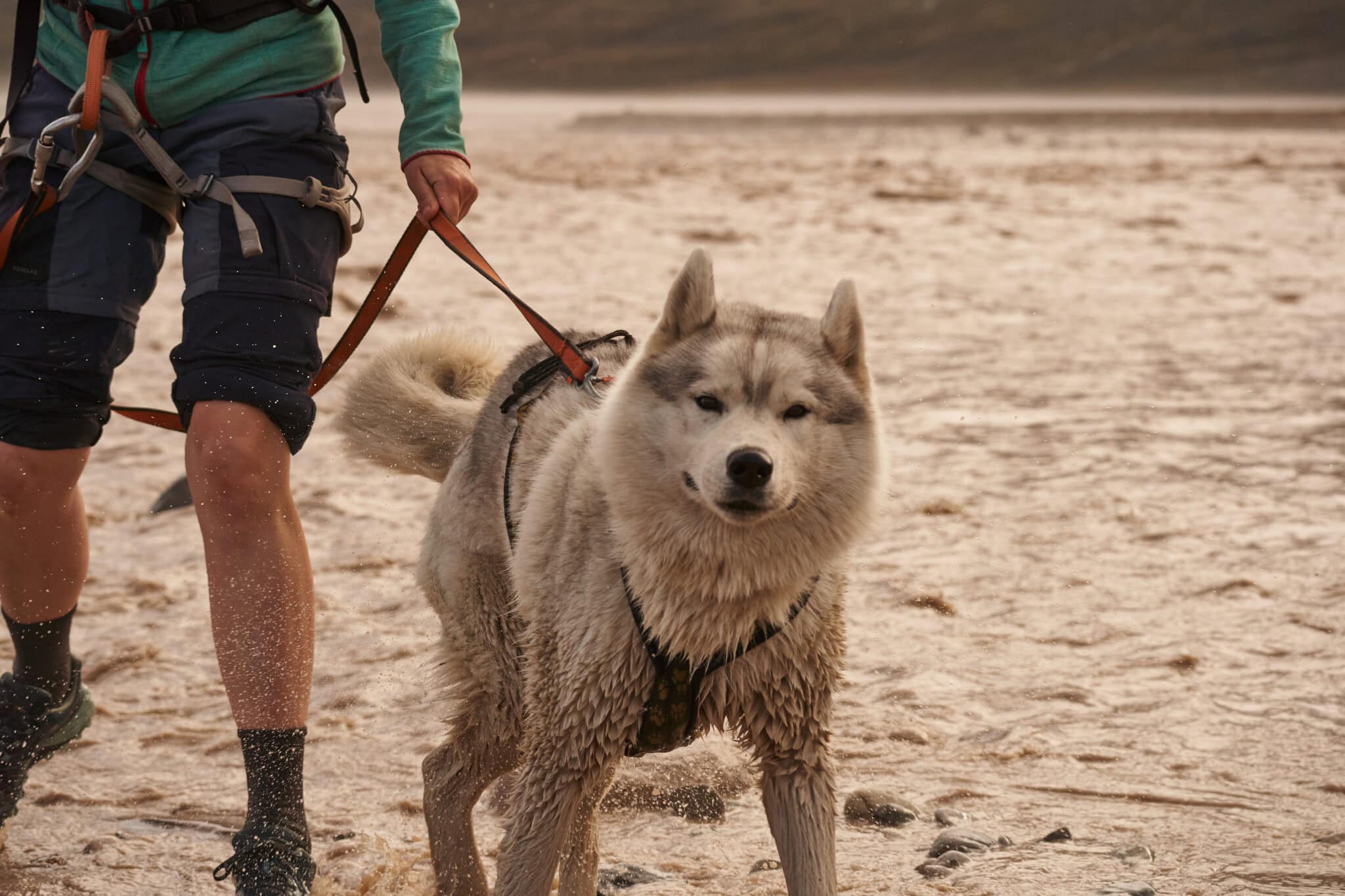
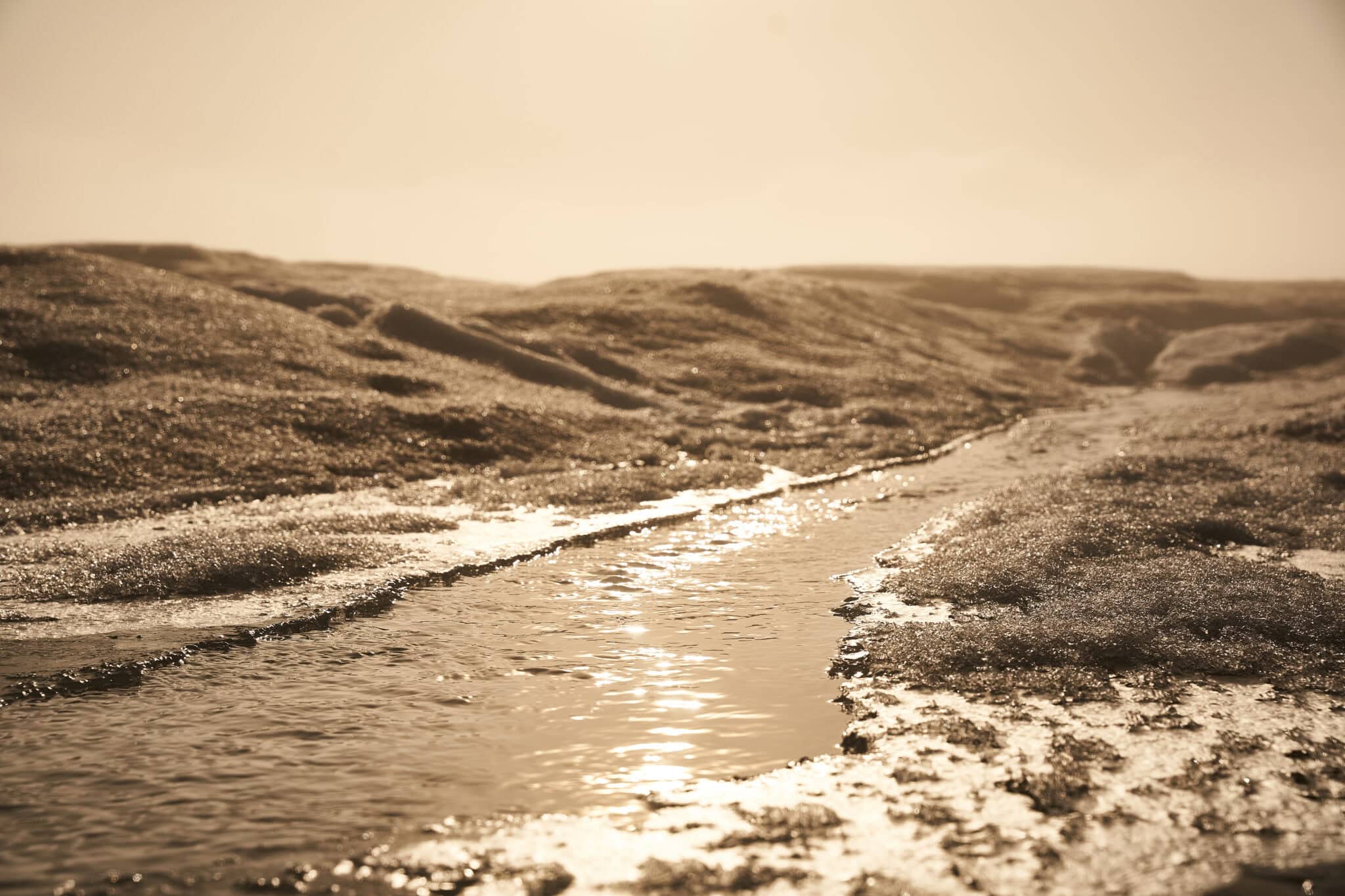
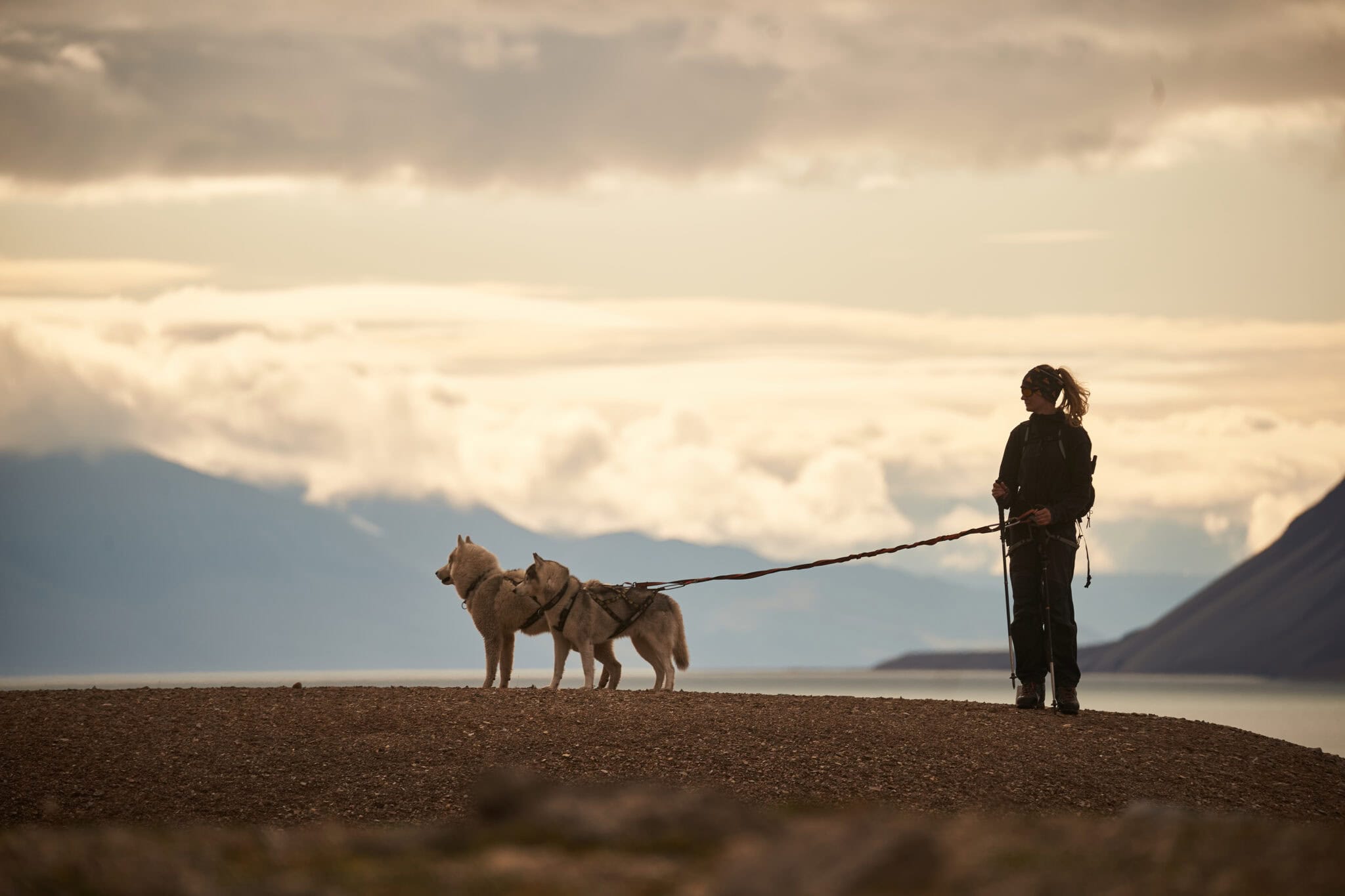
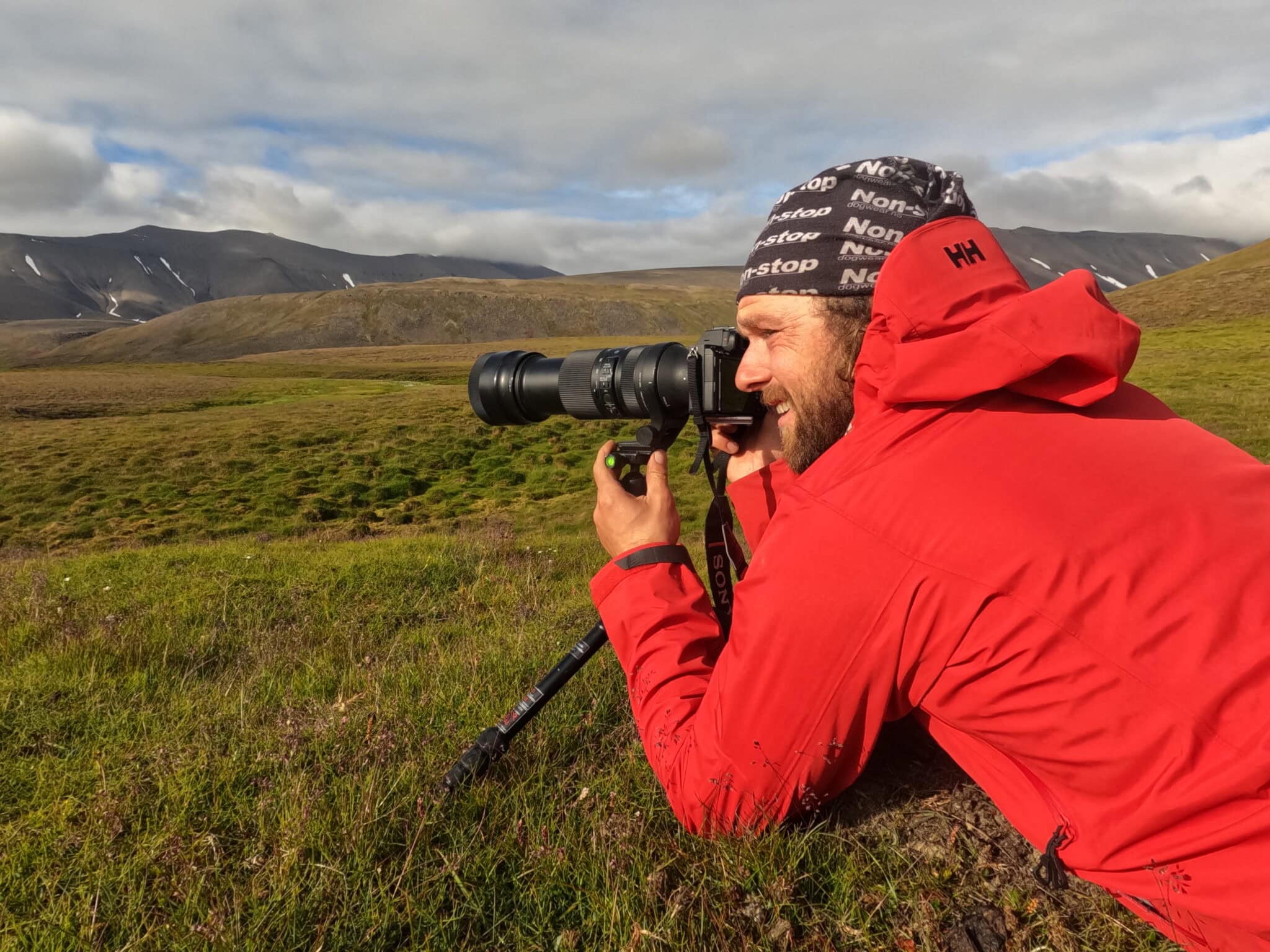
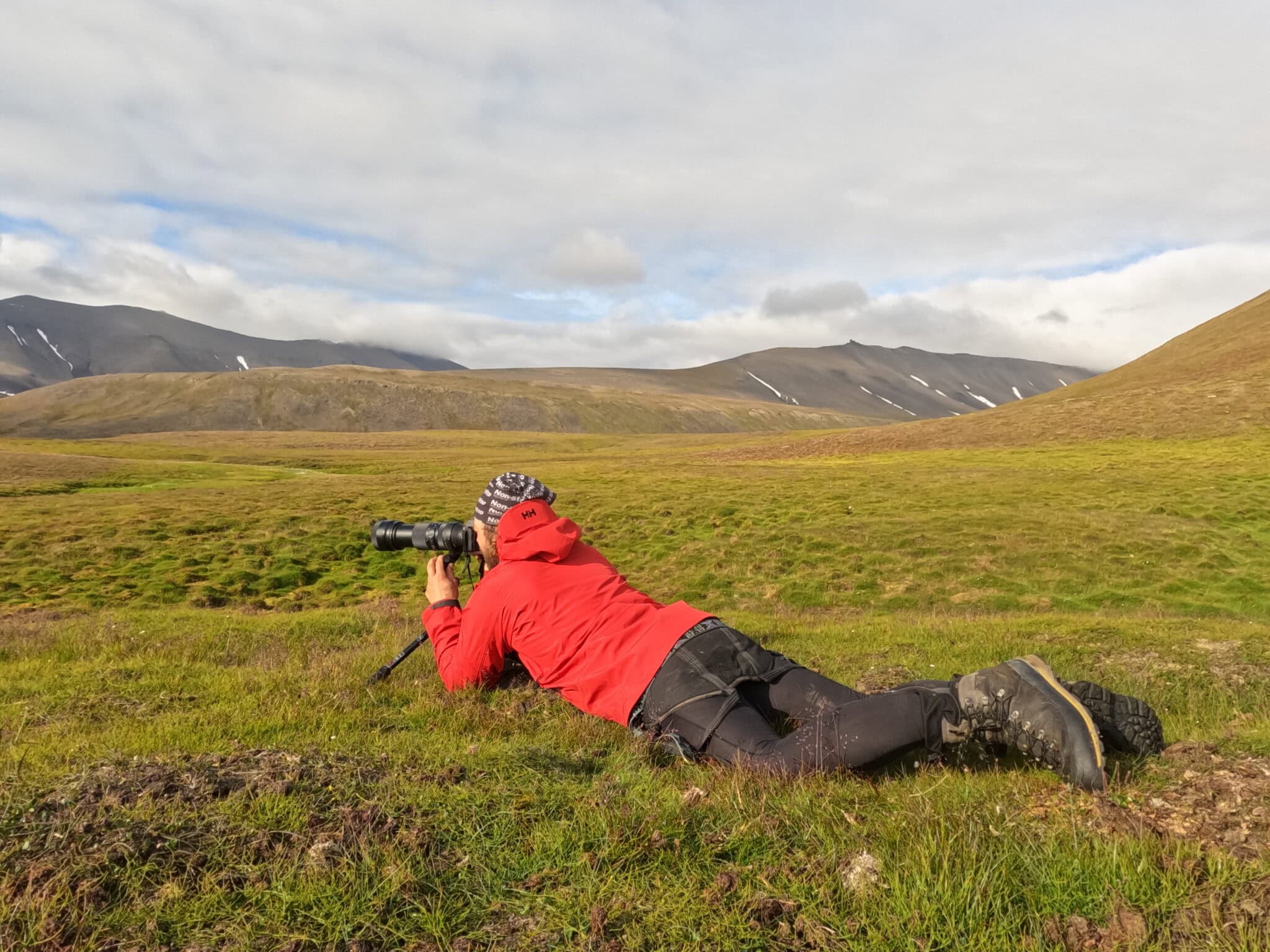
We crossed the first glacial rivers, which gathered in the large Adventdalen and joined together into a large, powerful stream. Again and again, we stopped to prop our backpacks on our hiking poles. The unspeakable backpacks didn’t make it any easier to wade through the streams. Depending on the weather, these could turn into raging rivers within a few hours and become impassable. After our lunch break, we climbed down an embankment and looked for the best spot to cross. That worked right away, and another crossing was successful on the first try. But when we stood at a fast stream with larger volumes of water a few hundred meters further on, the situation toughened up a bit. I found a good spot, or so I thought. I slowly felt my way forward, and after successfully reaching the other bank, I positioned my camera to capture our maneuvers. The spot where we wanted to cross the river split into three arms, so the water volume was somewhat distributed. Rebecca followed me with Momo and Kira. The somewhat small female dog had more of a struggle than her companions, simply because she had to start swimming much earlier than the other three dogs. Rebecca strode through the first part with determined steps, while her dogs followed her and were caught by the river’s masses. The two of them stayed on the surface, and Rebecca pulled them toward her by the leashes on their harnesses. A small moment of inattention in the middle section caused her to slip and land in the water with all her gear. Before I could rush to my sweetheart’s aid, however, she was already standing again and kept going.
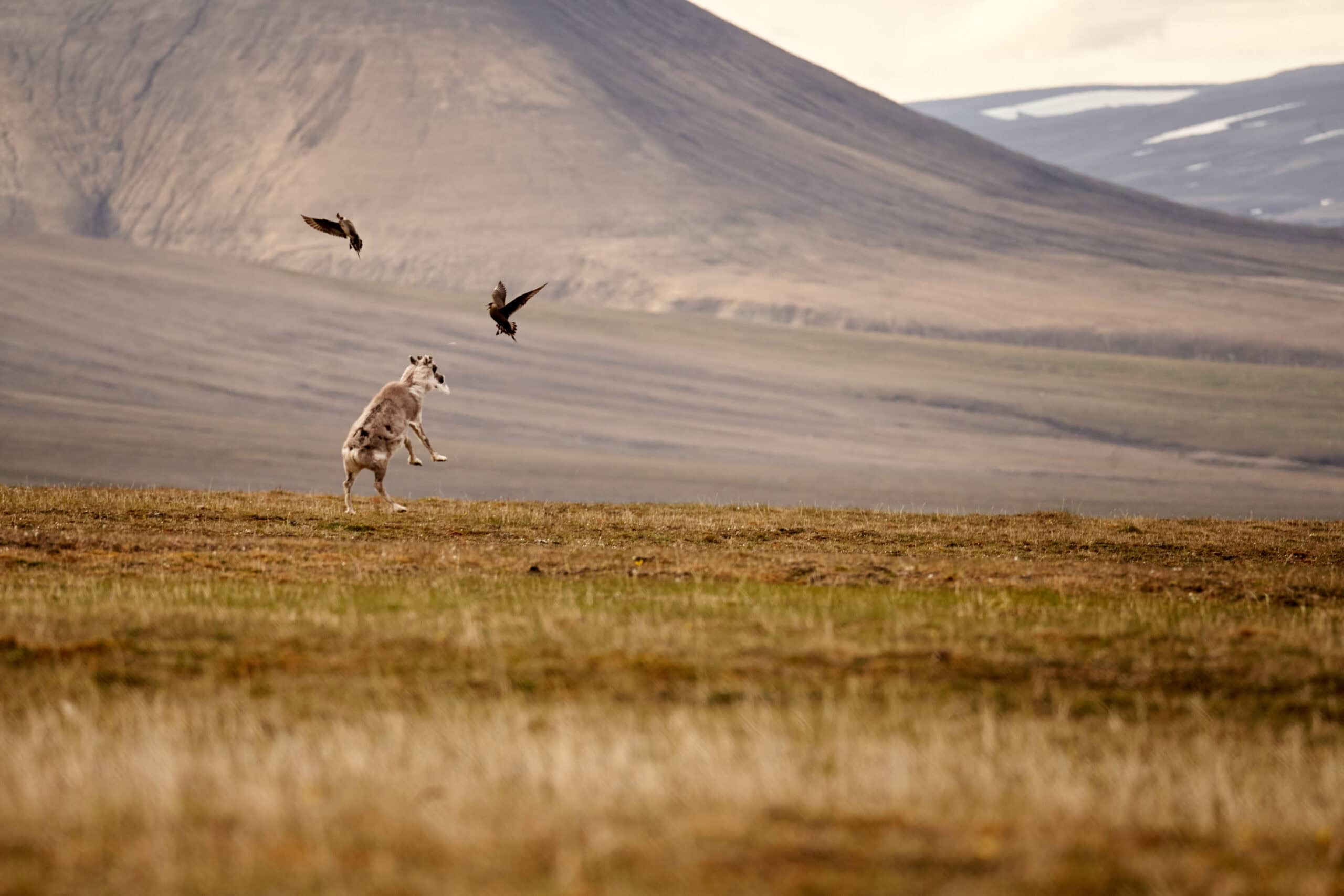
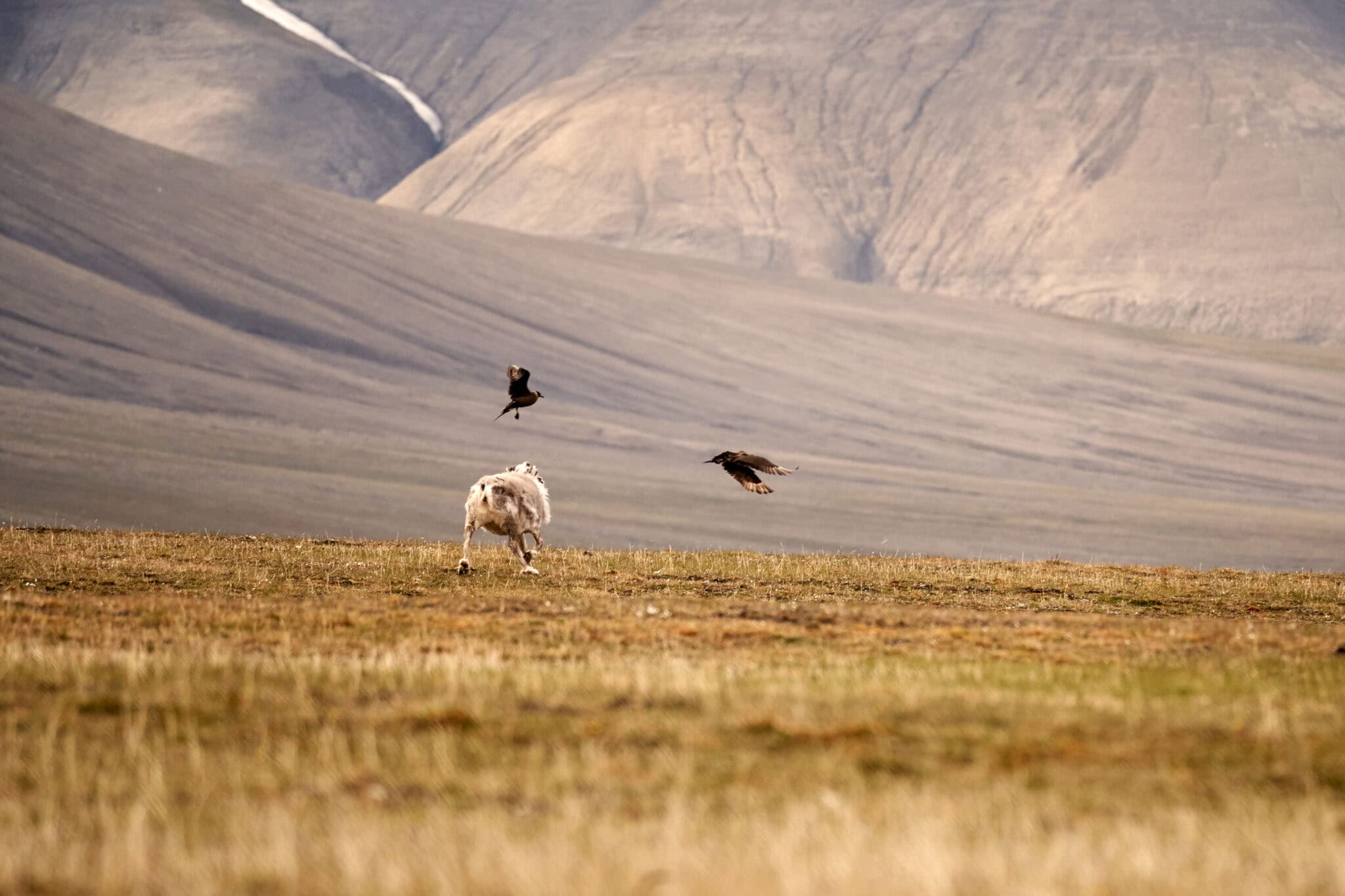
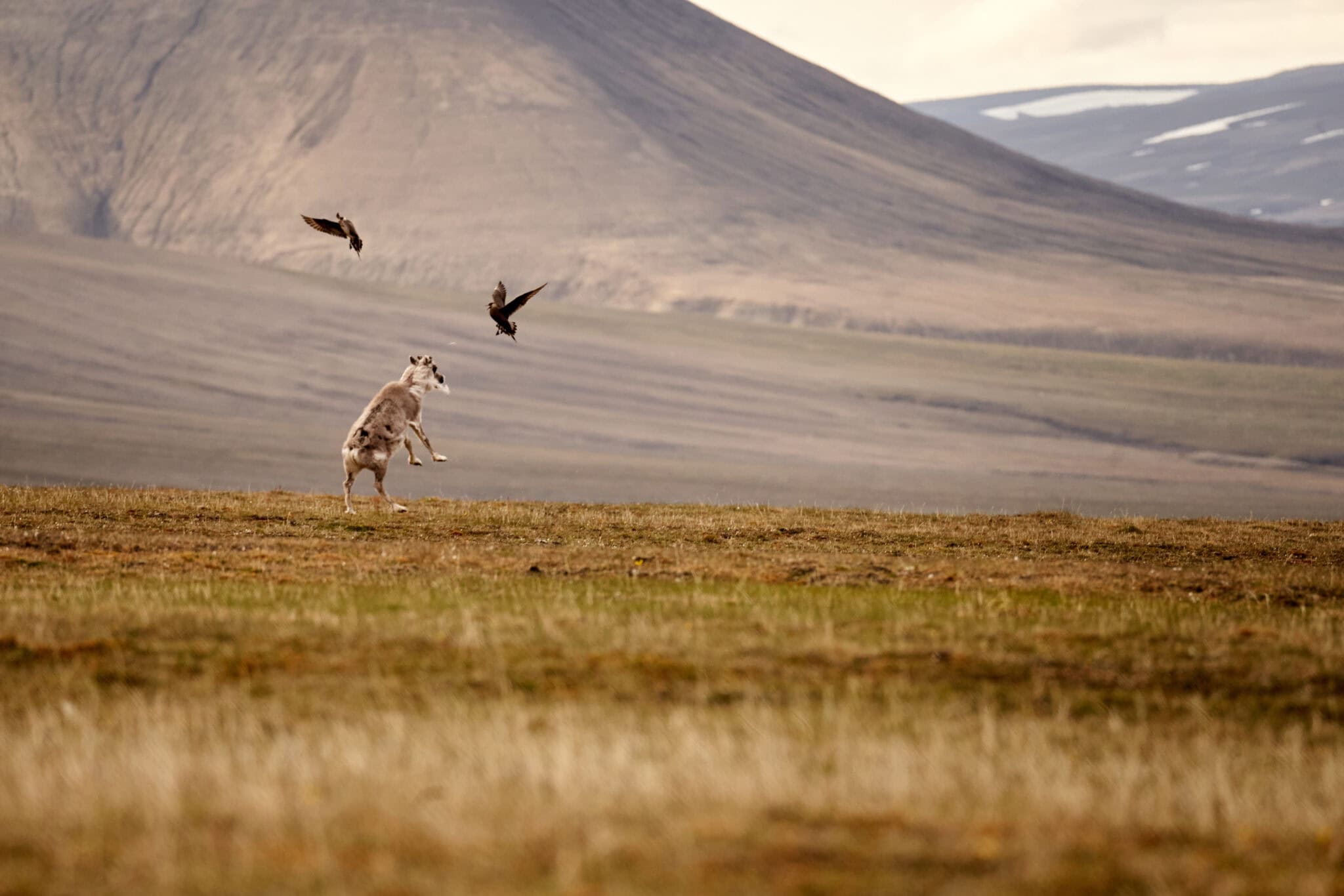
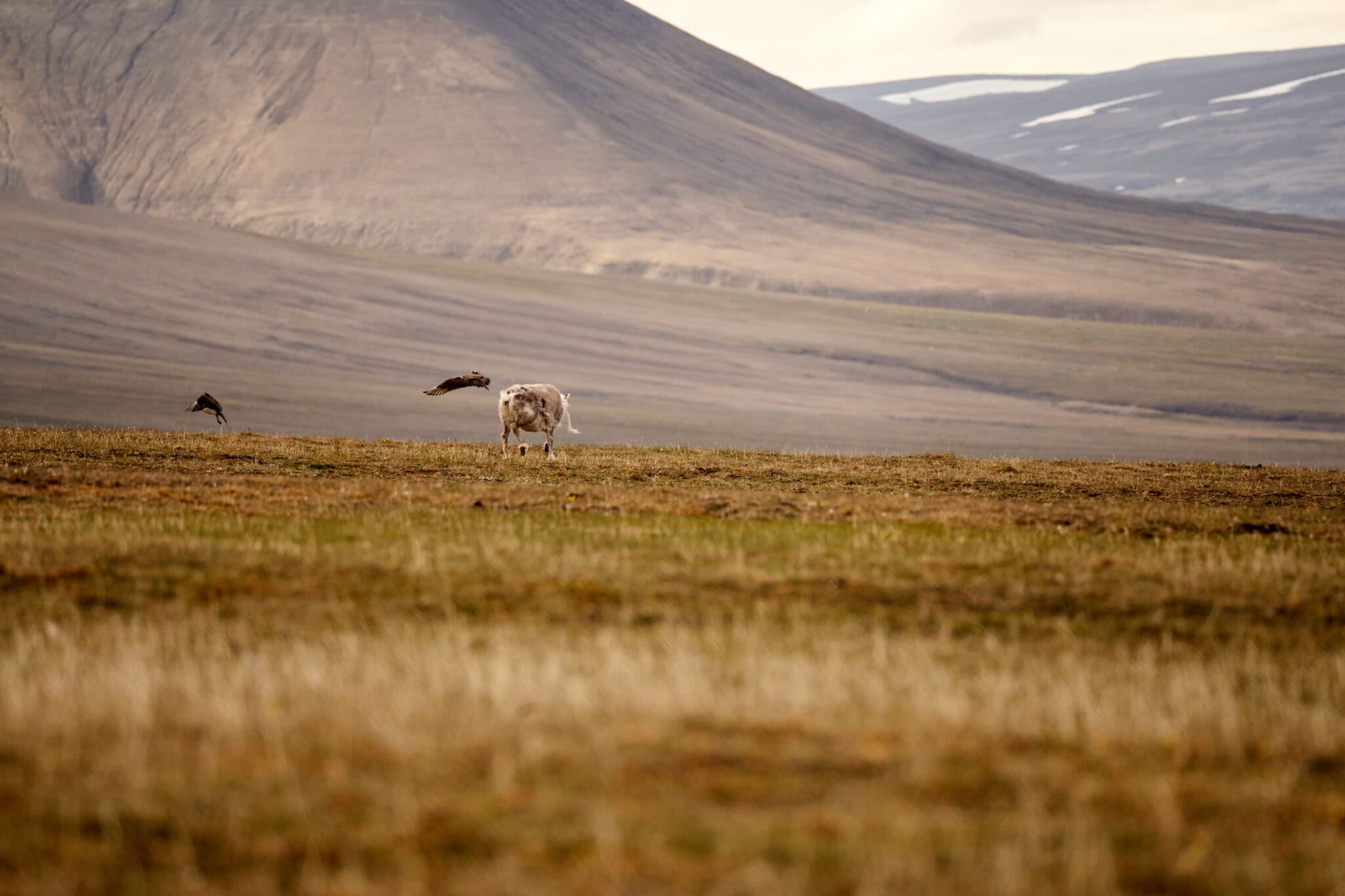
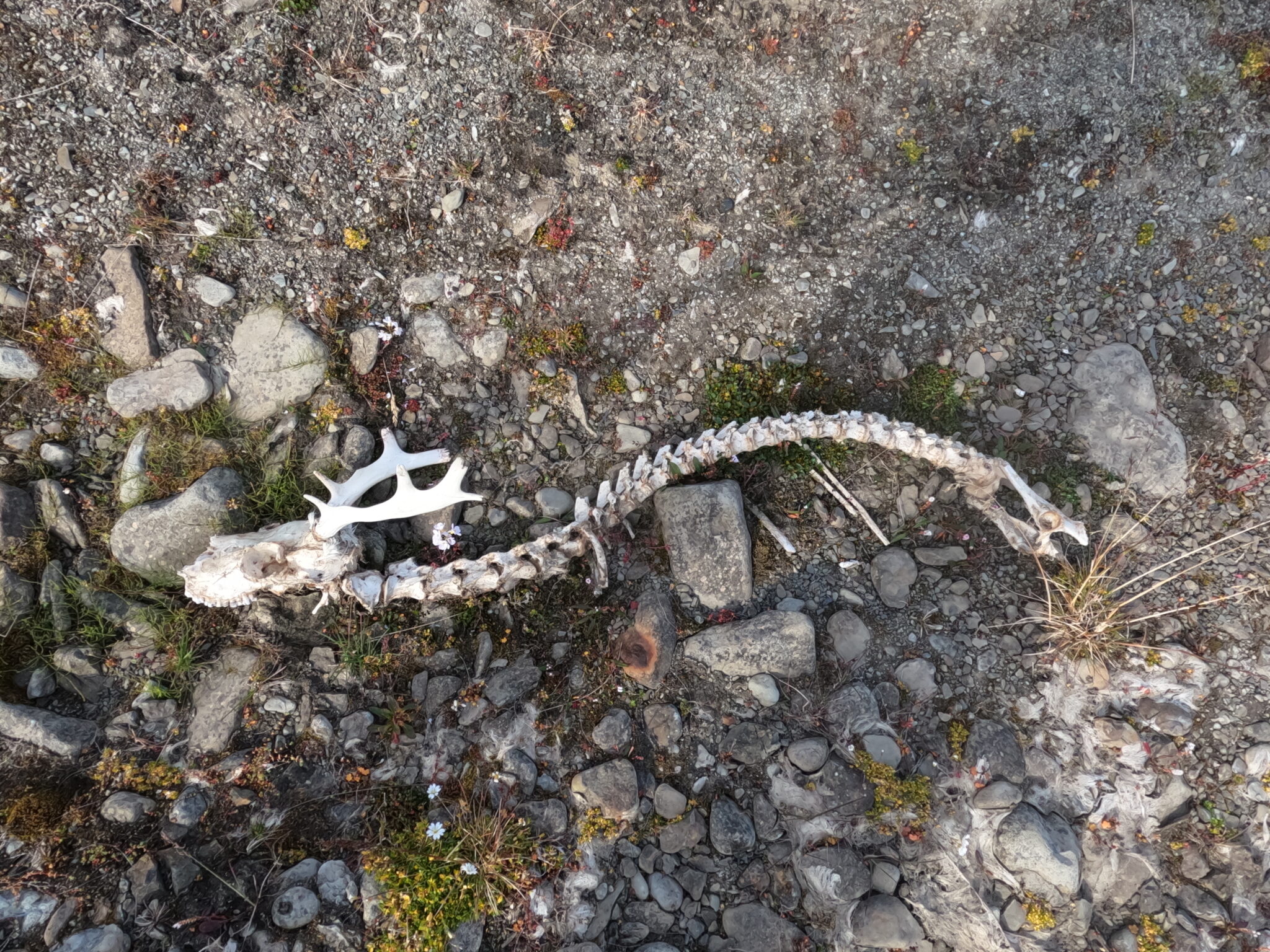
Two crows try to peck out the reindeer’s eyes so that it becomes blind, loses its orientation, and eventually dies, providing food for them. We don’t know how it ended.
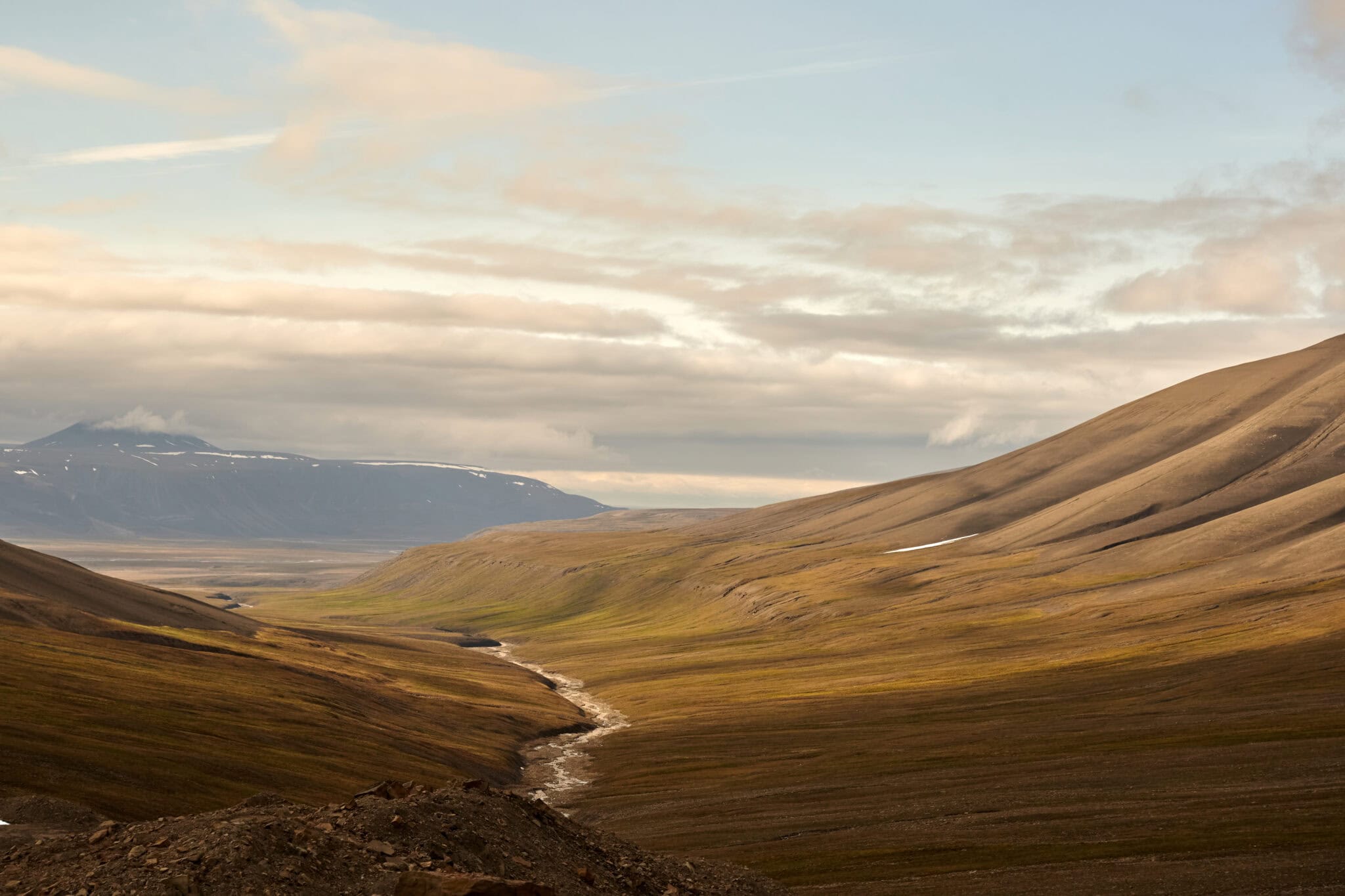
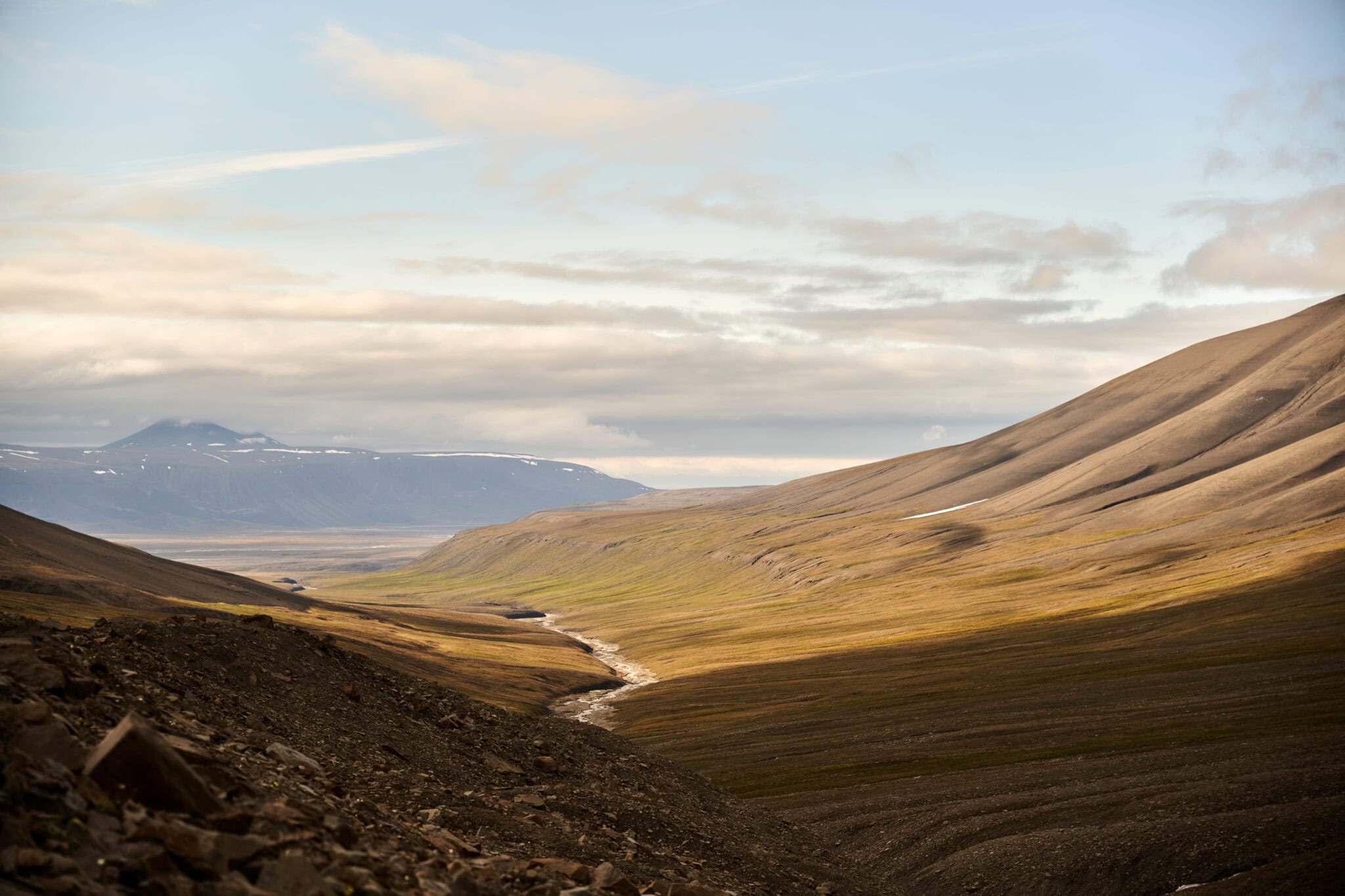
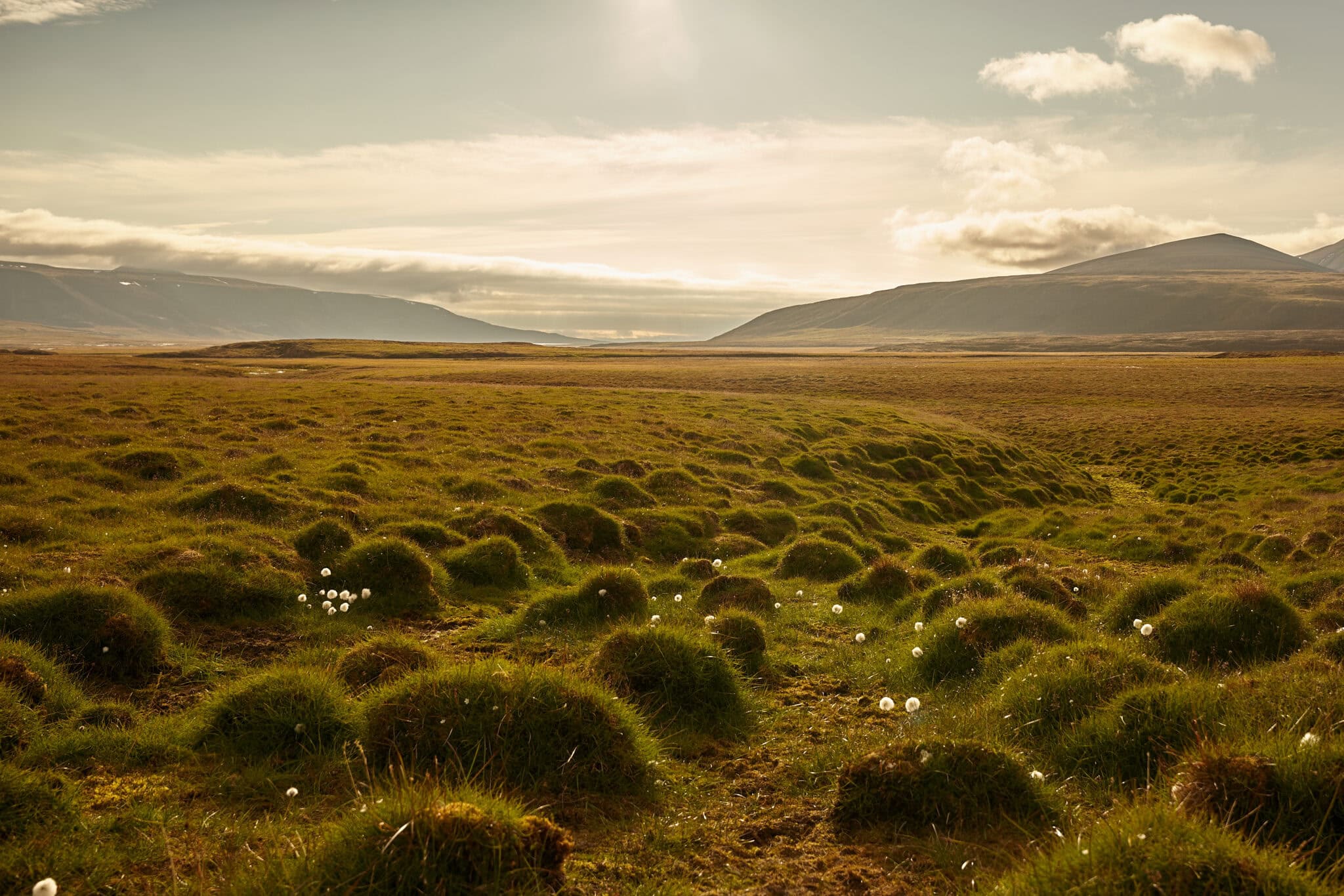
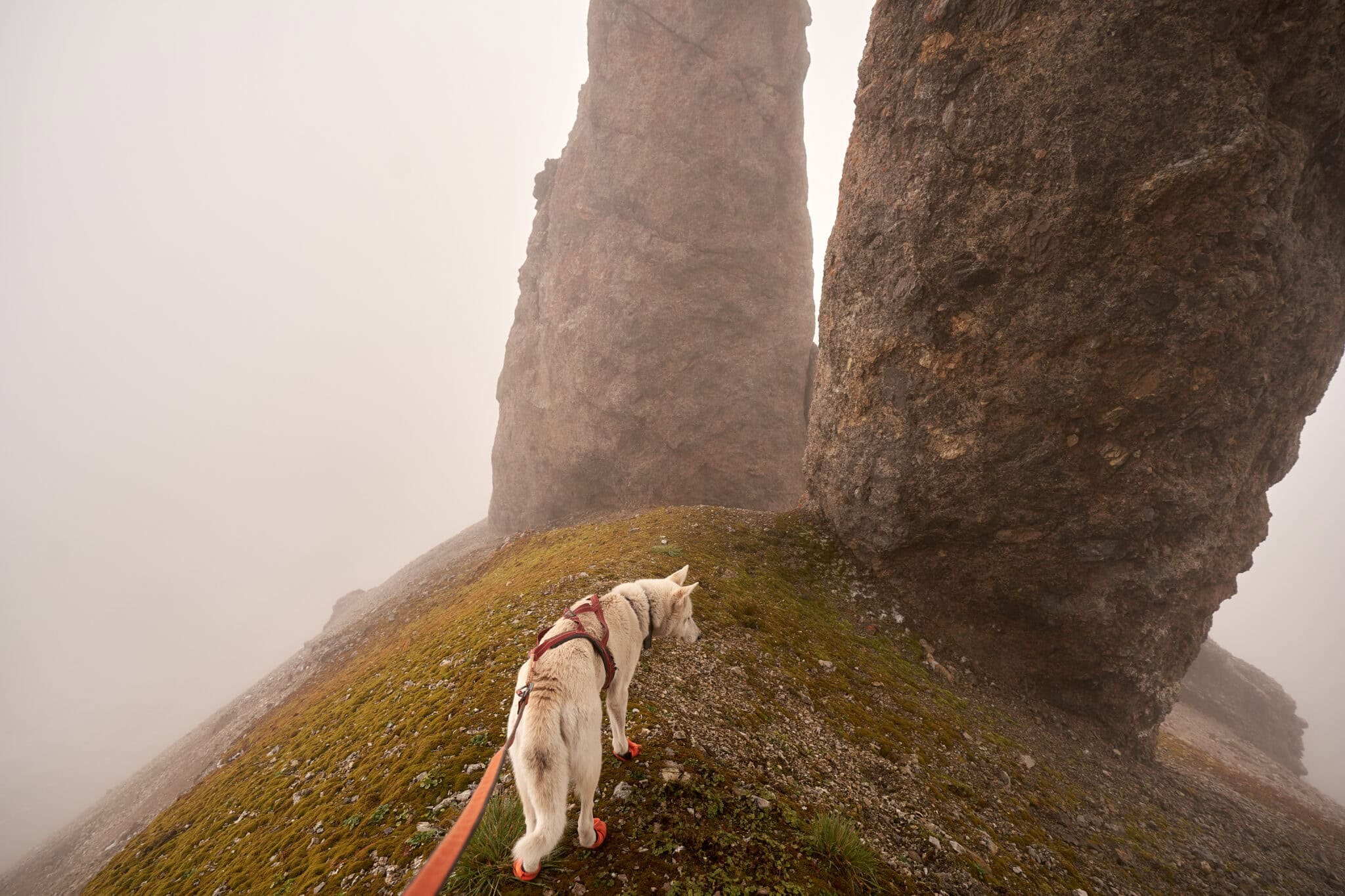
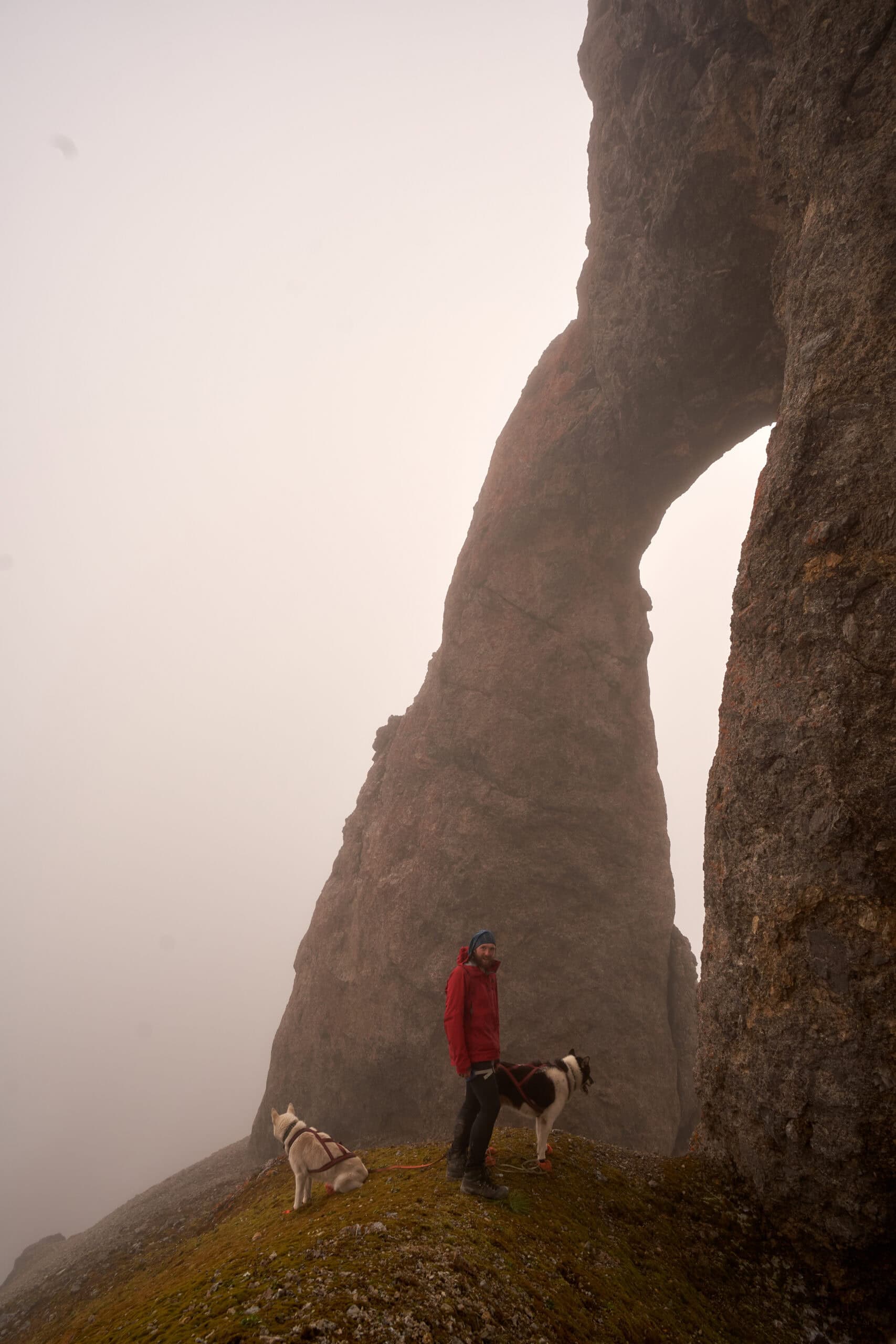
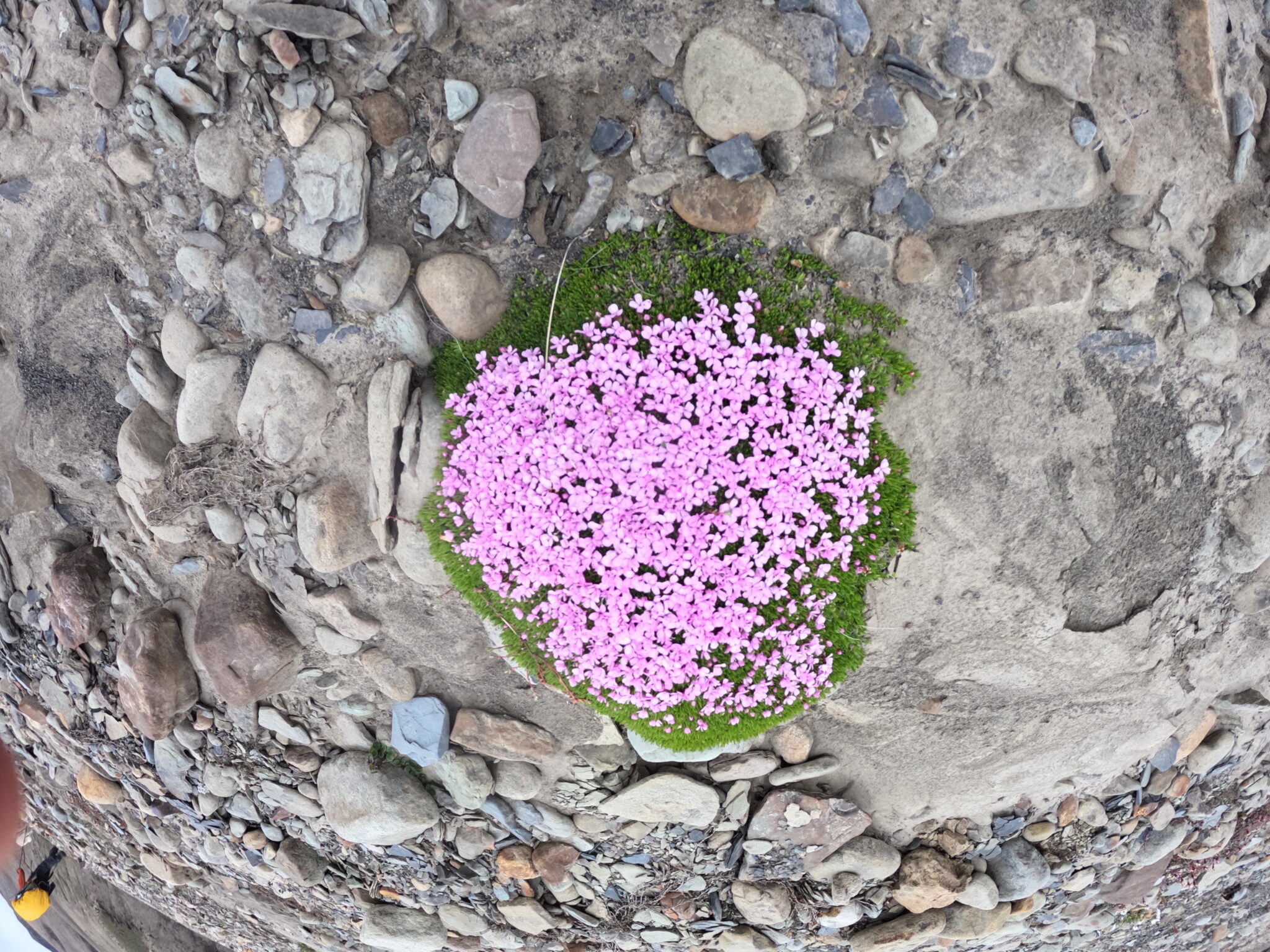
Gradually, we left the traces of civilization behind; the last huts located closer to Longyearbyen disappeared behind us as the large, long valley merged into two arms. We took the northern one, but before we truly disappeared into it, we turned east into a small, narrow, confusing valley. It had something very special about it; it was bursting with green, and the small river winding along here had a completely different charm than all the others so far. Pitching the tent somewhere in the middle of this paradise could only be a dream I was in. “No, no,” the pain in my back reminded me that it wasn’t one. The rock formations with the green-covered base of grass and moss looked more like “Game of Thrones” than reality. Again and again, I drift into dreams for a few minutes and am simply overwhelmed by this beauty on our planet. Only the recurring pain in my back and the jerky pulling of the dogs when one of the reindeer came too close brought me back to reality.
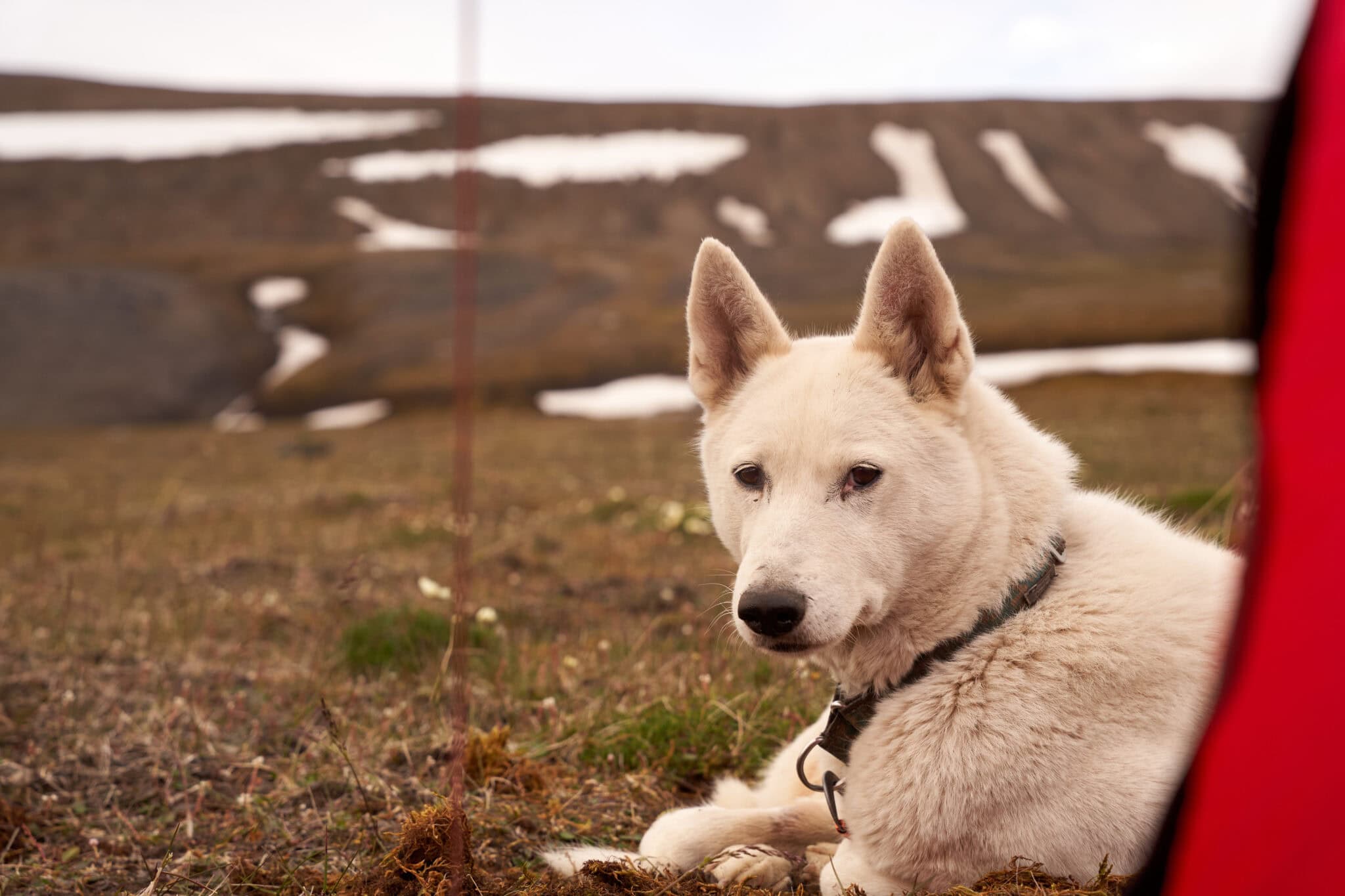
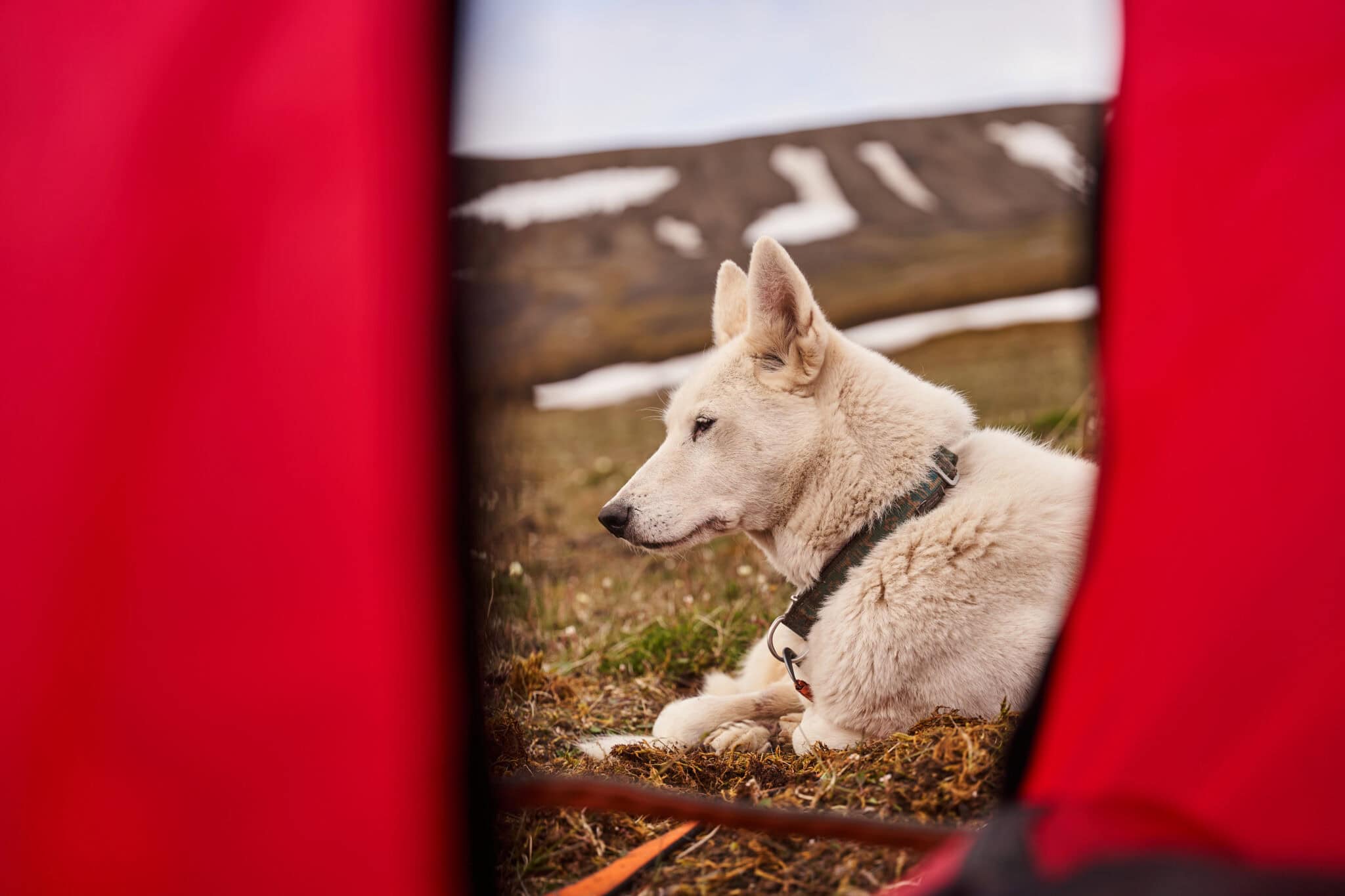
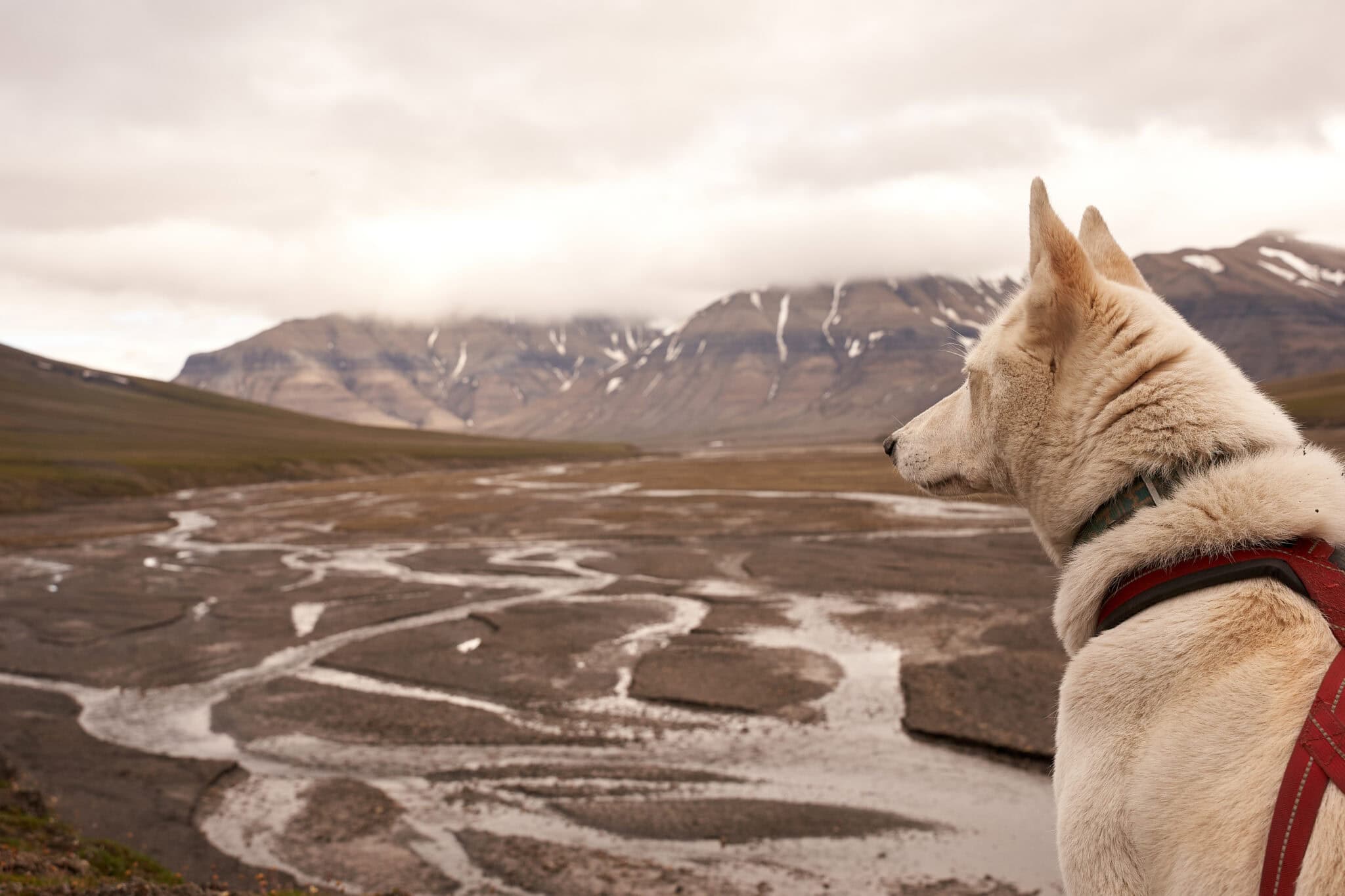
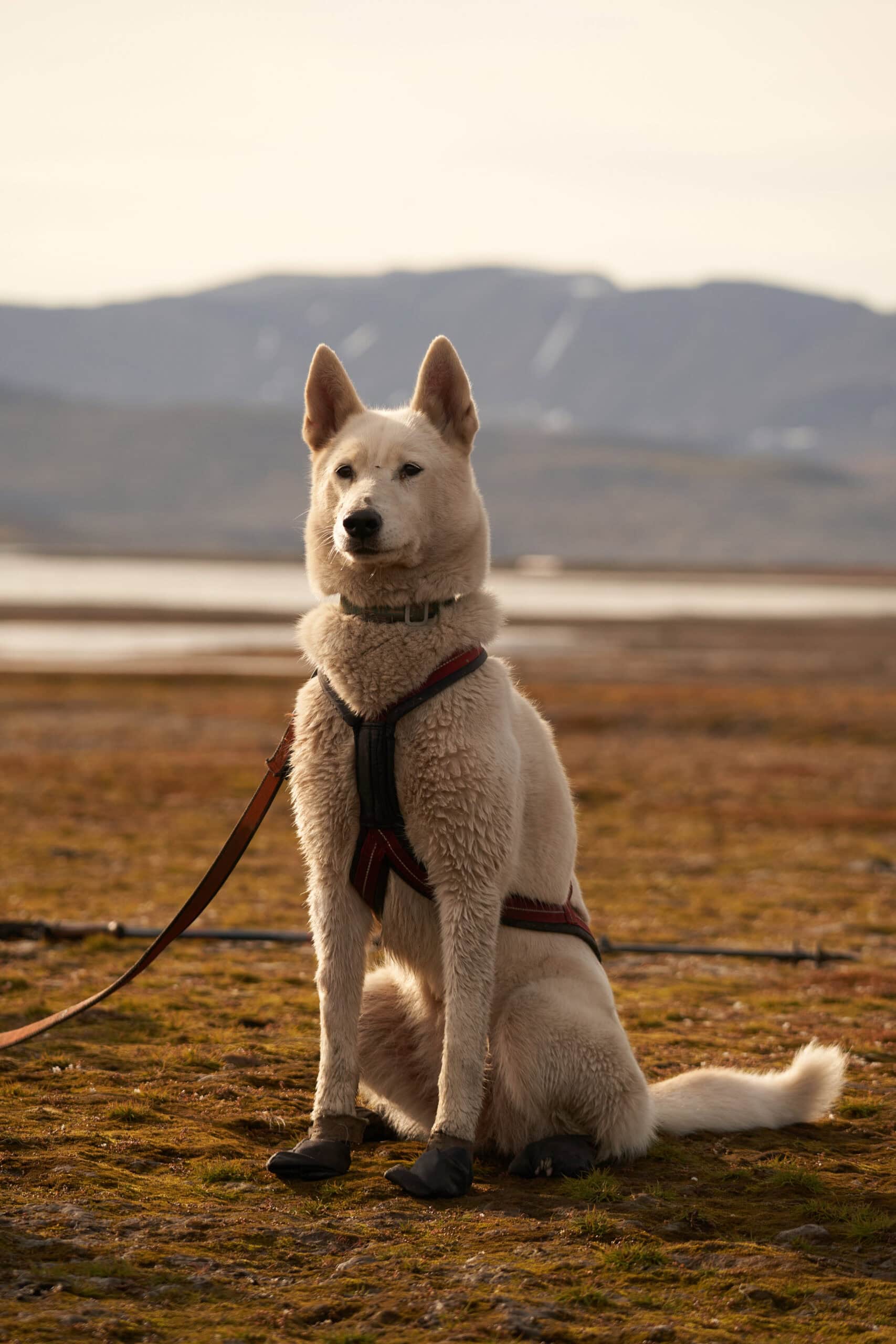
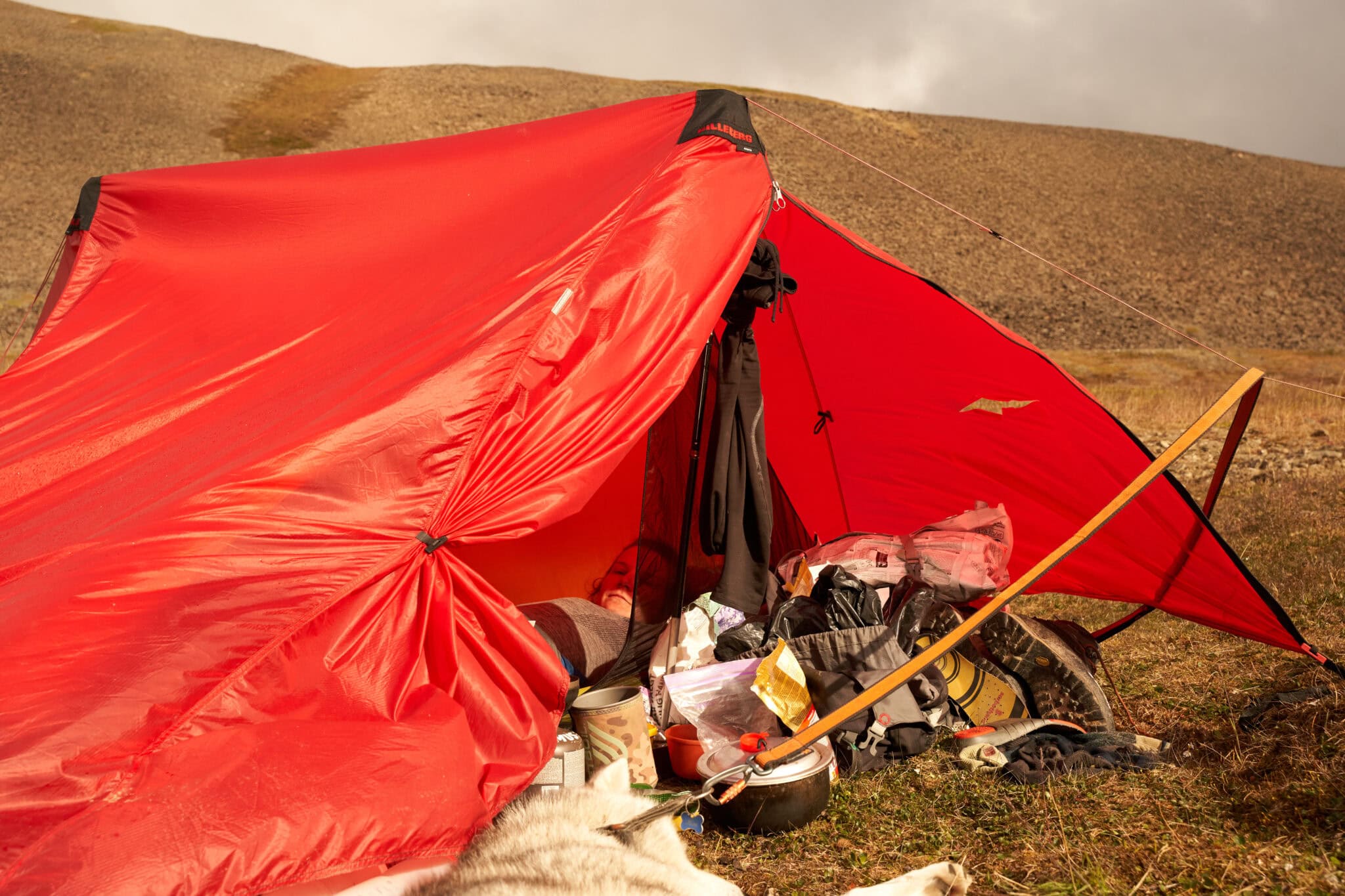
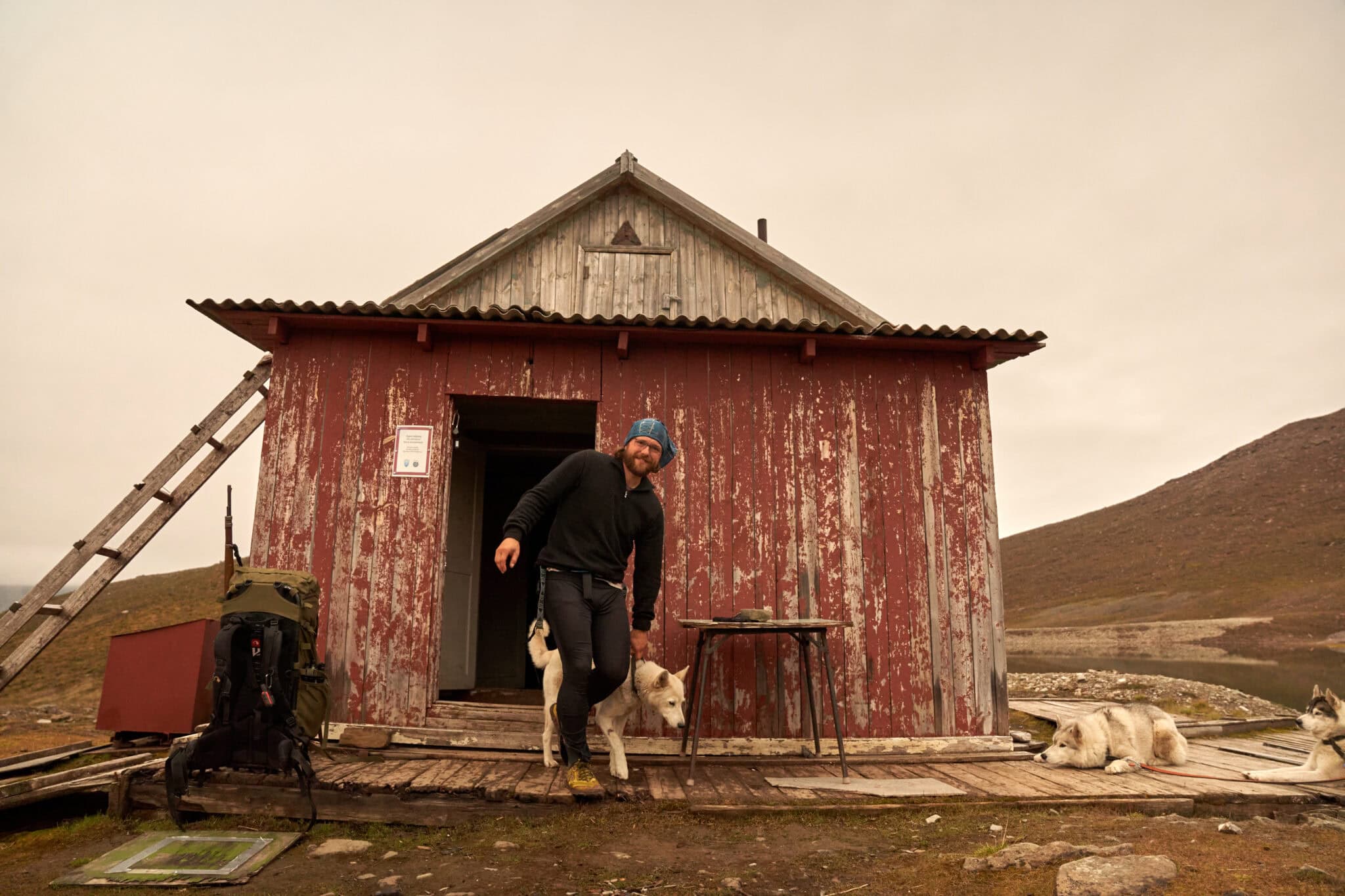
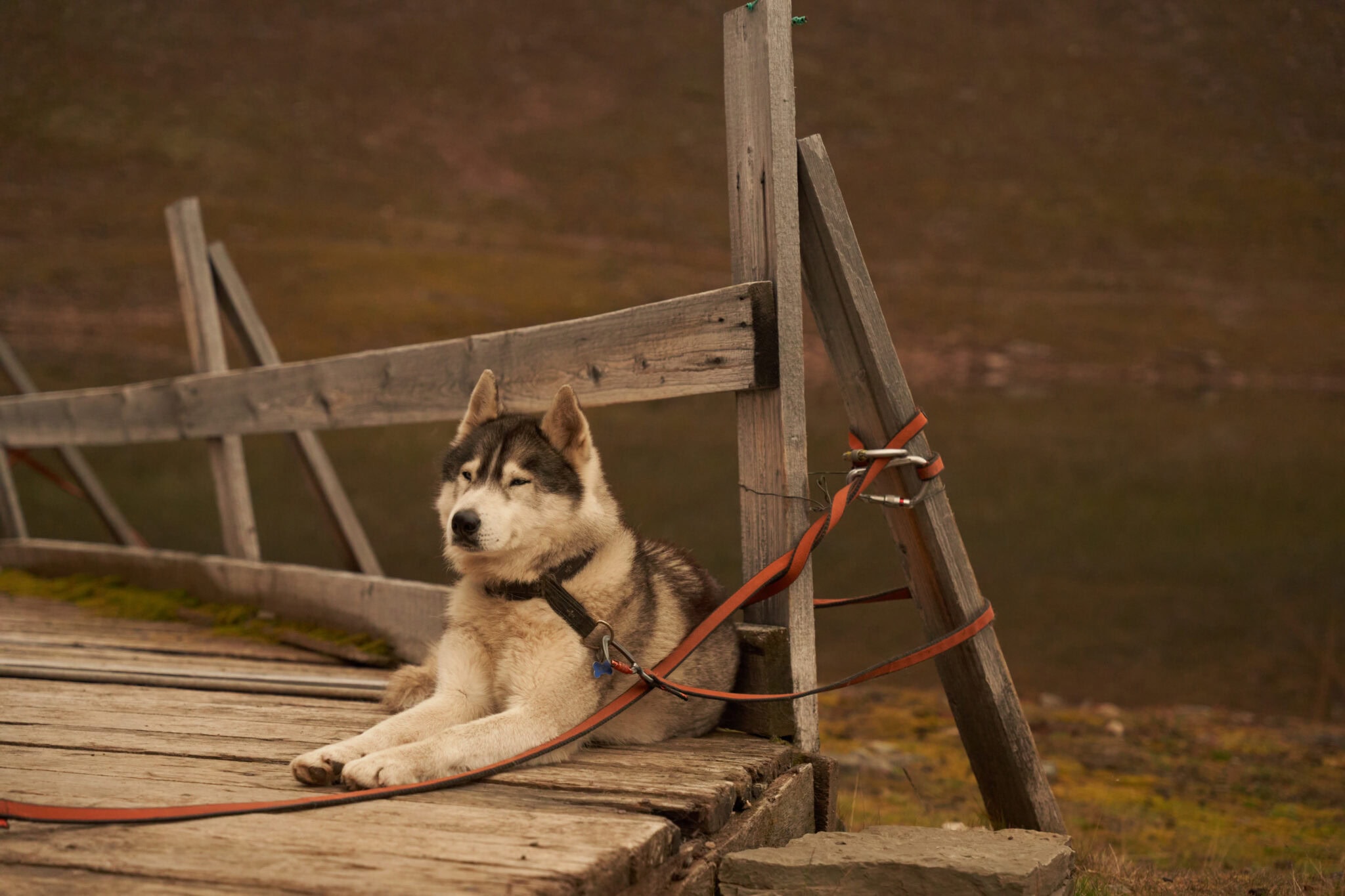
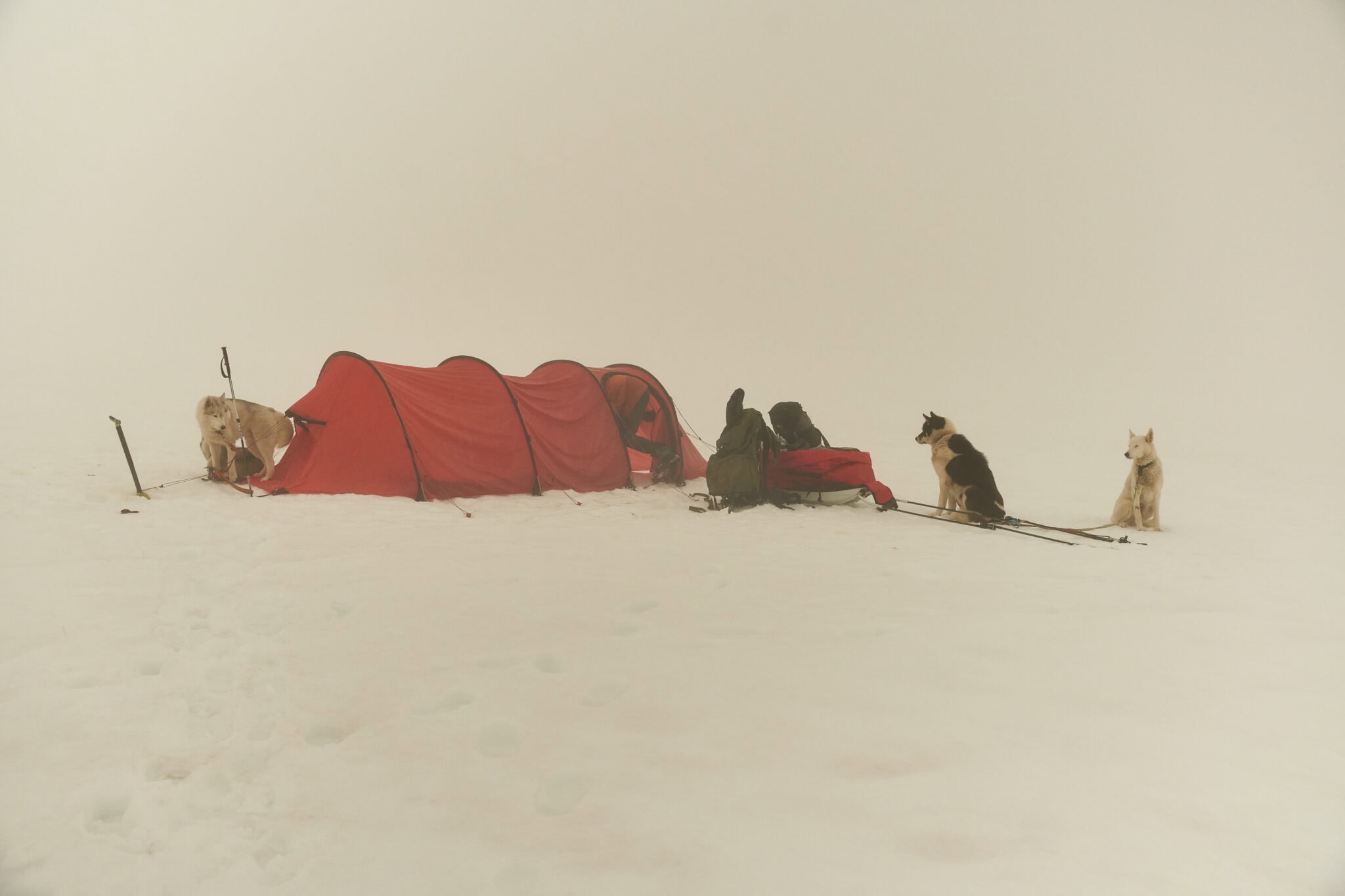
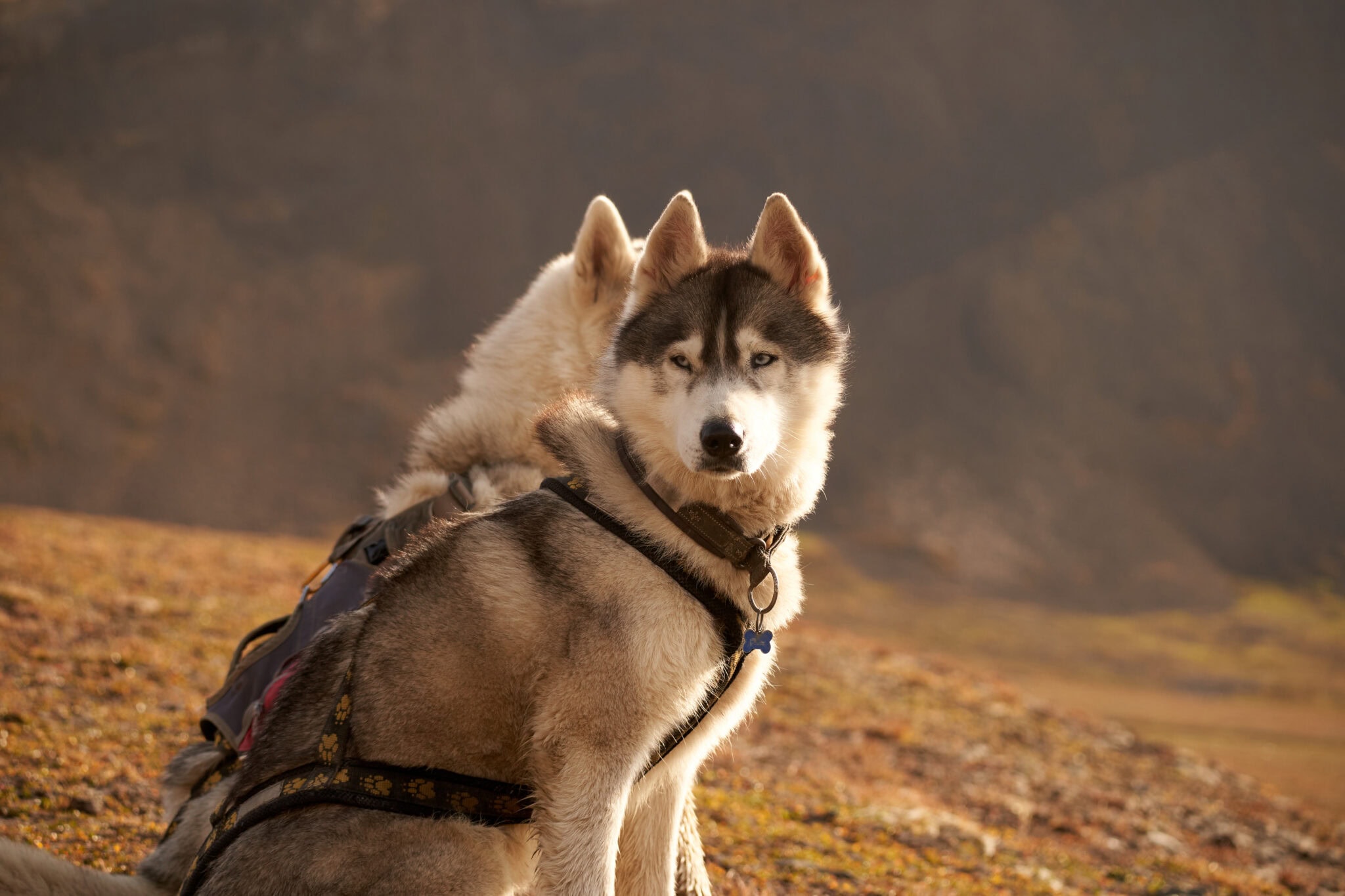
A suitable campsite seemed to be only on one of the adjacent hills, from which our bodyguard Taiga had an overview of the whole situation. So we struggled up a few meters and pitched our ultra-light tent.
There are two special moments in a hiker’s life: a beautiful one and an ugly one.
Before you read on, please think about it for a moment yourself.
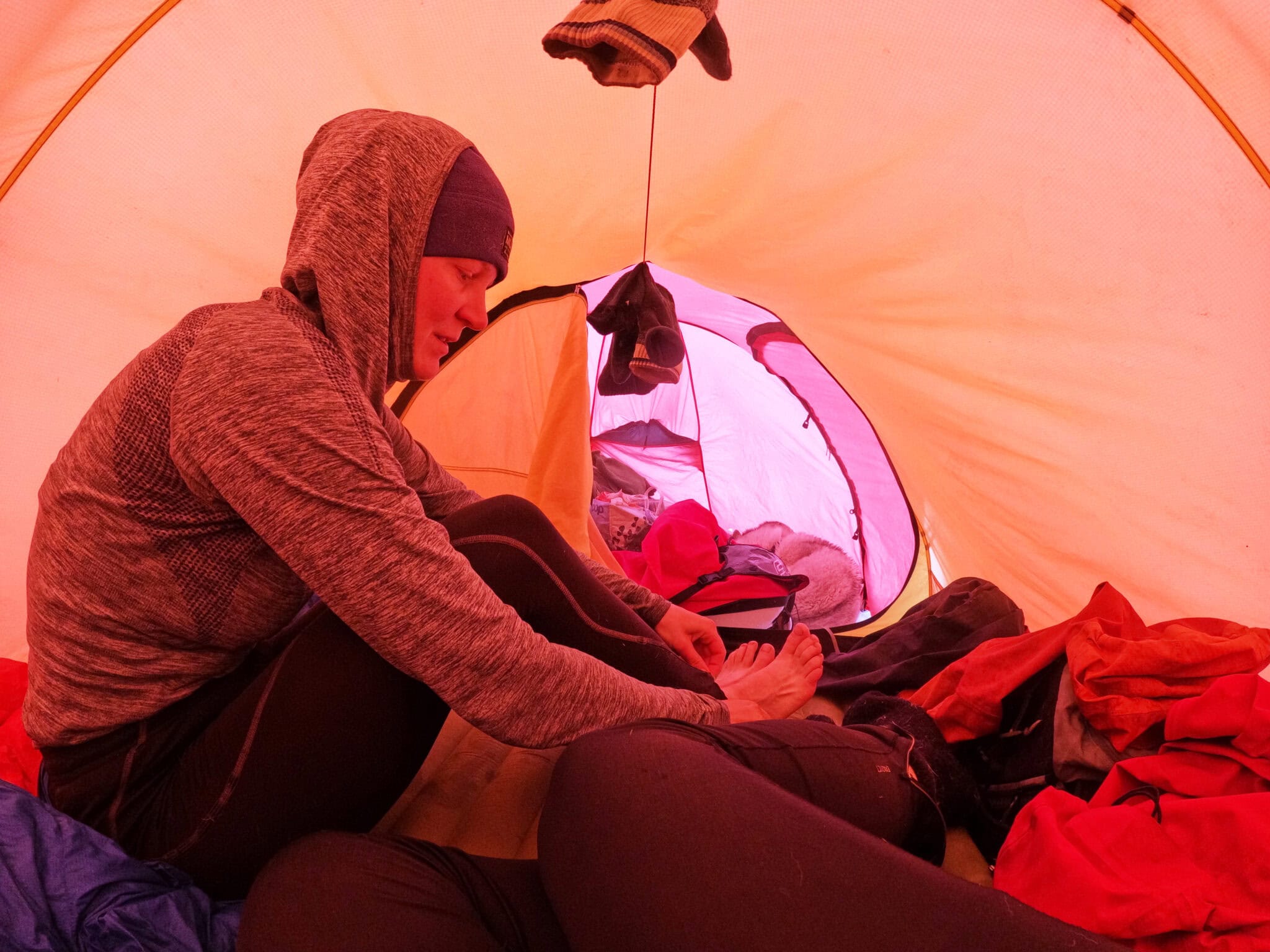
Okay, I’ll tell you, and I’ll start with the ugly one: that’s in the morning when you have to get out of your dry, warm tent socks and back into the wet stockings and/or shoes. The beautiful one almost explains itself: that’s in the evening when you take off your wet socks and shoes and put on the dry socks for the tent.
Yeah, yeah, some might think how nice and easy it is with trail runners that dry on the go. Forget that thought!!! The heavy backpack in combination with the river crossings doesn’t give you enough support, and you can’t use the crampons you should be carrying with them either. Svalbard isn’t the Alps, unfortunately. If you plan a route, that doesn’t mean Mother Nature will let you go that way.
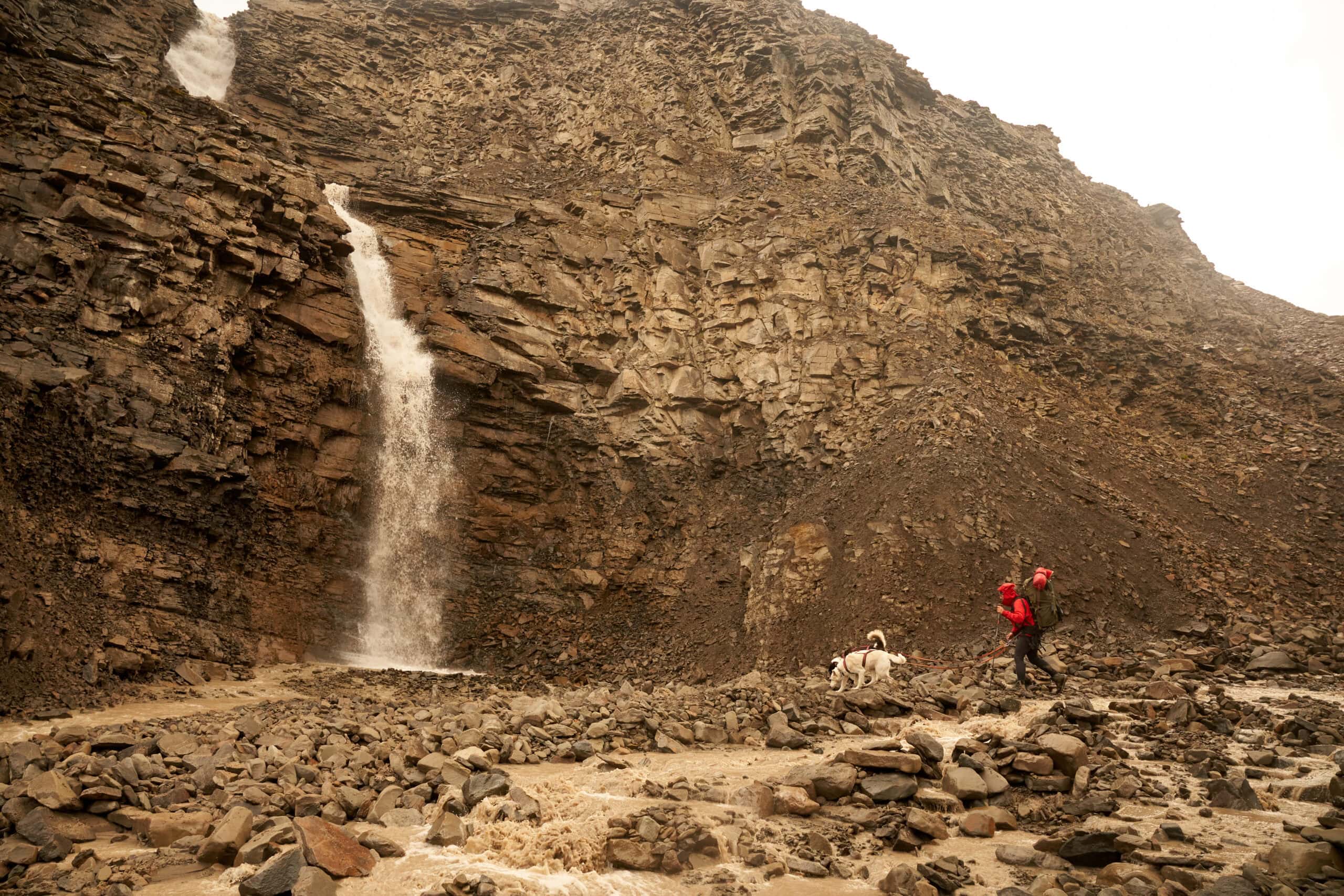
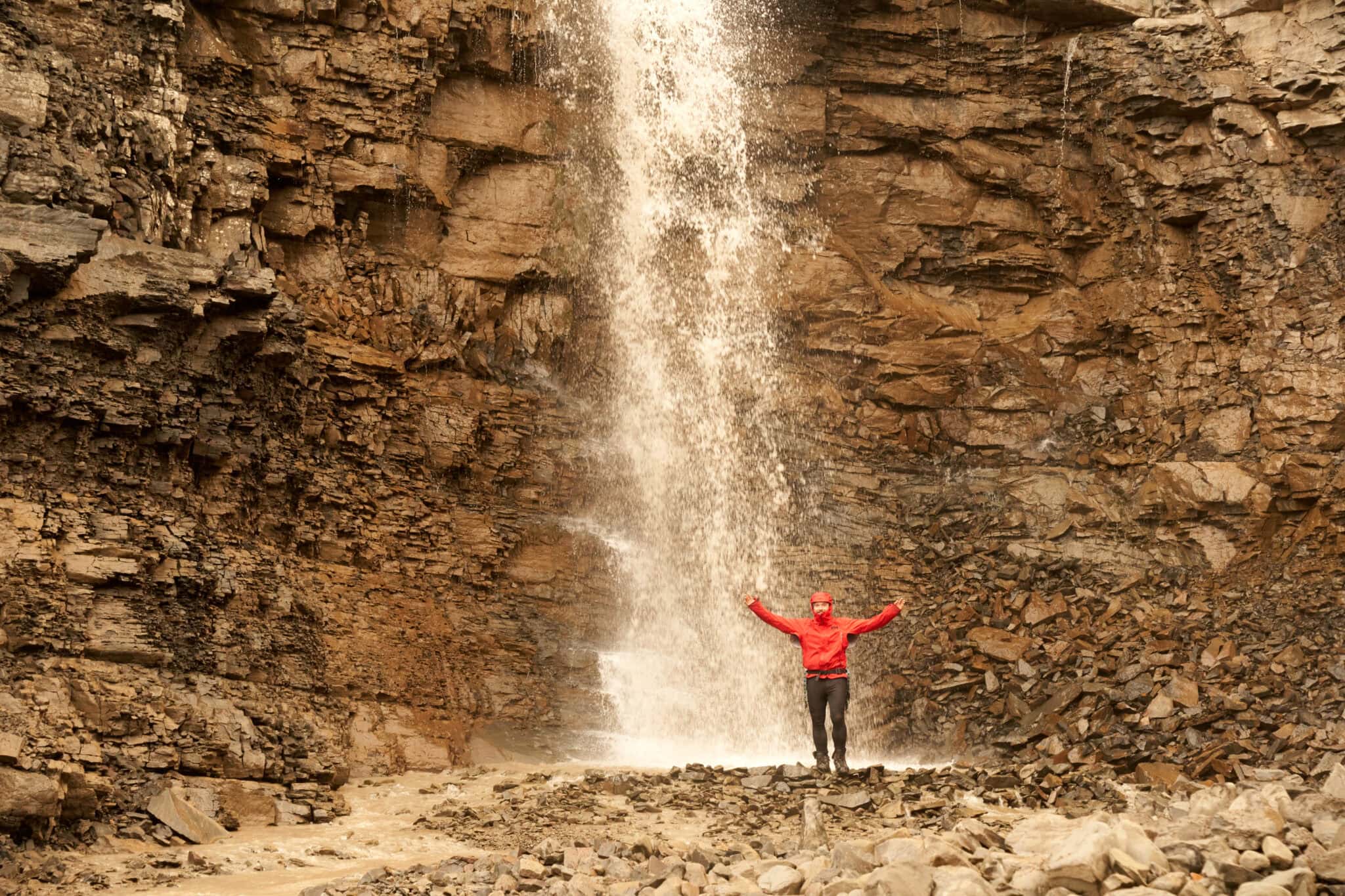
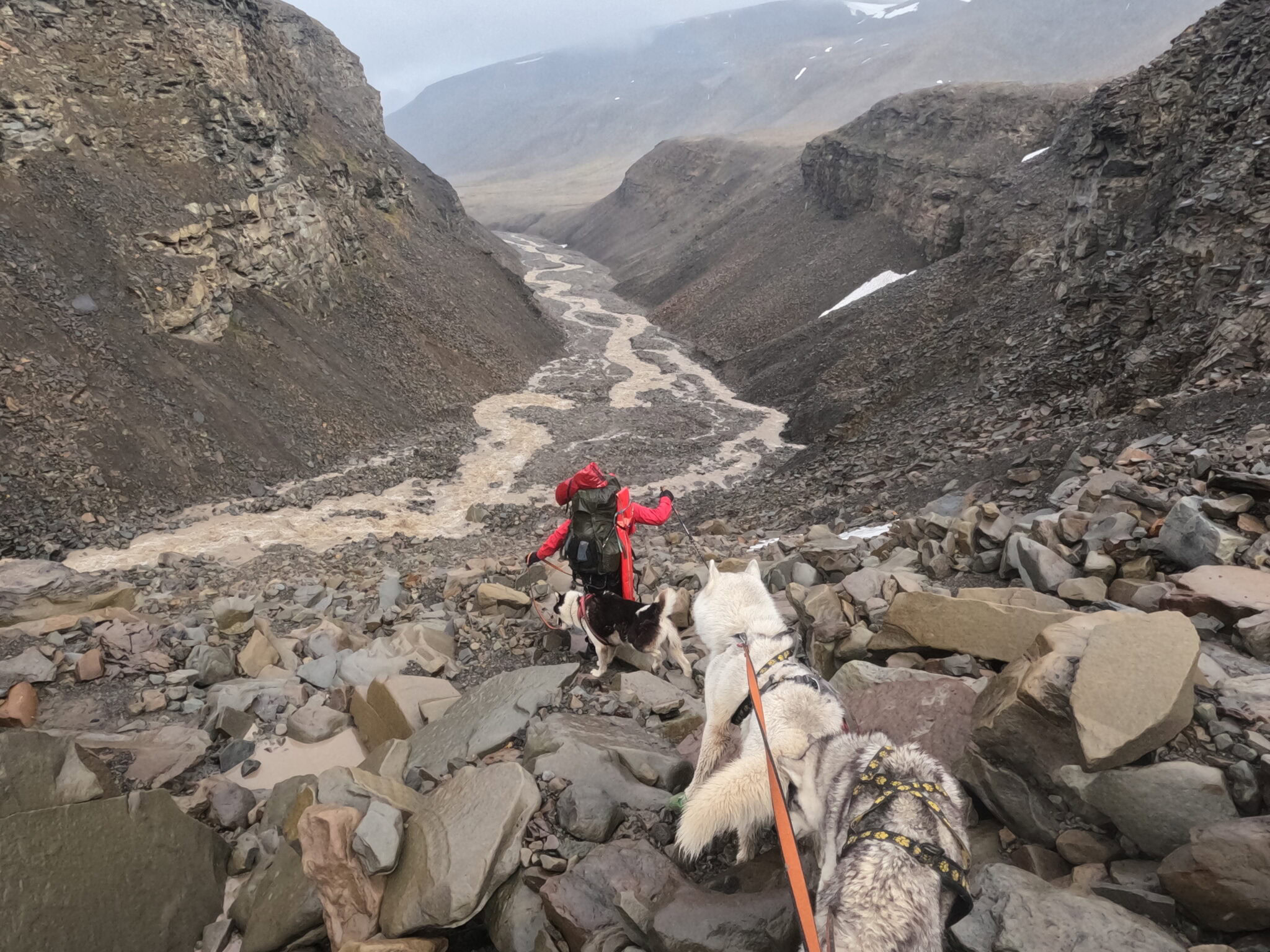
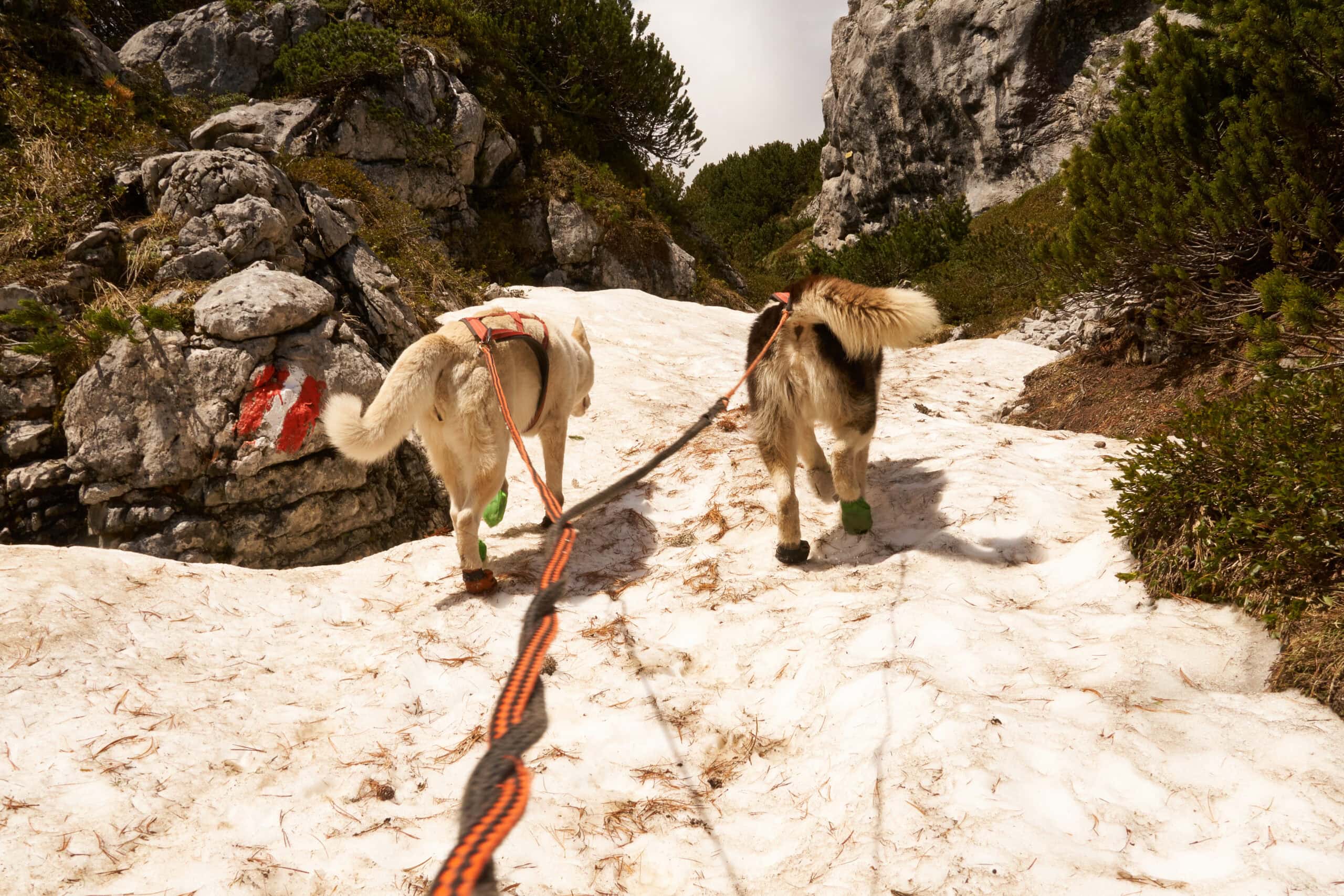
After a steep, stony descent on a dull, rainy day.
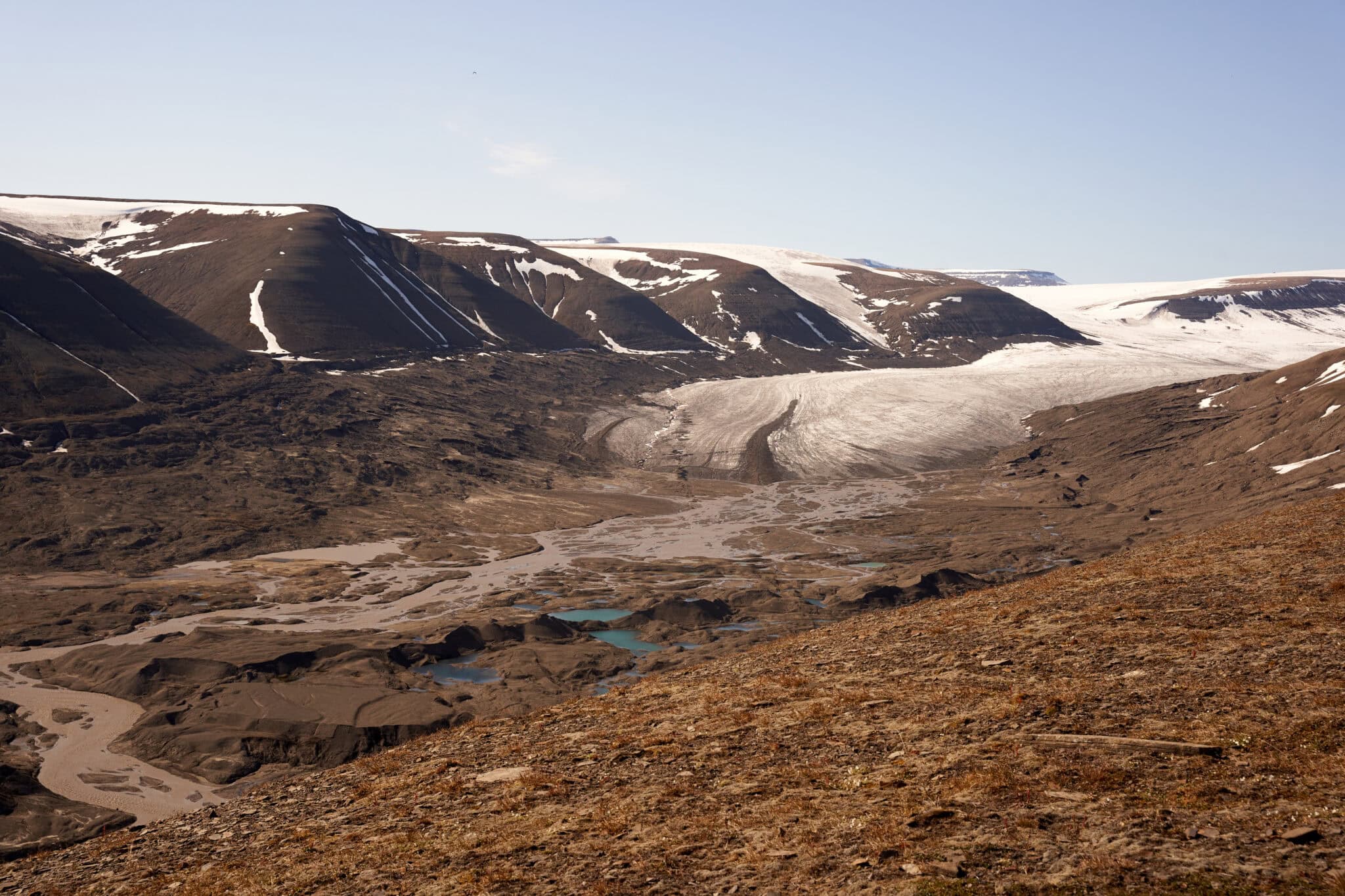
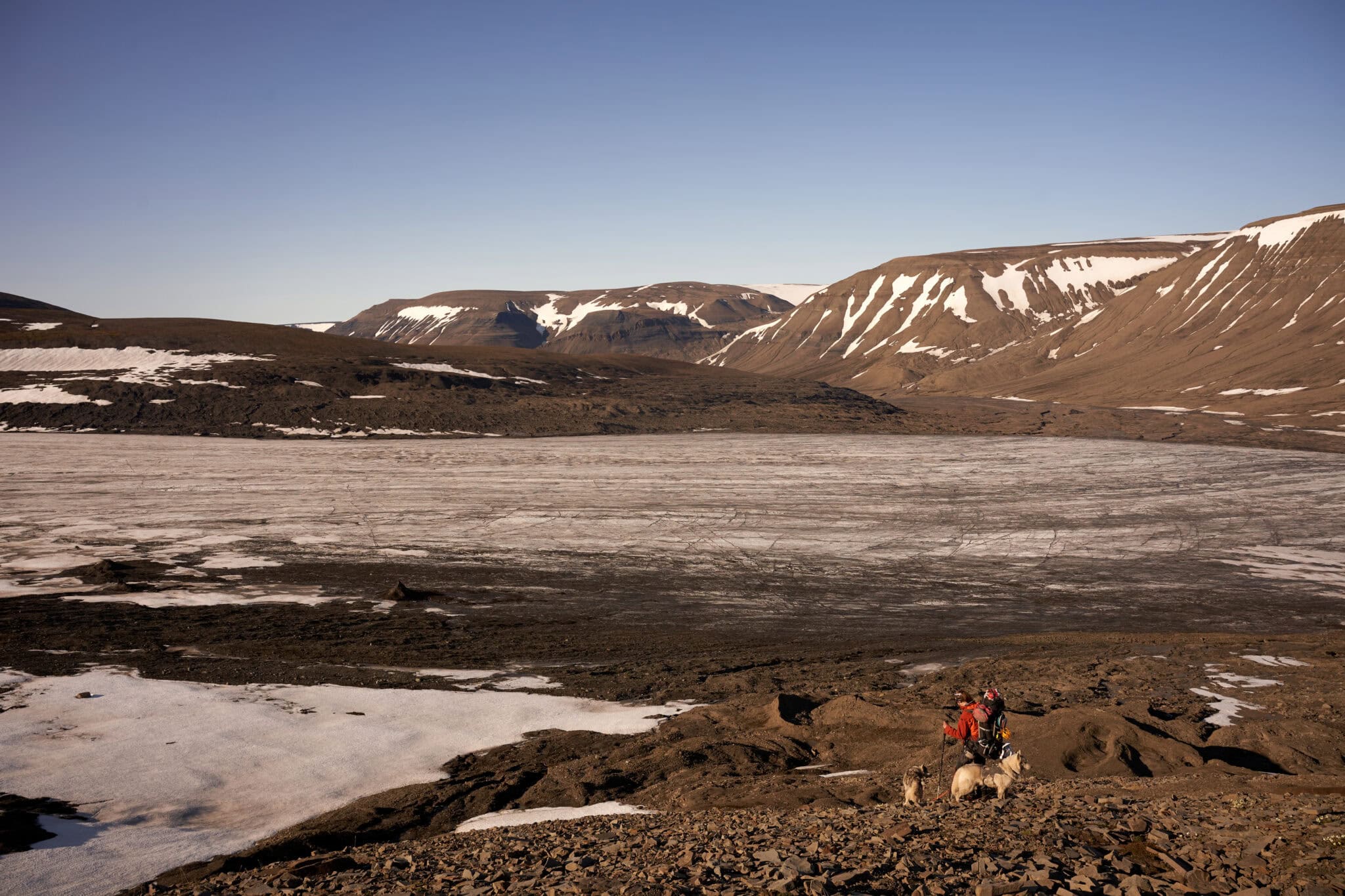
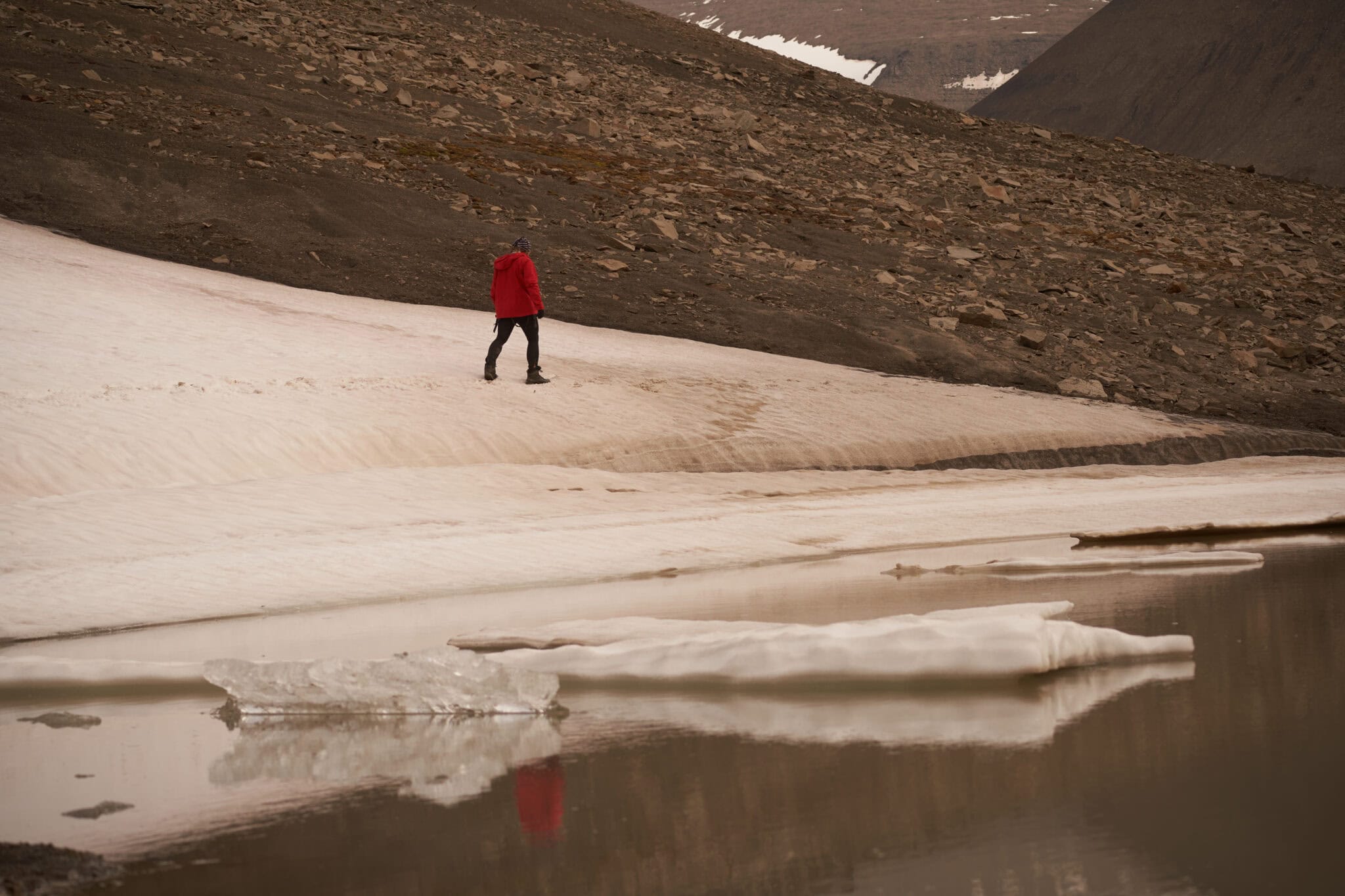
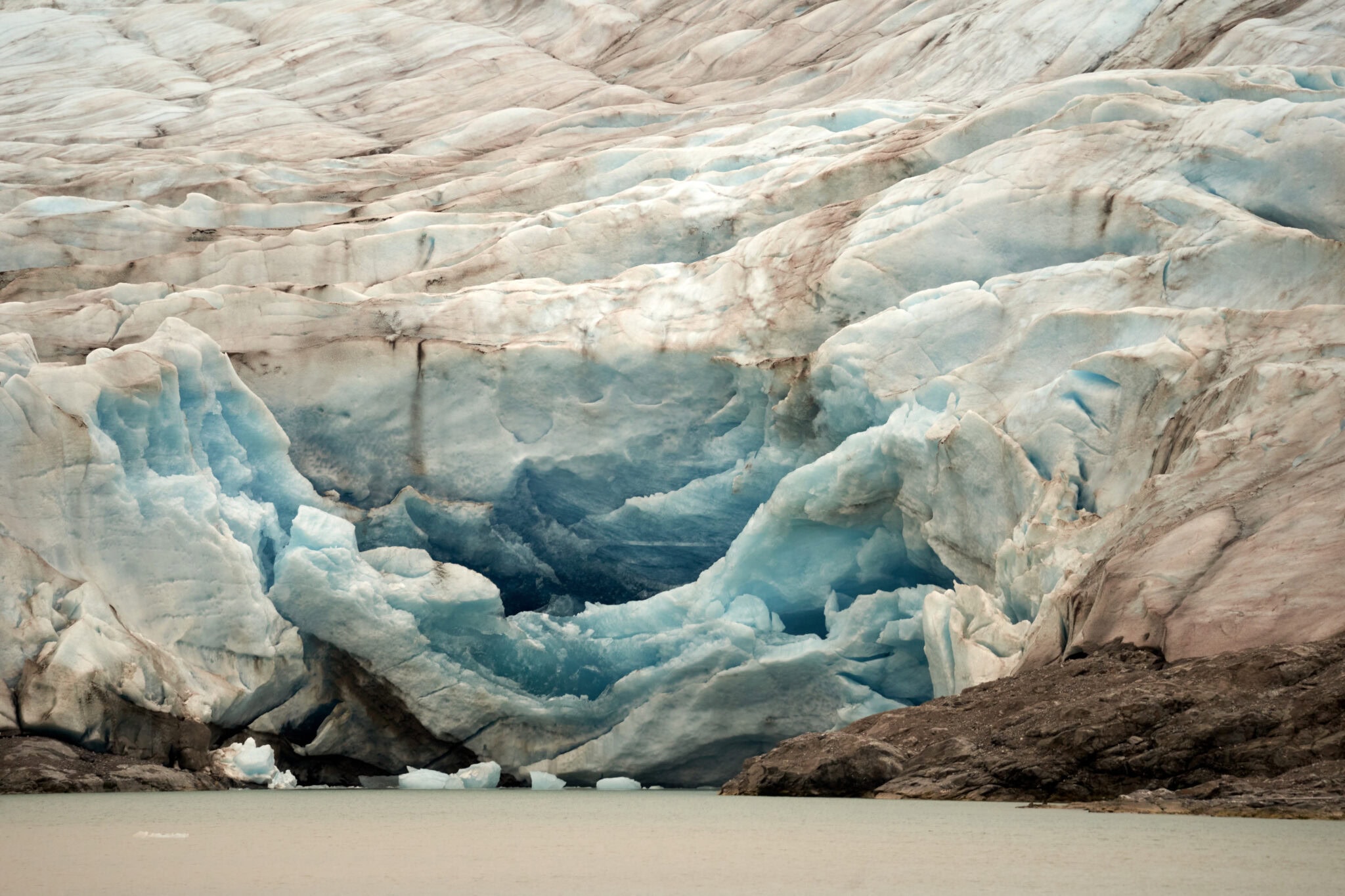
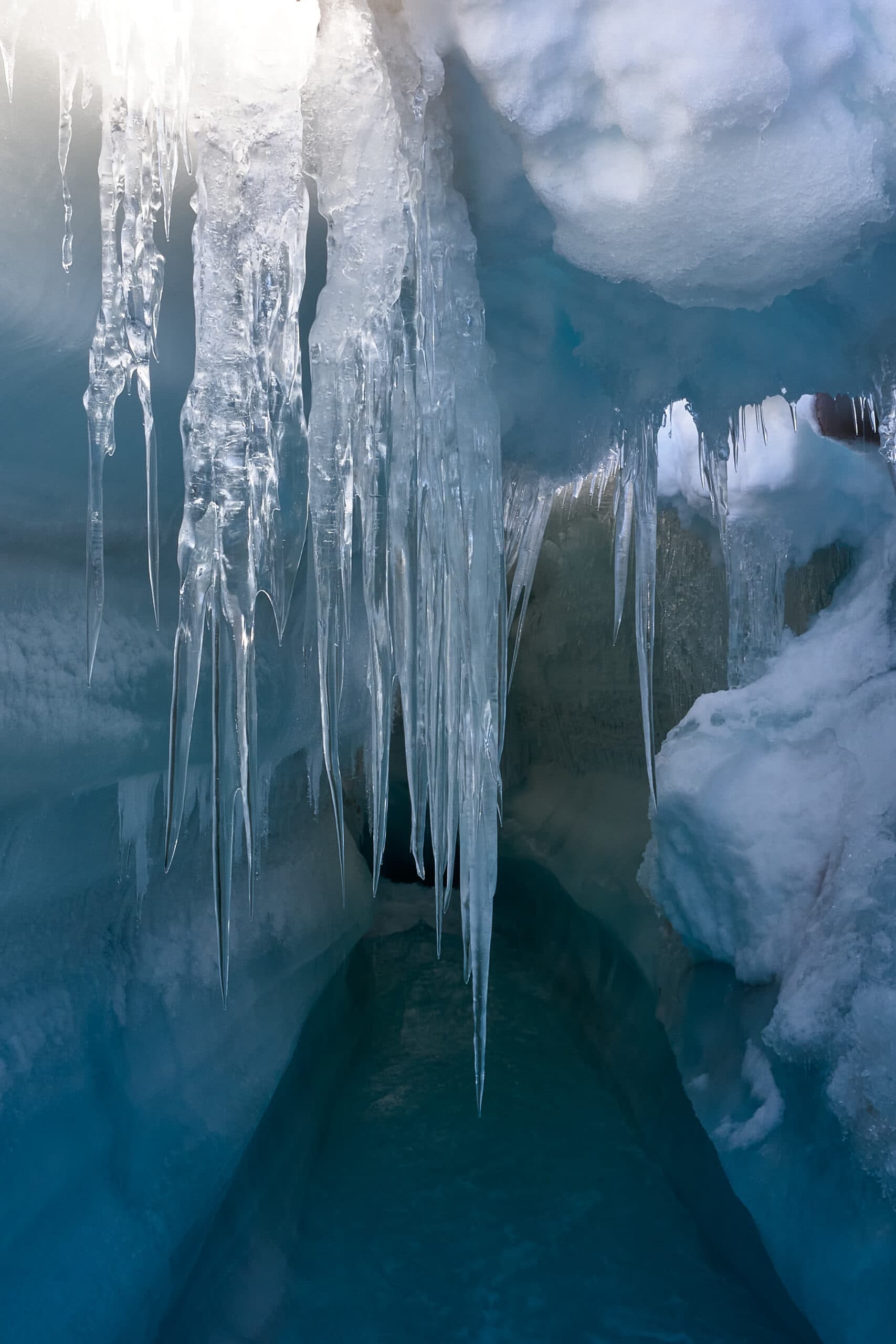
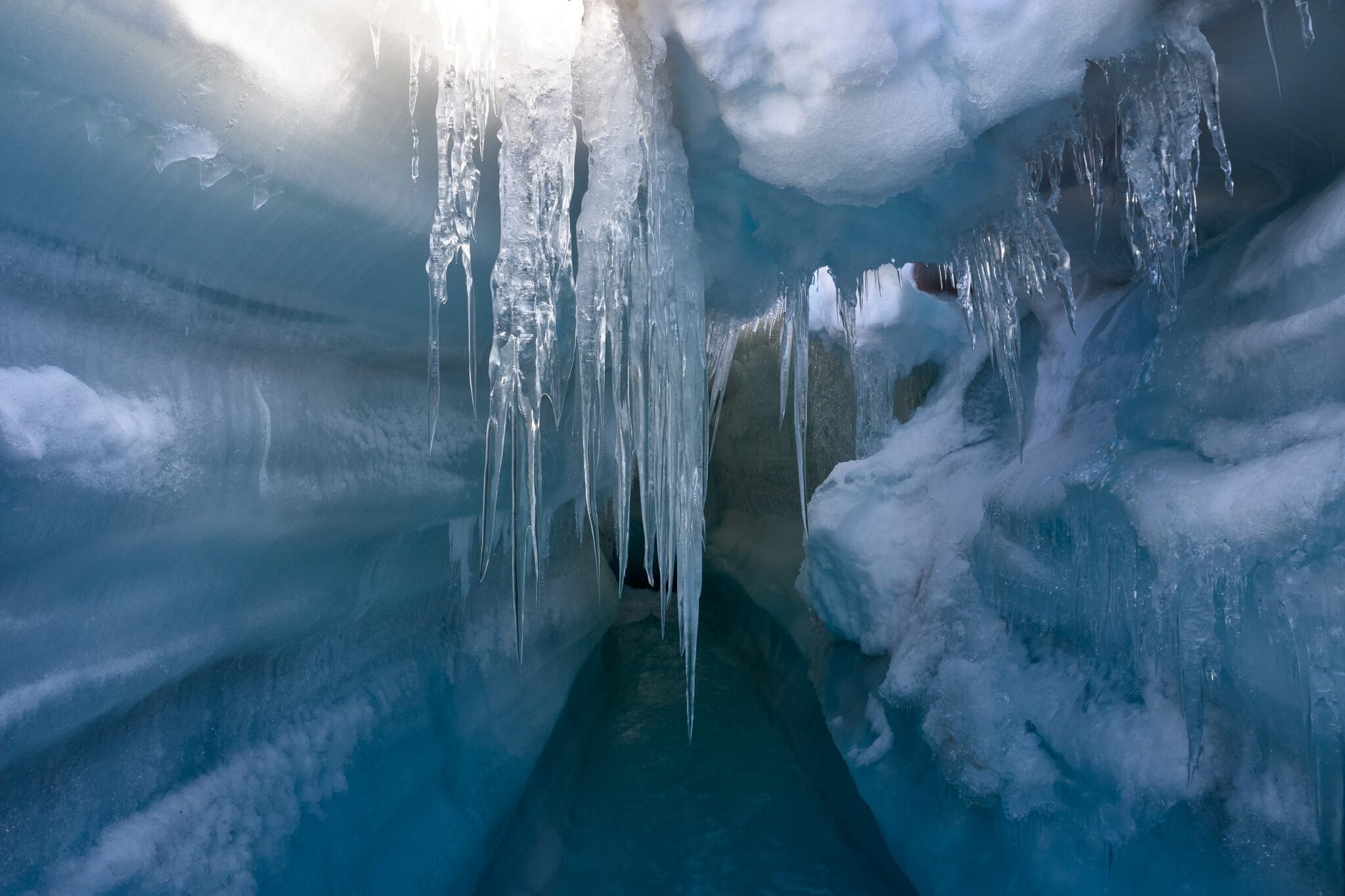
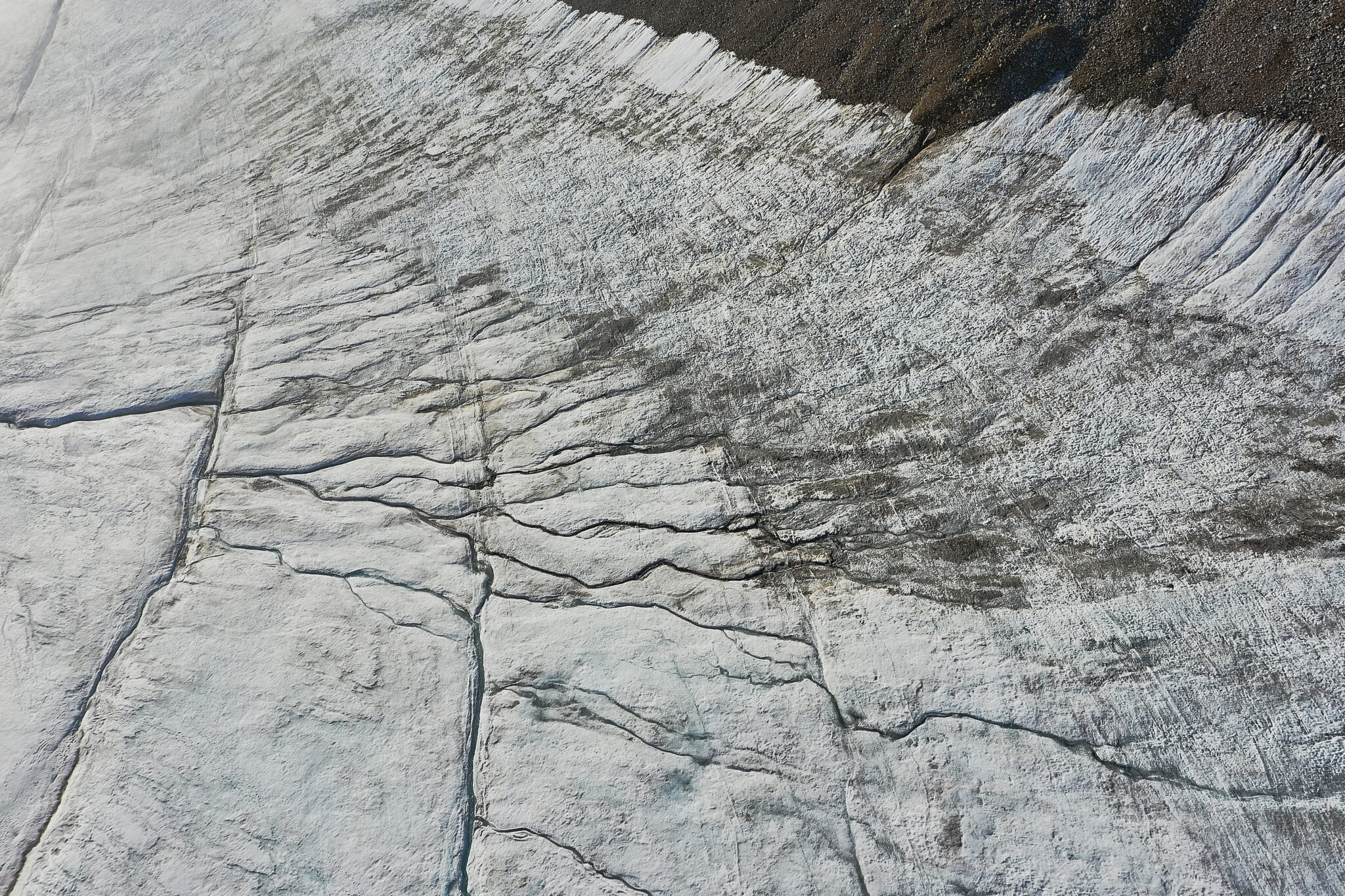
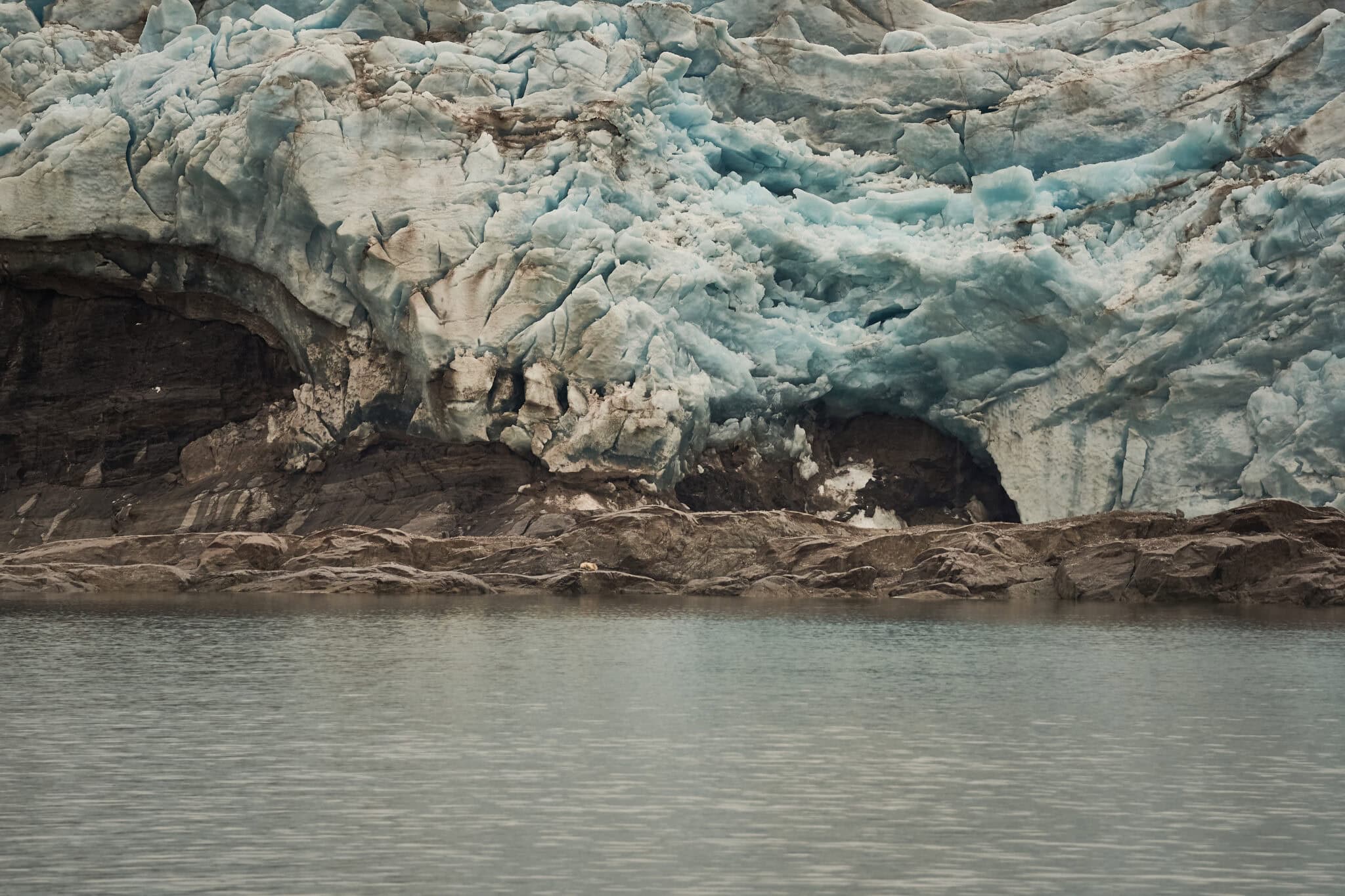
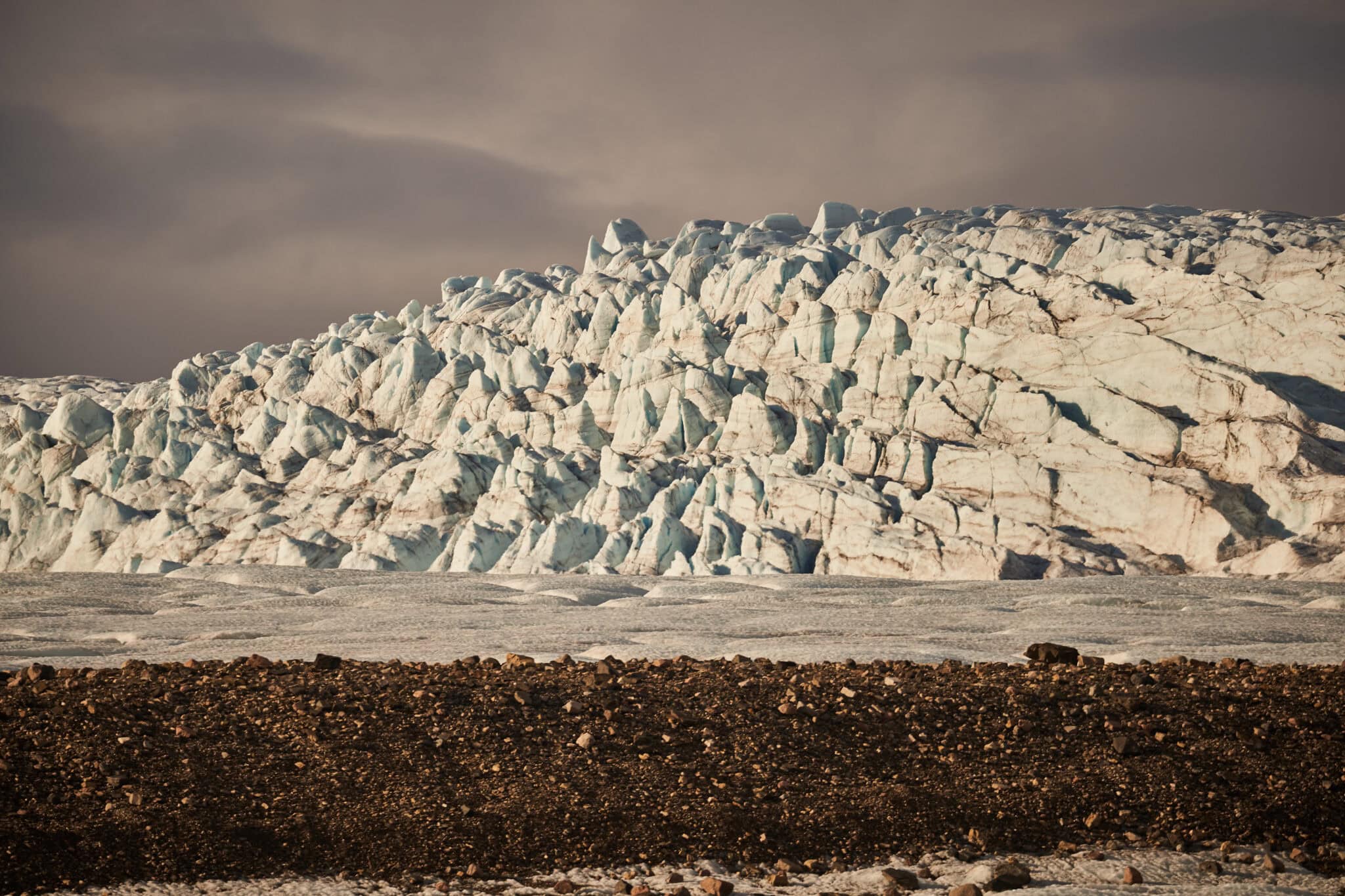
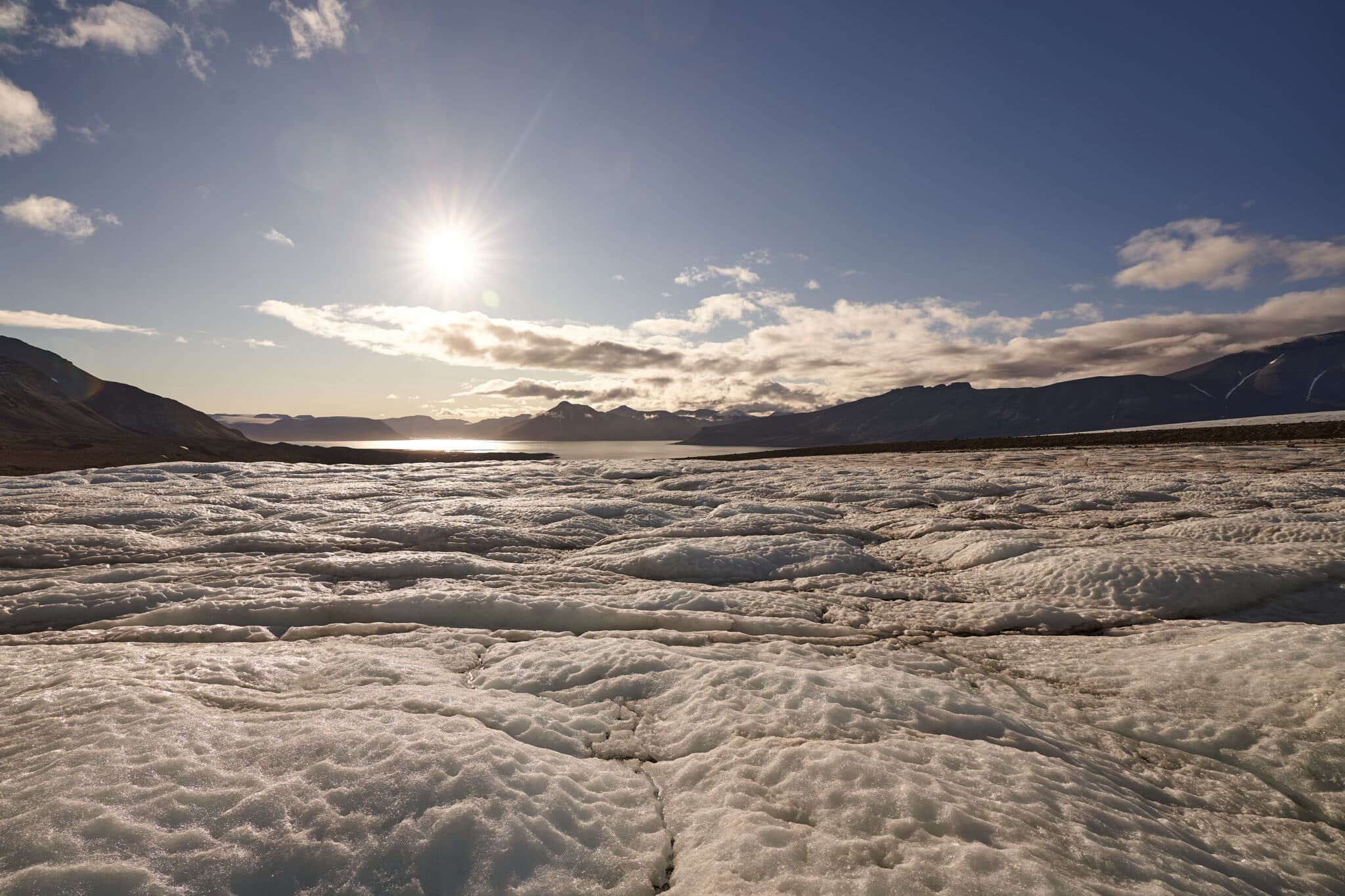
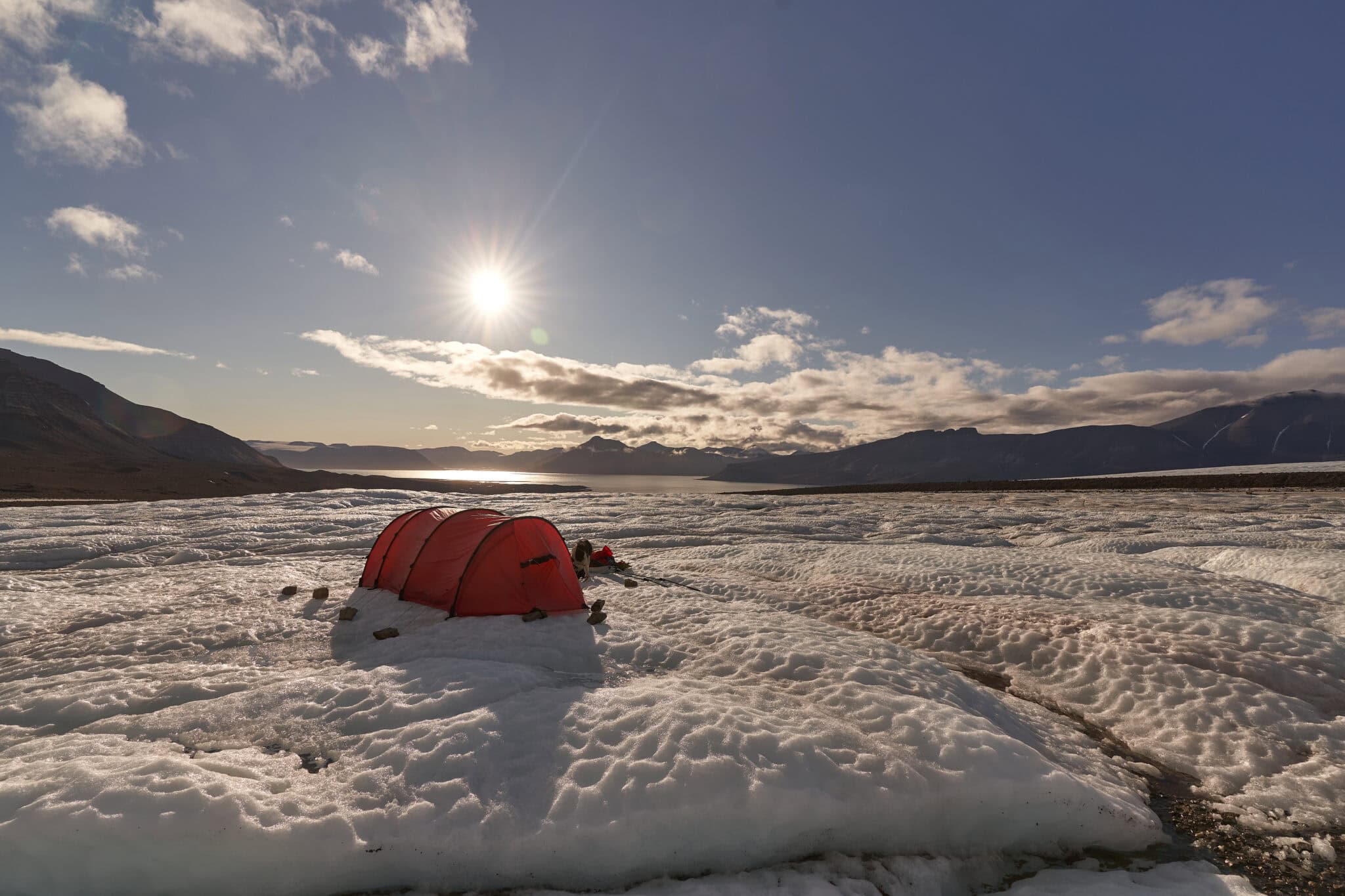
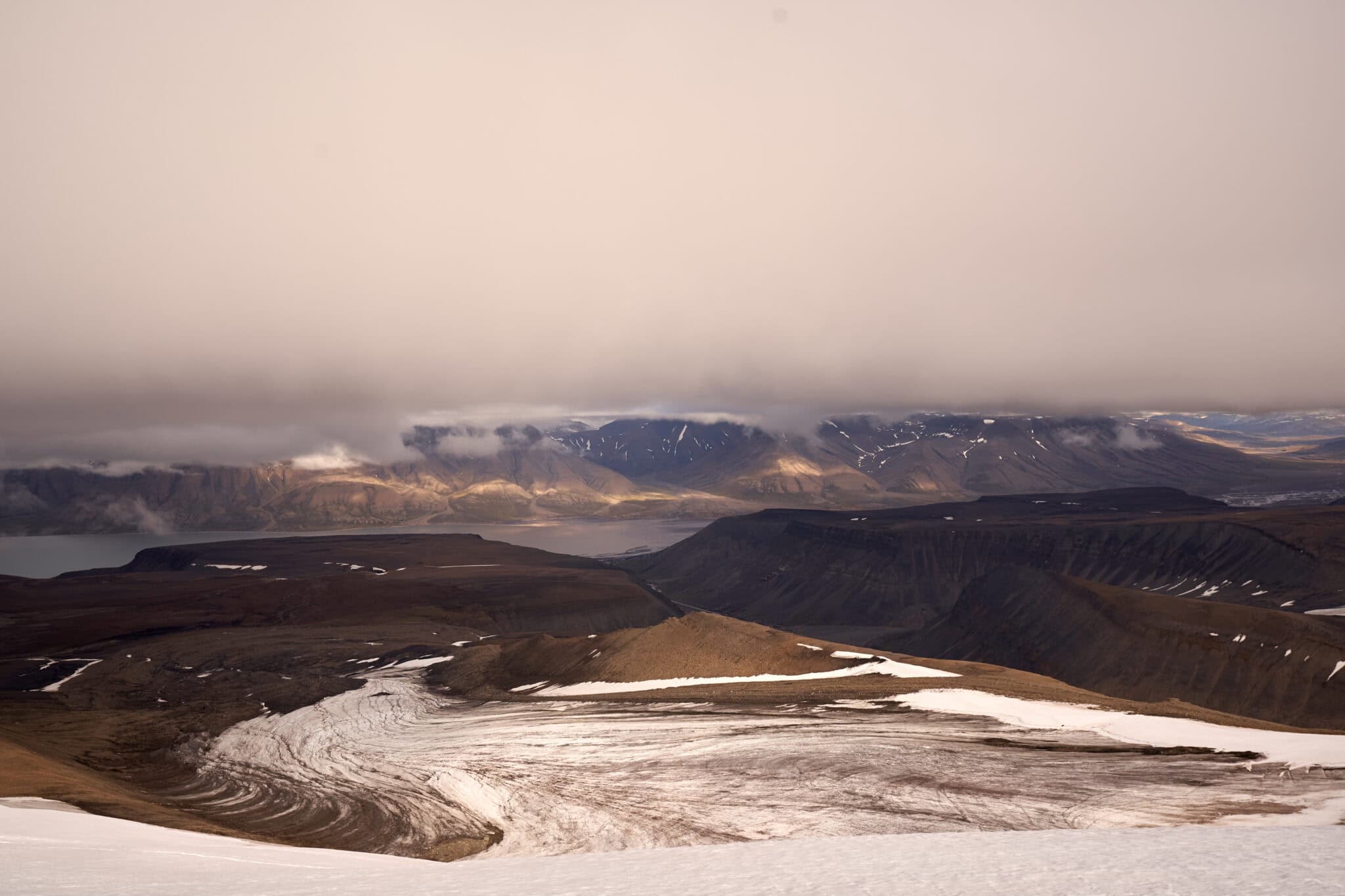
Gradually, we felt like the backpacks could be carried for longer than half an hour without having to put them down. At the foot of a glacier on the moraines, our path was supposed to level out according to our plan. At least that was our idea. But it vanished into thin air faster than we could look. The moraines here were so wet and saturated with mud that it seemed truly dangerous to try it there. After a brief discussion about the situation, we decided to try to get onto the glacier via the flank. A bridge crossed the raging stream—not a man-made one, but one made of ice and debris. While Rebecca still had her doubts, I was already stepping ahead and standing with both feet on the glacier ice. Rebecca followed me.
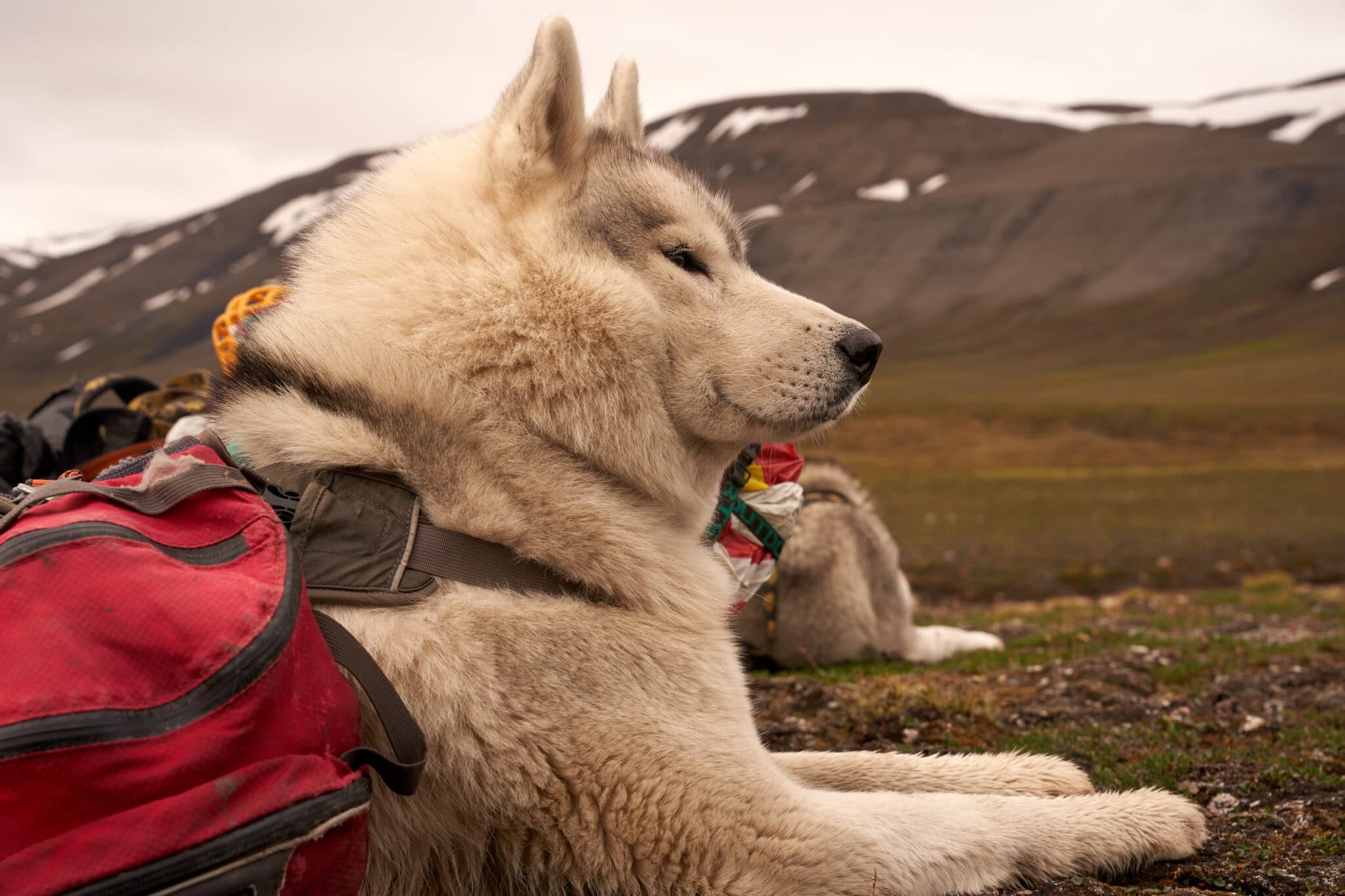
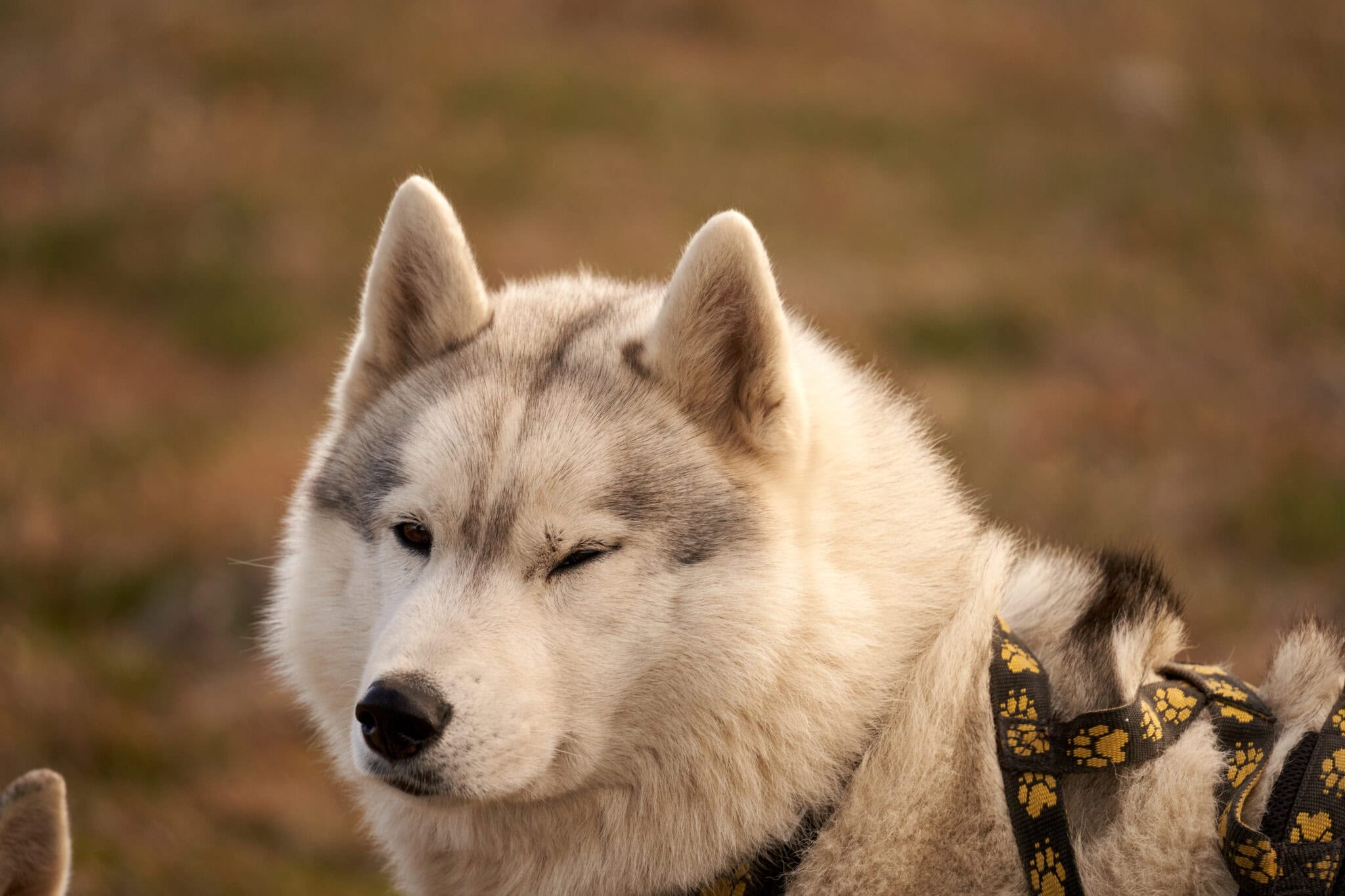
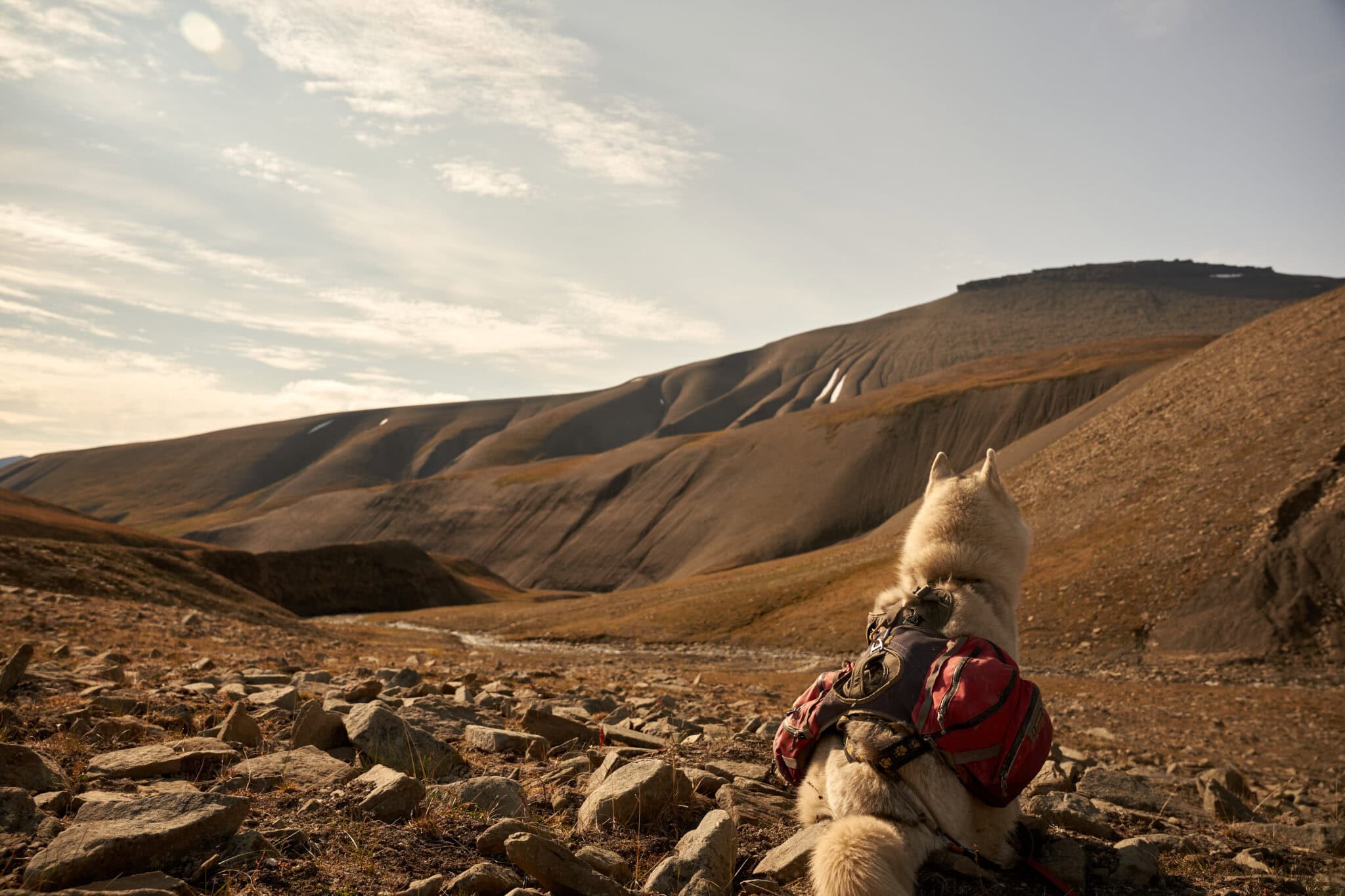
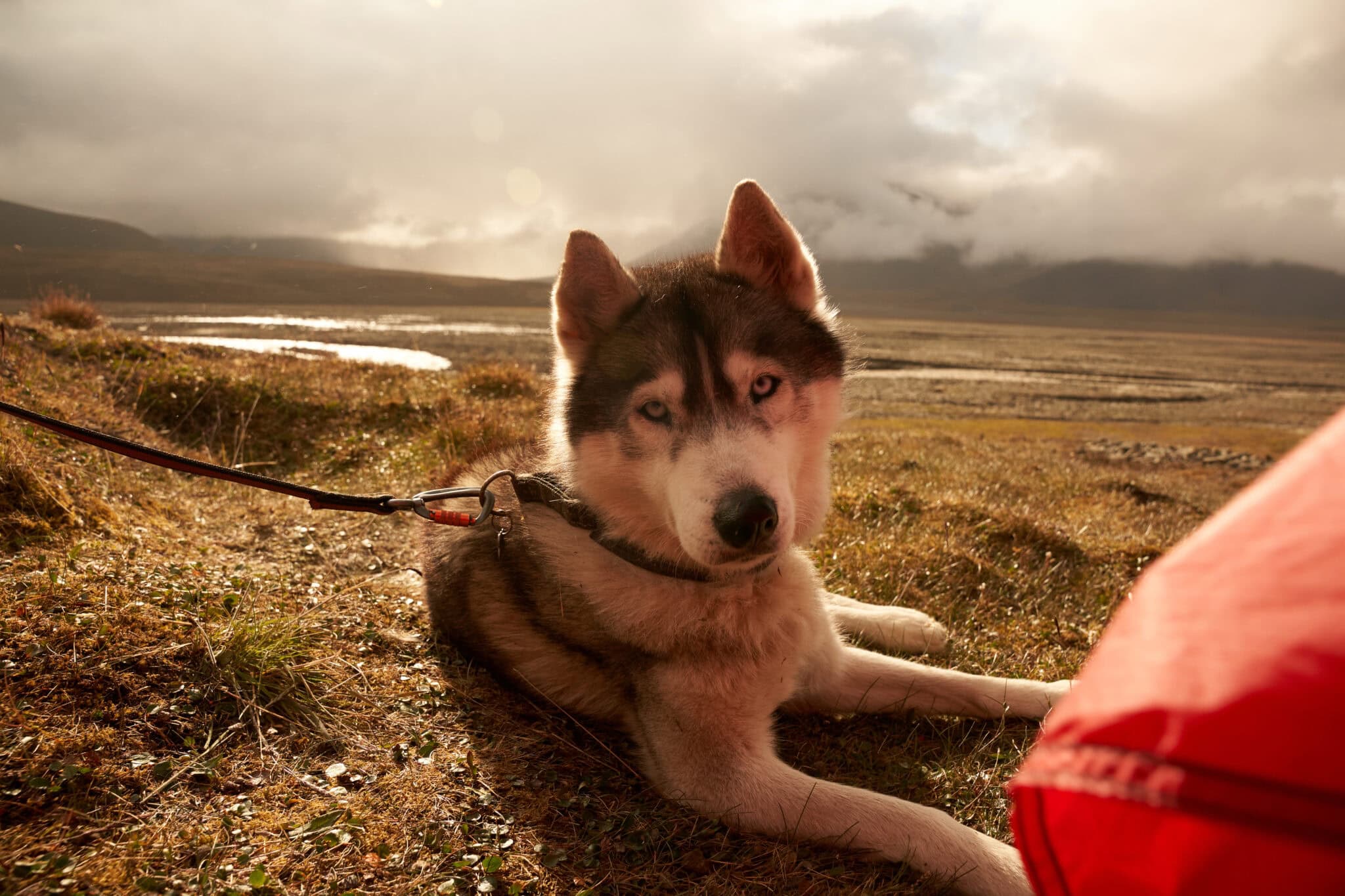
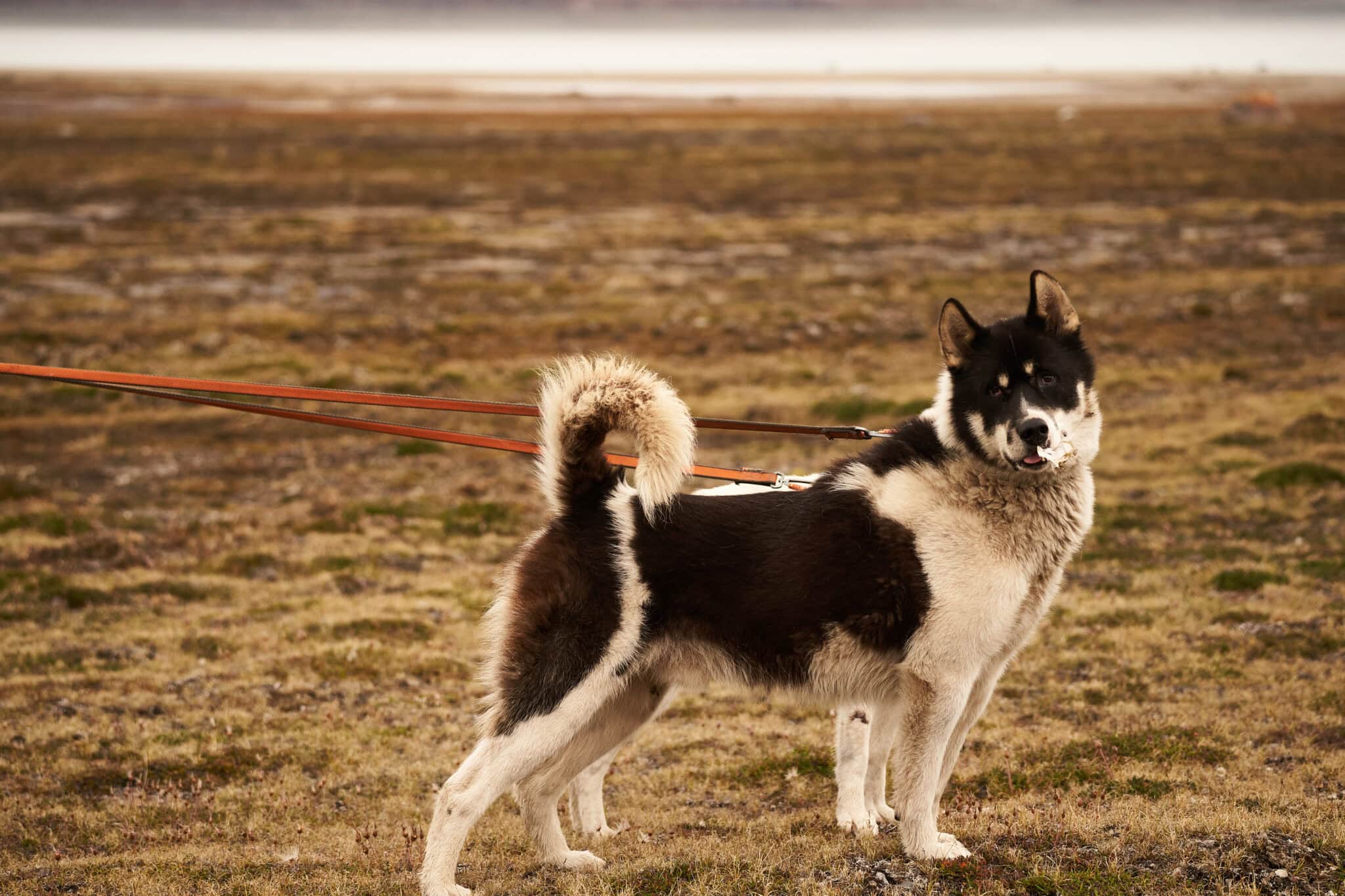
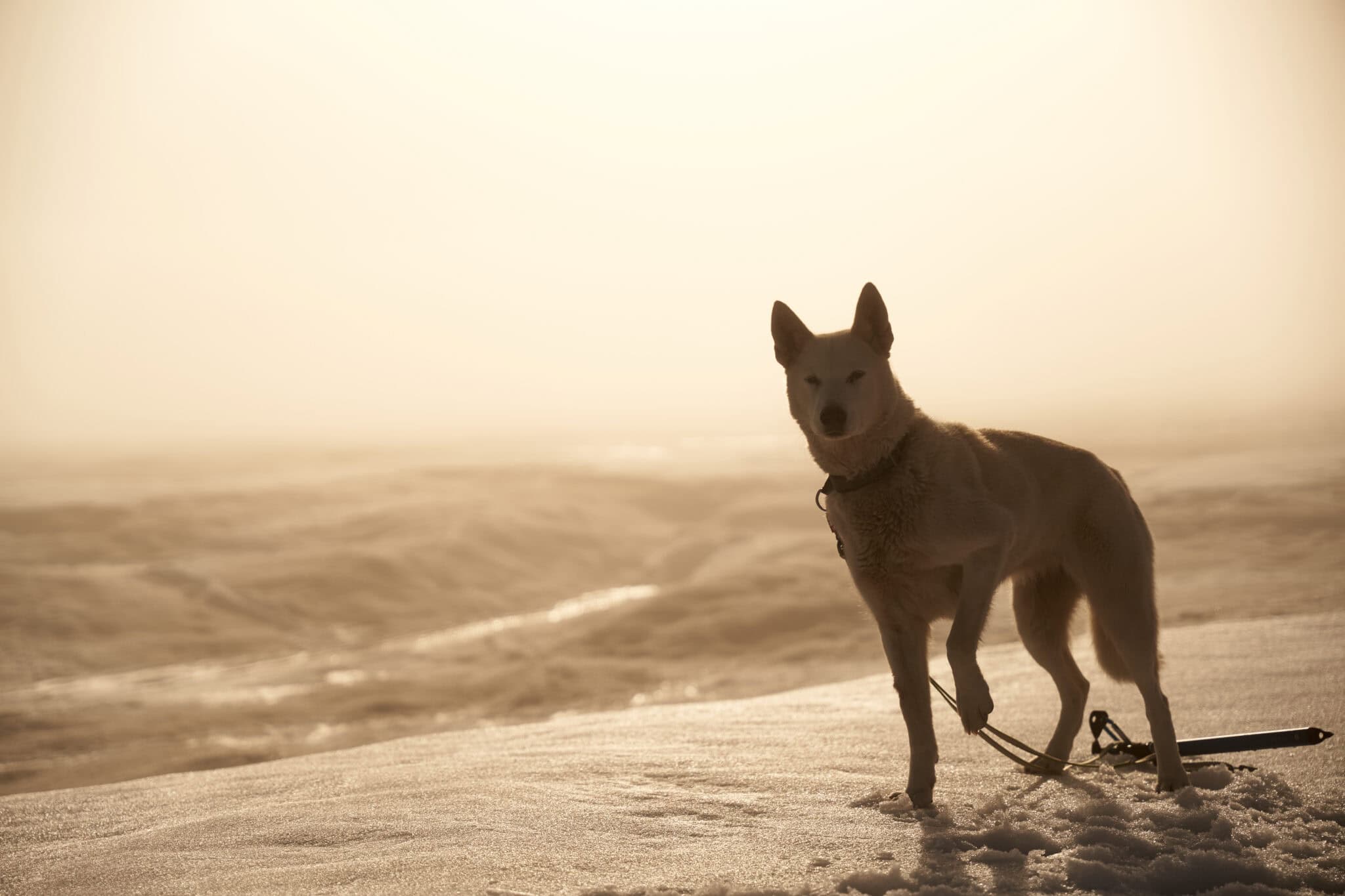
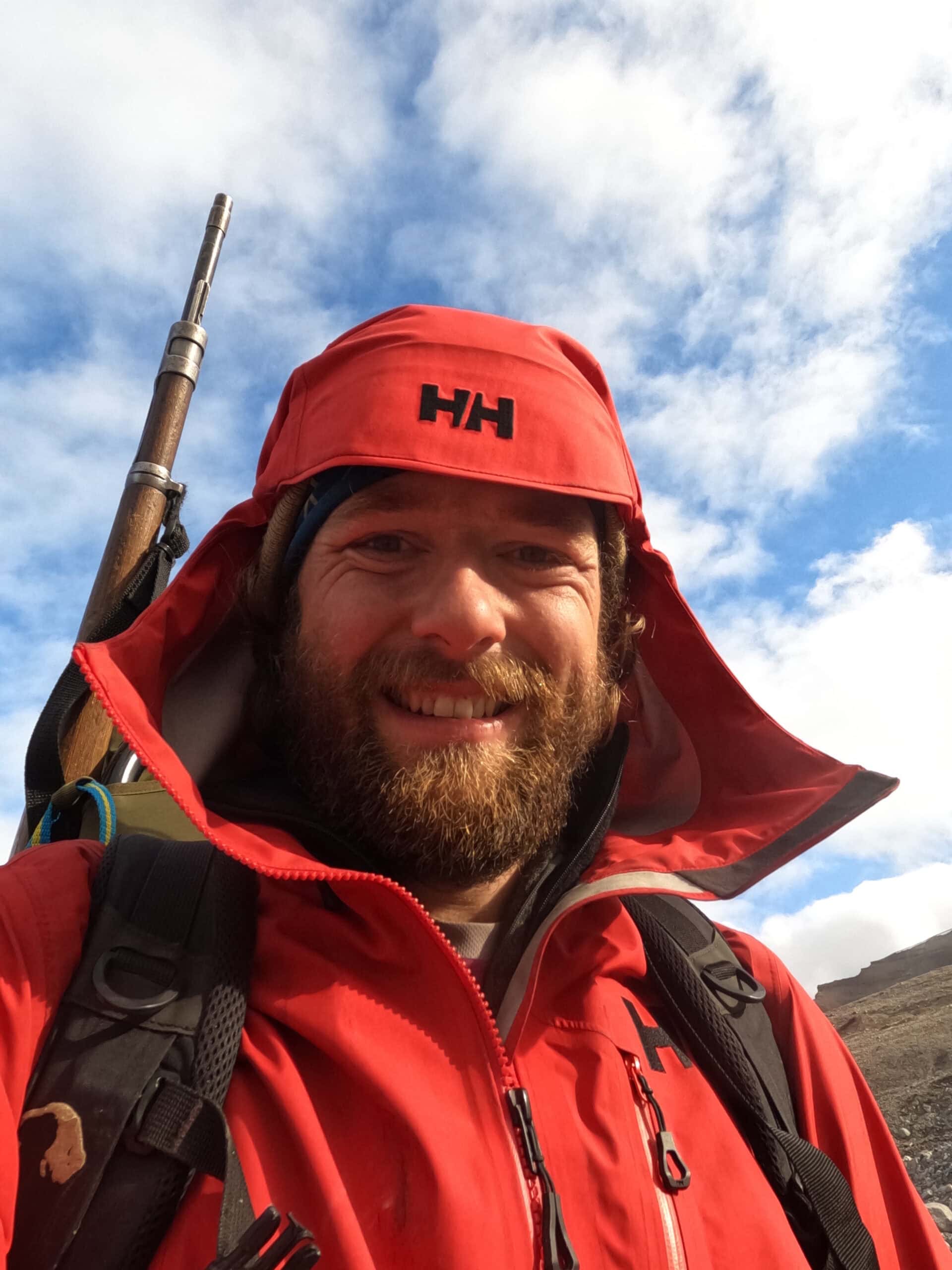
Taiga had everything under control and looked after us well. Nevertheless, the weapon always lay loaded and safety-on next to me. The flare gun was also always within reach.
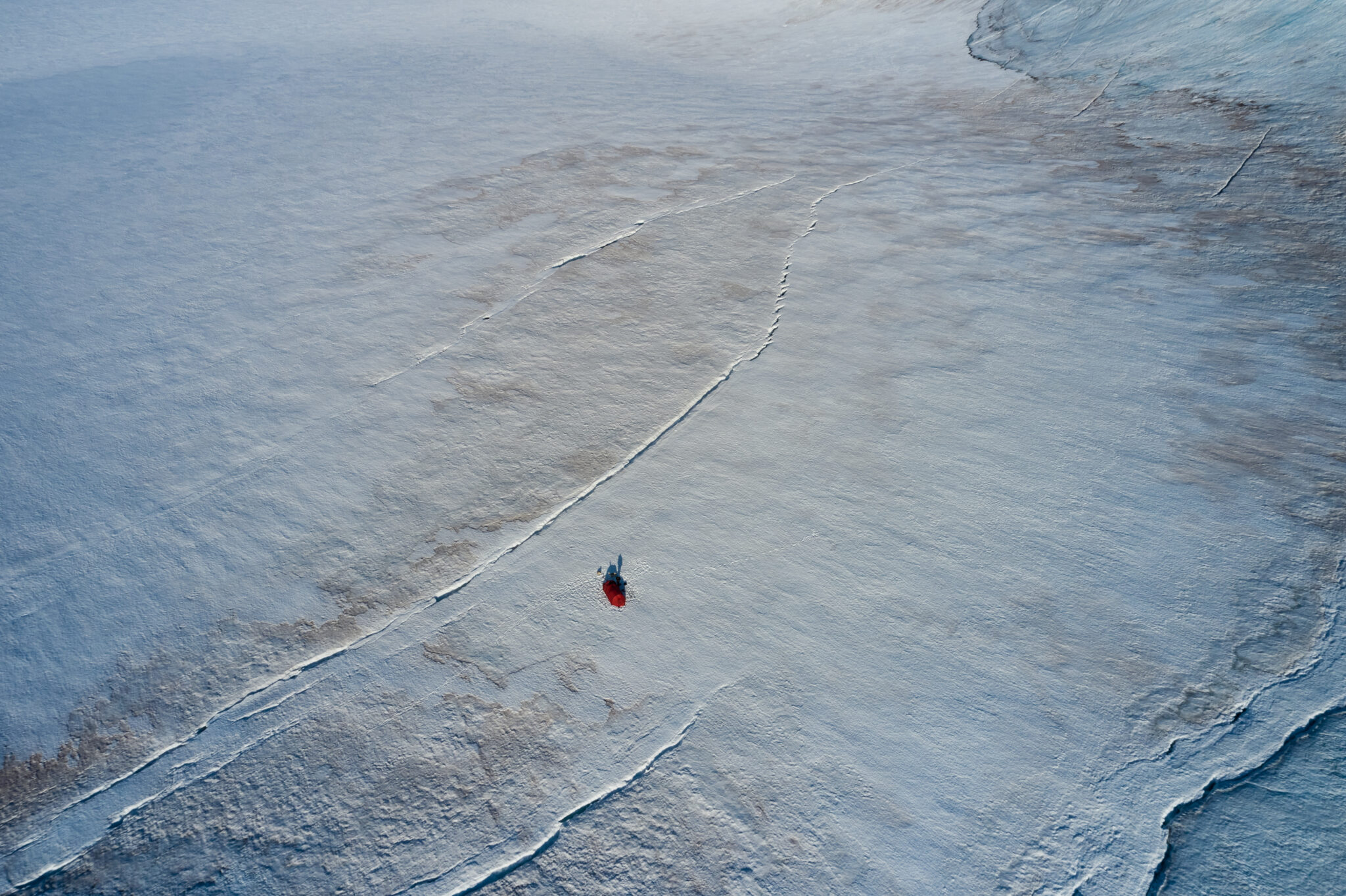
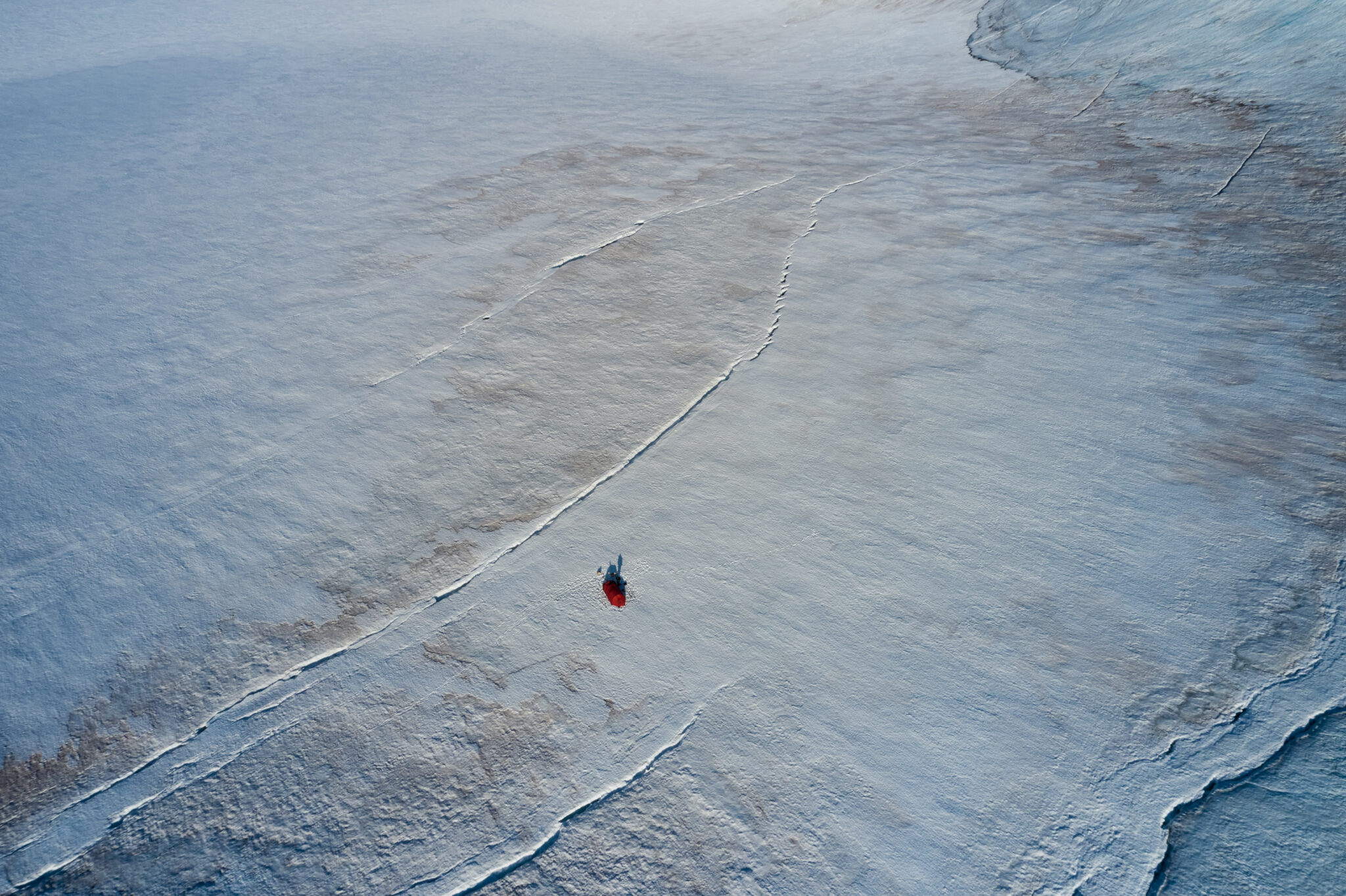
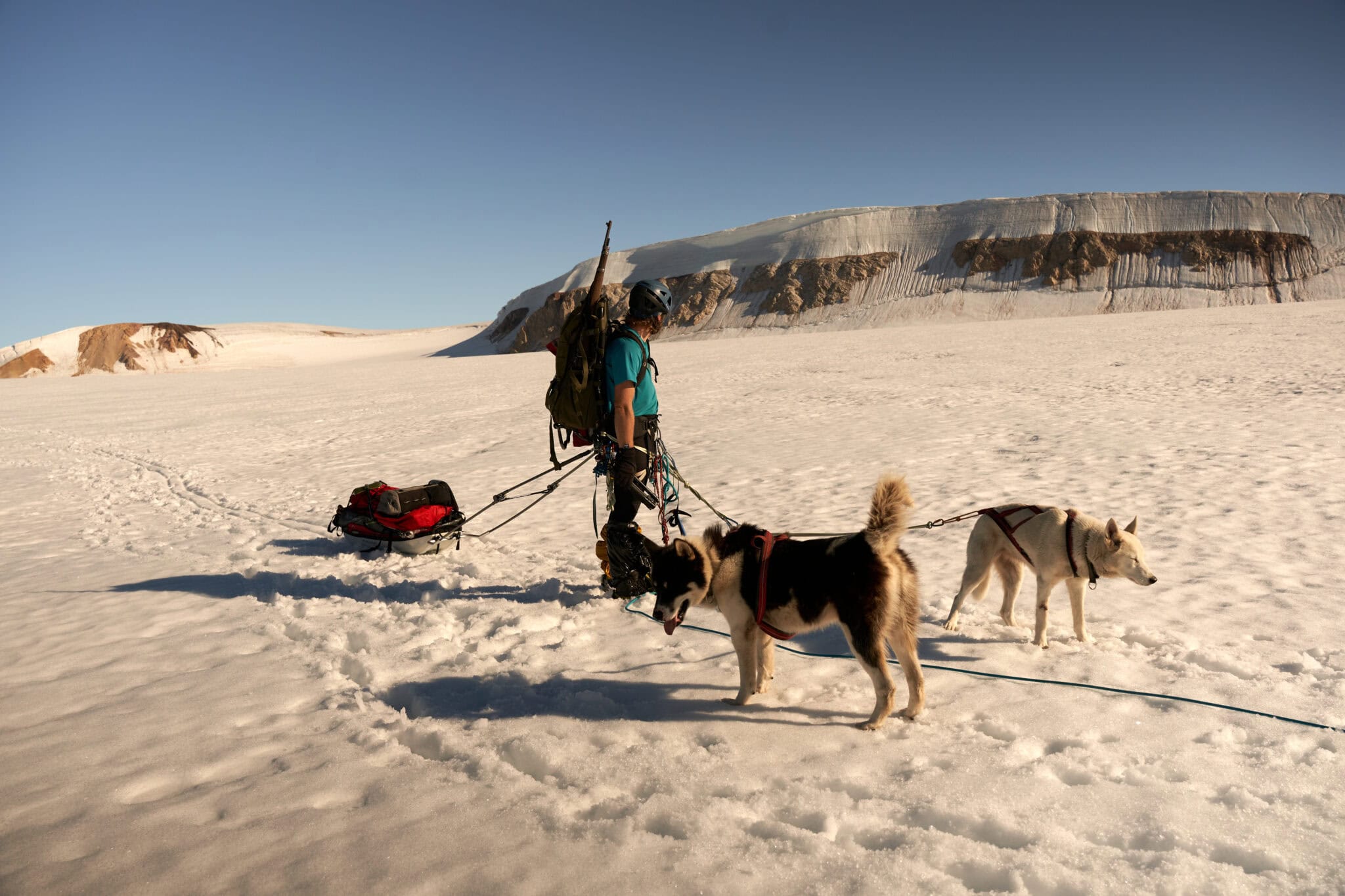
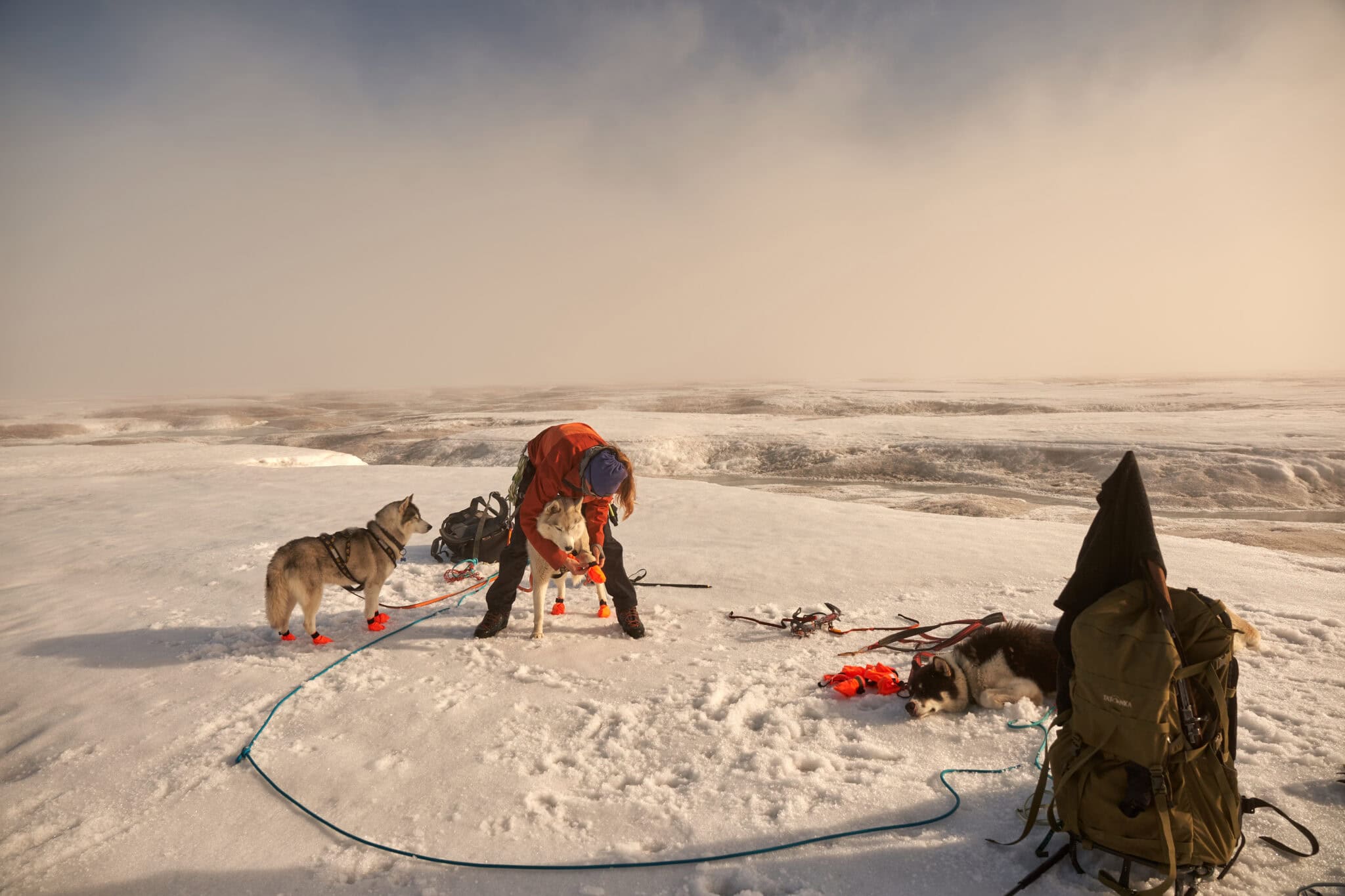
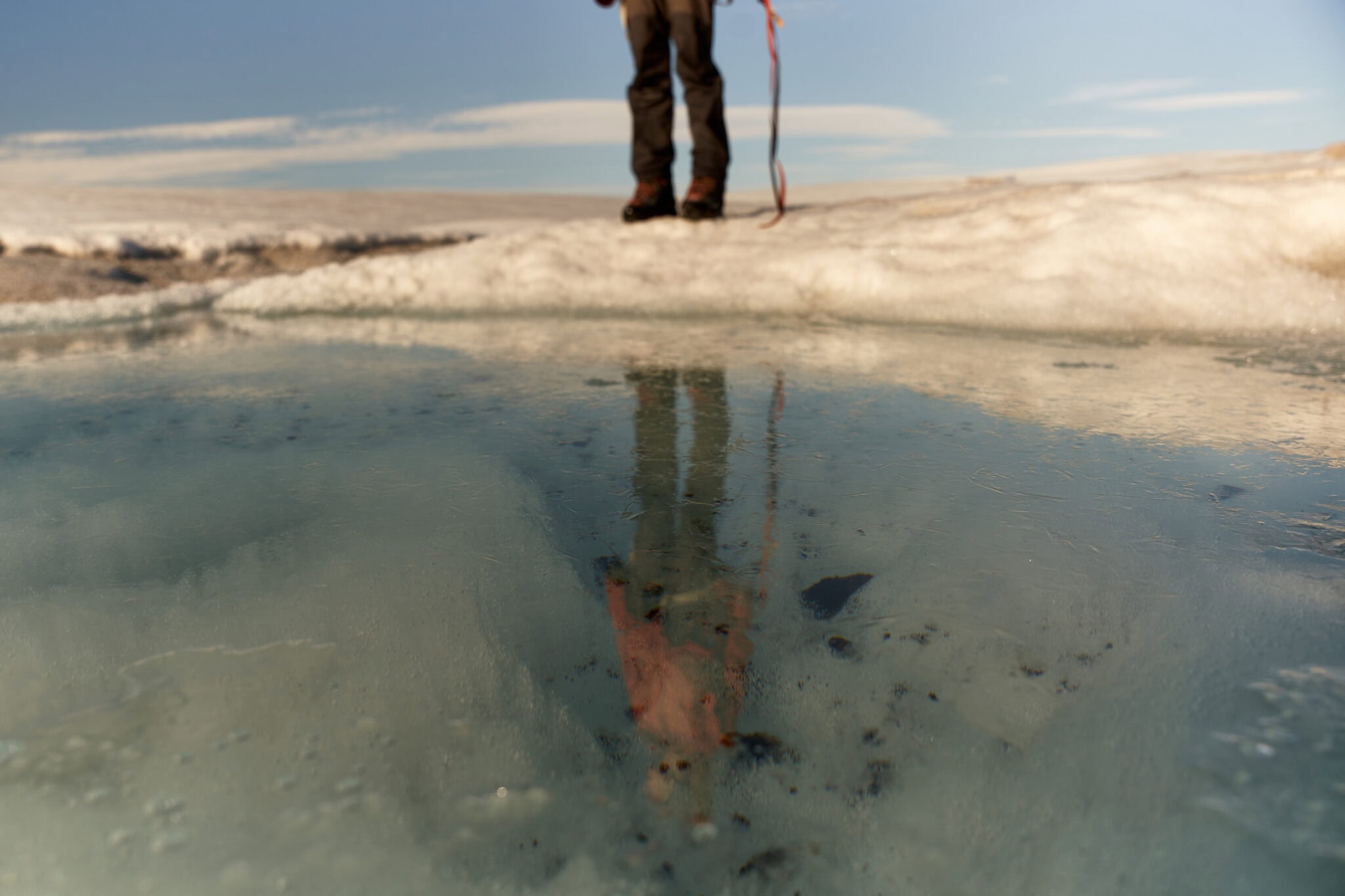
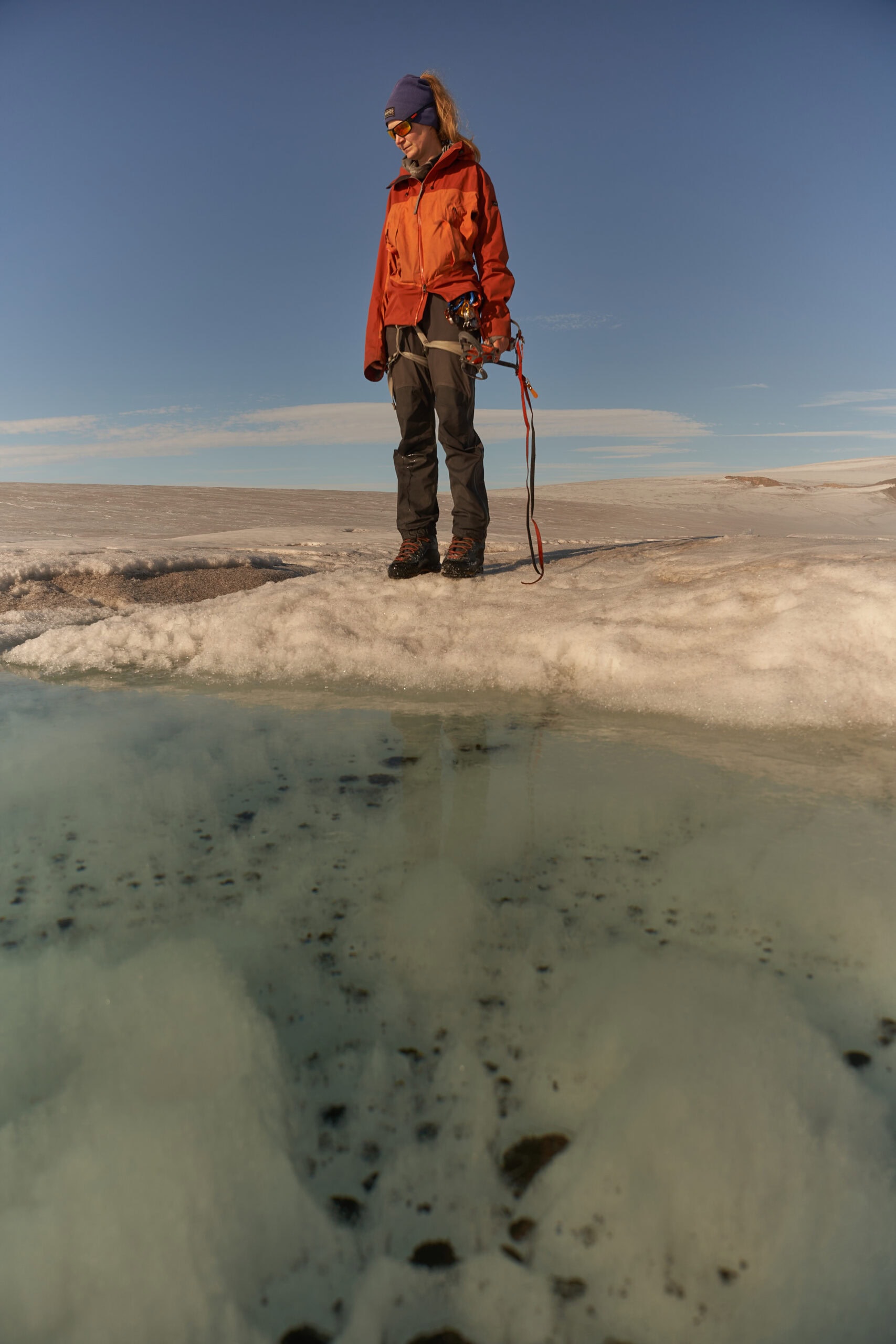
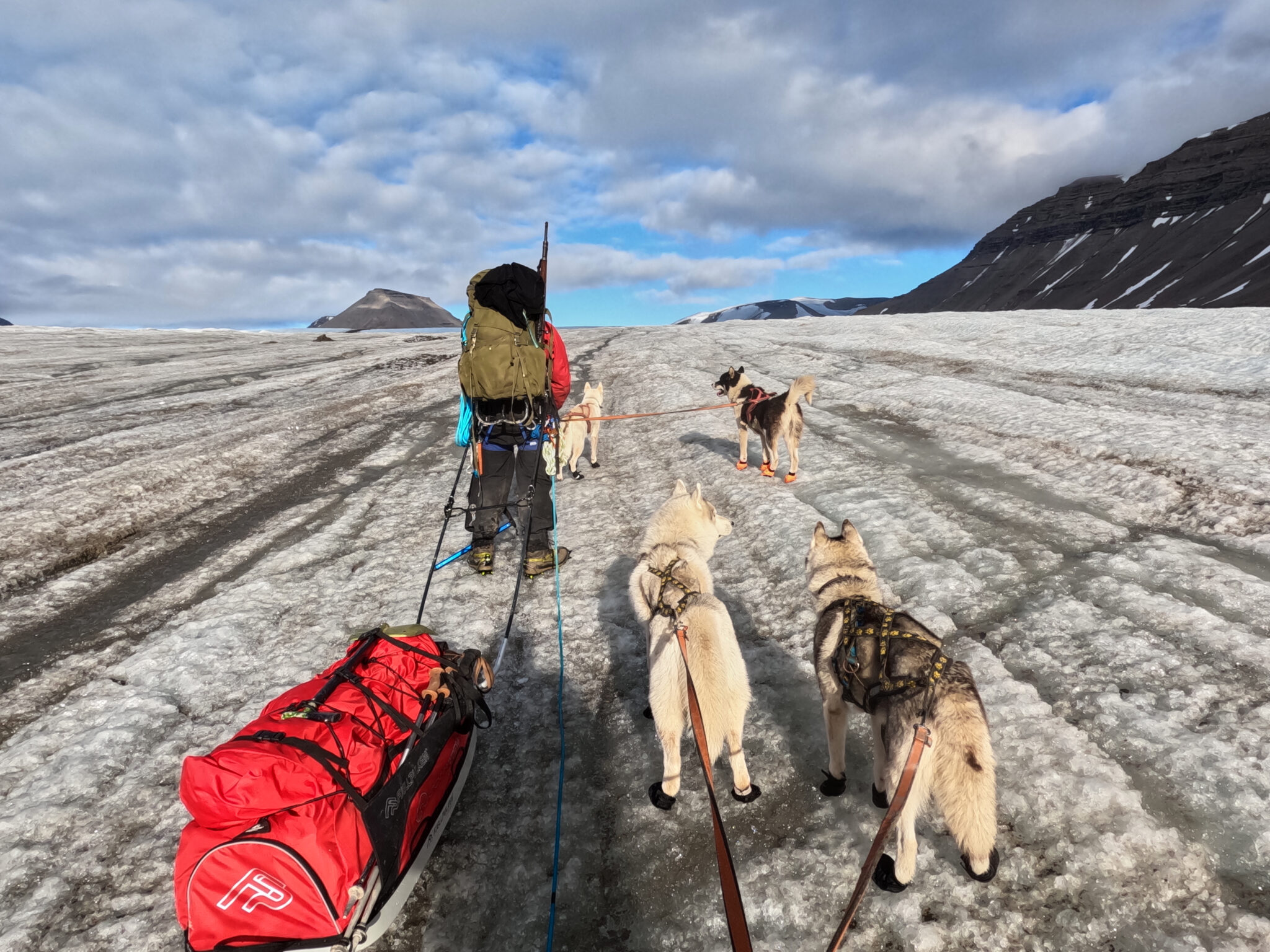
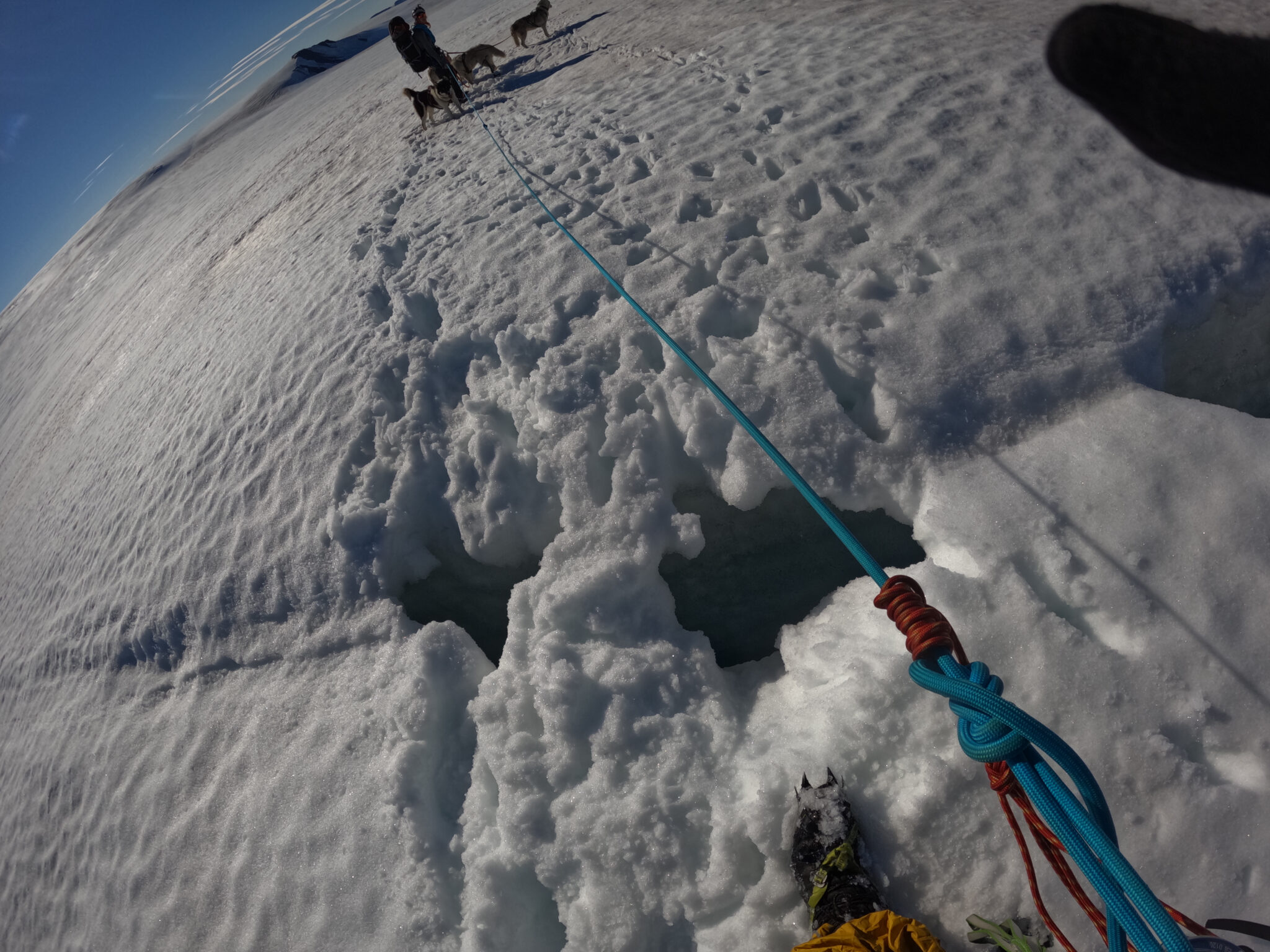
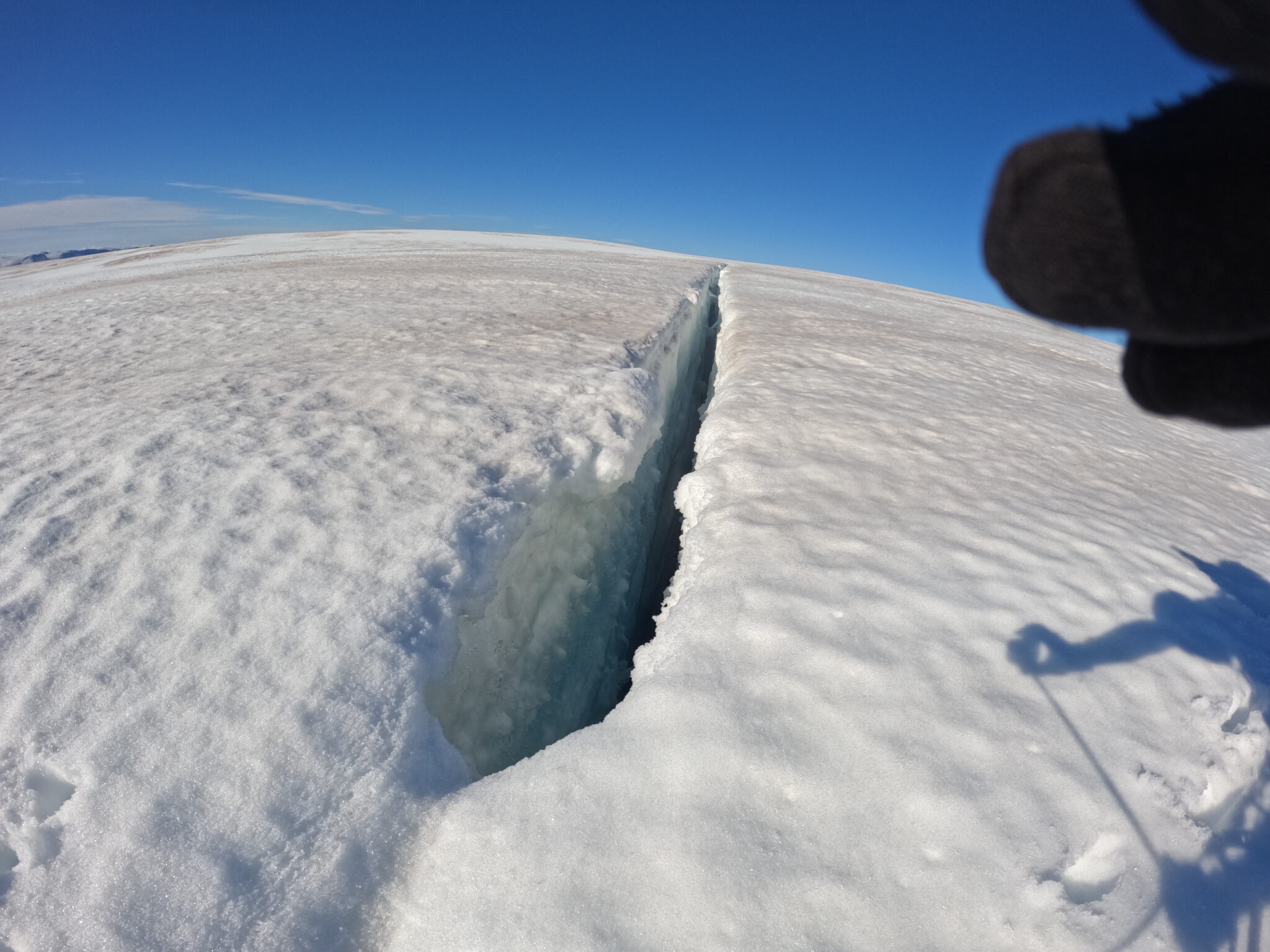
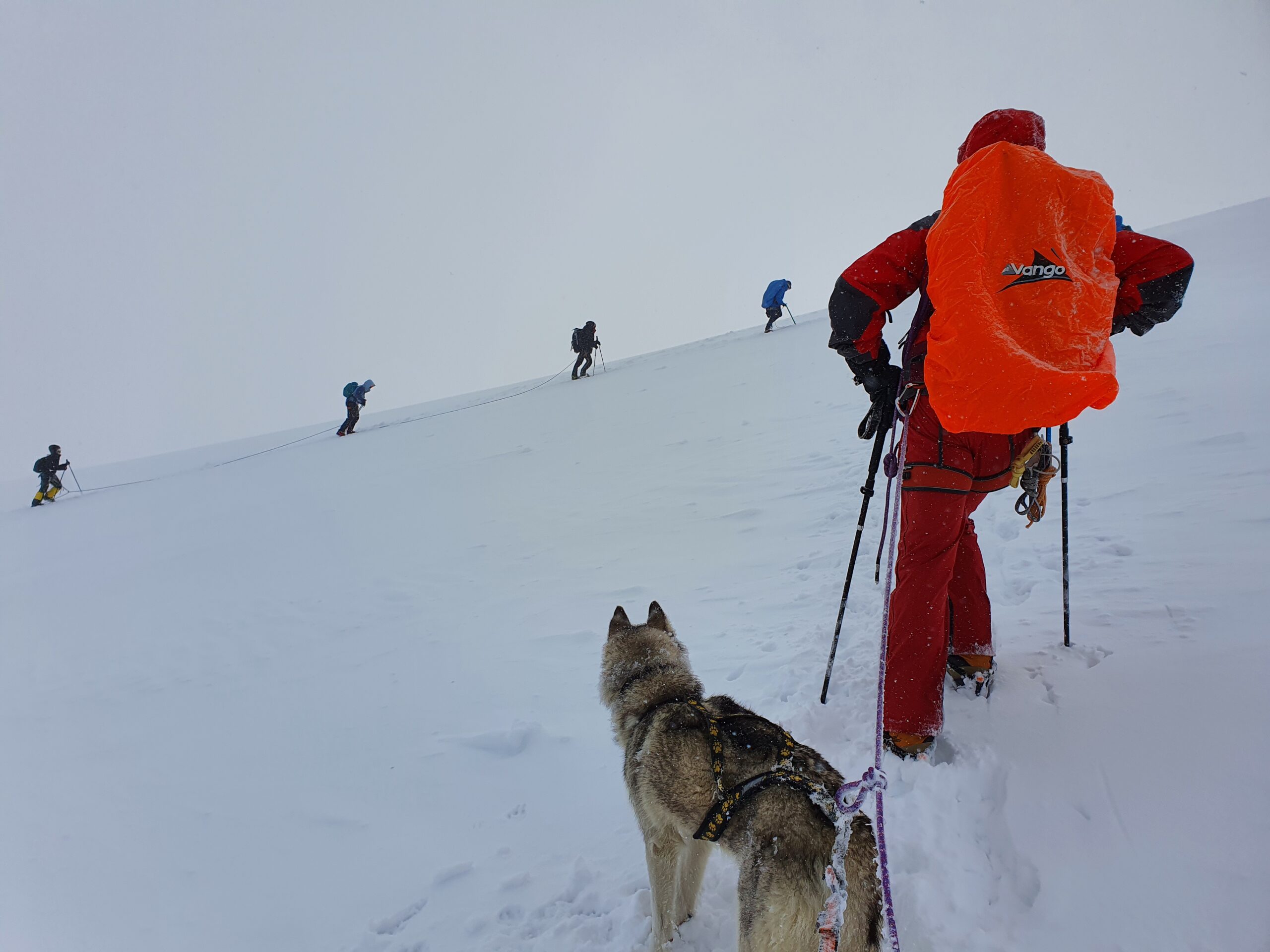
Admittedly, my glacier experience is near zero. But still, I claim to have a good feel for different situations in nature. This part was bare ice, so any possible crevasses would have been clearly visible. One of us always steps in when the other might be getting unreasonable, thus slowing things down a bit. I now see this very clearly as a positive, as it increases the safety factor. So we put on the crampons and continued; we got a little taste here of what we would face on a later tour. A small but fast and curvy glacial river carved a bobsled run toward the valley. Just small enough to jump over, but big enough to be swept away if the attempt went wrong. First, we hiked a few hundred meters up the glacier until we found a suitable spot. Once there, I first jumped over with my backpack without the dogs. This turned out to be not so easy. Upon landing, the weight on my back pulled backward, and I used considerable force to keep my balance, but fortunately fell forward onto the hard ice and not into the rushing river. Then it was my two dogs’ turn. After that, we helped each other with the second backpack and Kira and Momo.
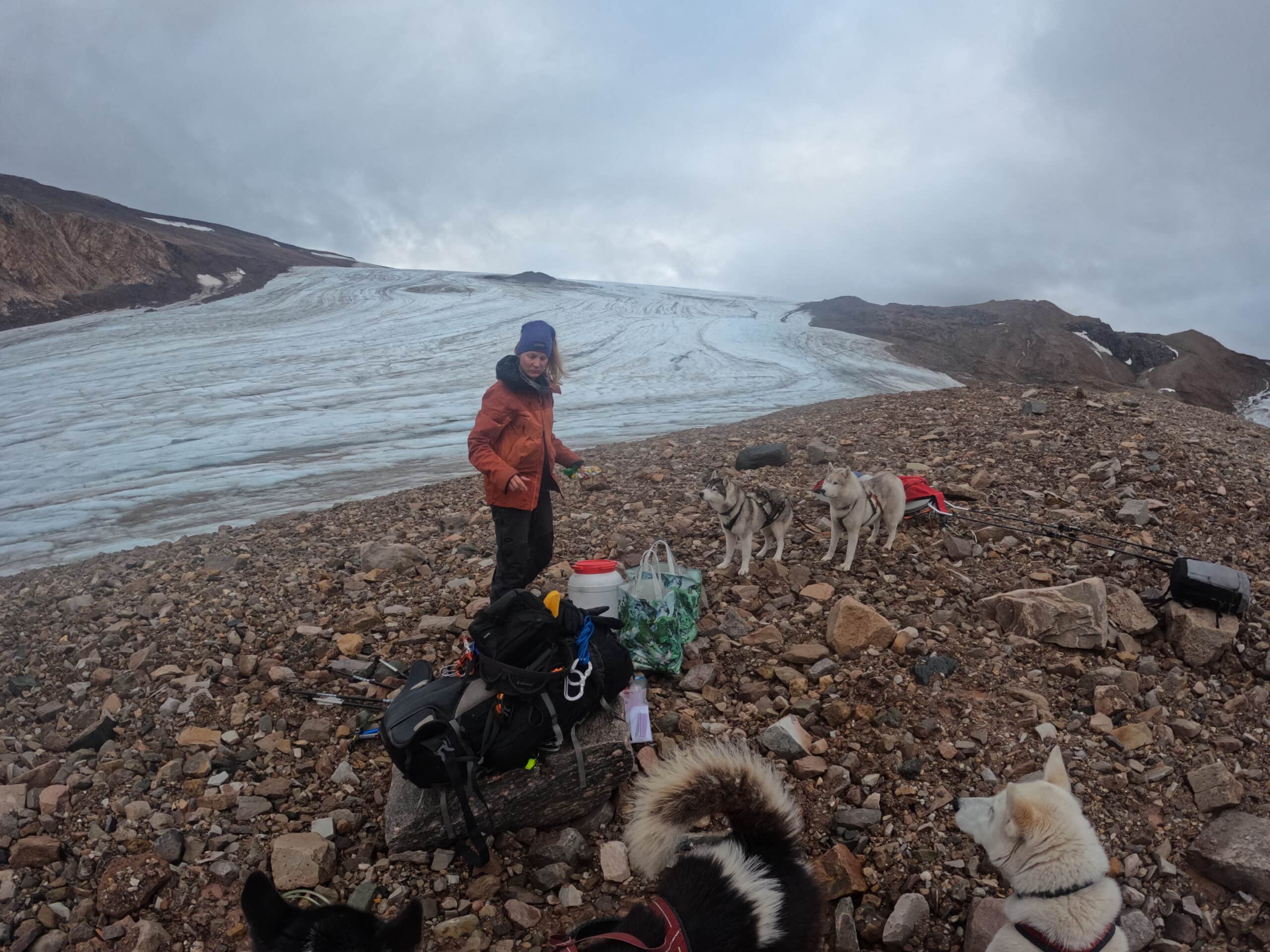
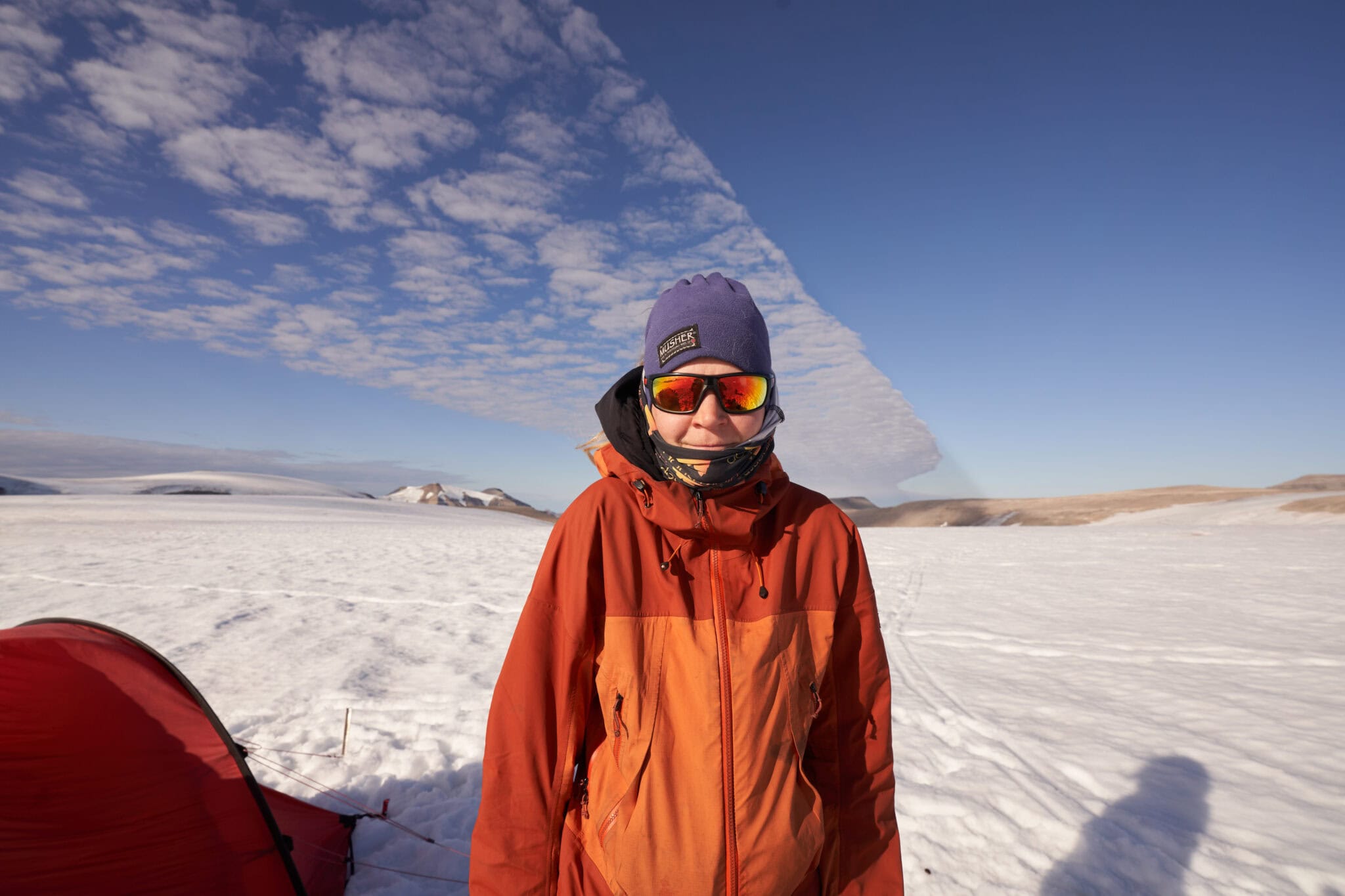
Rebecca at the foot of the glacier, which we crossed for a bit.
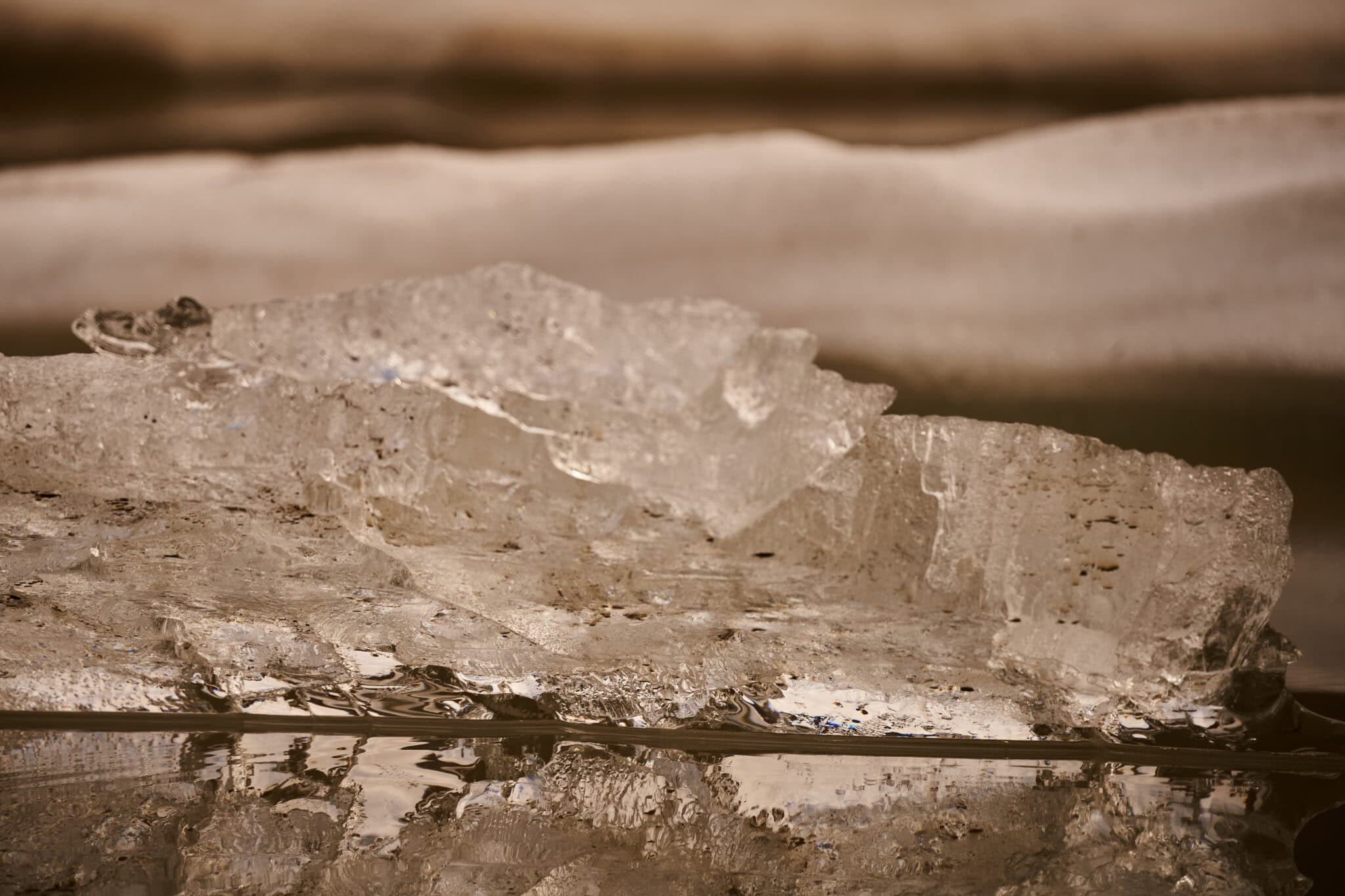
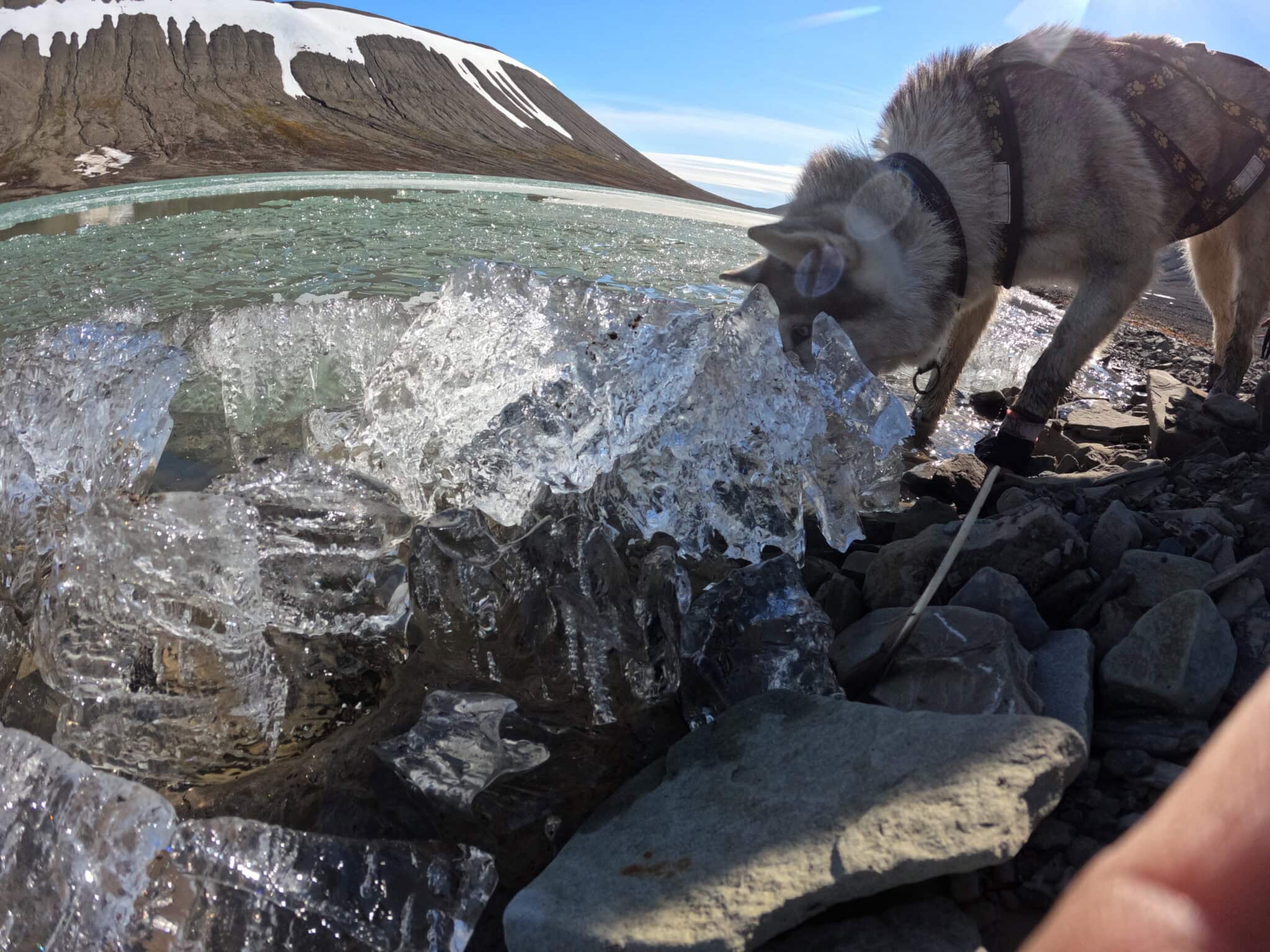
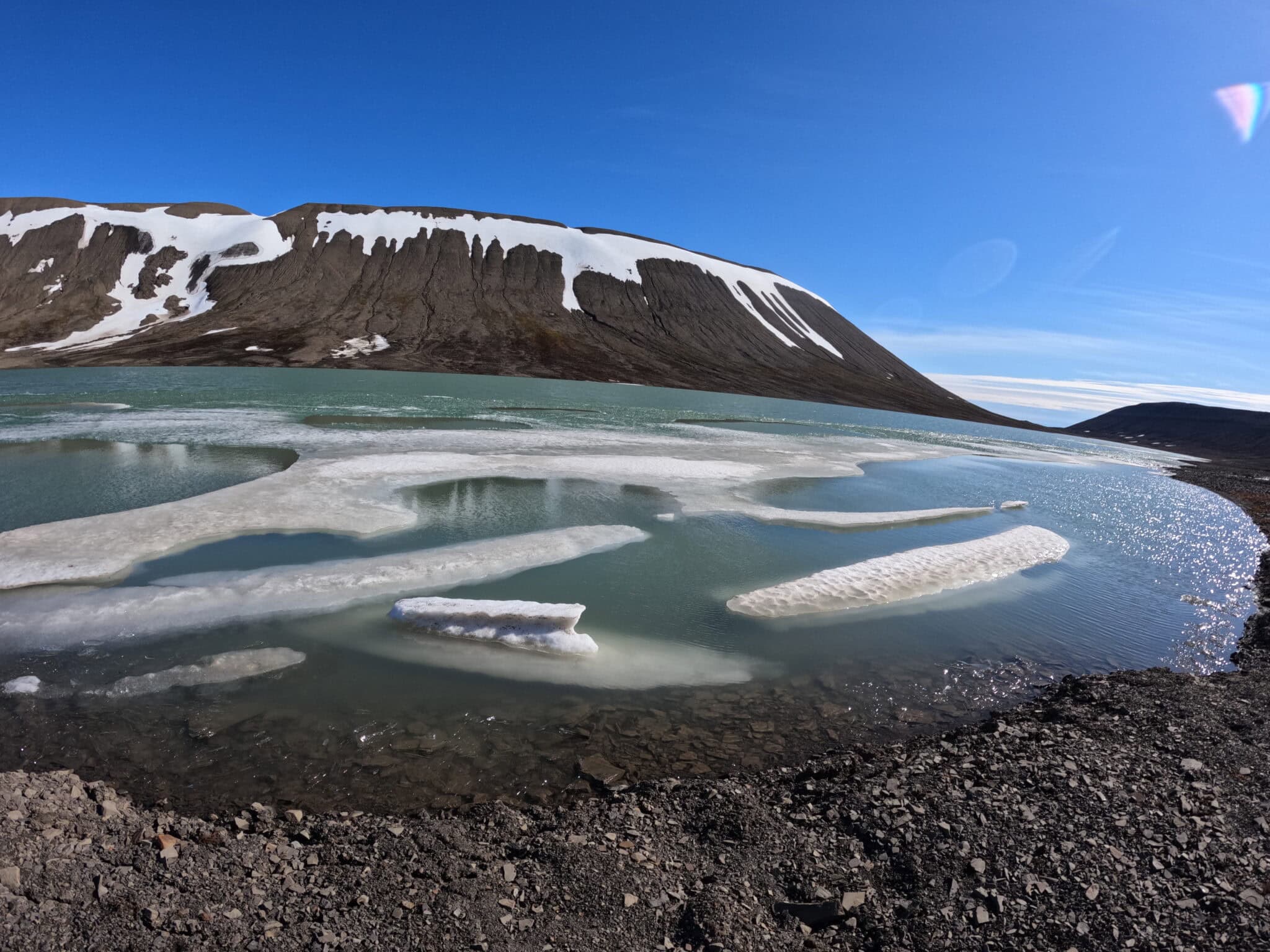
At the end of the other side, when we stepped onto the moraines again and the ice we could slip on disappeared under the debris, we took off the crampons again and fought our way down the mountain between stones, mud, and small snowfields to an elongated lake. On its shore, thousands of foot-sized, crystal-clear pieces of ice were floating, creating an unforgettable sound as they clinked against each other. A concert with thousands of identical-sounding instruments trilling the same melody, all created just by ice floating in the water and a little wind.
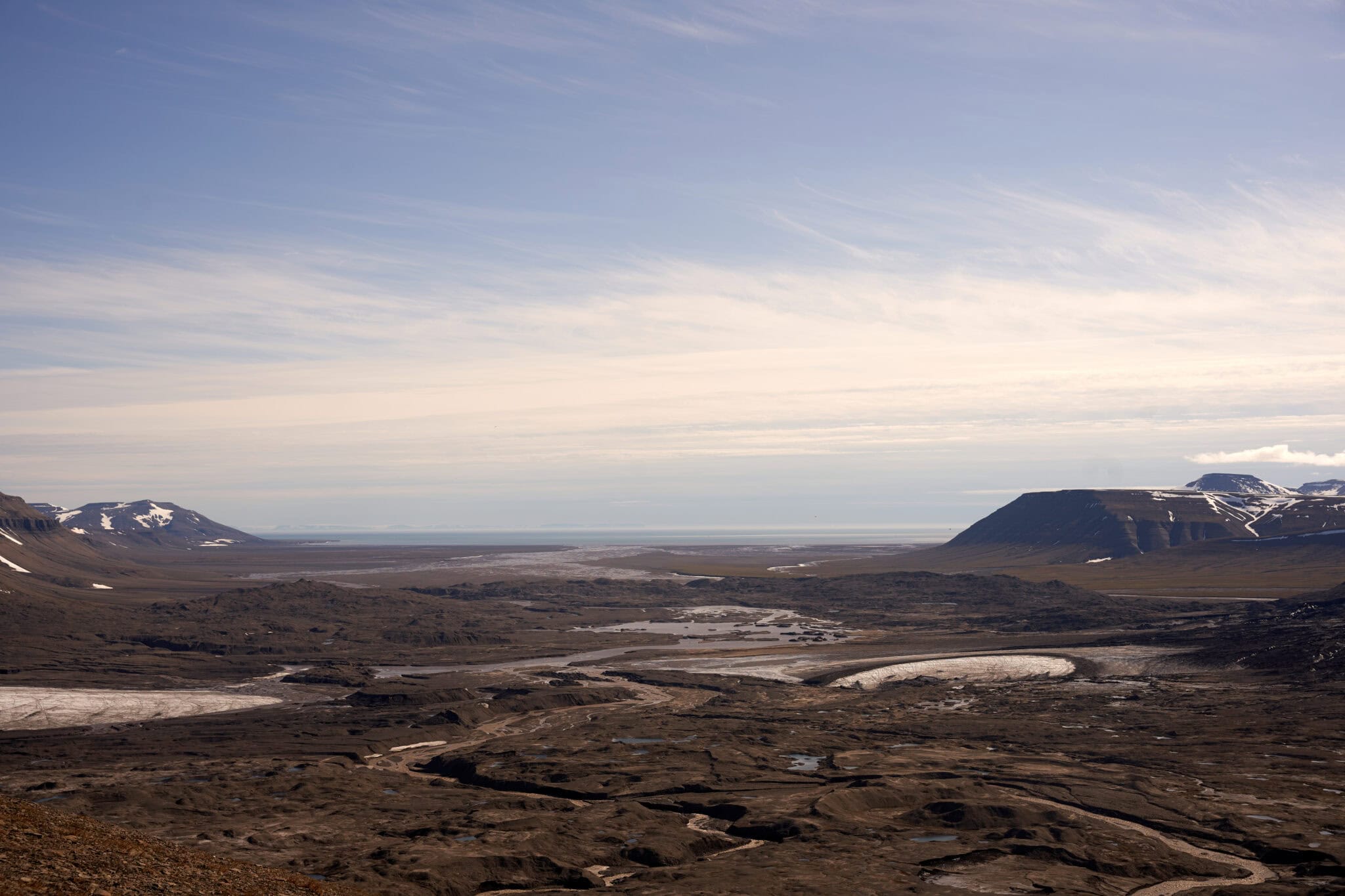
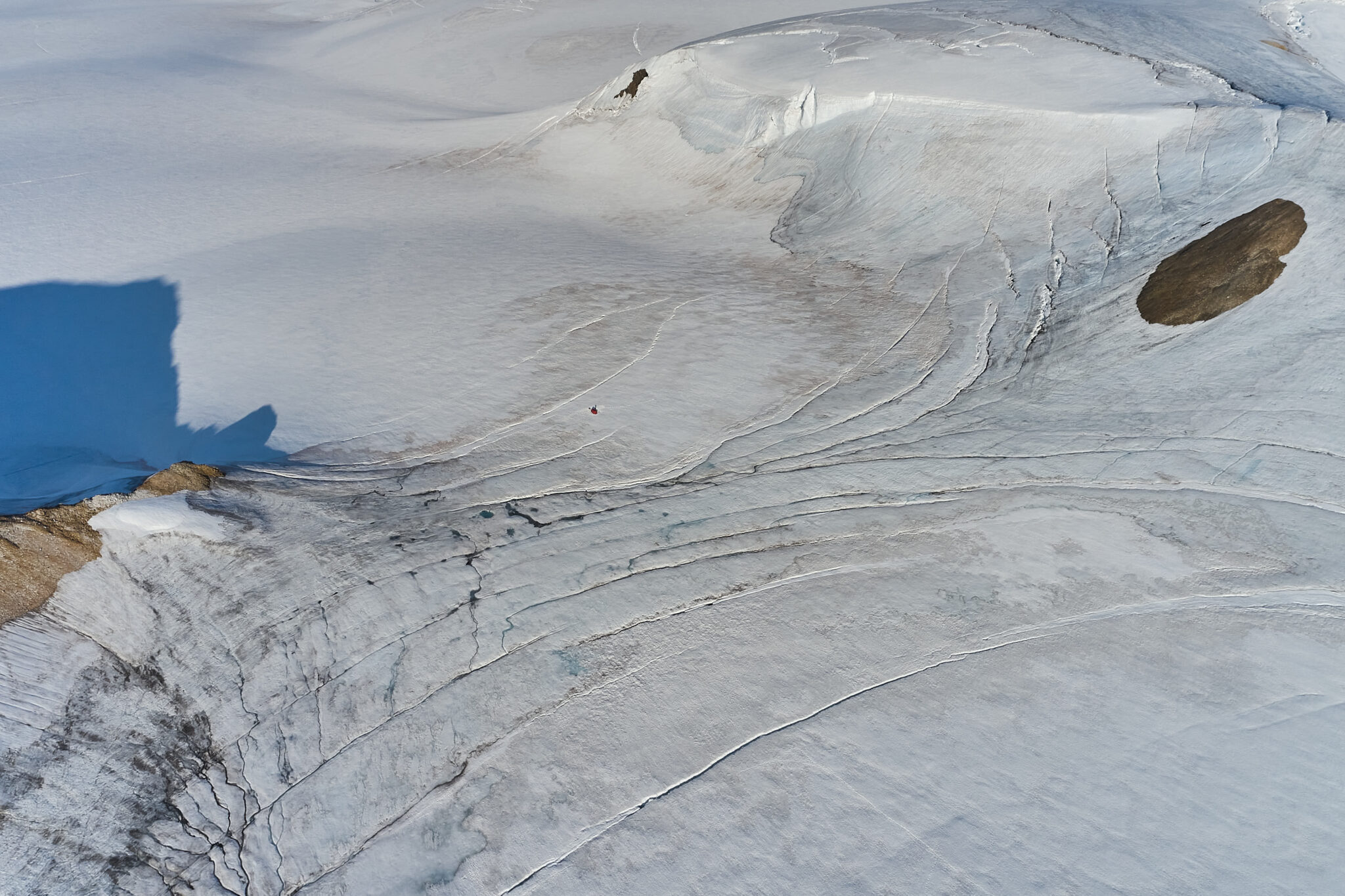
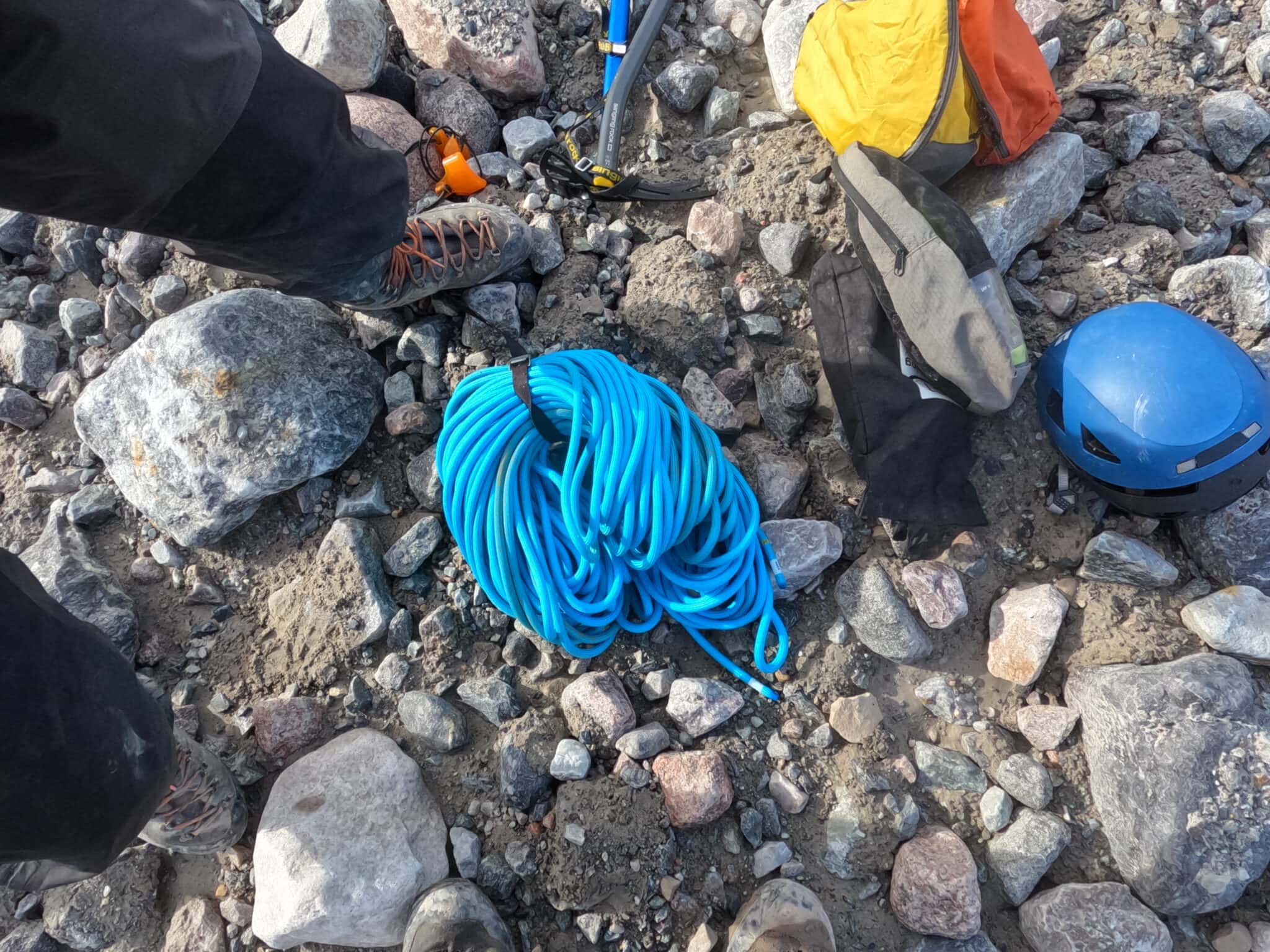
The lake ended in a river, and at the edge, the shore became steeper and steeper. We realized we could no longer hike along the riverbank but had to climb further and further uphill along the steep slope. Rebecca was walking a few meters behind me and shared her plan with me, which we implemented exactly. We climbed further and further uphill until we reached the summit, then descended on the back of the mountain at a flatter spot. But first, it was just up and up. It was one of those moments where you are only in the here and now, 100 percent focused. No other thoughts disturb your attention, because your deepest inner self knows exactly that distraction could end fatally. To the left, it went down 10, 20, 30, and then later 90 meters of scree, just steep enough that you probably wouldn’t have been able to catch yourself. Below was the increasingly strong river, which looked uncontrollable even from a distance. (Unfortunately, there are no pictures of this, as neither of us was really thinking about photos). Eventually, the steep slope became flatter, and we could take a short breather. We continued up the ridge of the mountain until we reached the highest point. From there, we reassessed the situation and could see two sides of hell: the one to the right and the one straight ahead of us. Hell, as we called it, were the giant moraines that clearly consisted of mud and stones. So wet and impenetrable that it would have been threatening and stupid to get involved in that game. Yes, you can really say stupid. There was only one possible option: over the glacier. However, although we had crampons, we didn’t have the rest of the necessary equipment to go in a rope team. So we consulted at a windy height in the tent over our warm lunch meal.
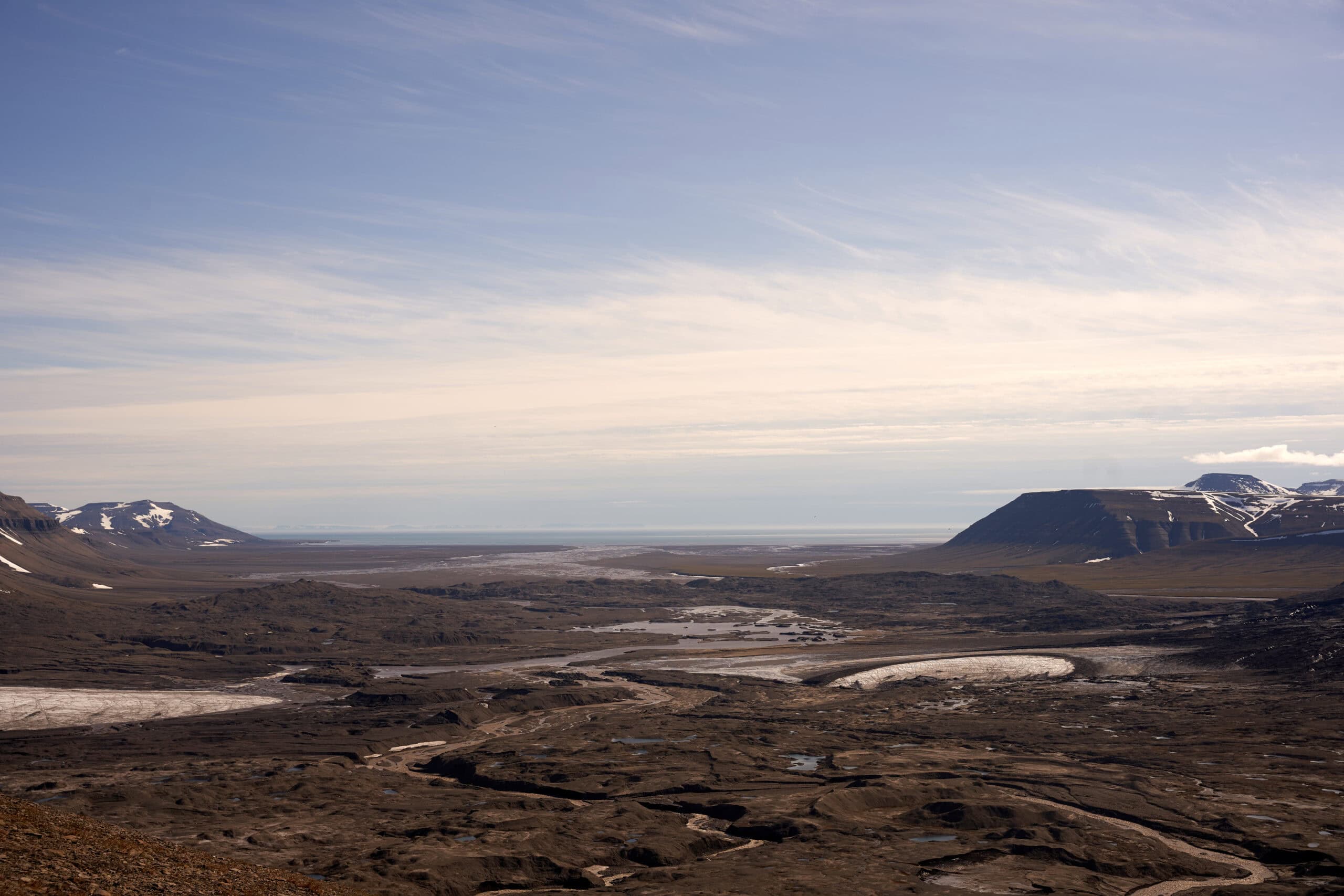
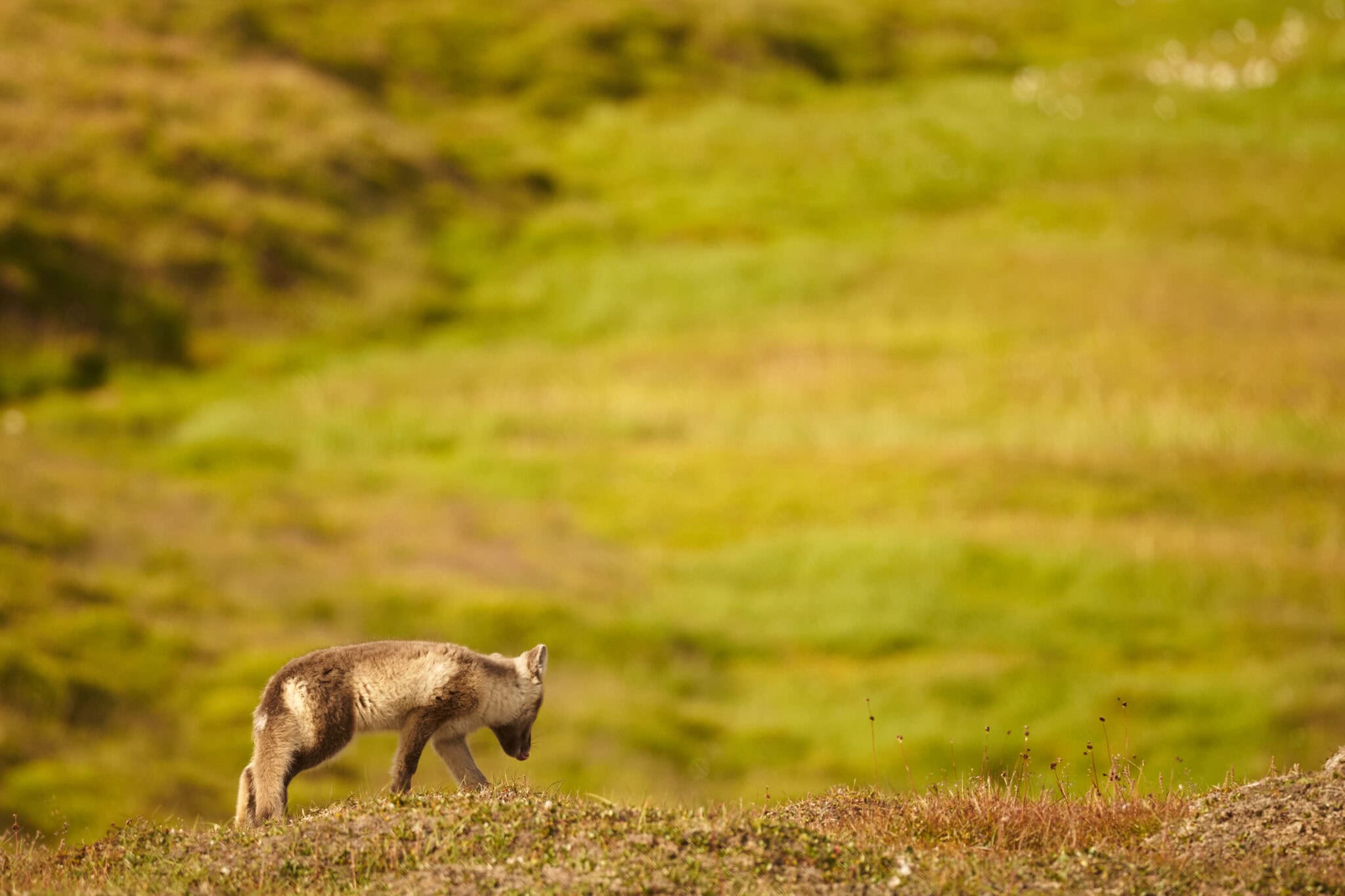
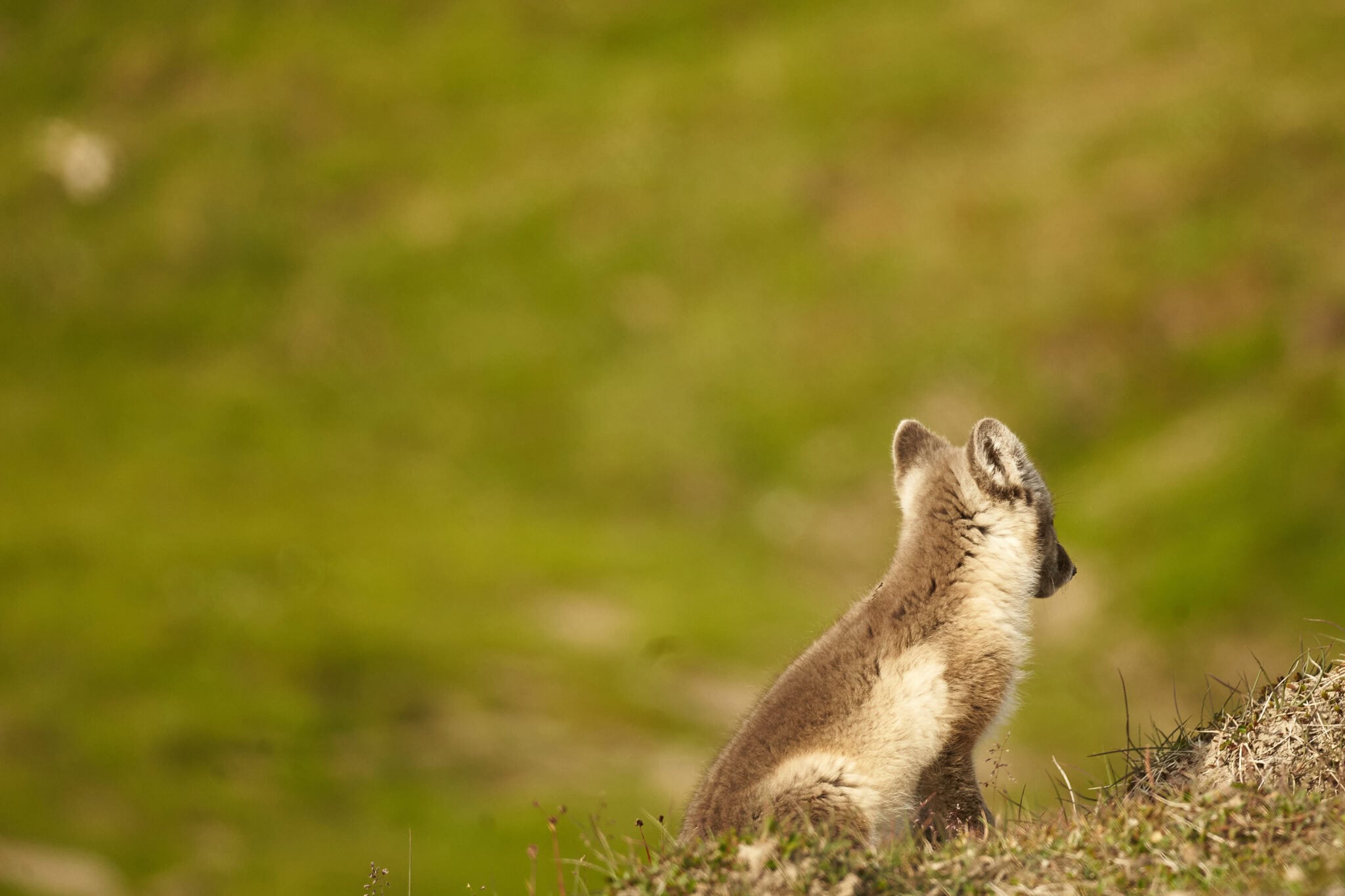
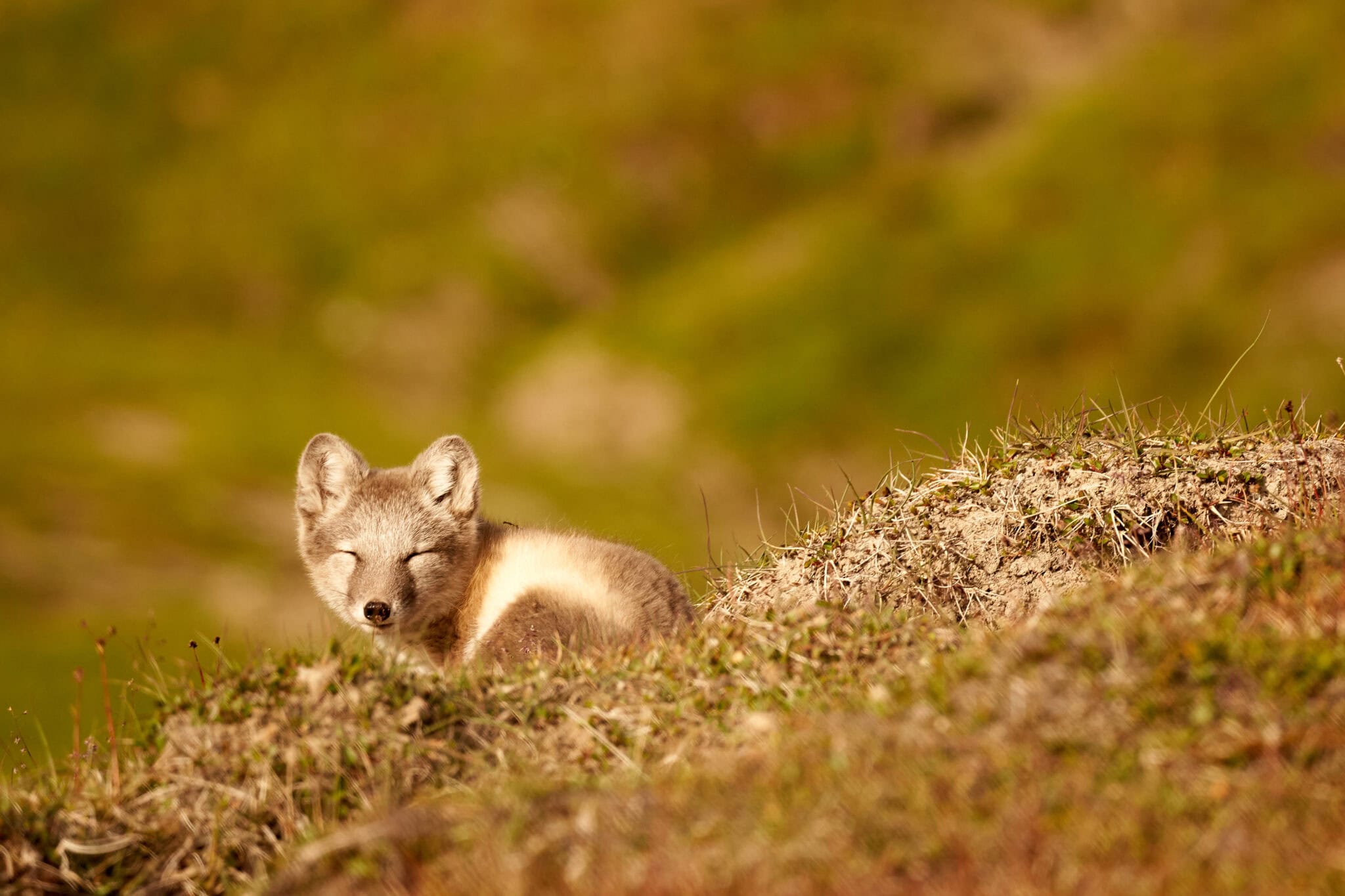
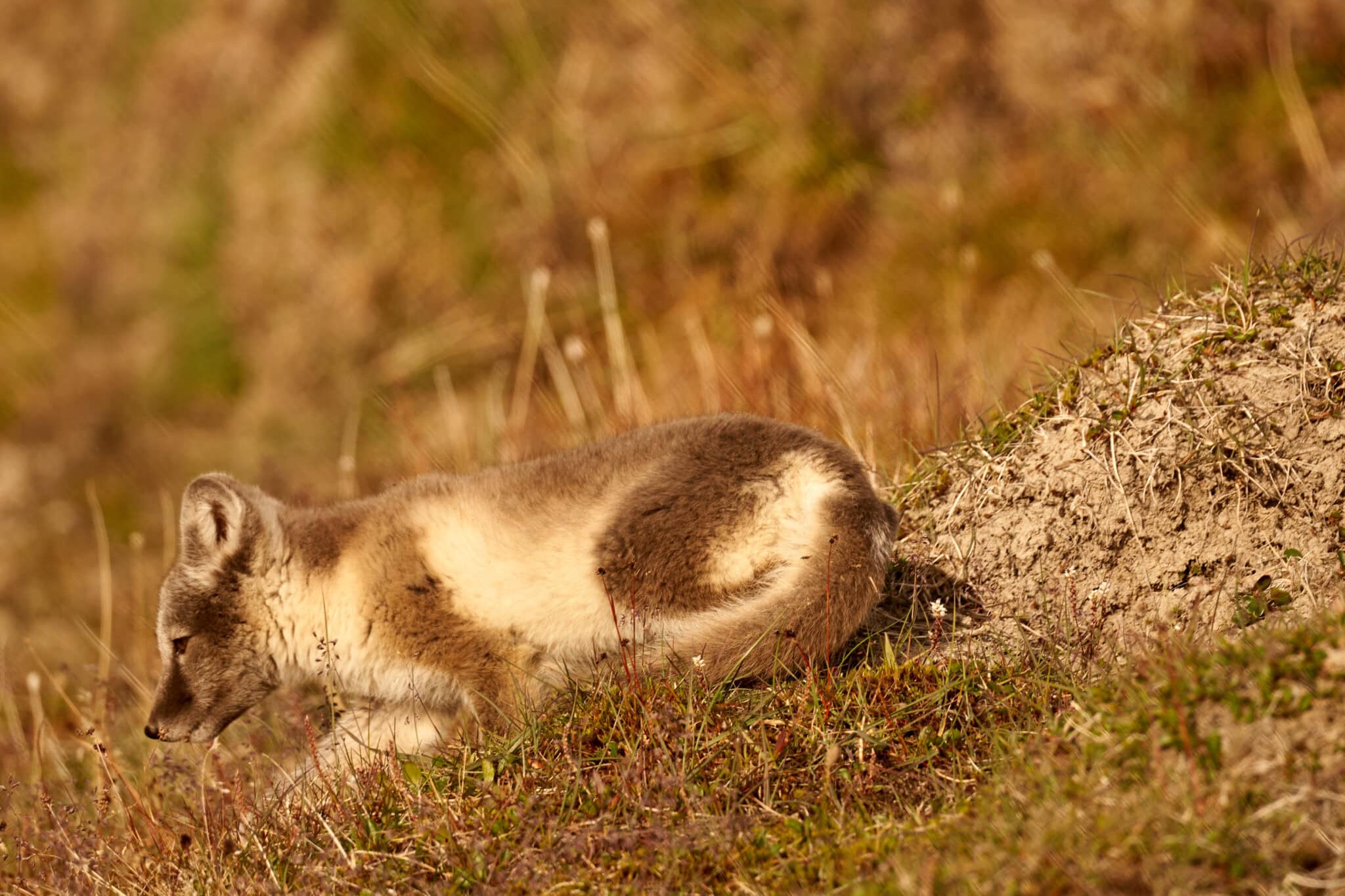
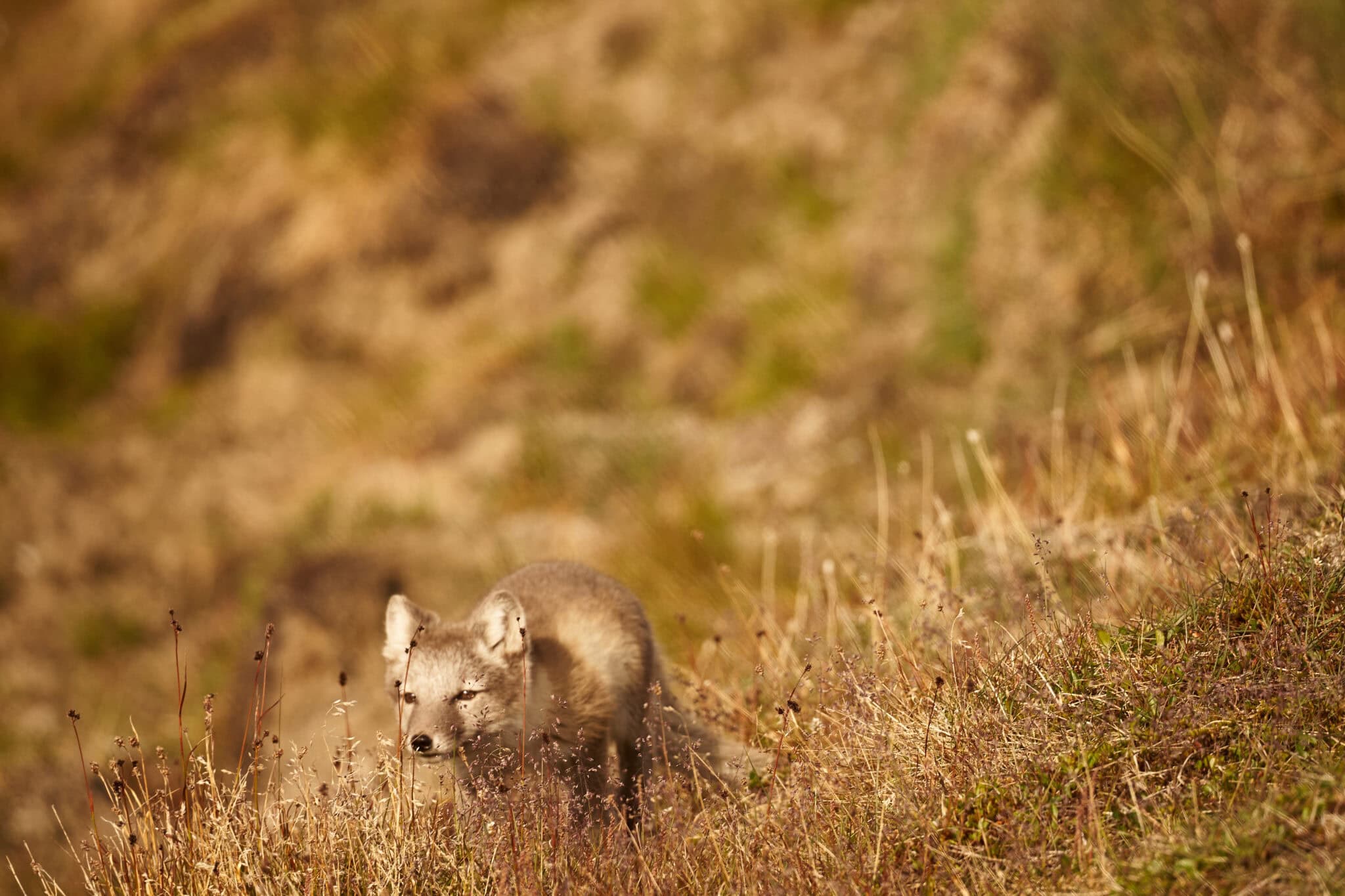
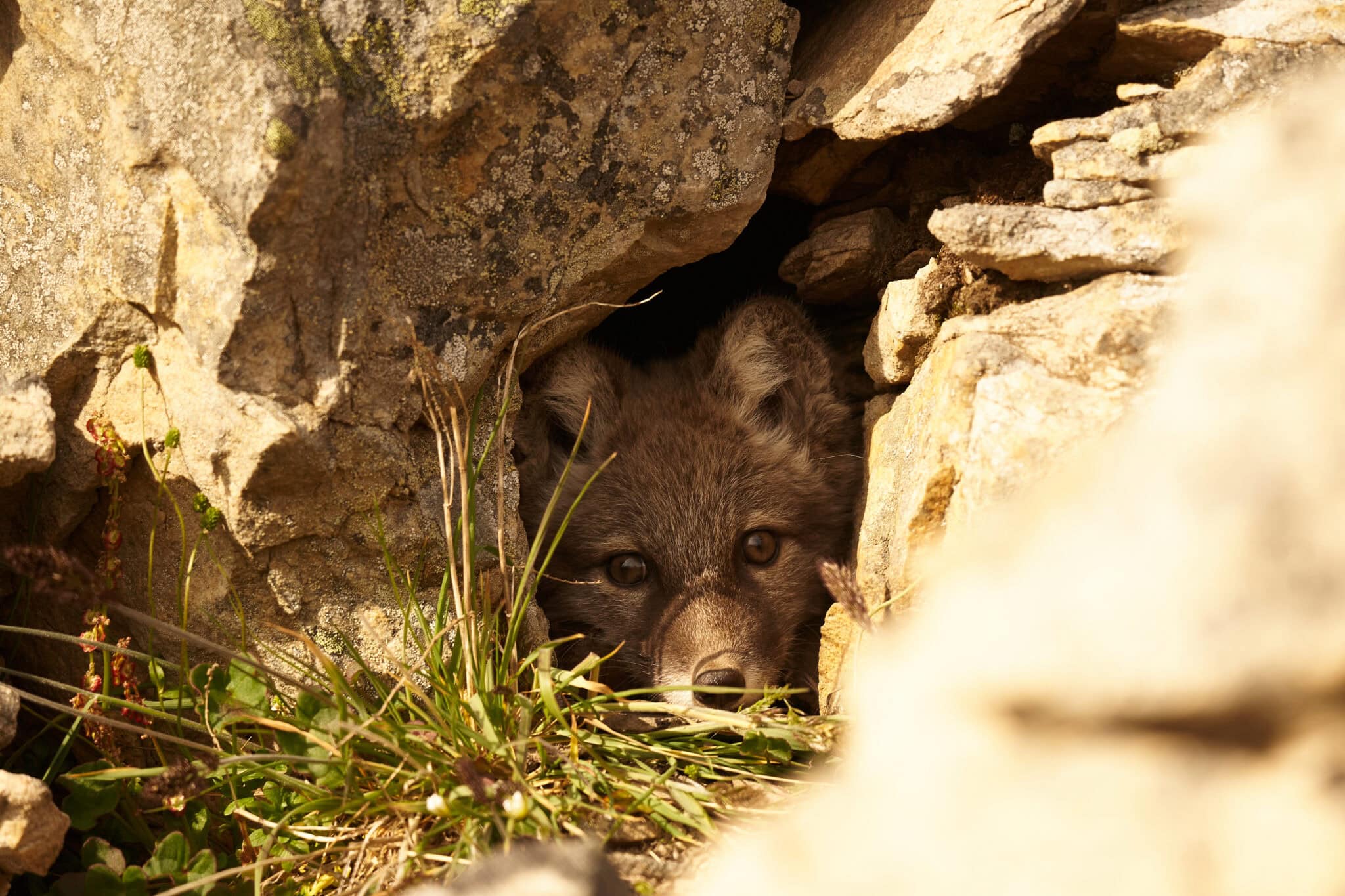
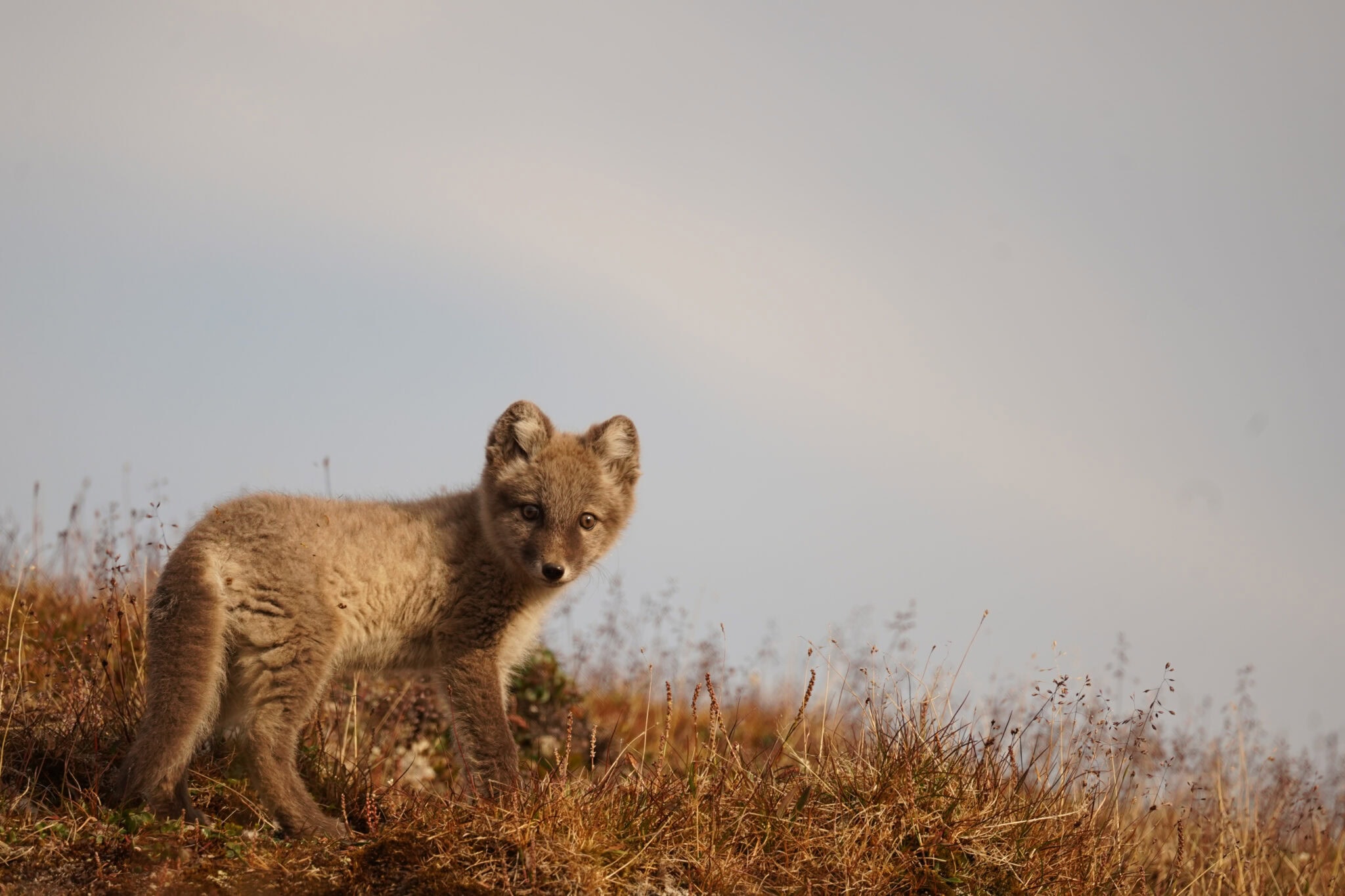
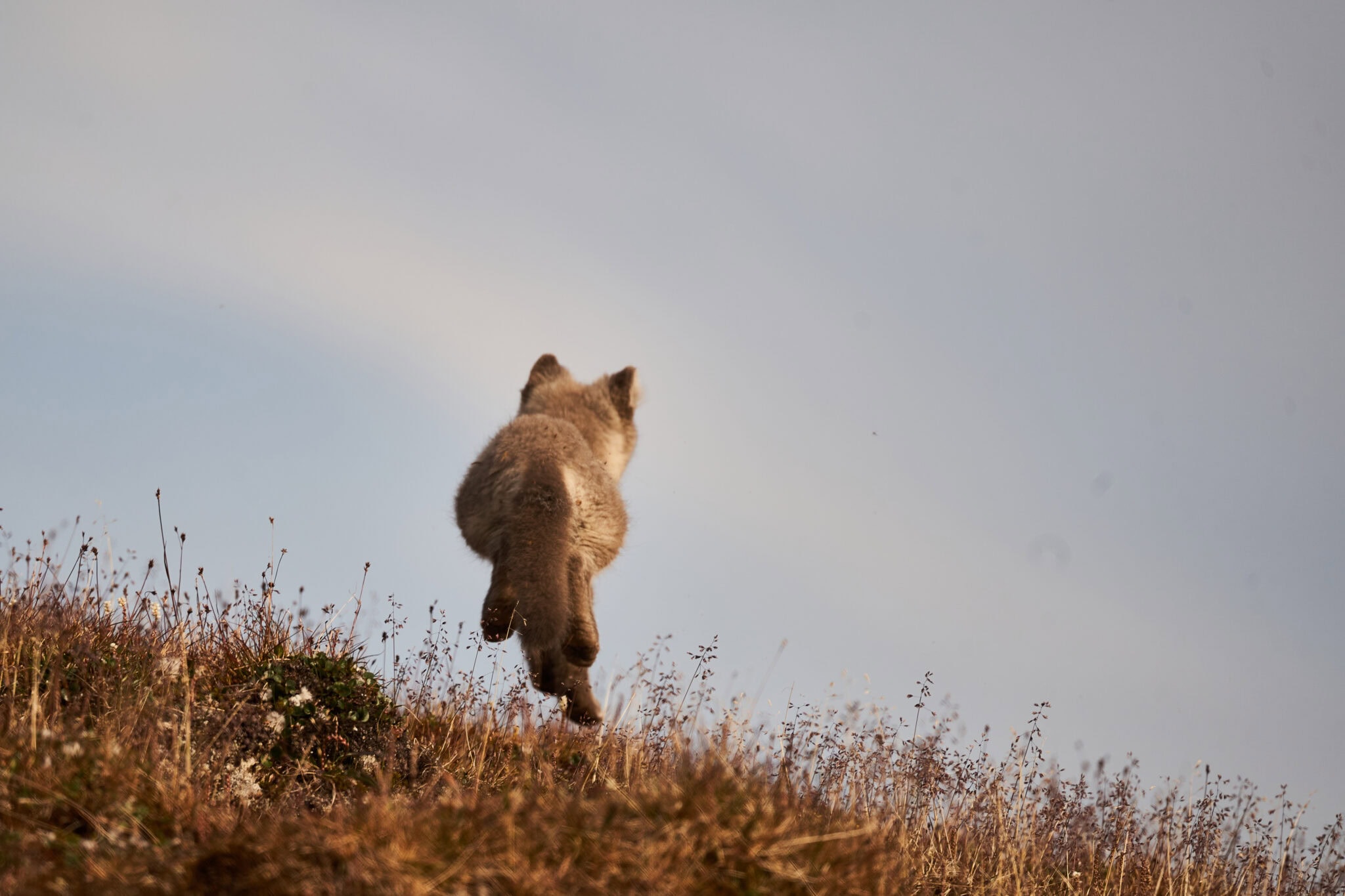
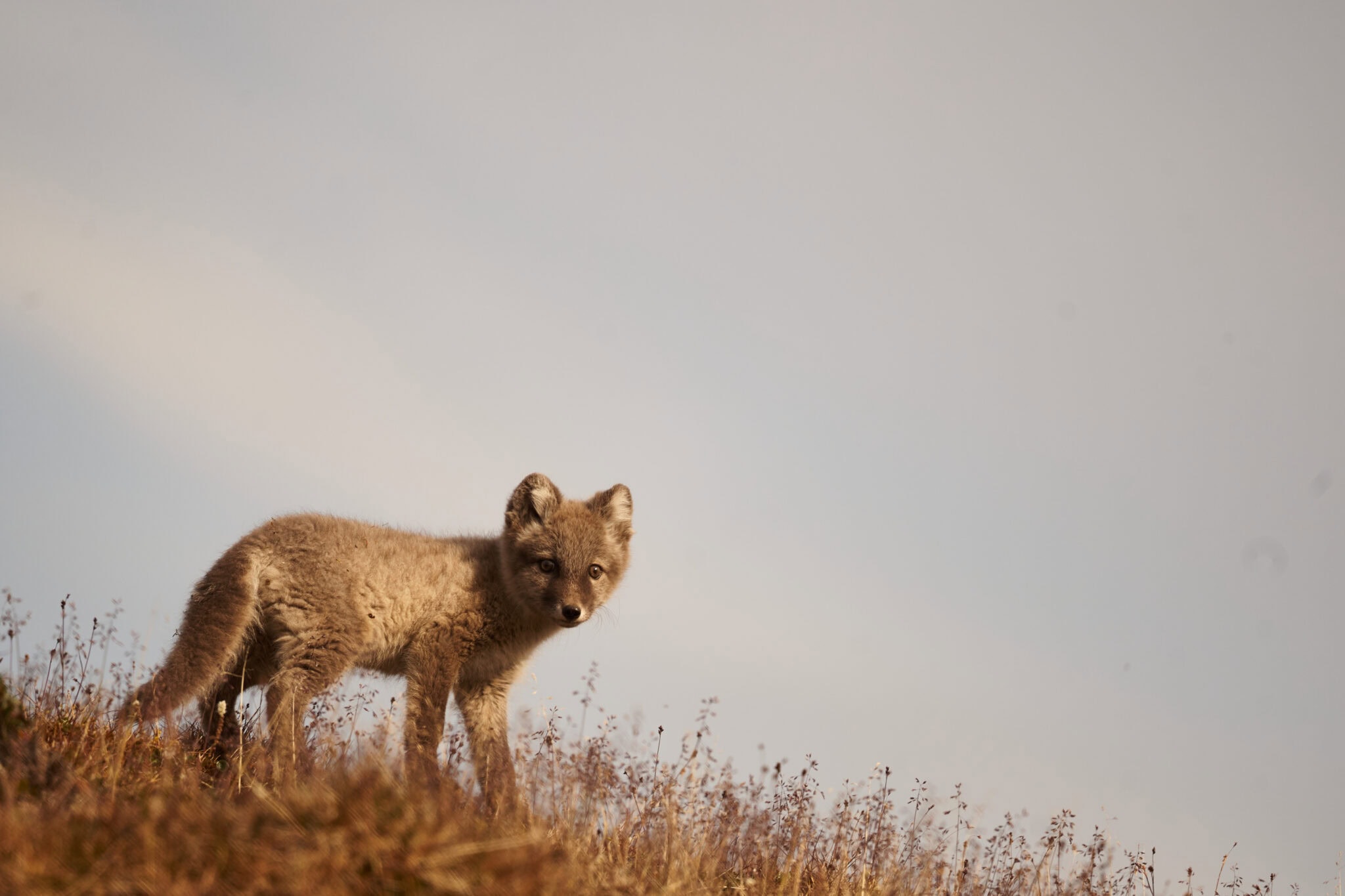
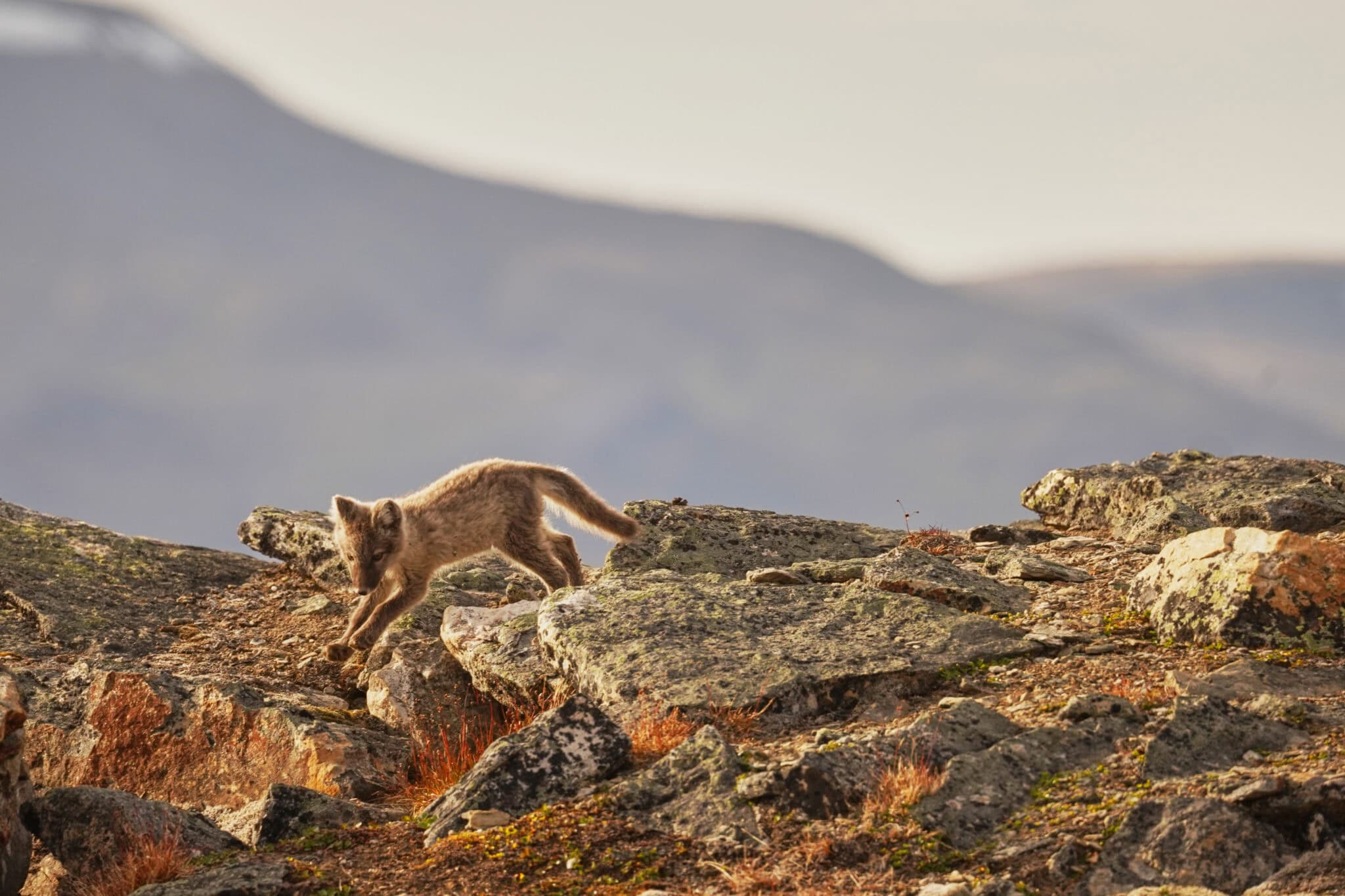
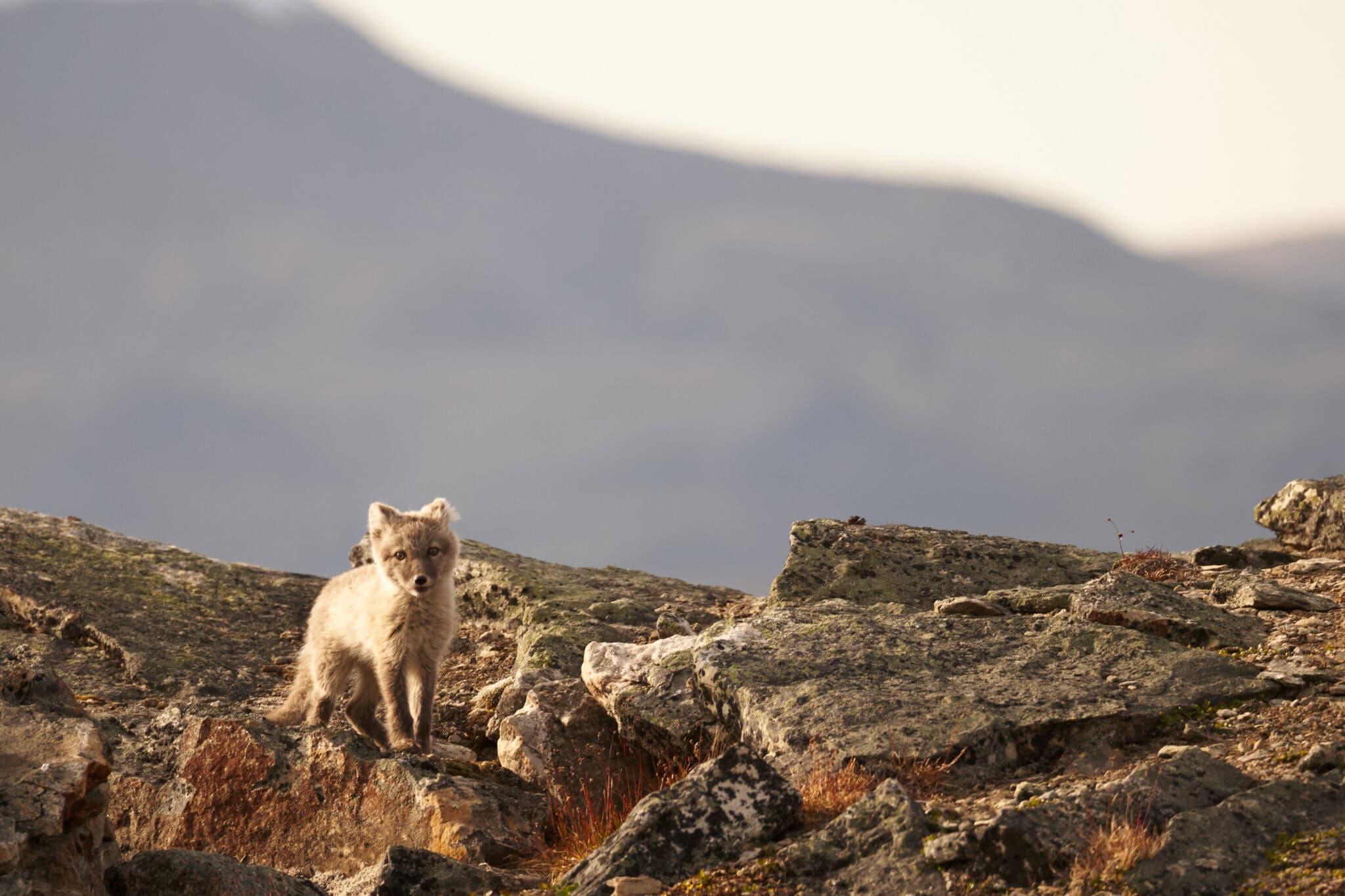
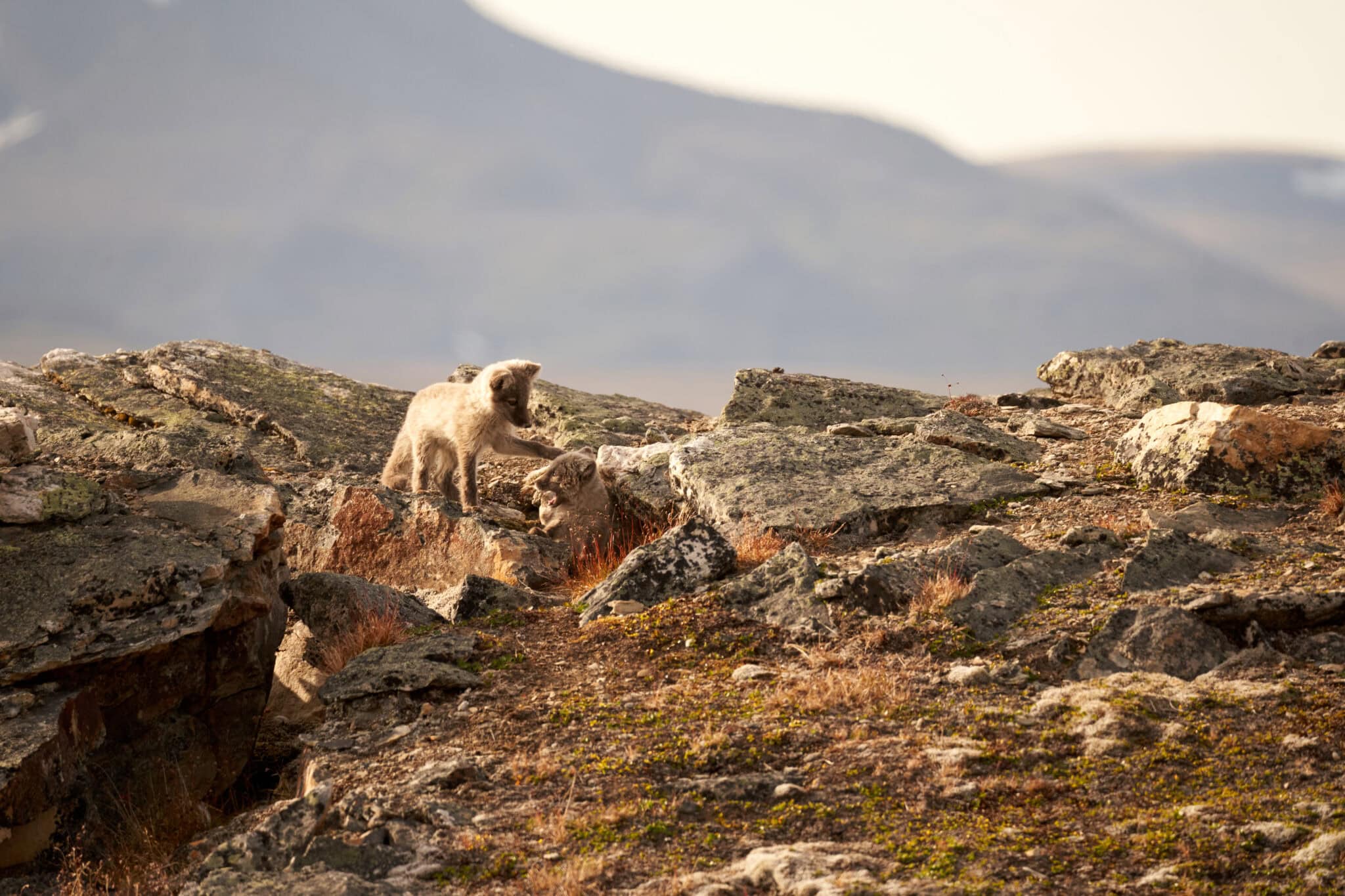
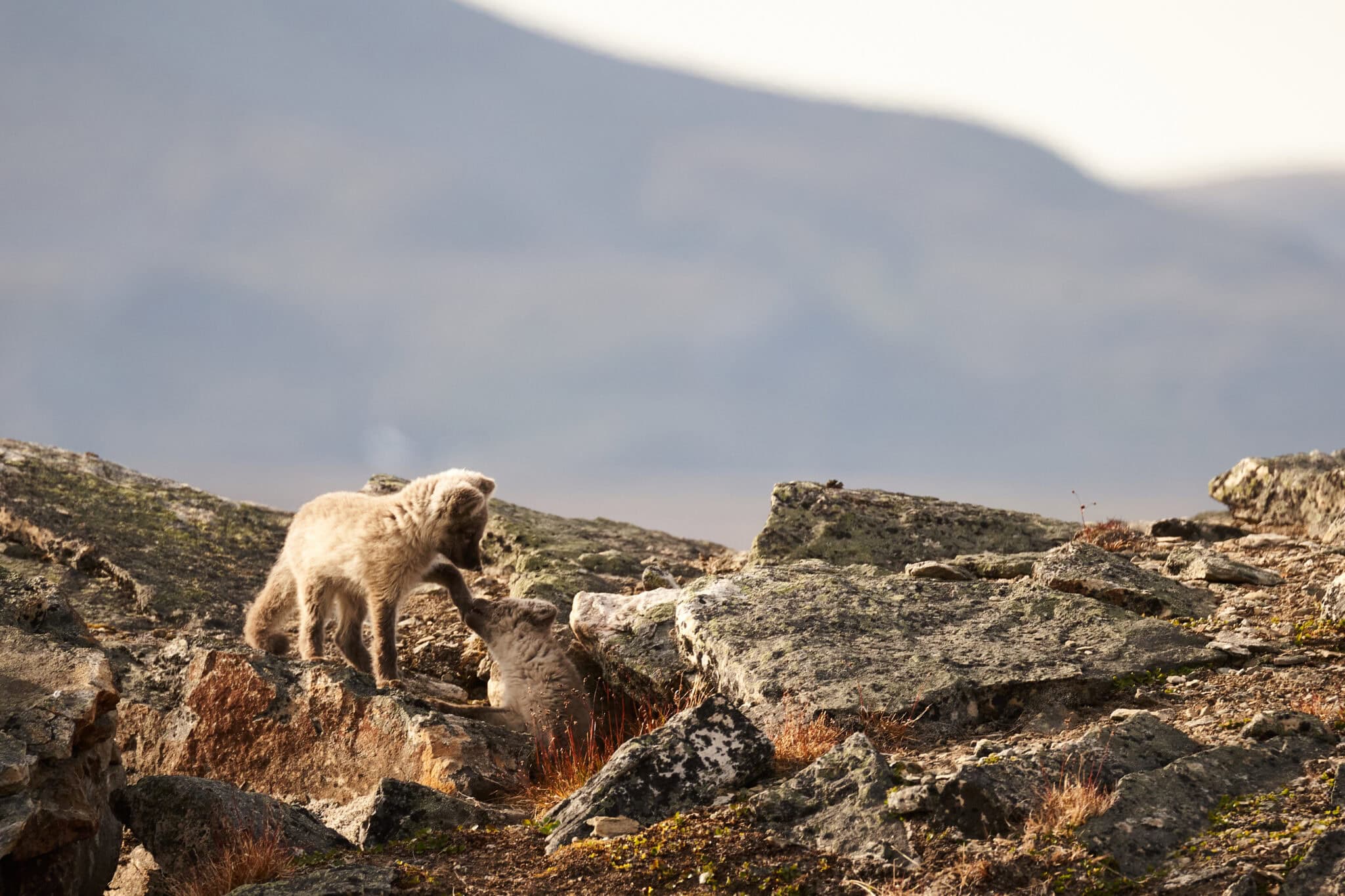
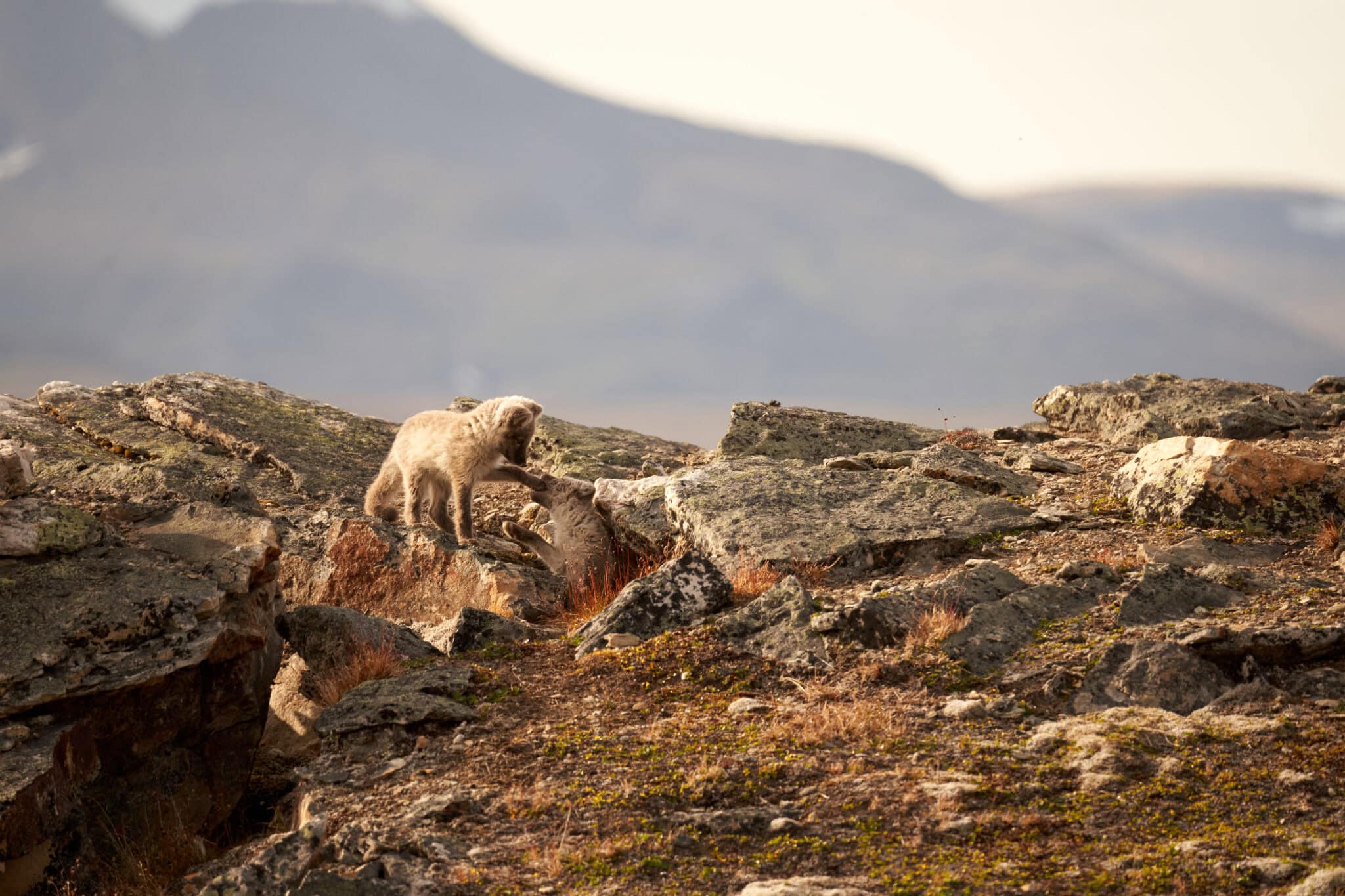
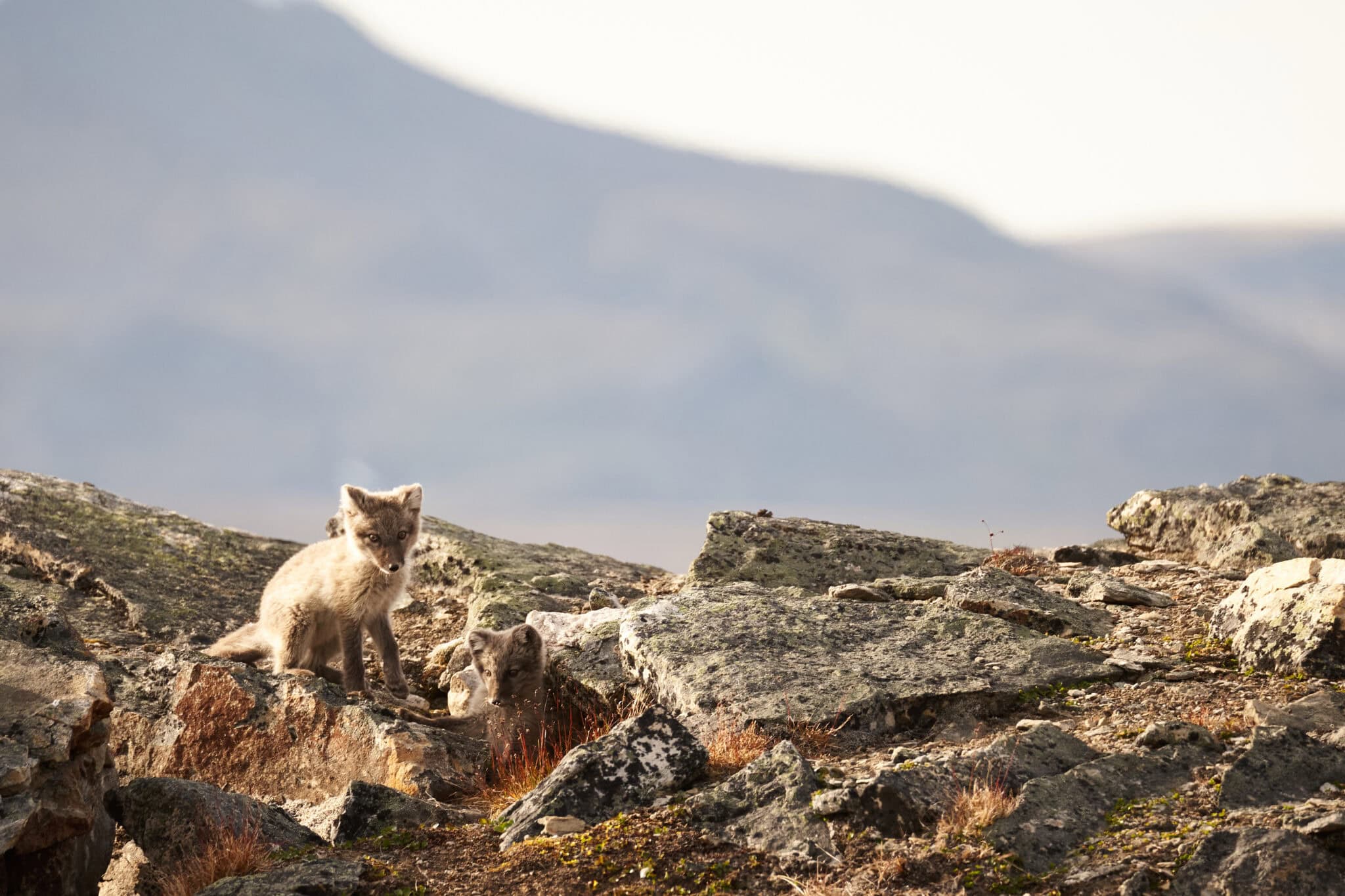
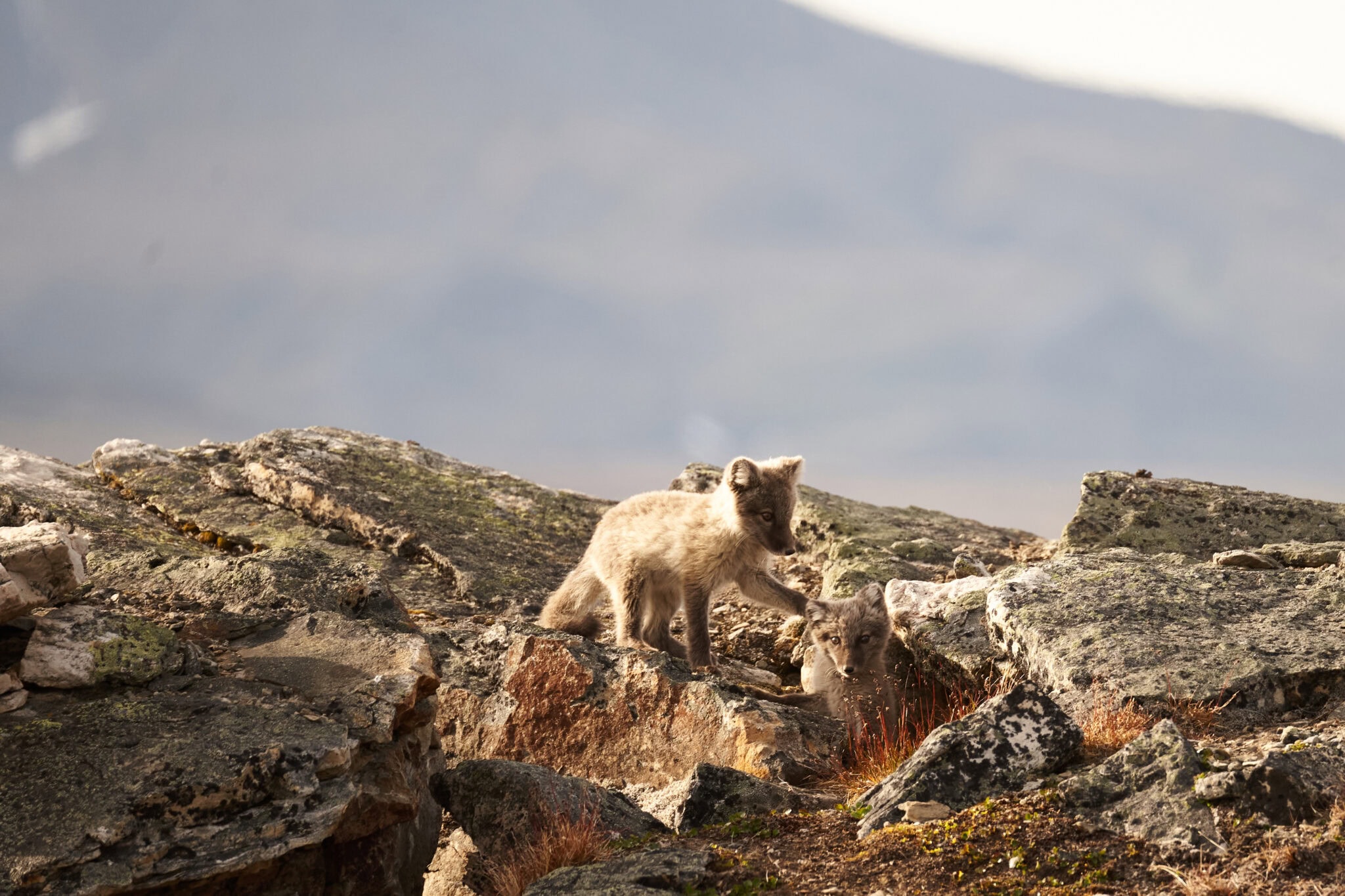
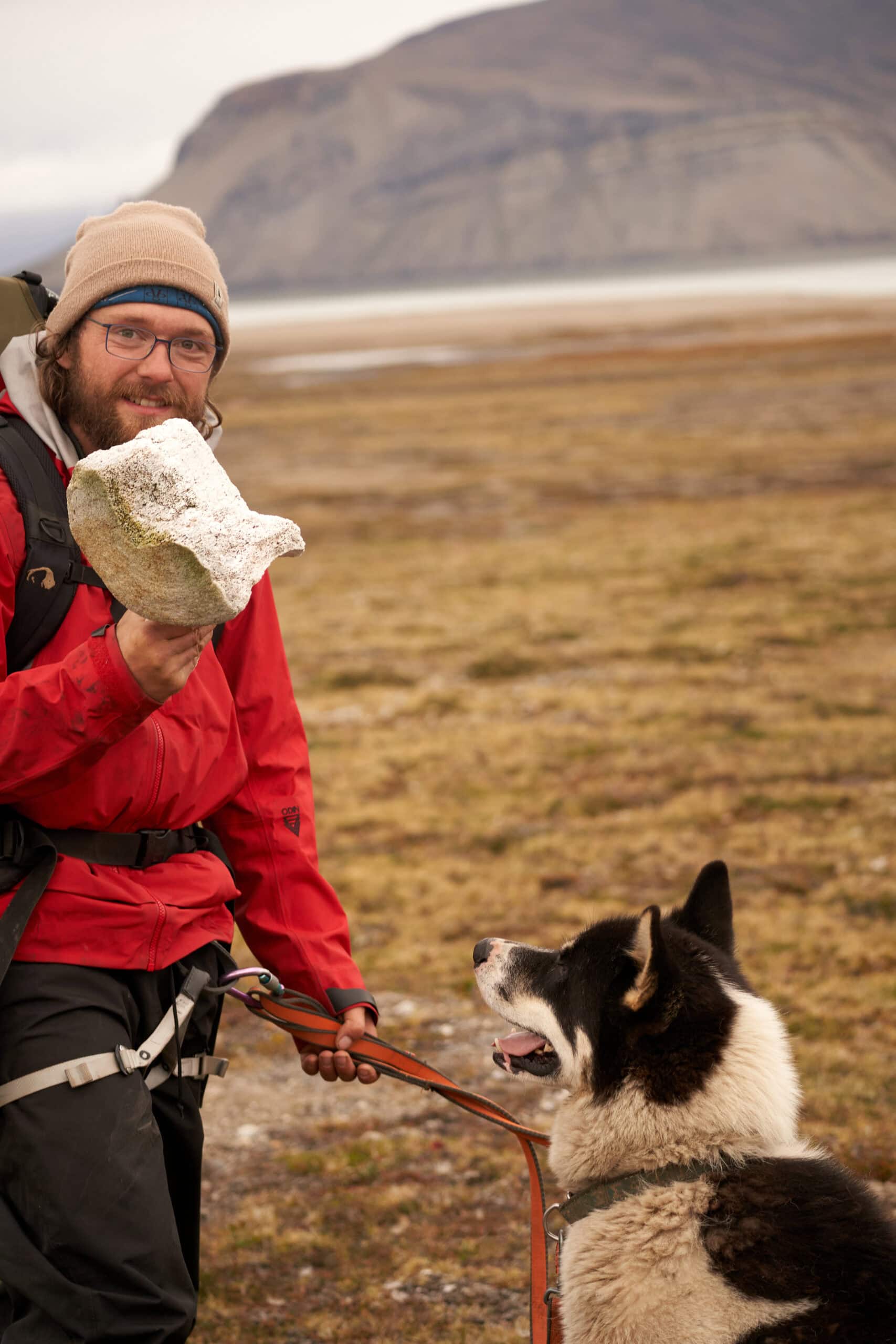
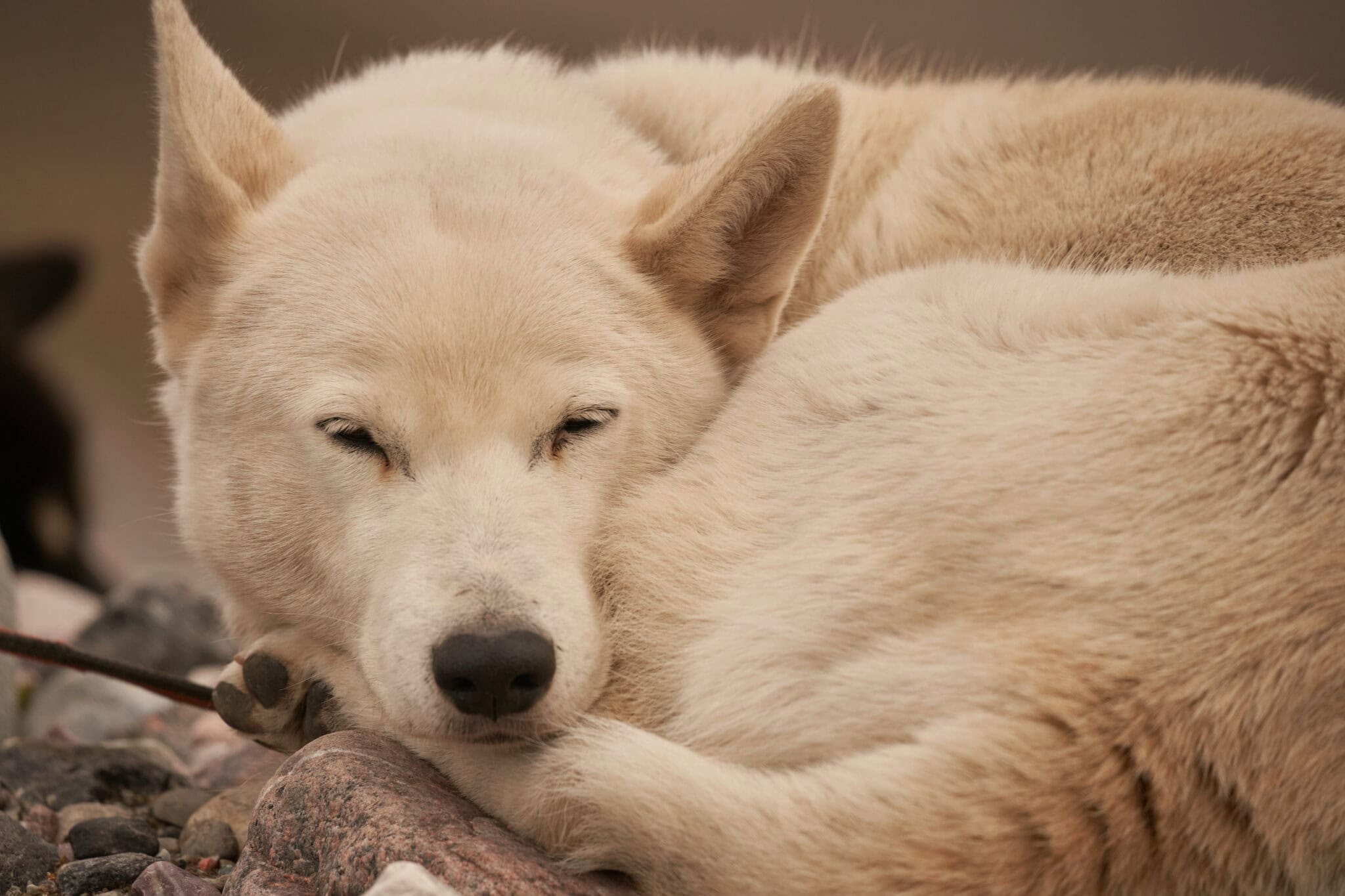
Safety first!!! We decided to turn back—a hard decision, to fail so close to the goal. But was it a failure? After all, we had one of the most beautiful landscapes on earth before us, and we still had a lot planned for this trip. Across the mountain ridge, we could hike into one of the neighboring valleys, where we then set up our camp. The following morning, we continued through another valley back toward Longyearbyen. The path was picturesque; the grass was so green and rich in color that it hardly seemed real. Arctic foxes appeared on the horizon every now and then. On the last night before our return, this even became a bit of a nuisance; a small Arctic fox annoyed Taiga by appearing every now and then at night and making her bark. This, of course, led to me getting up and going outside to see what the reason for Taiga’s barking was. We hardly slept that night. As tired as we were, we strolled back to the camp.
Once we arrived there, a cold Coke and some chips were waiting for us, which we enjoyed in the common room of the campsite.